Friday, November 1, 2019

Cities Need Traffic Laws Recognizing Cyclists As The Most Important People On Earth

Cities Need Traffic Laws Recognizing Cyclists As The Most Important People On Earth

Wes Brinkman - Cycling enthusiast


Every day in this country, cyclists are treated like second-class citizens, barely tolerated by careless motorists and lazy pedestrians who refuse to share the streets. It’s time to confront reality and enact new traffic laws that reflect the inarguable truth: Cyclists are better than you in every way possible.

From cutting down on pollution, to lowering your commute time, the very existence of cyclists in your city is a blessing. Building protected bike lanes and bike boxes for turning is the least you can do. Anyone with a basic modicum of courtesy knows that cyclists should be allowed to do whatever we want, whenever we want—from riding on the sidewalks if the streets are crowded, to blocking the exits of subway cars during rush hour. Today’s laws need to address that.

Anyone with a basic modicum of courtesy knows that cyclists should be allowed to do whatever we want, whenever we want…

If you press them hard enough, motorists and pedestrians will begrudgingly admit that they could do more to look out for cyclists. This is obvious. But they’ll often argue as a counterpoint that cyclists have a responsibility to wear helmets and obey stop signs and traffic signals.

Dead fucking wrong.

Cyclists shouldn’t have to obey your rules. Cyclists should make the rules. We’re done braking for your dogs and strollers while you’re promenading through a crosswalk. Forget new traffic laws—we’re above the law altogether. Parking lanes should be bike lanes. Sidewalks should be bike boulevards. Stoplights ought to be optional for anything on two wheels—or three, if you welded it yourself.

The time has come for all driver’s education courses, safety books, and road signs to reflect the reality that anyone on a bike—from fair-weather riders going 10 miles per hour in the left-hand turn lane, to entire families of tourists crowding the sidewalks—outranks you as a human being. We need laws forcing anyone who so much as sees a cyclist on the street to thank them for their very existence. If a cyclist wants to run down the mayor in broad daylight, you should get down on your hands and knees and kiss the skid marks.

If you don’t think cyclists are the most important people on Earth, prove it. Talk to one of us for five minutes, and tell us we’re wrong.

That’s what I thought.

Thursday, October 31, 2019

Marinwood CSD update on the "White Elephant" Shed


Marinwood CSD Manager updates the Parks and Rec Commission onthe Park Shed project.  Dreikosen still is denying that vehicles will need to turn around in the meadow and use the land in front of the building for landscaping trash.  I wonder if he owns a measuring tape?  If he does, he simply needs to see how a 22 foot truck and a 22 foot trailer will manuever inside the maintenance facility.  It really isn't hard and we should DEMAND ANSWERS why Dreikosen has not done this yet.  Of course, he hired Bill Hansell, former CSD politician who gave him his cushy job at the CSD in 2016.  This is really bad news and conflict of interest laws are being broken in addition to managerial incompetence.

Wednesday, October 30, 2019

Ending the War on Communities: 14 Suggestions

Ending the War on Communities: 14 Suggestions to Protect Neighborhoods While Providing Meaningful Housing Solutions

The debate on solving California’s housing affordability crisis has reached a fever pitch, and the level of noise is drowning out solutions. We are facing a push to indiscriminately force density on neighborhoods and a war on single-family housing, which some in Sacramento paint as inherently “racist” and “immoral.”
As Sacramento politicians spin their wheels on the highway to nowhere, we have an opportunity to find sensible, community-friendly measures to meet the housing affordability challenges here in California and across America.
The fundamental question: do we want to create affordable housing or do we want to promote housing as an investment vehicle? Wall Street, corporate developers and their Sacramento politician friends espouse “trickle down” housing theories which in reality promote luxury development which we have in abundance. The goal of non-profit affordable housing developers is: housing itself.
Huge difference.
With this in mind, sensible housing policies should look to promote affordable housing solutions with non-profit organizations, most of whom are in it for the long-run and want to be integrated within the communities they serve.
Sadly, the discussion of California’s housing challenges in traditional (and some non-traditional) media outlets is so one-sided that people have a right to be skeptical about the agendas being pushed in them.
Publications from the Washington Post to the New York Times devote a serious amount of column inches to housing in California, and almost everything they write places the blame for the housing affordability crisis exclusively on “Nimby” cities. The preferred “solution” is to override local zoning in favor of Sacramento-mandated levels of forced density. Self-proclaimed “housing advocates,” including San Francisco state senator Scott Wiener are freely allowed to state their Reaganomic trickle-down, “the unfettered market will solve it all” perspectives without any counterposing views.
When the communitarian views of those representing the very cities being scapegoated are denied the ability to respond and/or present alternative perspectives, you know something very strange is going on.
And when those who are being faulted are not “just saying ‘no’ to everything,” but have real, concrete solutions to propose, refusing to allow those voices to be heard represents something more than a mere sin of omission.
It’s not for want of trying.
Beverly Hills has been perhaps the poster child of Yimby efforts to make cities “the bad guys.” Sadly, most of the attacks are based on misinformation and, worse, bigoted stereotypes. Even people who should know better seem to be watching too many reruns of “The Beverly Hillbillies.”
One would think that a chance to rebut the skewed and false narratives with ideas which have been vetted with affordable housing advocates would at least be worth sharing, if for nothing else than for the sake of fairness and objectivity. And, of course, we have submitted these ideas to all the usual suspects.
But the Washington PostNew York TimesWall Street JournalBloomberg, and closer to home, the Sacramento BeeSan Francisco Chronicle and LA Times all seem to prefer stereotypes to substance, fiction to fairness and diatribe to dialogue.
The LA Times, owned by a billionaire oligarch has a housing writer, Liam Dillon, who bids fair to become the biggest unofficial CBIA (California Building Industry Association) and Yimby spokesperson in the state, in addition to having a storied history of stereotyping and boosterism.
Publications like the Wall Street JournalBloomberg, the New York Times, the San Francisco Chronicle and the Sacramento Bee have a history of putting the interests of big business, corporations, and Wall Street above that of individual communities and the people who live in them. Perhaps it shouldn’t be surprising that the Wall Street Journal and Co. are organs of Wall Street talking points — wonder how many would like to see densification of their communities in Westchester and Marin, but never mind….
What’s perhaps even more disappointing is that CalMatters, which purports to be a marketplace of various Californian ideas, was unwilling to share the proposed solutions coming from a city that has regularly been targeted by the same Sacramento politicians whose feathers CalMatters evidently doesn’t want to ruffle by allowing our voice to be heard.
One would think that any or all of these outlets might at least have had the fairness to now present our solutions to the state’s housing challenges. One would think they might at least have tried to pay lip service to objectivity, even if it’s just window dressing to create a pretense of journalistic balance.
Fortunately, there are still websites, which are unafraid to feature a diversity of opposing viewpoints. And in this case, it’s not even a question of opposing viewpoints: it’s a question of proactive solutions to the state’s housing affordability crisis (which is what we are really dealing with; it’s not like we have a luxury housing crisis). True, these are solutions that the Yimbys and their Wall Street and tech oligarch benefactors might not prefer, but they i preserve local flavor and preserve community diversity in a way that the standard, virtually identical high-density buildings clearly do not.
What we need are community-based solutions that embrace urban humanism. These include the following measures:
  1. A massive statewide bond, dedicated to building truly affordable housing, specifically directed towards non-profit affordable housing developers. Much of the state’s surplus could also be used to build affordable housing. Locally generated revenue, including linkage fees and local bonds could support local projects.
  2. Land banking: using some of the state’s surplus funds to prospectively purchase properties throughout the state which would be used for purely affordable housing, in addition to registering all current public lands which could be suitable for affordable housing with the input of local agencies.
  3. Reintroduction of redevelopment (or some form of tax increment financing) with a focus on affordable housing (at least 75% of funds would go to affordable housing built by non-profit affordable housing developers). Eminent domain of residential property or any property for non-residential uses could be precluded, so some of the abuses of past redevelopment agencies would be avoided.
  4. Supporting economic development in underserved areas, reversing the trend of population clustering created by job concentration. Increased investment in public higher learning institutions in these areas, such as the Central Valley, etc. Carrot/stick approach to corporations to encourage job creation in these areas, while avoiding the pitfalls of overheated job concentration in already dense areas, thereby also furthering the goals of geographic equity.
  5. Repeal of Costa/Hawkins and the Ellis Acts (which restrict cities’ abilities to implement rent stabilization ordinances and renter protections), along with assisting cities in creation and maintenance of rental registries. Good data can help with the creation of good policy, and particularly accurate information on vacancy rates are crucial.
  6. Vacancy, foreign owner and “speculation” taxes. Vacancy taxes, like in Canada, would progressively be charged to absentee landlords. Additional taxes would be levied towards speculators who don’t actually occupy their properties but purchase them as investment vehicles. Some naysayers to this approach have complained that it would have the effect of reducing property prices – something which would actually be a boon to non-profit affordable housing organizations.
  7. Strengthen state anti-trust rules for speculative ownership of housing and real estate; the securitization and commoditization of housing often stands in direct conflict with the goal of affordable housing and additional anti-trust regulations would aim to curb Wall Street’s influence.
  8. Strengthen CEQA (the California Environmental Quality Act). Commercial projects which create a need for additional housing would need to mitigate the impacts they are creating, namely, by requiring the requisite amount of housing (including affordable housing) be built as a condition of project approval. No “kicking the can” to other communities or to the future; no “statements of overriding considerations.”
  9. Institute a “Clean Up Your Own Mess First” principle, including linkage fees. Negative impacts of projects must be mitigated by project owners. If a project creates a need for more housing or infrastructure, the project owner must “clean up her own mess first” rather than place the burden on the public.
  10. Density bonuses only for non-profit affordable housing developers, working in conjunction with individual communities, with continued community involvement/partnership with these non-profits.
  11. Address the root cause of the housing affordability crisis: income inequality. Consider instituting corporate wealth taxes.
  12. Allow regional cooperation/solutions to affordable housing (currently not allowed in California). Cities could through bi- or multi-lateral discussions/negotiations with other jurisdictions share RHNA (Regional Housing Needs Assessment) obligations across jurisdictional boundaries (and could share in revenue generated by projects, if the projects are the cause of increased housing needs which the jurisdictions would be meeting together).
  13. Waive all fees for non-profit affordable housing, with the fees to be reimbursed to cities by Sacramento.
Let these ideas bring debate and discussion which ultimately lead to housing solutions and dynamic, livable and sustainable communities that celebrate urban humanism, our ability to make choices for ourselves and our belief that ‘one-size-fits-all’ doesn’t work well in America. Is there a better time than now?

Tuesday, October 29, 2019

Community is Precious


for more info on this project visit: https://playingforchange.com/

The White Elephant in Marinwood Park is coming!


Marinwood CSD hired a former CSD politician, Bill Hansell to design a new park maintenance garage.  Instead of a small shed originally approved by citizen in April 2017 he has designed a 4400 square foot facility that will occupy almost the entire footpath where the current shed now occupies.

In a few weeks we will see the story poles.

We STILL DO NOT KNOW HOW MUCH THE CSD BOARD is planning to spend.  When Hansell was hired last year his fee was estimated to be $13,800 for the entire project.  The CSD has now paid Hansell an estimated $50k.before the plans are approved!  It violates the Marin General plan, reduces our recreation park to an industrial site and violates the Stream Conservation Ordinance.

Frankly the ENTIRE CSD BOARD should be removed from office for collusion and violation of Fair Political Practices.  

More will come to light soon. 

Fortunately, a cost effective alternative exists that respects our park and our environmental laws. 

Watch for the story poles and the information display coming soon.


Saturday, October 26, 2019

Walking as Creative Fuel


Walking as Creative Fuel

A splendid 1913 celebration of how solitary walks enliven “the country of the mind.”
Brain Pickings|
Maria Popova


Kenneth Grahame.

“Every walk is a sort of crusade,” Thoreau wrote in his manifesto for the spirit of sauntering. And who hasn’t walked — in the silence of a winter forest, amid the orchestra of birds and insects in a summer field, across the urban jungle of a bustling city — to conquer some territory of their interior world? Artist Maira Kalman sees walking as indispensable inspiration: “I walk everywhere in the city. Any city. You see everything you need to see for a lifetime. Every emotion. Every condition. Every fashion. Every glory.” For Rebecca Solnit, walking “wanders so readily into religion, philosophy, landscape, urban policy, anatomy, allegory, and heartbreak.”


Perched midway in time between Thoreau and Solnit is a timeless celebration of the psychological, creative, and spiritual rewards of walking by the Scottish writer Kenneth Grahame (March 8, 1859–July 6, 1932), best known for the 1908 children’s novel The Wind in the Willows — a book beloved by pioneering conservationist and marine biologist Rachel Carson, whose own splendid prose about nature shares a kindred sensibility with Grahame’s.

Five years after publishing The Wind in the Willows, Grahame penned a beautiful short essay for a commemorative issue of his old boarding school magazine. Titled “The Fellow that Goes Alone” and only ever published in Peter Green’s 1959 biography Kenneth Grahame (public library), it serenades “the country of the mind” we visit whenever we take long solitary walks in nature.

With an eye to “all those who of set purpose choose to walk alone, who know the special grace attaching to it,” Grahame writes:


Nature’s particular gift to the walker, through the semi-mechanical act of walking — a gift no other form of exercise seems to transmit in the same high degree — is to set the mind jogging, to make it garrulous, exalted, a little mad maybe — certainly creative and suprasensitive, until at last it really seems to be outside of you and as if it were talking to you whilst you are talking back to it. Then everything gradually seems to join in, sun and the wind, the white road and the dusty hedges, the spirit of the season, whichever that may be, the friendly old earth that is pushing life firth of every sort under your feet or spell-bound in a death-like winter trance, till you walk in the midst of a blessed company, immersed in a dream-talk far transcending any possible human conversation. Time enough, later, for that…; here and now, the mind has shaken off its harness, is snorting and kicking up heels like a colt in a meadow.

In a sentiment which, today, radiates a gentle admonition against the self-defeating impulse to evacuate the moment in order to capture it — in a status update, in an Instagram photo — Grahame observes:


Not a fiftieth part of all your happy imaginings will you ever, later, recapture, note down, reduce to dull inadequate words; but meantime the mind has stretched itself and had its holiday.


Art from What Color Is the Wind? by Anne Herbauts.

Nearly a century before Wendell Berry’s poetic insistence that in true solitude “one’s inner voices become audible” and modern psychology’s finding that a capacity for “fertile solitude” is the seat of the imagination, Grahame writes:


This emancipation is only attained in solitude, the solitude which the unseen companions demand before they will come out and talk to you; for, be he who may, if there is another fellow present, your mind has to trot between shafts.


A certain amount of “shafts,” indeed, is helpful, as setting the mind more free; and so the high road, while it should always give way to the field path when choice offers, still has this particular virtue, that it takes charge of you — your body, that is to say. Its hedges hold you in friendly steering-reins, its milestones and finger-posts are always on hand, with information succinct and free from frills; and it always gets somewhere, sooner or later. So you are nursed along your way, and the mind may soar in cloudland and never need to be pulled earthwards by any string. But this is as much company as you ought to require, the comradeship of the road you walk on, the road which will look after you and attend to such facts as must not be overlooked. Of course the best sort of walk is the one on which it doesn’t matter twopence whether you get anywhere at all at any time or not; and the second best is the one on which the hard facts of routes, times, or trains give you nothing to worry about.

In consonance with artist Agnes Martin’s quiet conviction that “the best things in life happen to you when you’re alone,” Grahame writes:


As for adventures, if they are the game you hunt, everyone’s experience will remind him that the best adventures of his life were pursued and achieved, or came suddenly to him unsought, when he was alone. For company too often means compromise, discretion, the choice of the sweetly reasonable. It is difficult to be mad in company; yet but a touch of lunacy in action will open magic doors to rare and unforgettable experiences.


But all these are only the by-products, the casual gains, of walking alone. The high converse, the high adventures, will be in the country of the mind.

Complement with poet May Sarton’s sublime ode to solitude, Robert Walser on the art of walking, and Thoreau on the singular glory of winter walks, then revisit Rebecca Solnit’s indispensable cultural history of that art.


This article was originally published on January 10, 2018, by Brain Pickings, and is republished here with permission.


Please consider supporting Brain Pickings—a one-woman labor of love—with a donation:donating = loving

Friday, October 25, 2019

ORGANIC URBANISM IS THE CURE FOR NEW URBANISM

ORGANIC URBANISM IS THE CURE FOR NEW URBANISM 

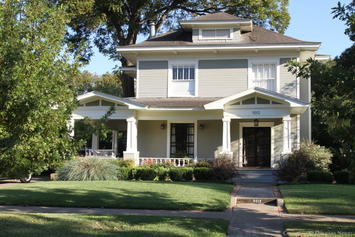
lead-munger-place-historic-district.jpg
This early 1900s house, after the neighborhood had been rezoned for apartments, declined in value to $7,000 in the 1970s. Being rezoned single-family brought decades of revitalization that raised the value of neighborhood homes like this one to $700,000.
New Urbanism is like a virus. For 50 years it keeps coming back in mutated forms. It needs a cure.
First, the only thing new in New Urbanism is the new construction that tears down the organic city. A form of New Urbanism has been around for 50 years. Like I said, it is a virus that keeps coming back in mutated forms. But the scheme, of more density, new mixed-use construction, and fixed rail transit, replacing existing homes remains constant. The desire of planners to determine where you live and where you work also remains constant. New urbanists increasingly do not like single family homes, which most Americans prefer.
There is a growing New Urbanism movement across the country that says single-family zoning is bad. There are some cities like Minneapolis that have banned single-family zoning that had made up over 50% of Minneapolis. Some states, like Oregon, are considering abolishing single-family zoning. Even the Dallas City Council unanimously voted to allow two-story backyard rental houses in single-family neighborhoods. Former Dallas City Councilperson, Philip Kingston, said that single-family neighborhoods like Preston Hollow are no longer relevant. If this trend continues, your grandchildren or great grandchildren might never have a chance to live in a single-family zoned neighborhood, with front or back yards to play in, streets to ride bikes on, or familiarity with longtime neighbors.
In contrast, what I call Organic Urbanism works with people’s preferences, particularly those of families. It protects, preserves, and nurtures the city, allowing the creativity of individuals and neighborhoods to shape the direction of the city. This includes the single-family homes as well as a diversity of housing types.
Organic urbanism supports what people want in their diverse neighborhoods. In contrast new urbanism, particularly their allies in the planning profession, oppose such housing and favor density to support public transit and claim they make homes more affordable.
In contrast, organic Urbanists think denser apartment development makes neighborhoods less walkable and less desirable. Organism Urbanism strives to preserve, protect, and rejuvenate the existing housing stock of diverse sizes, styles, and conditions that is conducive to a mix of incomes and lifestyles. Organic Urbanism also favors zoning for less than what is already built. Less dense zoning provides the incentive to preserve and revitalize the existing housing stock, or lose the privilege of higher density on a lot if an existing multi-family building is torn down. For example, if a duplex or apartment house is zoned single-family and it is torn down, it can only be replaced by a single-family home. This gives the owner incentive to maintain the existing duplex or apartment house or lose their privilege of multi-family.
Organic Urbanism approaches the city like a garden. There is an understanding that the evolution of buildings and uses should evolve rather than being plowed under and planted like an industrial farm. In a garden that is nurtured, one might plant a sapling with sun-loving plants around it. Once the tree grows, one might plant, shade-tolerant flowers under the tree. There is a natural ebb and flow of decay, rejuvenation, and new construction in an organic city. Neighborhoods fall in and out of favor, creating opportunities for those of all incomes.
New Urbanism has a goal of creating diversity by diluting good parts of the city. Organic Urbanism strives for diversity by improving out-of-favor neighborhoods.
I will describe eight key differences of New Urbanism and Organic Urbanism.
  1. Density versus preservation

    New Urbanism is in favor of more density replacing existing structures, even in a shrinking city.

    Organic Urbanism is in favor of preserving and rejuvenating the existing buildings in addition to adding new construction.


    Here is a historic duplex of two 500 sq.ft. apartments within three blocks of $2.5 million historic mansions that could have been renovated. Instead, because it is zoned multifamily, it will be torn down and the land added to the entire block of three-story new apartments being erected.

  2. Vibrancy versus nature.

    New Urbanism touts vibrancy as the key attraction to a city and thinks jamming people together will create vibrancy. Along the same lines, New Urbanism says the next generation is less interested in single-family homes and more interested in living in apartments.

    Organic Urbanism think more along the lines of Yogi Berra –when a city gets too crowded no one wants to live there anymore. The Wall Street Journal tends to agree. It reported that census figures showed that cities with over a half a million people collectively lost 27,000 Millennials aged 25 to 39 last year in 2018. New York lost 38,000 Millennials. This was the fourth year in a row city lost Millennials led by those 35 to 39. Millennials are the most committed to the environment and they love living in nature surrounded by trees, gardens, and a pleasing environment. Organic Urbanists understand Millennials interest in nature, trumps vibrancy, especially when they begin raising families.

  3. Income diversity in neighborhoods

    New Urbanism is in favor of providing the rich with cultural amenities and the poor with services and subsidies, while ignoring the middle class.

    Also, New Urbanism wants to create income diversity in neighborhoods by building moderate and expensive apartments and then having a percentage of those apartments subsidized for low-income residents.

    In contrast, Organic Urbanism creates income diversity in neighborhoods by rejuvenating inexpensive single-family homes, protecting middle-class neighborhoods, and encouraging expensive neighborhoods for high-income homeowners.

    This Organic Urbanism approach emphasizes emerging middle-class neighborhoods and protecting the middle-class residents that are disappearing in cities across the country.

    Organic Urbanism recognizes that diverse sizes and conditions of older homes allow diverse incomes in older neighborhoods. Old East Dallas is a good example. In Mount Auburn, you will find $150,000 cottages, in Junius Heights $400,000 bungalows, in Munger Place $700,000 prairie style homes, and on Swiss Avenue $2 million historic mansions. All four of these neighborhoods are within six blocks of each other. I have had friends and clients that owned an 1100 square foot home, and then moved to a 2400 square foot home, and then to a 5000 square foot home, all which were within 4 blocks of each other and in three different historic districts.


    This historic Prairie style home is part of a natural progression of home ownership in an organic urban neighborhood. The homeowner's first home was an 1,100 sq.ft. cottage in the Peak Suburban Historic District, then they purchased a 2,400 sq.ft. home in the Munger Place Historic District a few blocks away, and ultimately they purchased a 5,700 sq.ft. Swiss Avenue Prairie style home which is only four blocks away from their first two homes.

  4. Mass Transit and Mobility

    New Urbanism calls for fixed rail mass transit to be built where people don’t want it. Recently, New urbanist planner Christof Spieler, openly suggest at a D Magazine-sponsored New Dallas Summit said we need the political will to put fixed rail through the middle of neighborhoods where people didn’t want it, in order to gain ridership. Michael Morris, the Director of Transportation for the North Central Texas Council of Governments, said at another talk that they are lobbying the State Legislature to allow tax dollars that had been allocated for mass transit, to be diverted to subsidize new development next to fixed rail so more people will use the rail system.

    Organic Urbanism instead acknowledges and applauds the incredibly diverse areas, fragile neighborhoods, and established buildings in Dallas where people live and work. It insists transit exist to serve people, not the other way around. Rather than tearing up neighborhoods for rail systems and forcing mass transit development, Organic Urbanistslike 20th century forms of transportation like buses, and 21st century technology like Uber, autonomous vehicles, and air taxis to adapt to where people want to live and work.

    Also, Organic Urbanism want to entice people to walk by creating a pleasing environment, not forcing people to walk.

    Organic Urbanism recognizes that diverse sizes and conditions of older homes allow diverse incomes in older neighborhoods. Old East Dallas is a good example. In Mount Auburn, you will find $150,000 cottages, in Junius Heights $400,000 bungalows, in Munger Place $700,000 prairie style homes, and on Swiss Avenue $2 million historic mansions. All four of these neighborhoods are within six blocks of each other. I have had friends and clients that owned an 1100 square foot home, and then moved to a 2400 square foot home, and then to a 5000 square foot home, all which were within 4 blocks of each other and in three different historic districts.

  5. Schools

    Since busing did not work out, New Urbanists now want to extract people from low-income neighborhoods and place them in new subsidized housing in expensive neighborhoods so that they can live in these neighborhoods with better public schools. 

    Organic Urbanists instead cheer on private schools, charter schools, ISD Academies, and collaborate private/public schools that are emerging in lower income neighborhoods. These schools also attract middle- and high-income families to these lower income neighborhoods, creating a more positive and natural diversity.

  6. Increase or diminish the value of single-family homes

    New Urbanists Chris Leinberger, said at a D Magazine New Urbanism lecture, “Single-family zoning is good economically for the homeowner but is bad morally for the city.”

    New Urbanists see a moral imperative to replace single family housing with multifamily structures.

    Organic Urbanists see things much differently. They know the economic viability of the city is dependent on the sustained value of single-family homes and a prosperous middle class who tend to live in them. Organic Urbanists also understand the middle class is the strongest lobby for good schools, good police, fire departments, and parks.

  7. Affordable Housing

    Many are in favor of the city subsidizing developers to build affordable housing. New Urbanism is a great advocate of the city government subsidizing developers of affordable housing. But where do the developers find cheap land? Usually in the areas that would naturally appeal to low-income homebuyers.

    New Urbanism also is in favor of giving a developer more height or density for a new building in exchange for the developer subsidizing the rent of a certain percentage of the apartments in the building that will be designated for affordable housing units. Let’s say a builder wants to get permission to build high-rise apartments that will lease for $2,000 a month, the developer might then have to set aside for 20 years, 10% of the apartments in the building, where the developer agrees to subsidize the rent. If a developer is required to subsidize the rent for each of these units at $1000 a month, a tenant in an affordable housing unit is only required to pay $1000 a month rent for their $2000 a month apartment. This raises the price for everyone else.

    Organic Urbanists think a better solution than subsidizing rent would be for the city to require a developer to subsidize the interest on a home mortgage loan to help a low or moderate-income person to buy a home. This expands homeownership in the city.

    For example, Organic Urbanists would prefer that a developer not spend $1000 a month subsidizing one expensive apartment for a low-income renter, but instead the developer spending that $1000-a-month subsidy to pay for interest-free mortgage loans to three families, so each family could afford to purchase a $100,000 home. Or instead of a $1000-a-month rent subsidy for one apartment, the developer could provide six interest-free mortgage loans on six $50,000 homes for six low-income homebuyers.

    Organic Urbanists understand the greatest economic disparity between black and white families is wealth. Black families earn 70 cents on the dollar for what white families earn, but black families only have 4% of the comparative wealth of white families, because of the lower rate of home ownership and subsidizing rent on apartments does not create wealth for low-income families.

    Organic Urbanists also are opposed to subsidizing developers for their purchase of inexpensive homes that these developers will tear down so they can build new affordable housing.  Organic Urbanists are in favor of preserving the existing housing stock that allows low income families the opportunity to purchase a home.

  8. Dilute good neighborhoods or improve bad neighborhoods

    New Urbanists declare that there are not any affordable homes where people want to live. Their resulting strategy is to extract lower income people from their deteriorating neighborhoods and relocate them to new subsidized apartment units on very expensive lots in the more attractive expensive neighborhoods.

    Organic Urbanists are in favor of improving low-income neighborhoods and making them more attractive for both low- and middle-income residents.

    Organic Urbanists understand that if a lot in an expensive neighborhood cost $500,000 and a lot in a deteriorated neighborhood cost $50,000, the same number of affordable homes could be built on either priced lot. However, if the affordable homes were built on the inexpensive $50,000 lot, there would be $450,000 left over to spend on new sidewalks, curbs, parkway trees, attractive street lights, and internet connectivity, which would improve the desirability of the neighborhood and attract people who would now want to live in this neighborhood.

Maybe the best example of the difference between New Urbanism and Organic Urbanism is their respective position on granny flats.
The New Urbanism idea of granny flats is sweeping the country. The mantra used in Dallas is that granny flats provide more affordable housing and allow senior homeowners to remain in their homes. A few months ago, the Dallas Assistant Director of Housing made a presentation to the Dallas Architecture Forum. She repeated this economic justification for granny flats, that they will create more affordable housing and allow senior homeowners to remain in their homes. When asked what the projected square footage cost of a granny flat was, she said she had no idea as there had been no discussion of the cost of a granny flat and this question had never come up within the housing department or City Council.
Organic Urbanism, on the other hand, looks for the best economic ways for the city to evolve for senior citizens and those needing affordable homes. If a nonprofit in Dallas spent $300 a square foot to build the 400 square foot Crossroads cottages for the homeless, it becomes obvious to an Organic Urbanist that renovating existing houses is a more cost-effective means of providing affordable housing than building new granny flats. Using the homeless cottage cost figures, building a 600-square foot apartment over a garage might cost $200,000.
This does not make a one-bedroom granny flat apartment affordable or lower the cost for a senior homeowner.
In the meantime, a two-story granny flat removes a canopy of trees, looms over the neighbor’s property, lines the front curb with on-street parked cars, and creates more transience in the neighborhood.
Here on one side of the alley you see New Urbanism granny flats blocking the sun and breezes that replaced towering trees. On the other side of the alley you see the layered canopy of trees that include mature pecan trees, tall cedar trees, crepe myrtles, and understory Japanese maples in the backyards of single-family homes that are still dedicated to nature, not rentals.
Conclusion
New Urbanism wants to create a city where people are forced to walk, forced to take fixed rail, forced to live in buildings shared with subsidized renters, and forced to live jammed together in dense neighborhoods in the name of vibrancy.
Organic Urbanism represents an alternative to the top-down tyranny of the new urbanist mantra. We recognize that the cycles of deterioration and rejuvenation create environments that people desire and where they can afford to live and work. Organic Urbanists would rather nurture a city where people enjoy living and walking in a diverse neighborhood, a city that entices Millennials and the middle class to stay in the city and raise their families.
Organic Urbanism allows creativity and self-expression can be manifested. Embracing Organic Urbanism, every person can impact the significance and stewardship of their city, their neighborhood, and their home.
Hopefully, Organic Urbanism can eradicate New Urbanism in our lifetime and reintroduce the concept that cities are not for planners or trains, but people.
Douglas Newby is a real estate broker who initiated the largest the largest rezoning in Dallas - 2,000 properties primarily in use as multi family rental properties to single family zoning. In 1979, in Dallas he created the first Restoration House of the Year Award, and for the Dallas Chapter of the AIA organized a city wide survey of architect designed and Significant homes. His TEDx talk is Homes That Make Us Happy. His website is: ArchitecturallySignificantHomes.com. Blog is DallasArchitectureBlog.com




Subjects:

Marinwood CSD meeting October 2019


Monday, October 21, 2019

The End of Aspiration

The End of Aspiration


Since the end of the Second World War,  middle- and working-class people across the Western world have sought out—and, more often than not, achieved—their aspirations. These usually included a stable income, a home, a family, and the prospect of a comfortable retirement. However, from Sydney to San Francisco, this aspiration is rapidly fading as a result of a changing economy, soaring land costs, and a regulatory regime, all of which combine to make it increasingly difficult for the new generation to achieve a lifestyle like that enjoyed by their parents. This generational gap between aspiration and disappointment could define our demographic, political, and social future.
In the United States, about 90 percent of children born in 1940 grew up to experience higher incomes than their parents, according to researchers at the Equality of Opportunity Project. That figure dropped to only 50 percentof those born in the 1980s. The US Census bureau estimates that, even when working full-time, people in their late twenties and early thirties earn $2000 less in real dollars than the same age cohort in 1980. More than 20 percent of people aged 18 to 34 live in poverty, up from 14 percent in 1980. Three-quarters of American adults today predict their child will not grow up to be better-off than they are, according to Pew.
These sentiments are even more pronounced in France, Britain, Spain, Italy, and Germany. In Japan, a remarkable three-quarters of those polled said they believe things will be worse for the next generation. Even in China, many young people face a troubling future; in 2017, eight million graduates entered the job market, but most ended up with salaries that could have been attained by going to work in a factory straight out of high school.  
Undermining of Home Ownership
Few metrics demonstrate the end of aspiration better than the decline in home ownership. The parents and grandparents of the millennial generation (born between 1982 and 2002) witnessed a dramatic rise in homeownership; in contrast, by 2016, home ownership among older millennials (25-34) had dropped by 18 percent from 45.4 percent in 2000 to 37 percent in 2016. Without a home, these millennials will face a “formidable challenge” in boosting their net worth. Property remains central to financial security: Homes today account for roughly two-thirds of the wealth of middle-income Americans; home owners have a median net worth more than 40 times that of renters.
Perhaps nowhere is shift more dramatic than in Australia, a country long renowned for both social mobility and widespread home ownership. Between 1981 and 2016, property ownership rates among 25 to 34 year-olds in Australia—a country with a strong tradition of middle- and working-class home ownership—fell from more than 60 percent to 45 percent. This is not, as some suggest, the result of a lack of developable land. Even in the relatively crowded United Kingdom, only six percent of the land is urbanized, while barely three percent of the US and 2.1 percent in Canada is urbanized. It’s less than 0.3 percent of Australia 
So why has home ownership fallen? Largely due to regulations that have placed new affordable housing beyond the reach of younger Australians, something we also see in major cities in Great Britain, the United States, and Canada. In all these places, the main culprit has been “smart growth,” a notion that encourages the reluctant to move closer to dense urban cores and give up the dream of owning a home. 
As a result, Australia’s once affordable cities are now among the world’s most expensive. According to demographer Wendell Cox, prices for homes in Sydney—even in the current downturn—are higher than Los Angeles, London, New York, Singapore, and Washington. These all are cities that by any estimate are more critical in the world economy and far more land constrained. Even Adelaide, an isolated and declining industrial hub, has higher prices based on income than Seattle, one of the world’s most dynamic tech hubs.

The impact on prices has been severe. In Sydney, planning regulations, according to a recent Reserve Bank study, now add 55 percent to the price of a home. In Perth, Melbourne, and Brisbane the impact is also well over $100,000 per house. Australian cities once filled with family-friendly neighborhoods are now dominated by dense apartments. According to projections from the Urban Taskforce, apartments will make up half of Sydney’s dwellings by the mid-century, whereas only one quarter of Sydney dwellings will be family-friendly detached homes. 
These policies are widely supported among planners, academics, and the media; in virtually all countries, the cognitive elites congregate in elite urban centres. Indeed, when I produced data at a recent convention demonstrating that most Australians are continuing to move to the periphery, even in New South Wales, the moderator, Australian Broadcast commentator Ali Moore, described much of suburbia as “the wastelands.” This led one attendee to wonder “what country” she inhabited, given that 80 percent of all Australians live in suburbs, with more than four-fifths of families preferring to live in single family homes.
The Green Agenda
Historically, opposition to suburban lifestyles was based largely on aesthetic, social, or even economic considerations. Today, opponents are preoccupied with “green” and “sustainability” concerns. The environmental magazine Grist envisioned “a hero generation” that will escape the material trap of suburban living and work that engulfed their parents. One magazine editor proudly declared herself to be a part of the GINK generation (as in “green inclinations, no kids”) which not only afforded her a relatively care-free and low-cost adult life, but also “a lot of green good that comes from bringing fewer beings onto a polluted and crowded planet.”
This view is widely shared by both the oligarchy and the upper echelons of the planning clerisy. Like their medieval counterparts, they wish to see a more “ordered” planet, but in ways that do not threaten their own power or quality of life. Those at the top of class pyramid can purchase “indulgences” for their consumption by investing in forests, driving electric cars, solarizing their homes, while their wealth allows them to purchase expensive inner-city flats.    
This meme is applauded by publications like the Australian Financial Review, which insist that millennials do not want to live in suburbia. This is largely specious. In survey after survey, most millennials, in the United States and elsewhere, hope to buy a single-family house. The problem is simply that they can’t afford them, particularly in the highly regulated regions as in California, Australia, Canada, or the UK.   
This sets a stage for a future political conflict. Even in the teeth of policies that seek to discourage suburban growth, in most high-income countries, including Canada, Australia, and the US, suburban tastes remain predominant, and are likely to become more so. In America, among those under 35 who do buy homes, four-fifths choose single-family detached houses. According to a recent National Homebuilders Association report, over 66 percent, including those living in cities, actually prefer in the future to purchase a house in the suburbs. 
The drive against bourgeois aspirations underpins an emerging neo-feudal system in which people remain renters for life, enjoying their video games or houseplants. This may end the dream of ownership that has defined the middle class for a half millennium, but it could assure a steady profit for the owner class, a rent that would seem appropriate to a medieval landlord. 
French economist Thomas Picketty has suggested that today’s ageing societies exacerbate this pattern. Older people dominate the stock and property assets, forcing up prices to the point that younger generations or newcomers to these countries face growing obstacles to upward mobility. High rents as well as rising house prices make the extension of property ownership increasingly difficult for all but inheritors. 
This receding horizon is generating an ever more feudalistic mentality among the young—those with wealthy parents are far luckier to own a house and enter what one writer calls “the funnel of privilege.” In  America—like Australia, a country whose mythology disdains the power of inherited wealth—millennials are increasingly counting on inheritance for their retirement at a rate three times that of the boomers. Among the youngest cohort, those aged 18 to 22, over 60 percent see inheritance as their primary source of wealth as they age.
A Return to Bourgeois Aspiration
“Young people,” wrote Montesquieu in the mid-eighteenth century, “do not degenerate; this only occurs only after grown men have become corrupt.” By endorsing policies that restrict suburban development and home ownership, planners, investors, and the media are asking the next generation to accept conditions that their predecessors would never have tolerated.
Ultimately, this poses a threat to the powerful democratic ideal that arose in the second half of the last century. Instead of spreading the wealth, many of the leading Silicon Valley oligarchs’ solution to marginalization is to have the state provide housing subsidies as well as unconditional cash stipends to keep the peasants from rising against their betters. 
The oligarchs understandably do not want a populist rebellion from below; the Trump victory and Brexit were demonstrations of that threat. But nor do they worry all that much about being burdened by a call for societal generosity. Such people tend to be skilled at tax avoidance, so they won’t be picking up the bill. Instead, as occurred in the Middle Ages, the taxes will be paid by the remaining middle- and working-class residents, while the regulatory clerisy, both in government and the universities, enjoy cushy pensions and other protections unavailable to the masses. 
The erosion of upward mobility threatens a deepening conflict between the middle orders and the elites. It also threatens the future of liberal democracy. A strong landowning middle order has been essential in democracies from ancient Athens and the Roman and Dutch Republics to contemporary Europe, North America, and Australia. Now with fewer owning land, and many without even a reasonable expectation of acquiring it, we may be entering an era portrayed as progressive and multicultural but that will be ever more feudal in its economic and social form.

Joel Kotkin is a Presidential Fellow in Urban Futures at Chapman University and Executive Director for the Center for Opportunity Urbanism. His next book, On the Return of Feudalism, will be out early next year from St. Martin’s.