Showing posts with label climate change. Show all posts

Thursday, June 22, 2017

Will China Be a World Leader on Climate Change?


With America's exit from the Paris Agreement, many are looking to China to lead global climate change initiatives. But not even China's state media is buying it.

Tuesday, June 6, 2017

Studying the Climate Doesn't Make You an Expert on Economics and Politics

Studying the Climate Doesn't Make You an Expert on Economics and Politics

06/01/2017
In response to the Trump administration's announcement that it was pulling out of the Paris Climate Accord, some of his critics declared that anyone who likes "science" would have supported the accord. 
Not surprisingly, Neil deGrasse Tyson rushed to declare that Trump supported the withdrawal because his administration "never learned what Science is or how and why it works." 
But what does "Science" (which Tyson capitalizes for some reason) have to do with it? 
We know that Tyson is of the opinion that there is global warming. We also know that many other physical scientists agree with him. 
40FB8A7E00000578-4561928-Astrophysicist_Neil_deGrasse_Tyson_suggested_that_Trump_didn_t_u-a-19_1496330408968_0.jpg
But, it does not follow logically that agreeing with Tyson on the matter of climate change must necessarily mean supporting the Paris Climate Agreement.
After all, the Paris Climate Agreement isn't a scientific study. It's a political document that lays out a specific public-policy agenda. 
Agreement or disagreement with the accord might hint at one's opinions about climate science. Or it might not. One can agree that climate change exists and that human beings have a large role in the phenomenon. Agreement on this matter, however, does not dictate that one must also agree with the political policies outlined in the Paris document.
The two are totally independent phenomena. 

Science and Politics Are Not the Same Thing 

An analogy might help illustrate further:
Scientific inquiry tells us that obesity is bad for one's health. Let's imagine then, that in response to rising obesity rates, a large number of politicians gather and sign an agreement — let's call it the London Obesity Avoidance Deal (LOAD). The supporting politicians claim that the deal will reduce obesity and that failure to abide by the agreement will spell a health crisis for humanity. 
Does this mean, then, that any politician who doesn't sign onto the agreement is an "obesity denier"? Does a failure to approve of the agreement prove that the dissenters believe that obesity is not a real thing? 
Obviously not. 
Those who refuse to sign the agreement may be of the opinion that the LOAD does little to actually reduce obesity. Or, the dissenters may feel that the deal fails to properly compare costs and benefits when imposing its directives. Opponents may feel that "the cure is worse than the disease." 
In any case, dissent from the deal has nothing to do with denying the existence of obesity or the science behind the studies on the matter. 

The Problem with Paris 

The same is true of the Paris deal. Those who disagree with it may very well be — and probably are — taking issue with the specific provisions of the deal which may actually prove to be more costly to people than the presumed global warming itself. 
But, for physicists like Tyson — i.e., people who know nothing about economics or political institutions — public policy is like a magic trick. A group of politicians get together, declare that they're going to solve problem X, and then problem X is magically solved, so long as everyone supports the "solution." 
But what if the policy prescriptions of the Paris politicians are wrong? Or, what if the cure is worse than the disease? 
Presumably, the agreement is supposed to improve the lives of real-world human beings by improving their standards of living. 
If this is true, then, the Paris agreement must accomplish several things: 
1. It must rely on good science about the climate. 
2. It must accurately predict the effects of climate change on standards of living.
3. It must endorse public policies that will do something to mitigate the negative effects of climate change on standards of living. 
4. It must demonstrate that these public policies will in fact mitigate the effects of climate change. 
5. The agreement must demonstrate that the costs of the proposed public policies themselves are lower than the costs of the climate change. 
If the Paris agreement fails to do any of these things, it should be rejected. If the net effect of the agreement is to make people poorer, then the agreement is of no value. 
Now, without making any judgment about climate science itself, we can see just from looking at the Paris agreement that it could easily be rejected on the basis of numbers two, three, four, and five in our list.
After all, the agreement is based on policy predictions that are wildly speculative.They attempt to make predictions about the global economy decades in the future (a notoriously unreliable endeavor) and they fail to honestly take into account the true costs of imposing far-higher energy costs on most of the world's poor and working classes — which is what the agreement would do. 
In fact, the agreement doesn't even mention the cost to households that would face higher energy costs under the agreement. The only costs mentioned are the costs of adapting to climate change. In other words, the agreement assumes that there is no downside for households in the agreement's provisions. That's a huge red flag right there. 
Also ignored is the opportunity cost of adopting the agreement's provisions. In real life, adoption of the agreement's policy prescriptions will lessen growth by reducing access to basic energy resources. In addition to reducing household wealth, this will also reduce tax revenues. Money spent on higher energy costs is money that can't be spent elsewhere — on things like health care, and research into better agricultural practices. Yet, at the same time, the agreement calls for massive redistribution of wealth and large amounts of government spending on various programs such as "emergency preparedness" and more government "insurance" to pay for the effects of natural disasters. 
Thus, the agreement calls for more spending, while reducing the ability of both the public and private sectors to engage in that spending. It's a self-defeating endeavor. 
Other opportunity costs include the impact on the production of fresh water. As I noted in a 2015 article: 
A second major factor here in the necessity of energy is fresh water. The California drought has reminded us that fresh water is a scarce resource, even if the government likes to treat it as if it were not. But even as larger populations demand more water, fresh water can be produced through the use of energy via desalinization and pump-based aqueducts.
Today, most such schemes are still uneconomical because the problem of water scarcity can usually be solved through cheaper means such as importing food from wetter climates and through cheaper aqueduct systems that are primarily gravity-based.
In the future, however, as water does become more and more scarce as populations grow, the most practical answer will indeed become more energy-intensive solutions.
By centrally planning and artificially limiting energy usage, however, what the global warming lobby wants to do is raise the price of water processing, and by limiting the use of such methods, also inhibit technological progress by preventing practical experience in the use of water processing and fresh water production.
The Paris Climate Agreement supporters will no doubt retort that the provisions of the agreement will somehow amazingly prevent the need for more spending on clean water in the future by reducing global temperatures. Based on what evidence? Based on a computer model for what will happen decades from now?
With such flimsy evidence, it's easy to see that it might be wiser to stick with policies we have now that are likely to produce a bird in hand — rather than the two birds in the bush merely promised by the Paris agreement. 
We already know we can help the poor now with cheap energy, more productive capacity, and a robust economy. The Paris agreement only promises to help hypothetical people in the future based on a theoretical and untried public policy regime. 
Many prudent people will elect to go with the former. 
Moreover, many of the global warming lobby's own people deny that the Paris agreement does much of anything to reduce temperatures anyway. Thus, prudence would dictate a renewed interest in investing in technologies and poverty-relief measures (such as those that encourage more trade and capital investment) that we know will help the poor right now. Adopting policies that cripple our ability to invest in these measures — as the Paris agreement does — only makes matters worse. 
Nevertheless, in the imaginary world of physicists and climate scientists who can't comprehend the complicated realities of economics and public policy, simply wishing something to be so makes it so. If we just wish really hard that all our problems are solved, surely the good people in government will make it happen.

Friday, June 2, 2017

The Paris Climate Agreement Won't Change the Climate


The Paris Climate Agreement will cost at least $1 trillion per year, and climate activists say it will save the planet. The truth? It won't do anything for the planet, but it will make everyone poorer--except politicians and environmentalists. Bjorn Lomborg explains.

Saturday, May 6, 2017

Are you planning with Climate Change in Mind?

Local officials are asked to plan for climate change and sea level rise but MTC is ignoring this and prioritizing urban growth instead. Corte Madera councilperson, Jim Andrews asks the PLAN BAY AREA 2040 planner about the conflict and receives this evasive answer using vague terms like "resiliency" and "priority development areas". Diane Steinhauser of the Transportation Authority of Marin closes the meeting shortly thereafter.

Friday, December 9, 2016

Could Donald Trump Cancel the Paris Climate Accord?


Cassandra Sweet, a reporter for the Wall Street Journal explains the impact Donald Trump's presidency may have on the Paris Climate Accord.


Full program: President-elect Trump’s enthusiastic embrace of fossil fuels and rejection of the Paris climate deal is the earthshaking story of 2016. That surprise change is casting doubt on clean energy efforts across the board and sending climate-conscious people into a deep funk.

Thursday, January 28, 2016

The Climate Snow Job


The Climate Snow Job
A blizzard! The hottest year ever! More signs that global warming and its extreme effects are beyond debate, right? Not even close.

ENL


By
PATRICK J. MICHAELSJan. 24, 2016 2:45 p.m. ET
2350 COMMENTS

An East Coast blizzard howling, global temperatures peaking, the desert Southwest flooding, drought-stricken California drying up—surely there’s a common thread tying together this “extreme” weather. There is. But it has little to do with what recent headlines have been saying about the hottest year ever. It is called business as usual.

Surface temperatures are indeed increasing slightly: They’ve been going up, in fits and starts, for more than 150 years, or since a miserably cold and pestilential period known as the Little Ice Age. Before carbon dioxide from economic activity could have warmed us up, temperatures rose three-quarters of a degree Fahrenheit between 1910 and World War II. They then cooled down a bit, only to warm again from the mid-1970s to the late ’90s, about the same amount as earlier in the century.

Whether temperatures have warmed much since then depends on what you look at. Until last June, most scientists acknowledged that warming reached a peak in the late 1990s, and since then had plateaued in a “hiatus.” There are about 60 different explanations for this in the refereed literature.

That changed last summer, when the National Oceanic and Atmospheric Administration (NOAA) decided to overhaul its data, throwing out satellite-sensed sea-surface temperatures since the late 1970s and instead relying on, among other sources, readings taken from the cooling-water-intake tubes of oceangoing vessels. The scientific literature is replete with articles about the large measurement errors that accrue in this data owing to the fact that a ship’s infrastructure conducts heat, absorbs a tremendous amount of the sun’s energy, and vessels’ intake tubes are at different ocean depths. See, for instance,John J. Kennedy’s “A review of uncertainty in in situ measurements and data sets of sea surface temperature,” published Jan. 24, 2014, by the journal Reviews of Geophysics.

NOAA’s alteration of its measurement standard and other changes produced a result that could have been predicted: a marginally significant warming trend in the data over the past several years, erasing the temperature plateau that vexed climate alarmists have found difficult to explain. Yet the increase remains far below what had been expected.

It is nonetheless true that 2015 shows the highest average surface temperature in the 160-year global history since reliable records started being available, with or without the “hiatus.” But that is also not very surprising. Early in 2015, a massive El Niño broke out. These quasiperiodic reversals of Pacific trade winds and deep-ocean currents are well-documented but poorly understood. They suppress the normally massive upwelling of cold water off South America that spreads across the ocean (and is the reason that Lima may be the most pleasant equatorial city on the planet). The Pacific reversal releases massive amounts of heat, and therefore surface temperature spikes. El Niño years in a warm plateau usually set a global-temperature record. What happened this year also happened with the last big one, in 1998.

Global average surface temperature in 2015 popped up by a bit more than a quarter of a degree Fahrenheit compared with the previous year. In 1998 the temperature rose by slightly less than a quarter-degree from 1997.

When the Pacific circulation returns to its more customary mode, all that suppressed cold water will surge to the surface with a vengeance, and global temperatures will drop. Temperatures in 1999 were nearly three-tenths of a degree lower than in 1998, and a similar change should occur this time around, though it might not fit so neatly into a calendar year. Often the compensatory cooling, known as La Niña, is larger than the El Niño warming.

There are two real concerns about warming, neither of which has anything to do with the El Niño-enhanced recent peak. How much more is the world likely to warm as civilization continues to exhale carbon dioxide, and does warming make the weather more “extreme,” which means more costly?

Instead of relying on debatable surface-temperature information, consider instead readings in the free atmosphere (technically, the lower troposphere) taken by two independent sensors: satellite sounders and weather balloons. As has been shown repeatedly by University of Alabama climate scientist John Christy, since late 1978 (when the satellite record begins), the rate of warming in the satellite-sensed data is barely a third of what it was supposed to have been, according to the large family of global climate models now in existence. Balloon data, averaged over the four extant data sets, shows the same.

It is therefore probably prudent to cut by 50% the modeled temperature forecasts for the rest of this century. Doing so would mean that the world—without any political effort at all—won’t warm by the dreaded 3.6 degrees Fahrenheit by 2100 that the United Nations regards as the climate apocalypse.

The notion that world-wide weather is becoming more extreme is just that: a notion, or a testable hypothesis. As data from the world’s biggest reinsurer, Munich Re, and University of Colorado environmental-studies professor Roger Pielke Jr. have shown, weather-related losses haven’t increased at all over the past quarter-century. In fact, the trend, while not statistically significant, is downward. Last year showed the second-smallest weather-related loss of Global World Productivity, or GWP, in the entire record.

Without El Niño, temperatures in 2015 would have been typical of the post-1998 regime. And, even with El Niño, the effect those temperatures had on the global economy was de minimis.

Mr. Michaels, a climatologist, is the director of the Center for the Study of Science at the Cato Institute.

The Coming Ice Age in the 1970s... Yikes!

Sunday, January 17, 2016

GREEN POPE GOES MEDIEVAL ON PLANET

GREEN POPE GOES MEDIEVAL ON PLANET

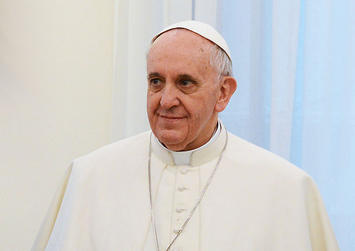
800px-Pope_Francis_in_March_2013_b.jpg
Some future historian, searching for the origins of a second Middle Ages, might fix on the summer of 2015 as its starting point. Here occurred the marriage of seemingly irreconcilable world views—that of the Catholic Church and official science—into one new green faith.
As Pope Francis has embraced the direst notions of climate change, one Canadian commentator compared Francis’s bleak take on the environment, technology, and the market system to that of the Unabomber. “Doomsday predictions,” the Pope wrote in his recent encyclical “Laudato Si,” “can no longer be met with irony or disdain.”
With Francis’s pontifical blessing , the greens have now found a spiritual hook that goes beyond the familiar bastions of the academy, bureaucracy, and the media and reaches right into the homes and hearts of more than a billion practicing Catholics. No potential coalition of interests threatened by a seeming tsunami of regulation—from suburban homeowners and energy firms to Main Street businesses—can hope to easily resist this alliance of the unlikely.
Historical U-Turn?
There are of course historical parallels to this kind of game-changing alliance. In the late Roman Empire and then throughout the first Middle Ages, church ideology melded with aristocratic and kingly power to assure the rise of a feudal system. Issuing indulgences for the well-heeled, the Church fought against the culture of hedonism and unrestrained individualism that Francis has so roundly denounced. The Church also concerned itself with the poor, but seemed not willing to challenge the very economic and social order that often served to keep them that way.
Historically Medievalism represented a “steady state” approach to human development, seeking stability over change. Coming after the achievements of the classical age—with its magnificent engineering feats as well as an often cruel, highly competitive culture—the Middle Ages ushered in centuries of slow growth, with cities in decline and poverty universal for all but a few.
To be sure, the Church played an important, if difficult role, in preserving classical culture and, in the Renaissance, often nurtured a resurgence in some classical values of human self-improvement, science and inquiry, and individual enterprise. But ultimately, as Max Weber noted, it could not compete with a Protestantism that fit more easily with the emerging capitalist spirit. Protestant countries—the Netherlands, northern German, Britain, and America—took the lead in the development of the modern world. 
Capitalism, particularly during the early industrial revolution, often abused human dignity and engendered huge poverty. This still happens today, as the Pope suggests, but this system has also been responsible for lifting hundreds of millions of people—most recently in China and East Asia—out of poverty. Without the resources derived from capitalist enterprise, there would have been insufficient funds to drive the great improvements in sanitation, housing, and education that have created huge pockets of relative affluence across the planet.
The Coalition for Anti-Growth
What makes the Pope’s position so important—after all, the world is rejecting his views on such things as gay marriage and abortion—is how it jibes with the world view of some of  the secular world’s best-funded, influential, and powerful forces. In contrast to both Socialist and capitalist thought, both the Pope and the greens are suspicious about economic growth itself, and seem to regard material progress as aggression against the health of the planet.
The origins of this world view back to the ’40s. An influential group of scientists, planners, and top executives voiced concern about the impact of an exploding population on food stocks, raw materials, and the global political order. In 1948, environmental theorist William Vogt argued that population was outstripping resources and would lead to the mass starvation predicted in the early 19th century by Thomas Malthus.
The legacy of Malthus, himself a Protestant clergymen, dominates environmental thinking. As historian Edward Barbier notes, Malthusianism presumes that a culture or society lacks all “access to new sources of land and resources or is unable to innovate,” thus is “vulnerable to collapse.” In his seminal 1968 book,The Population Bomb, Paul Ehrlich predicted imminent mass starvation in much of the world and espoused draconian steps to limit fertility, which he saw being imposed by a “relatively small group” of enlightened individuals. He even raised the possibility of placing “sterilants” in the water supply and advocated tax policies that discouraged child-bearing.
Ehrlich’s dire predictions proved widely off the mark—food production soared, and starvation declined—but this appears not to have dissuaded the Church from embracing Ehrlich’s contemporary acolytes. This is not to say that environmentalism has not achieved much in terms of cleaning the air and water, restoring wildlife and expanding open space. Yet these triumphs are not seen as sources of inspiration by a movement that seems to live off pointing to a doomsday clock. 
Given their lack of faith in markets or people, the green movement has become ever less adept at adjusting to the demographic, economic, and technological changes that have occurred since the ’70s. Huge increases in agricultural productivity and the recent explosion in fossil fuel energy resources have been largely ignored or downplayed; the writ remains that humanity has entered an irreversible “era of ecological scarcity” that requires strong steps to promote “sustainability.”
The green movement’s views on population represent the most difficult contradiction in the new alliance. Many environmental organizations and pundits favor strong steps to discourage people from having children. The Church and Francis are now allied to the likes of Peter Kareiva, chief scientist for the U.S.-based Nature Conservancy, who has concluded that not having children is the most effective way for an individual in the developed world to reduce emissions, although he adds that he himself is a father. In the United Kingdom, Jonathan Porritt, an environmental advisor to Prince Charles, has claimed that having even two children is “irresponsible,” and has advocated for the island nation to reduce its population by half in order, in large part, to reduce emissions.

Thursday, December 3, 2015

Why the Paris climate deal is meaningless

Why the Paris climate deal is meaningless

The more seriously you take the need to reduce greenhouse-gas emissions, the angrier you should be.


The lack of progress becomes even more apparent at the country level.

Negotiators from around the world gather in Paris this week to finalize an international climate change agreement, capping a years-long process on which hopes have been riding for global action to limit greenhouse-gas emissions. When those demanding U.S. action speak of the need to show “leadership” and foster international progress, they speak of building momentum toward Paris.

“This year, in Paris, has to be the year that the world finally reaches an agreement to protect the one planet that we’ve got while we still can,” said U.S. President Barack Obama on his recent trip to Alaska. Miguel Cañete, the EU’s chief negotiator, has warned there is “no Plan B — nothing to follow. This is not just ongoing UN discussions. Paris is final.”


But the more seriously you take the need to reduce greenhouse-gas emissions, the angrier you should be about the plan for Paris. With so much political capital and so many legacies staked to achieving an “agreement” — any agreement — negotiators have opted to pursue one worth less than…well, certainly less than the cost of a two-week summit in a glamorous European capital.

* * *

Climate talks are complex and opaque, operating with their own language and process, so it’s important to cut through the terminology and look at what is actually under discussion. Conventional wisdom holds that negotiators are hashing out a fair allocation of the deep emissions cuts all countries would need to make to limit warming. That image bears little resemblance to reality.

In fact, emissions reductions are barely on the table at all. Instead, the talks are rigged to ensure an agreement is reached regardless of how little action countries plan to take. The developing world, projected to account for four-fifths of all carbon-dioxide emissions this century, will earn applause for what amounts to a promise to stay on their pre-existing trajectory of emissions-intensive growth.

Here’s how the game works: The negotiating framework established at a 2014conference in Lima, Peru, requires each country to submit a plan to reduce greenhouse-gas emissions, called an “Intended Nationally Determined Contribution” (INDC). Each submission is at the discretion of the individual country; there is no objective standard it must meet or emissions reduction it must achieve.

Beyond that, it’s nearly impossible even to evaluate or compare them. Developing countries actually blocked a requirement that the plans use a common format and metrics, so an INDC need not even mention emissions levels. Or a country can propose to reduce emissions off a self-defined “business-as-usual” trajectory, essentially deciding how much it wants to emit and then declaring it an “improvement” from the alternative. To prevent such submissions from being challenged, a group of developing countries led by China and India has rejected“any obligatory review mechanism for increasing individual efforts of developing countries.” And lest pressure nevertheless build on the intransigent, no developing country except Mexico submitted an INDC by the initial deadline of March 31 — and most either submitted no plan or submitted one only as the final September 30 cut-off approached.

After all this, the final submissions are not enforceable, and carry no consequences beyond “shame” for noncompliance — a fact bizarrely taken for granted by all involved.

* * *

Perhaps not surprisingly, the submitted plans are even less impressive than the process that produced them. In aggregate, the promised emissions reductions will barely affect anticipated warming. A variety of inaccurate, apples-to-orangescomparisons have strained to show significant progress. But MIT’s Joint Program on the Science and Policy of Global Change calculates the improvement by century’s end to be only 0.2 degrees Celsius. Comparing projected emissions to the baseline established by the UN’s Intergovernmental Panel on Climate Change back in 2000 shows no improvement at all.

The lack of progress becomes even more apparent at the country level. China, for its part, offered to reach peak carbon-dioxide emissions “around 2030” while reducing emissions per unit of GDP by 60-65 percent by that time from its 2005 level. But the U.S. government’s Lawrence Berkeley National Laboratory had already predicted China’s emissions would peak around 2030 even without the climate plan. And a Bloomberg analysis found that China’s 60-65 percent target isless ambitious than the level it would reach by continuing with business as usual. All this came before the country admitted it was burning 17 percent more coalthan previously estimated—an entire Germany worth of extra emissions each year.

India, meanwhile, managed to lower the bar even further, submitting a report with no promise of emissions ever peaking or declining and only a 33-35 percent reduction in emissions per unit of GDP over the 2005-2030 period. Given India’s recent rate of improving energy efficiency, this actually implies a slower rate of improvement over the next 15 years. In its INDC, India nevertheless estimates it will need $2.5 trillion in support to implement its unserious plan.

* * *

And therein lies the sticking point on which negotiations actually center: “climate finance.” Climate finance is the term for wealth transferred from developed to developing nations based on a vague and shifting set of rationales including repayment of the “ecological debt” created by past emissions, “reparations” for natural disasters, and funding of renewable energy initiatives.

The issue will dominate the Paris talks. The INDCs covering actual emissions reductions are subjective, discretionary, and thus essentially unnegotiable. Not so the cash. Developing countries are expecting more than $100 billion in annual funds from this agreement or they will walk away. (For scale, that’s roughly equivalent to the entire OECD budget for foreign development assistance.)

Somehow, the international process for addressing climate change has become one where addressing climate change is optional and apparently beside the point. Rich countries are bidding against themselves to purchase the developing world’s signature on an agreement so they can declare victory — even though the agreement itself will be the only progress achieved.

An echo chamber of activist groups and media outlets stands ready to rubber-stamp the final agreement as “historic,” validating the vast reservoirs of political capital spent on the exercise. Already, the Chinese and Indian non-plans have been lauded as proof that the developing world is acting and the United States stands as the true obstacle. India won the remarkably inapt New York Times headline: “India Announces Plan to Lower Rate of Greenhouse Gas Emissions.” A formal agreement, notwithstanding its actual contents, will only amplify the demands that we do more ourselves—and, of course, that we contribute hundreds of billions of dollars along the way.

From a political perspective, perhaps this outcome represents “victory” for environmental activists launching their next fundraising campaign or for a president building his “legacy.” But it comes at the environment’s expense. A system of voluntary, unenforceable pledges relies on peer pressure for ambitious commitments and the “naming and shaming” of countries that drag their feet. In this context, true U.S. leadership and environmental activism require the condemnation of countries manipulating the process. Instead, the desperation to sign a piece of paper in Paris has taken precedence over an honest accounting. And once the paper is signed, any leverage or standing to demand actual change in the developing world will be weakened further.

Congressional Republicans, signaling they will not appropriate the taxpayer funds that a climate-finance deal might require, stand accused of trying to “derail” the talks. But opposing such a transfer of wealth to developing countries would seem a rather uncontroversial position. One can imagine how the polling might look on: “Should the United States fight climate change by giving billions of dollars per year to countries that make no binding commitments to reduce their greenhouse gas emissions?” Certainly, President Obama has made no effort to even inform his constituents that such an arrangement is central to his climate agenda, let alone argue forcefully in favor of it.

The climate negotiators have no clothes. If making that observation and refusing to go along causes some embarrassment, those parading around naked have only themselves to blame.

Oren Cass is a Manhattan Institute senior fellow.

Wednesday, December 2, 2015

Ding, Dong – The Godfather Of Global Warming Is Dead!


Ding, Dong – The Godfather Of Global Warming Is Dead!

3887
56

Paris, COP21 Climate Summit – One of the most dangerous men of the Twentieth Century has just died: and the weird thing is, hardly anyone noticed.

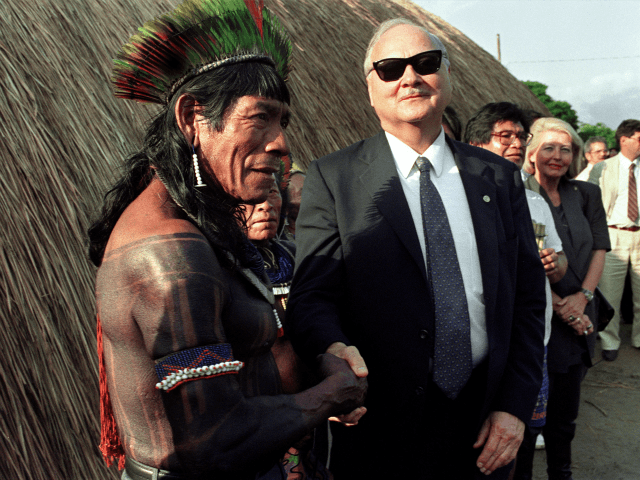
His name was Maurice Strong (picture above, on the right), Canadian billionaire, diplomat and UN apparatchik, and though you may not have heard of him, he probably did more to make your world a more expensive, inconvenient, overregulated, hectored, bullied, lied-to, sclerotic, undemocratic place than anyone post Hitler, Stalin and (his personal friend) Mao.
He’s the reason, for example, that most of the world’s leaders, 40,000 delegates and their attendant carbon mega-footprint descended here on Paris yesterday in order to talk about magical fairy dust for two weeks and then charge you $1.5 trillion (that’s per year, by the way) for the privilege.
He’s the reason that “climate change” is now so heavily embedded within our system of global governance that it is now almost literally impossible for any politician or anyone else whose career depends on the state to admit that’s it not a problem and to argue that there are more important issues in the world, like maybe the terrorism that killed over 130 innocent people just the other week now, where was it?- oh yeah, here in Paris where for some bizarre reason all the delegates are talking about carbon emissions instead…
He was the father of the mother of all climate summits: the one in Rio in 1992 that spawned a million and one bastard offspring, like the one in Paris now.
He was the main instigator of the blueprint for arguably the most sinister and insidious assault on liberty and free markets: Agenda 21.
If you had met him – if you’d even noticed him – you would have probably quite liked him:
One of the most remarkable things about Strong was how unremarkable he was in person. Somebody once said that you wouldn’t pick him out of a crowd of two.
Nevertheless, he was an avuncular and likeable figure, even to those who disagreed strongly with his world view, as I did. I interviewed him numerous times over a 20-year period, and found that he took scarcely-concealed delight in explaining his often Machiavellian political manoeuvrings.
But as I argue in Watermelons – which gave a lot of space to Strong – it’s a big mistake to expect that supervillains will always have scars down the side of their face and fluffy white cat on their lap.
Strong’s true evil lay in the effects of his acts, not in his (claimed) good intentions.
Then again, the mask did occasionally slip.
In his 2000 autobiography Where Are We Going? he projected that by 2031 two thirds of the world’s population might have been wiped out. This, he chillingly described as:
“A glimmer of hope for the future of our species and its potential for regeneration.”
See: it’s perfectly OK to fantasize about the deaths of maybe 5 billion people – as long as you show at the end that you really care: you’re thinking about the future of humanity.
Strong sincerely believed all this Malthusian stuff and that was the problem. It became ourproblem because unfortunately – see that charm, above – he was such a skilled operator, with an endless appetite for labyrinthine bureaucracy and the will to embed it in the system.
The United Nations, which he joined early in 1947 as a lowly assistant pass officer in the Identification Unit of the Security Section in New York, was his perfect playground.
It was where, he quickly realized, he could achieve his dream of a world of global governance by a self-appointed elite. And the best way to go about this, he understood, was by manipulating and exploiting international concern about the environment.
Strong was never shy of admitting what he was about:
“Our concept of ballot box democracy may need to be modified to produce strong governments capable of making difficult decisions, particularly in terms of safeguarding the global environment.”
Or, as he put it when he’d wormed his way through the system to the position of Secretary-General of the United Nations Conference on Environment and Development in 1991:
Current lifestyle and consumption patterns of the affluent middle class – involving high meat intake, use of fossil fuels, appliances, home and workplace air-conditioning and surburban housing – are not sustainable. A shift is necessary which will require a vast strengthening of the multilateral system, including the United Nations.
This was the purpose of the Rio Earth Summit – and on the non-binding but secretly deadly agreement Strong managed to gull 179 sovereign nations into signing: Agenda 21.
If you don’t know about Agenda 21, you should. This final quote from Strong will give you an idea how illiberal and undemocratic it is – a blueprint for one-world government by an unelected bureaucracy of technocrats, enabled by diehard progressive activists.
The concept of national sovereignty has been an immutable, indeed sacred, principle of international relations. It is a principle which will yield only slowly and reluctantly to the new imperatives of global environmental co-operation. It is simply not feasible for sovereignty to be exercised unilaterally by individual nation states, however powerful. The global community must be assured of global environmental security.
Now perhaps you understand why the people in the world most saddened by Maurice Strong’s death are currently all at Le Bourget on the outskirts of Paris at COP21, plotting the new world order.
“We thank Maurice Strong for his visionary impetus to our understanding of sustainability. We will miss you,” said Christina Figueres, the head of the UNFCC, which is in charge of the Paris conference.
The rest of us, once familiar with what Maurice Strong did, may not feel quite so teary-eyed.
De mortuis nil nisi bonum, they say. But I think we can make an exception for this particular totalitarian control freak.

Editor's Note: I am not a believer in Agenda 21 "conspiracy theories" but the fact remains that Agenda 21 is a UN Policy.  The Global Summit in Paris this week was a part of the UN effort to address climate change.   Despite, all of the noble intentions of many,  I also believe there is  deliberate political manipulation going on by people like Maurice Strong whose political ideology trumps environmentalism. 

Wednesday, June 3, 2015

And That’s the Way It Was: In 1972, Cronkite Warned of ‘New Ice Age’

And That’s the Way It Was: In 1972, Cronkite Warned of ‘New Ice Age’


The “brutal” winter is on the attack again, bringing sleet and heavy snow to the mid-Atlantic region. Previous storms targeted the deep south including Dallas, Texas, and several hammered New England. By March 4, Boston was just 2 inches away from hitting an all-time record for snow, Boston.com reported.
It’s a reality more in keeping with media warnings from the 1970s than today’s arguments about global warming. Then, CBS anchor Walter Cronkite, the dean of American journalism, was warning about an "ice age." Cronkite cited scientific claims that the Earth was cooling and "the full extent of the new ice age won't be reached for 10,000 years." That's completely different from the media's line today that global warming is settled science.
NBC Nightly News reported February 23 that Dallas was paralyzed “after an entire season’s worth of sleet and freezing rain, up to two inches, fell in a single day,” causing massive traffic problems. Similar scenes happened in other southern states as the cold swept across the nation. Single-digit temperatures hit New York City and Newark saw temperatures as low as 8 degrees on February 23, NOAA said.
Massive pileups mangled cars, Louisianans built snowmen and thousands flocked to Letchworth State Park, near Rochester, N.Y. to see a 53-foot tall ice fountain that keeps growing as record lows abound in the Northeast, CBS reported on February 25. CBS also noted Rochester experienced its coldest month since 1871.
Some winters are “bone-chilling,” like this one has been, others are mild, and some like the 1972-1973 winter started early and harsh, but grew surprisingly mild. That was the same year Walter Cronkite was “the most trusted man in America” in 1972, according to polls. A 2009 CBS obituary for the journalist said, “Cronkite was the biggest name in television news, the king of the anchormen; in fact, he was the reporter for whom the term ‘anchorman’ was coined."
On September 11, 1972, Cronkite cited scientists’ predictions that there was a “new ice age” coming. He called that prediction from British scientist Hubert Lamb “a bit of bad news.”
“But then there is some good news,” Cronkite continued. “That while the weather may be just a little colder in the immediate years to come, the full extent of the new ice age won’t be reached for 10,000 years. And if you can stand any more good news, even then it won’t be as bad as the last ice age 60,000 years ago. Then New York, Cincinnati, St. Louis, were under 5,000 feet of ice. Presumably no traffic moved and school was let out for the day. And that’s the way it is, Monday, September 11, 1972.”
Lamb, the scientist Cronkite cited, was no fringe scientist. He founded the Climatic Research Unit at the University of East Anglia in Great Britain. When he died, the CRU director called him “the greatest climatologist of his time,” according to the Global Warming Policy Foundation. He was also credited with establishing “climate change as a serious research subject.”  
Unlike scientists often quoted by the media today, GWPF said that Lamb viewed the Earth’s climate as changing constantly and naturally. Unlike its founder, CRU now has a major role in spreading global warming alarmism. CBS said in 2009, CRU “wields outsize influence” in warming circles. The Climategate scandal centered around leaked documents and emails from that organization.
The late Cronkite is considered a “legendary journalist” and a pioneer in the field, which is why Marc Morano, publisher of Climate Depot, said this footage was so important. Morano is a former staff member of U.S. Senate Environment & Public Works Committee and producer of the upcoming global warming documentary Climate Hustle, set for release later in 2015.
"Global warming activists have claimed for years that the 1970s global cooling scare never existed. They have tried to erase the inconvenient history which ironically blamed extreme weather like tornadoes, droughts, record cold and blizzards on global cooling,” said Morano.
Morano told MRC Business, “But now -- unearthed from bowels of media archives -- comes none other than Walter Cronkite reporting on fears of a coming ice age in 1972. Having Cronkite's image and face discussing global cooling fears reveals the fickleness of the climate change claims.”
“Climate fear promoters switched effortlessly from global cooling fears in the 1970s to global warming fears in the 1980s. In the present day, the phrase 'global warming' has lost favor in favor of 'climate change' or 'global climate disruption' or even 'global weirding,’ Morano added. “'Settled science' has never seemed so unsettled.”
- See more at: http://newsbusters.org/blogs/julia-seymour/2015/03/05/and-thats-way-it-was-1972-cronkite-warned-new-ice-age#sthash.bqTrNJr1.dpuf