Showing posts with label Marinwood Park. Show all posts

Saturday, March 14, 2020

Marinwood CSD Manager Dreikosen, "No Plan to Fix Fountains"


Residents have asked for timely maintenance of drinking fountains at our parks. Bill McNicholas, longtime Marinwood resident has made requests of both Luke Fretwell Parks Manager(and previously Shane DeMarta) and Eric Dreikosen, CSD General Manager for years. According to them, the drains cannot be fixed because the public clogs them with debris. Occasionally the staff will clear them but the problem always returns. "The REAL problem" according to CSD staff, " is that the public complains about fountains" Fretwell, Dreikosen and three maintenance staff earn combined income of at least $500k. They service a tiny park and 4 fountains. The taxpayers are the problem? This display of arrogance and indifference to the fundamental responsibility to maintain the park should be noted. A simple fountain design used by Muir Woods National Park will completely solve the problem. The staff have been given design info and a community member even has agreed to build it for the district. Dreikosen appears bored and angry with the public.


Thursday, December 19, 2019

Miller Creek after a Rainstorm


Miller Creek, one of Marin County's pristine watersheds is under threat of a 4400 square foot development in Marinwood Park. The proposed Maintenance Facility is excessive for the tiny park.  It is three times the size of the maintenance facility McInnis Park despite the fact that McInnis is employs double the staff and is 450 acres.  Marinwood Park is a mere 14 acres of which only about 7 acres is improved property and the excess. The rest is open space.  The Maintenance facility is gobbling up the open space and prime recreation area to fullfill the ambitions of the architect and former CSD board member Bill Hansell.  Despite the violation of the 2007 Marin County general plan that prohibits development within 100' of the stream bank, the Marinwood CSD is seeking approval of its design.  Neighbors are upset and the Marinwood CSD has kept its plans and budget secret.  They have violated numerous government contracting rules, political practices, transparency laws, in addition to numerous environmental laws.  This is quite unfortunate because there is unanimous agreement to approve a smaller structure outside the prohibited zone.  A 1200 sf structure identical to McInnis Park Maintenance Facility will be easily approved by a grateful public.

Thursday, November 14, 2019

Marinwood Maintenance Truck destruction of the Nature Trail in Marinwood Park

The Ford F250 and the dump trailer are a combined length of 44 feet.  The Marinwood landscaping crew has no choice but  to turn around 180 degrees in the Marinwood Park Nature meadow 450 feet east of this facility There is no other choice.  The proposed Marinwood facility will be too constrained to turn around any other way.  The only other option is to back up onto Miller Creek avenue. This will require expert skill and attention avoiding walkers, children, dogs and equipment.

The project must be halted IMMEDIATELY until the Marinwood CSD comes up with a solution for material handling and vehicle movement that does not destroy our park. Photos 11/14/2019

Huge piles of landscaping debris/ trash are stored in the open as a part of normal weekly operations
Tire tread is clearly visible in the field


The large 60 foot turnaround is directly behind 515 Quietwood Dr.


The truck is ready to exit the facility after turning around in meadow

The truck will exit the facility several times a day even during rain and muddy conditions. The meadow will be destroyed with deep tire tracks and ruts. Pictured above is a conditions from last winter.

Saturday, October 26, 2019

Walking as Creative Fuel


Walking as Creative Fuel

A splendid 1913 celebration of how solitary walks enliven “the country of the mind.”
Brain Pickings|
Maria Popova


Kenneth Grahame.

“Every walk is a sort of crusade,” Thoreau wrote in his manifesto for the spirit of sauntering. And who hasn’t walked — in the silence of a winter forest, amid the orchestra of birds and insects in a summer field, across the urban jungle of a bustling city — to conquer some territory of their interior world? Artist Maira Kalman sees walking as indispensable inspiration: “I walk everywhere in the city. Any city. You see everything you need to see for a lifetime. Every emotion. Every condition. Every fashion. Every glory.” For Rebecca Solnit, walking “wanders so readily into religion, philosophy, landscape, urban policy, anatomy, allegory, and heartbreak.”


Perched midway in time between Thoreau and Solnit is a timeless celebration of the psychological, creative, and spiritual rewards of walking by the Scottish writer Kenneth Grahame (March 8, 1859–July 6, 1932), best known for the 1908 children’s novel The Wind in the Willows — a book beloved by pioneering conservationist and marine biologist Rachel Carson, whose own splendid prose about nature shares a kindred sensibility with Grahame’s.

Five years after publishing The Wind in the Willows, Grahame penned a beautiful short essay for a commemorative issue of his old boarding school magazine. Titled “The Fellow that Goes Alone” and only ever published in Peter Green’s 1959 biography Kenneth Grahame (public library), it serenades “the country of the mind” we visit whenever we take long solitary walks in nature.

With an eye to “all those who of set purpose choose to walk alone, who know the special grace attaching to it,” Grahame writes:


Nature’s particular gift to the walker, through the semi-mechanical act of walking — a gift no other form of exercise seems to transmit in the same high degree — is to set the mind jogging, to make it garrulous, exalted, a little mad maybe — certainly creative and suprasensitive, until at last it really seems to be outside of you and as if it were talking to you whilst you are talking back to it. Then everything gradually seems to join in, sun and the wind, the white road and the dusty hedges, the spirit of the season, whichever that may be, the friendly old earth that is pushing life firth of every sort under your feet or spell-bound in a death-like winter trance, till you walk in the midst of a blessed company, immersed in a dream-talk far transcending any possible human conversation. Time enough, later, for that…; here and now, the mind has shaken off its harness, is snorting and kicking up heels like a colt in a meadow.

In a sentiment which, today, radiates a gentle admonition against the self-defeating impulse to evacuate the moment in order to capture it — in a status update, in an Instagram photo — Grahame observes:


Not a fiftieth part of all your happy imaginings will you ever, later, recapture, note down, reduce to dull inadequate words; but meantime the mind has stretched itself and had its holiday.


Art from What Color Is the Wind? by Anne Herbauts.

Nearly a century before Wendell Berry’s poetic insistence that in true solitude “one’s inner voices become audible” and modern psychology’s finding that a capacity for “fertile solitude” is the seat of the imagination, Grahame writes:


This emancipation is only attained in solitude, the solitude which the unseen companions demand before they will come out and talk to you; for, be he who may, if there is another fellow present, your mind has to trot between shafts.


A certain amount of “shafts,” indeed, is helpful, as setting the mind more free; and so the high road, while it should always give way to the field path when choice offers, still has this particular virtue, that it takes charge of you — your body, that is to say. Its hedges hold you in friendly steering-reins, its milestones and finger-posts are always on hand, with information succinct and free from frills; and it always gets somewhere, sooner or later. So you are nursed along your way, and the mind may soar in cloudland and never need to be pulled earthwards by any string. But this is as much company as you ought to require, the comradeship of the road you walk on, the road which will look after you and attend to such facts as must not be overlooked. Of course the best sort of walk is the one on which it doesn’t matter twopence whether you get anywhere at all at any time or not; and the second best is the one on which the hard facts of routes, times, or trains give you nothing to worry about.

In consonance with artist Agnes Martin’s quiet conviction that “the best things in life happen to you when you’re alone,” Grahame writes:


As for adventures, if they are the game you hunt, everyone’s experience will remind him that the best adventures of his life were pursued and achieved, or came suddenly to him unsought, when he was alone. For company too often means compromise, discretion, the choice of the sweetly reasonable. It is difficult to be mad in company; yet but a touch of lunacy in action will open magic doors to rare and unforgettable experiences.


But all these are only the by-products, the casual gains, of walking alone. The high converse, the high adventures, will be in the country of the mind.

Complement with poet May Sarton’s sublime ode to solitude, Robert Walser on the art of walking, and Thoreau on the singular glory of winter walks, then revisit Rebecca Solnit’s indispensable cultural history of that art.


This article was originally published on January 10, 2018, by Brain Pickings, and is republished here with permission.


Please consider supporting Brain Pickings—a one-woman labor of love—with a donation:donating = loving

Monday, September 2, 2019

New exhibit in Marinwood Park: Marinwood Kids in the 1970s


A new exhibit of Kids of Marinwood  and Terra Linda has been installed.  The exhibit will be in three parts and displayed through September and October.

Friday, August 16, 2019

Marinwood Parks and Recreation department discussion about interpretive signs


Long time Marinwood Parks and Recreation commission members seem confused about interpretive signs in Marinwood Park. They are unaware of the history of the joint project and appear to be suspicious of the content.  This essential program was started in 2009 by the Friends of Marinwood Park.  They clearly have not read the signs like so many park users despite serving on the board for years.

Thursday, August 15, 2019

Senior Citizen asks for safety rail for Marinwood Park and is ignored


For at least four years, Linda Barnello has patiently asks for a safety rail at the 500 block of Quietwood Dr and Marinwood Park walk path. She has been ignored the Marinwood CSD despite a generous private donation and Measure A funds.  It is outrageous and disrespectful that the board does not consider safety improvements to Marinwood Park. Instead they fund private consultants and grand projects costing residents hundreds of thousands of dollars.

Marinwood CSD tripping hazard fixed only AFTER an accident


Linda Barnello has been asking the Marinwood CSD to repair tripping hazards along Marinwood CSD walk paths.  Marinwood CSD responds only AFTER an accident occurs.  Jon Campo, Parks Director rudely quiets Barnello who  only asks for proactive maintenance .  The Marinwood CSD managers, Fretwell and Dreikosen blamed the problem on their contractor instead of reviewing maintenance practices

Wednesday, August 14, 2019

"Why not remove the Water Fountains in Marinwood Park?"


We pay our Marinwood CSD managers and three maintenance staff over $500k annually and they cannot keep ahead of an occasional clogged water fountain?  

The staff blame THE PUBLIC for complaining instead of getting the job done.

It is time to consider outsourcing our parks maintenance needs with professionals. 

Friday, August 2, 2019

WHITE ELEPHANT Maintenance Shed Plans are now online


See bigger size image HERE


Stop the White Elephant.  Sign the Petition HERE


The project is HUGE for our tiny park  
It is twice the size of neighboring homes and THREE TIMES the size of a similar facility at McInnis Park completed in 2018. McInnis Park is 26 times the size of Marinwood Park and employs triple the staff.

The Project VIOLATES the Miller Creek Watershed
The project violates the Miller Creek Stream conservation setback of 120' feet as required by Marin County.  The unusual side entrance requires a 15' corridor in the center of the building wasting 1/3 of the space.   It will require trucks to turn around in the meadow several hundred feet to the East.  Open space and recreation area will be needlessly destroyed by this inefficient design.  

The Project is Ridiculously EXPENSIVE
The initial estimate for this project was for $ 50K for a customized prefab unit as is the standard for maintenance facilities everywhere.  Once the Marinwood CSD hired former CSD Director, Bill Hansell as architect, the project ballooned in size and scope.  Already the CSD has spent an estimated $35 k in "consulting fees" for Mr. Hansell, the custom project is estimated to cost at least ten times initial estimate due to the custom architectural features insisted by Mr Hansell. The project will cost MORE than ANY PROJECT that the Marinwood CSD has undertaken since completing the park.   
It will be the MOST EXPENSIVE MAINTENANCE SHED IN MARIN COUNTY!

And as of February 2019 according to the financal audit, the Marinwood CSD is FIVE MILLION DOLLARS in debt.

This is the most outrageous and expensive project in Marinwood CSD History.

Fortunately, we can still have a new Maintenance facility for far less if we scale back the project to a simple garage/workshop like McInnis Park. 

Let's spend our money improving Marinwood Park for seniors and children, refurbishing the trails  refinishing the pool, improving programs and paying our staff instead.

Sometimes ambition makes us blind to the reality we face.


Monday, June 24, 2019

Two hours a week is key dose of nature for health and wellbeing


Two hours a week is key dose of nature for health and wellbeing


Kayaking through a mangrove forest.
Credit: Copyright Michele Hogan

Spending at least two hours a week in nature may be a crucial threshold for promoting health and wellbeing, according to a new large-scale study.

Research led by the University of Exeter, published in Scientific Reports and funded by NIHR, found that people who spend at least 120 minutes in nature a week are significantly more likely to report good health and higher psychological wellbeing than those who don't visit nature at all during an average week. However, no such benefits were found for people who visited natural settings such as town parks, woodlands, country parks and beaches for less than 120 minutes a week.

The study used data from nearly 20,000 people in England and found that it didn't matter whether the 120 minutes was achieved in a single visit or over several shorter visits. It also found the 120 minute threshold applied to both men and women, to older and younger adults, across different occupational and ethnic groups, among those living in both rich and poor areas, and even among people with long term illnesses or disabilities.

Dr Mat White, of the University of Exeter Medical School, who led the study, said: "It's well known that getting outdoors in nature can be good for people's health and wellbeing but until now we've not been able to say how much is enough. The majority of nature visits in this research took place within just two miles of home so even visiting local urban greenspaces seems to be a good thing. Two hours a week is hopefully a realistic target for many people, especially given that it can be spread over an entire week to get the benefit."

There is growing evidence that merely living in a greener neighbourhood can be good for health, for instance by reducing air pollution. The data for the current research came from Natural England's Monitor of Engagement with the Natural Environment Survey, the world's largest study collecting data on people's weekly contact with the natural world.

Co-author of the research, Professor Terry Hartig of Uppsala University in Sweden said: "There are many reasons why spending time in nature may be good for health and wellbeing, including getting perspective on life circumstances, reducing stress, and enjoying quality time with friends and family. The current findings offer valuable support to health practitioners in making recommendations about spending time in nature to promote basic health and wellbeing, similar to guidelines for weekly physical."


Story Source:

Materials provided by University of Exeter. Note: Content may be edited for style and length.


Journal Reference:
Mathew P. White, Ian Alcock, James Grellier, Benedict W. Wheeler, Terry Hartig, Sara

Saturday, April 13, 2019

Why the proposed Marinwood Maintenance Compound will be a Mess.

The proposed Marinwood Maintenance Compound won't have a grassy area in front.
This area must be used for loading/unloading of landscape materials.


The Marinwood CSD maintenance crew generates big piles of landscaping debris and trash each week. They store this in the large open area next to the horse shoe pits in Marinwood Park to allow the convenient loading/dumping of material.  


Large piles of landscaping waste and trash is stored in the open at the Maintenance shed


A bucket loading operation requires much space as you can see in this video.   Generally, the dump trailer is loaded from the side into the center of the trailer. The operator must do this to balance the load for safety.  This means the bucket loader requires a large area for scooping material and turning.

The truck and trailer must be parked perpendicular to the bucket loader.  


In the site plan of the proposed Maintenance Facility below, you can see that the only area where this operation can take place is IN FRONT of the Maintenance Facility.  The architect has drawn a walking path in this area to deceive the planning department.  There is NO ROOM inside the walled maintenance compound to perform a mechanized loading operation.

Our Ford F250 is 22 feet long.and the dump trailer is approximately 20 feet long including tongue.

This means that 42 feet of space will be required for the truck/trailer and an additional 40'  to 60'  to the side will be required for the bucket loader and material.  This will occupy all the area between the maintenance building and Miller Creek.


Proposed Maintenance Facility with old facility overlay in brown


This drawing shows the footprint of the proposed Maintenance Bldg and the old building footprint in brown. The brown box on the left is the area the architect calls open storage. In fact the entire area from the current building to the horse shoe pit is used for landscaping debris, parking and tool storage.  Clearly there is no area suitable for loading and unloading material within the proposed Maintenance Building above. The architect shows this area as green space and a walking path but it will not happen. It will be used for parking and storage of debris and landscaping materials. The is no alternative.

What happened to the access road that the architect showed in previous drawings?  It has disappeared.  This is highly deceptive.  The architect must show where essential activities will take place on the building site. Safety vehicles and pedestrians must pass through this area.

The drawings do not show the true impact to the stream conservation area and Marinwood Park.

The proposed Marinwood CSD Maintenance Facility is simply too big and inefficient,  harms the environment and occupies land that should be used for recreational purposes as intended.


Saturday, April 6, 2019

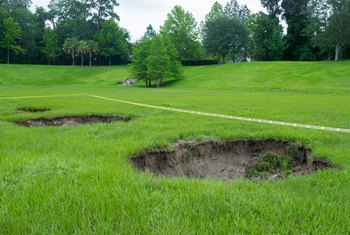
Marinwood Park Sinkhole grows and still no repair

If you are a regular walker in Marinwood Park, you noticed a sinkhole on the nature trail in late February after rainstorms.  It was much smaller then.  The CSD responded by putting up caution tape and hiring a geologist for advice.  $1700 later, he told Eric Driekosen, Marinwood CSD manager and Luke Fretwell, CSD that it was a sinkhole and how to fix it.  

That was over a month ago and still no repairs.


The sinkhole was probably due to buried trash, a decaying tree stump or a storm drain.  I saw old bottles in the hole and believe it was buried trash.  It is not the same type of sinkhole found in Florida from decaying limestone.  This sinkhole is of limited size and easily repaired with concrete and fill dirt.

Why doesn't the Marinwood CSD fix this?  Do they not know that kids ride and walk this way to school?   A child could be seriously injured playing in the hole.   Do they not care about the public safety?

The Marinwood CSD management team has NO EXPERIENCE managing landscaping crews nor do they have a sense of urgency for public safety.  This is why they ignore safety handrails for the western Quietwood walkpath entrance despite many requests over a four year period.

Instead, Eric Dreikosen, CSD Manager, is wasting his time with attempting to build the largest, most expensive maintenance facility in Marin County history, designed by former Marinwood CSD director, Bill Hansell.  The project aka "White Elephant"  will require 1 1/2 acres for the building grounds and access roads.  It is THREE TIMES the size of Marin County McInnis Park maintenance building.  It is a massive grift of the Marinwood community and must be stopped before they ruin our park and stick us with the bill.


The Marinwood sinkhole grows and no one is fixing it.

How to Repair Sinkholes in the Backyard

Written by Hana LaRock; Updated November 28, 2018
Sinkholes are the result of collapsing underground bedrock, leaving behind a hole. They occur in nature but also can be a result of humans cutting down trees and leaving rotting stumps behind, or because of buried construction debris. Sinkholes come in all sizes, causing safety hazards in your backyard, as people are likely to trip, twist an ankle or, in the case of larger holes, fall in. Because of these dangers, you should repair sinkholes as soon as you notice them. more HERE

Saturday, October 20, 2018

A Tough Shed can be installed in Marinwood Park in less than a week


A new maintenance shed in Marinwood Park doesn't have to be complex or expensive.  We can keep the current Modular office that has a bathroom, office and break room and install a modular shed like the above and save HUNDREDS OF THOUSANDS.  Virtually EVERY PARKS DEPARTMENT/ SCHOOL DISTRICT in Marin County uses modular units for their landscaping facilities. 

 Above are some of the product offerings available locally from Tuff Shed in Rohnert Park.  They can be installed quickly for hundreds of thousands less than the Marinwood Maintenance Compound.

Why do you think most localities prioritize sound fiscal management and preservation of open space, over a custom architectural design for utilitarian structures? 

Here is a video of a modular garage installation in five hours.


Sunday, October 14, 2018

Why did Marinwood CSD turn down a donation for safety improvement?


Marinwood resident asks for hand railing for the steep access point at the Quietwood walk path at the Western end of the path.  It is slippery during rainy conditions. Many seniors walk this path.  Despite a generous donation, the Marinwood CSD has failed to make improved access a  priority for Marinwood Park.  It is yet another example where reasonable citizen requests are being ignored by the Marinwood CSD staff and Board of Directors.

Tuesday, September 18, 2018

We can build a Small Amphitheater in Marinwood Park

As everyone in Marinwood  knows, Marinwood Park is a popular place for picnics and music.   A small steel amphitheater like the ones below are inexpensive and very functional.  In addition to providing a small outdoor theater, the space can function as a shaded picnic area, drama stage and outdoor classroom.  It will provide an attractive focal point for the community at a very low cost.  Many manufacturers have stock designs, ready to ship starting around $7500.  


Monday, July 30, 2018

Fish Spawn in Miller Creek


Video of what I believe to be steelhead trout spawn in Miller Creek near the Miwok Indian Burial Mound on Miller Creek Middle School..

Filmed July 19, 2017

Monday, July 2, 2018

Marinwood CSD mows Grass Meadow during Nesting Season (AGAIN!)

Marinwood CSD mows the ENTIRE nature path in June 2018 despite previous violations of the Migratory Species Bird Act.  Just like Hamilton field below, nesting birds habitat was destroyed.  When will Marinwood CSD abide by commonsense environmental regulations?  A few years ago, a bucket loader plowed a path through nesting habitat and the Marinwood CSD was advised of the Migratory Species Bird Act during nesting season.  They must be held to account.  Photo taken on June 30, 2018.

Novato bird nests’ discovery halts mowing at Hamilton

The discovery of migratory bird nests interrupted recent mowing at a former landfill at Hamilton Field in Novato.Robert Tong — Marin Independent Journal


By Mark Prado, Marin Independent Journal


A bird roosts on a fence near the former Hamilton Army Air Field's Landfill 26 Cap. (Robert Tong/Marin Independent Journal)


The discovery of migratory bird nests at Hamilton Field has halted the mowing of tall grasses on a former landfill.

Several species, including burrowing owls, tricolored blackbirds and red-winged blackbirds were found during recent mowing work at Hamilton’s Landfill 26. Once the birds were found, mowing was stopped, according to the U.S. Army Corps of Engineers.

The Army Corps’ Sacramento District manages maintenance of the former airfield’s landfill, which includes the annual mowing aimed at reducing potential fire hazards posed by dry grasses. Mechanical mowing of the landfill cap is usually done after the last rains of spring, typically around May to June each year, according to the Army Corps.

But this year there was a surprise.

“During the mowing we noticed some birds were being flushed from their nests,” said Shellie Sullo, the corps’ project manager at Hamilton, noting a biological survey was done before the work. “But we think the birds made it back to their nests. They apparently like the tall grasses.”

About 10 acres of the roughly 40-acre site still needs to be mowed once the birds move out. The Army Corps contemplated using goats to clear the balance, but the animals would likely eat nests along with the grasses. If the mechanical mowing can’t resume, the weeds could be pulled by hand, Sullo said. The unmowed area is away from Hamilton homes and doesn’t present an immediate fire threat. Neighbors will get fliers about the issue next week.

Nesting birds have been rare at the site, but they likely turned up this year because a culvert carrying water around the perimeter of the site was installed over the winter. That provided a water source for the birds.

Given the new conditions, the Army Corps will reassess its mowing schedule moving forward, Sullo said. The corps is working to adjust time frames of the annual mowing maintenance to accommodate the nesting seasons of the birds. Currently, the corps expects to complete removing the grasses one way or another by August or September, after the end of the nesting season.

“It’s good they stopped mowing,” said Barbara Salzman, president of Marin Audubon, who expressed concern that the birds were not detected earlier. “It’s a good lesson that we should wait on this type of work until after nesting season is over. But I’m glad these birds were saved.”

In April, the California Fish and Wildlife Commission voted to list the tricolored blackbird as a threatened species. The burrowing owl and red-winged blackbird are protected under the Migratory Bird Treaty Act.


See full story in the Marin IJ HERE

Wednesday, June 27, 2018

To push patients to be healthier, some doctors write exercise prescriptions

To push patients to be healthier, some doctors write exercise prescriptions


Studies show that people who spend time outdoors see improvement in mood, energy, stress and general well-being, as well as some aspects of physical health. (Ammentorp Photography / Alamy Stock Photo/Alamy)
By Ranit Mishori March 10

About a decade ago, a colleague told me about a cool new initiative, something called “Exercise Is Medicine.” The idea made total sense to me: Rather than just tell my patients about exercising, I would hand them an actual prescription for exercise, just like the ones I give patients for high blood pressure or diabetes. The thinking behind it was that an official “doctor’s order” for exercise, in the form of a prescription-pad-style piece of paper, would be taken more seriously by patients than a mere suggestion.

I quickly started giving out these prescriptions, going so far as to find some official-looking templates online and printing them out. I wrote out “dosages” based on each patient’s age and medical condition, and relying on evidence-based recommendations.

For example, for a person with diabetes, I might write a prescription that says:


Health and Science Email Alerts

Breaking news on health, science and the environment.

Sign up


●Frequency: At least 3-4 days a week.

●Intensity: Exercise at a moderate level.

●Time: Exercise 30-60 minutes per day (all at once, or break it up into a few sessions of at least 10 minutes each).

●Type: Aerobic or rhythmic exercises using the large muscle groups (walking, cycling, swimming). Weights 2x week.

We physicians often don’t have time during a typical office visit of 15 or 20 minutes to discuss ­lifestyle-related recommendations for improving health. Many of us tell patients, “You need to lose weight” or “stop smoking” or “exercise more” — but in practice we tend to skimp on the details. The exercise-prescription idea was supposed to help eliminate this vagueness by giving patients more-specific information to act on.

Many doctors have now expanded the prescription approach for exercise to a whole range of behaviors and activities associated with a healthy lifestyle. The assumption is that if the prescription pad can get more people exercising, then maybe it could also get patients doing other activities — dance lessons or an art class or a stroll in the park — that have been found to improve physical and mental health. In fact, over the past couple of years, such prescribing efforts have really taken off:

Physicians in Vermont, for example, have been giving out prescriptions for hiking and, in general, spending time in nature. That idea’s getting picked up elsewhere, including South Dakota, Maine, California and New Mexico, and is supported by multiple studies showing that people who spend time outdoors see improvement in mood, energy, stress and general well-being, as well as some aspects of physical health.

●The American Academy of Pediatrics has promoted the ParkRx Initiative, which was started in 2013 by the Institute at the Golden Gate and the National Recreation and Park Association with support from the National Park Service. The initiative is intended to help doctors prescribe “nature during the routine delivery of health care” by, among other things, showing them parks close to where their patients live.

●Prescription programs for healthy eating have popped up in more than a dozen states, championed by hospitals and physicians’ offices, as a means of battling diabetes, obesity and other conditions associated with nutrition. For example, a Chicago program called Food Rx pairs “doctor’s orders” with food coupons and information about community resources.

●In Hawaii, state lawmakers last year considered a bill to classify homelessness as a medical condition — multiple studies have documented the link between homelessness, poorer health and a lower life expectancy — and allow doctors to write a prescription for six months of subsidized housing. (The bill did not pass.)

Such interventions are known as “social prescribing,” in which health-care professionals are asked to identify and recommend interventions outside the exam room or hospital that might help patients adopt healthier lifestyles.

These efforts highlight what are called the social determinants of health and the recognition that social factors — including where you live, what you eat, how active you are, your access to health care, your income level, etc. — can be more important to your health than medical factors such as genetics.

Addressing these social determinants, studies have shown, may, in fact, be more effective in managing chronic conditions and prolonging life than medications and other clinical interventions.

The social prescribing trend focuses not only on food, exercise and housing, but also on “softer” activities such as making art, singing, participation in social gatherings — and their presumptive benefits on well-being and social connectedness. That’s because loneliness is also increasingly being thought of as a social determinant of health that is linked to physical- and mental-health conditions and even early death.

In Britain, social prescribing is sanctioned by the National Health Service and is being embraced by primary-care physicians who send their patients to community-based organizations and activities in response to an increase in lifestyle-associated conditions (including diabetes, obesity, heart disease) and social isolation.

Isolation is rising in Europe. Can loneliness ministers help change that?

Research has shown that such interventions are helpful, some more than others. There is irrefutable data showing that exercise is good for you, regardless of your age, gender, physical abilities or medical conditions. And there is beginning to be ­more-robust evidence for benefits from spending time in nature, dancing, singing, engaging socially and keeping your brain active.

And yet, as I consider the science, I ask myself: Does the act of actually prescribing these activities make a difference in patients’ lives? Are they more likely to act on these recommendations when packaged as an official-looking Rx?

The evidence on that is less clear. The literature on writing prescriptions for exercise shows that it may help more doctors discuss and recommend exercise (which is, of course, a good thing). But evidence that it is improving patients’ health is not really there.

A recent study concluded, “Whether social prescribing can contribute to the health of a nation for social and psychological well-being is still to be determined,” while an article in the journal Public Health noted, “Further research is required to optimize social prescribing benefits.”

The practice of social prescribing faces another kind of challenge, which I see firsthand. As a family physician who works with both affluent and poor patients, I realize that my use of this approach has exposed deep inequities in their access to resources. On the one hand, I get professional satisfaction from recommending hikes in Rock Creek Park, running along the Mall or singing in a chorus (partly because of the evidence and partly because those are activities I do myself). But can I really ask a patient who works two jobs and cares for her children to find 30 minutes a day to squeeze in a walk in a park? Or a patient who lives in an unsafe neighborhood to take a daily jog around the block? Or one who has no car to take two buses to get to an art class on the other side of town?

As for how successful my social prescribing has been, so far it’s too small a sample size to have statistical meaning. But from a purely anecdotal standpoint, I will admit to mixed results so far. Some patients have reported back that they had taken my recommendations to heart and begun to change their lifestyles. Others shoved my prescription in their bag and probably never looked at it again. I’m waiting for a big study or two to show me whether this trend can make a difference.

Many trends begin as great, well-intentioned ideas. Before we start proselytizing, we need to make sure that the resources are there, that the evidence of benefits is there and that we, as physicians, are well trained in how to push a change without causing any harm.

Correction:An earlier version of this story misidentified the organizations that launched the ParkRx Initiative.