Showing posts with label grady ranch. Show all posts

Friday, November 25, 2016

George Lucas’ ambitious affordable housing project in Marin County appears stalled


George Lucas’ ambitious affordable housing project in Marin County appears stalled


This project is currently on hold. Please be patient while we continue to work through the logistics in making this property a reality.


That’s the message that currently appears on the homepage for Grady Ranch, a 224-unit affordable housing project planned by George Lucas — yes, that George Lucas — on land he owns in Marin County, California. He first announced the $150-million development a year and a half ago, but now questions are being raised about whether it will actually happen.
Those questions aren’t unwarranted. Though public hearings were expected to take place midway through this year, as yet there has been no update. What’s more, while Lucas’ charitable idea has garnered some praise, some of his wealthy neighbors are opposed to it. According to the Marin Independent Journal, they have threatened to sue Lucas due to concerns about some components of the project, including a $70-million creek and watershed improvement.
If the project ever does reach completion, it would be the largest privately financed affordable housing project in the country. Local workers and senior citizens would reside there, with 120 units being reserved for workers earning between $65,700 and $101,400 a year (about 80 percent of the area median income). The 240-acre property would also have plenty of open space, as well as a community center, micro-farm, orchards and barns. 
Despite the apparent uncertainty surrounding Grady Ranch, those wanting to live on the property can still fill out an interest form hereQualified applicants will have to undergo an extensive criminal background check and provide references from former landlords. We’ll definitely be staying tuned for any updates.

Sunday, September 13, 2015

Clean up of the Paint Spill at Grady Ranch appears to be going Well


The clean up of the 1000 gallons of paint looks like it is going well. There is still trash on the site but otherwise looks good. 

360 photo: https://theta360.com/s/i8KmfmeVHQq8DwAtf...

Friday, September 11, 2015

1000 gallons of Toxic Paint spill onto Grady Ranch on 9/10!


This paint tote holds 330 gallons of paint.

1320 gallons of paint spills onto Grady Ranch on 9/10.  That is four tote loads of 330 gallons each. The spill is in the environmentally sensitive Miller Creek watershed above the proposed Grady Ranch project at 3000 Lucas Valley Road  www.nestel4csd.com.  They are cleaning it up quickly to minimize damage.  https://theta360.com/m/gEQHaXeNxYKEWQK2KeOQ5BLTk


1,500 Gallons of Paint Spilled, Lucas Valley Road in Marin County Closed

CHP Marin
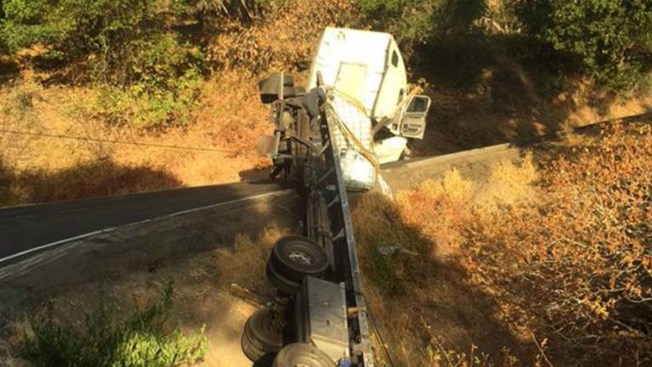
A big rig overturned on Lucas Valley Road in Marin County spilling 14,000 gallons of paint on Thursday, Sept. 10, 2015.
Lucas Valley Road was closed Thursday morning in both directions east of Big Rock after a big rig overturned and spilled an estimated 1,500 gallons of yellow paint onto watershed property, authorities said.
That estimate was downgraded from the original 14,000 gallons that was originally reported by the Marin County Sheriff.
That's because while California Highway Patrol Officer Andrew Barclay said 14,000 gallons of paint were on the truck, it appears as though only 1,500 gallons spilled. He is also unsure just how much went into a nearby creek, which is on George Lucas property.

A big rig overturned on Lucas Valley Road in Marin County spilling 14,000 gallons of yellow paint on Thursday, Sept. 10, 2015.
Photo credit: NBC Bay Area chopper
In a statement, the CHP said that 28-year-old Hugo Zavala-Berrera of Mendota was driving a 2008 freightliner truck and towing a trailer with eight 250 gallon containers of paint. He was trying to negotiate a tight, right turn on the road, west of West Gate Drive, when his trailer slipped, giving way to some paint containers falling into the ravine below.
The NBC Bay Area chopper flew overhead showing the overturned rig, as well as the yellow paint splattered all over rocks and a creek bed.
Representatives from the Environmental Protection Agency, California Department of Fish and Wildlife, Marin County Sheriff’s Office, Marin County Fire Department, Skywalker Fire Department, and Marin County Roads responded to the scene and began the recovery and cleanup of the hazardous materials.  The trucking company, JL Freight Line LLC out of Fresno, asked Bayview Environmental Services to clean up.
The California Highway Patrol said there were no injuries, only a "big mess" to clean up.
The road was expected to reopen at 10 p.m. on Thursday. But then decided that crews should come back Friday to finish the job.

Wednesday, August 26, 2015

Even the French Publication LE MONDE wants to call us NIMBYS thanks to the George Lucas PR Team.


George Lucas has hired his Hollywood PR machine to paint Marinwood/Lucas Valley as NIMBYS.
Recently,  I was contacted by a writer of the prestigious Le Monde about questions concerning Grady Ranch.  He totally mashed my points to portray us as wealthy NIMBYS and apparently was in league with the George Lucas PR hit team who wants to further its agenda in our working class district.


Here is how I responded to his request for clarification of my position on Grady Ranch:
=============
Hello Elvire,

Happy to answer questions to correct the record on Housing in Marinwood/Lucas Valley.   Everyone seems to be chasing the "George Lucas vs. the Wealthy Neighbors" story that his Hollywood PR team has put out.   There is much more to the story and the press has not kind.

We have written extensively about George Lucas on www.savemarinwood.org and youtube and posts to various blogs.

Here are some pertinent facts.

1.)  Grady Ranch is located 4 1/2 miles up a country road.  It has no water, sewer or other utilities.  It is isolated and lacks public transportation.  It will be run by a non profit and therefore contribute little if anything to community costs of the development.  The surrounding community will be on the hook for paying infrastructure, new schools, police and fire service.  

2.) Marinwood-Lucas Valley is a middle class neighborhood with moderate incomes. We have lots of retirees on fixed income.  Many would qualify for subsidized housing based on their income.  This is far from the picture painted in the press as "Millionaire Neighbors".  In fact this is one of the biggest lies being perpetuated by the press as most locals will tell you.  We are not southern Marin. Our neighborhood was one of the original working class neighborhood of Marin.  It still serves that purpose for families who have been priced out of San Francisco.  WE ARE THE ONES BEING FORCED TO PAY FOR SUBSIDIZED HOUSING while the housing advocates like Supervisor Steve Kinsey and Housing groups live like kings in San Geronimo Valley.  They are the real NIMBYS of Marin.

3.) George Lucas is reportedly willing to invest up to 300 million dollars for 224 apartments.  It is a very generous gift to all of the people of Marin.  Affordable Housing is needed but for that kind of money he could build THREE to FOUR times the amount of housing where the tenants would have access to shopping and essential services.  In fact he could BUY 450 HOMES in Marinwood at CURRENT MARKET PRICES and GIVE them to needy families. They would get a 3 bedroom, 2 bath home with a private backyard and no sensitive habitat will be destroyed. Why is George fixed on developing Grady Ranch.?

4.) Our community of 5.6 square miles is being burdened with 80% of all affordable housing not including Oakview Development and other locations currently seeking approvals.  We think that the distribution of housing should occur EVERYWHERE in Marin and not be concentrated in a politically weak community far from the elites in Marin.

5.) We support affordable housing (especially for seniors) like the Rotary Village Senior Center in Lucas Valley which is well located, fits within existing densities of the community, is environmentally safe and financially responsible.. 

Stephen Nestel

=====================
Here is what he wrote  (translation provided by a George Lucas's PR Firm website. link to original article below:  


George Lucas's Plans to Build Workforce & Senior Housing


Le Monde
August 8, 2015
By Elvire Camus

George Lucas's Plans to Build Workforce & Senior Housing
Grady Ranch
(photo caption)
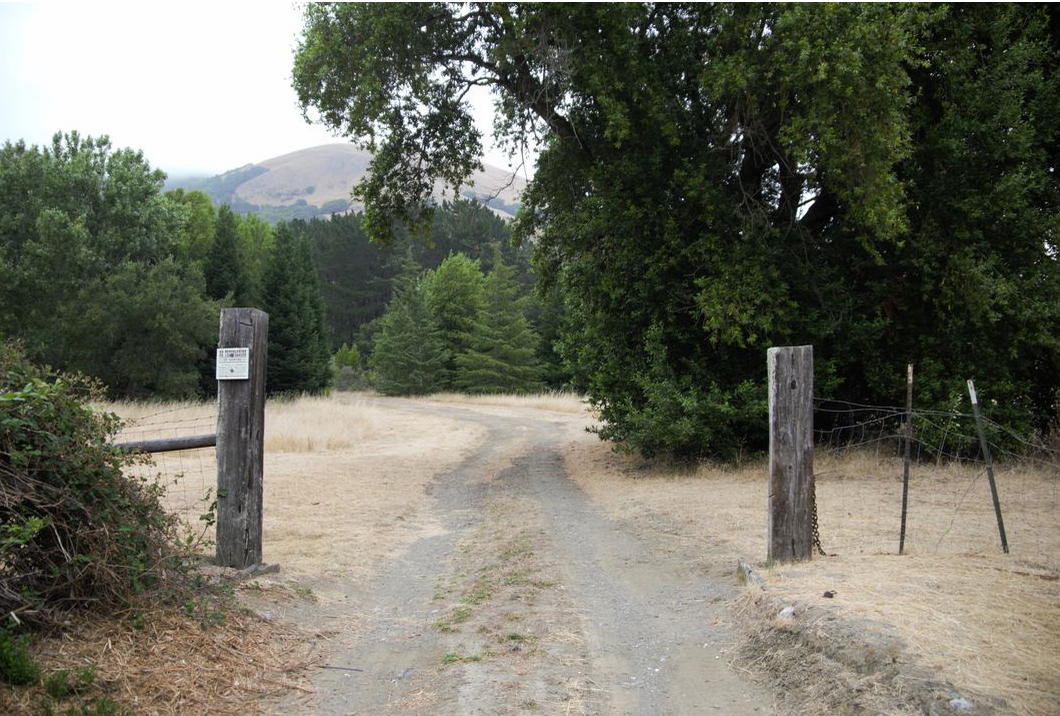
The current entrance to Grady Ranch. On a total area of 1037 acres, over 800 are open to the public for hiking. The development that George Lucas wants to build will be 50 acres.
Imagine: A vegetable garden, an orchard, a small farm, a swimming pool, lawns, a community center and some 224 units of senior and workforce housing, all nestled in the heart of one of California's most bucolic valleys. When George Lucas announced his intention to convert a small portion of land he owns in Marin County, north of

Saturday, August 1, 2015

PEP Housing WANTS YOU to pay for THEIR parks Tax


Mary Stompe of PEP Housing objects to the change from a parcel tax to a per unit tax for the assessment for the parks.  Currently a small single family home and a large multiunit property pay the same amount.  Grady Ranch will have 224 units and is expected to house 500 plus people who will be using our parks. 

Marinwood CSD currently has about 1750 living units.  As of July 2015, a potential of 1000 plus non profit housing units may be built as the result of the Marin County Housing element.  Marinwood CSD is filled with retirees on fixed incomes and moderate dual income working families.  The huge influx non profit housing which pays very little in property taxes will place a huge financial burden on the community.  It is especially upsetting that many of our low income homeowners will be forced to subsidize wealthy developers and financiers in the form of higher parcel taxes.  Assessing taxes on a per unit basis is a small way to address the inequity.

It should be noted that Grady Ranch is not currently part of the Marinwood CSD and may opt out of our service district.  We suspect that the HOLLYWOOD PR machine of George Lucas will come out with headlines "Millionaire Neighbors want to tax the poor" or some such rubbish.  We welcome the discussion.  Maybe this time the press will look around to the community that will be shouldering the burden of the Grady Ranch "gift".

We welcome affordable housing that is financially responsible to the community.

Read the story in the Marin IJ HERE

Sunday, June 28, 2015

New Laws proposed that ELIMINATE parking requirements for affordable housing!


This is a Six Story Senior Apartment Building like the one George Lucas wants to build out at Grady Ranch, a full four and miles up a country road.  It has little access to essential services, shopping, doctors, ambulance service, water and infrastructure.  It is merely vertical sprawl.
Several state legislators are pushing through amendments to the density bonus law that will take away cities' rights to require a minimum number of on-site parking spaces in density bonus projects. Most density bonus projects consist of a majority of market rate housing and just a few low income. Assemblyman Chau, the author of the bill, also added wording called the legislative intent "allowing builders and the market to decide how much parking is needed."

Density bonus law amendment to change to no parking spaces required, no parking minimums, if developer requests density bonus. "

AB 744 by Chau and Gonzalez, and now includes Quirk has passed the Assembly and will be heard in the Senate Transportation and Housing Committee on June 30. AB 744 adds a long, non-required section on legislative intent on density bonus, mixed-use, eliminating vehicle parking, and declares that infill development and excessive parking requirements is a matter of statewide concern and is not a municipal affair.

The League of California Cities requested a "No" vote on the Assembly Floor on June 3.

Among the reasons listed in the League of California Cities alert for voting no on this bill that will remove parking minimums:
AB 744 offers a complete exemption from city parking requirements for senior housing, 62-plus, with no connection to transit.
AB 744 offers a complete exemption from city parking requirements for housing for lower (80 percentage of median) income, near transit.

Also, the letter request for a no vote states:
The cities of California and their elected councils take no comfort in subdivision (q) of the intent language which advocates: "allowing builders and the market to decide how much parking is needed."

If you oppose this bill contact your State Senator, Assembly member, and the Senate Transportation and Housing Committee before the hearing date of June 30. If AB 744 is passed out of the committee, it is on its way to becoming law. Also contact your City Council.

Thursday, June 25, 2015

Recommendations for buying a ladder truck. (Why it is crazy to put a 60 foot structure out at Grady Ranch)


Editor's Note: Grady Ranch is FOUR and Half times the distance as depicted in this video.
WHEN SHOULD YOU PURCHASE AN AERIAL LADDER?


09/01/1995


WHEN SHOULD YOU PURCHASE AN AERIAL LADDER?


BY HARRY R. CARTER, Ph.D.


The question "Does my community need an aerial ladder?" is not an easy one to answer. While researching this topic as a municipal fire officer and fire protection consultant, I discovered a mechanism for arriving at a series of answers to this question but no all-encompassing rule that could be offered for every situation.


For many years, it was thought that the answer to this question had a firm basis in fact. We were governed by the old rule-of-thumb that said an aerial ladder was necessary when five or more buildings of three stories or more in height or their equivalent were within a fire protection jurisdiction.


A recent phone call inquiring as to the exact citation of that recommendation touched off an extensive search of my personal library. It had been quite a while since someone had asked me to cite the source of that rule.


I found the citation under Section 540 of the Insurance Services Office (ISO) Fire Suppression Rating Schedule. It specifically states, "[R]esponse areas with 5 buildings that are 3 stories or 35 feet or more in height, or [have] 5 buildings that have a Needed Fire Flow greater than 3,500 gpm, or any combination of these criteria, should have a ladder company."


Is this all one needs to know to justify the need for an aerial unit in a community? I then asked myself. What about the communities that want more than just code and rating schedule quotations? Are there other criteria that could be used to back up the ISO recommendations?


SEARCH FOR ADDITIONAL CRITERIA


My search for additional criteria began in the same location at which many of our current standards and recommendations began their lives: the old American Insurance Association (AIA) Bulletins. AIA Special Interest Bulletin #69, "Fire Department Apparatus, Ladder and Elevating Platforms," addressed the issue of the appropriate ratio of aerial ladders to pumpers. This was a complementary reference to those remarks in the rating schedule that spoke of the need for a basic structural fire response of two pumper companies and a ladder or service company. I then selected data that could help broaden the basic requirements.


Some interesting clues related to the thinking of the individuals who developed this document were detected by reading between the lines. Relating to building conditions in the years following the Civil War, the bulletin stated: "As the height of buildings increased, it became evident that ladders long enough to reach the upper floors could not be handled by hand alone."


This seemingly urban problem from the 1870s and 1880s led to the development of an elevating ladder attached to a horse-drawn turntable vehicle. Thus, the aerial ladder was born. Undoubtedly, the debate over which fire departments should have one began at that point.


Since the ISO grading schedule speaks to how a unit becomes a rated aerial company, its existence is therefore acknowledged. And its guidelines give us a starting point. Unfortunately, we are still left with the question of how to further justify such an acquisition.


JUSTIFYING AN ACQUISITION


Whether to purchase an aerial ladder seems to be a local decision based on local building conditions. However, we have seen that many communities that did not need an aerial ladder had one and other communities that desperately needed one could not get one. What then to do?


These concerns led me to additional research and the development of the rules, given below, for determining if the acquisition of an aerial ladder or elevating platform device is warranted.


An aerial device is recommended when a number of buildings within the jurisdiction appear to be beyond the reach of existing fire department ground ladders. This recommendation is not only based on ISO recommendations but is a basic common-sense concept. If a significant number of your buildings are beyond the reach of your ground ladders, you had better do something about it.


The number of buildings beyond the reach of ground ladders in itself is not an absolute criterion; its significance will vary from community to community. For example, consider two communities, each of which has 15 buildings beyond the reach of a standard 35-foot portable ladder. The first is a farming community, and all 15 structures are barns or silos. The other community contains a series of apartment buildings, each more than 35 feet in height and housing approximately 40 residents. We can make a distinction in this case and would give an aerial to the latter.


In determining the need for acquiring an aerial device, we are not going to ignore the recommendations in the National Fire Protection Association`s Fire Protection Handbook, 17th edition, which recommends the following response patterns:


High-hazard occupancies (schools, hospitals, nursing homes, high-rise buildings): at least four pumpers, two ladder trucks, and other specialized apparatus as may be identified or available for the hazard.


Medium-hazard occupancies (apartments, offices, mercantile and industrial occupancies not normally requiring extensive rescue or firefighting capabilities): at least three pumpers, one ladder truck, and other specialized apparatus as may be identified or available.


Low-hazard occupancies (one-, two-, or three-family dwellings and scattered businesses and industrial occupancies): at least two pumpers, one ladder truck, and other specialized apparatus as may be identified or available.


Rural operations (scattered dwellings, small businesses, and farm buildings): at least one pumper with a large water tank (500 gallons or more), one mobile water supply apparatus (1,000-gallon or larger tank), and other specialized apparatus as may be necessary to perform effective initial firefighting operations.


These are excellent recommendations. However, as we have said, in many in-stances, the listing of a requirement or recommendation does not satisfy the incessant questioning of a municipal government official. That is the reason we are looking for actual physical criteria that can be used to justify acquiring such an expensive piece of firefighting equipment.


RULES GOVERNING THE ACQUISITION OF AN AERIAL DEVICE


l. Consider acquiring an aerial device when the portable ground ladders in your community will not reach the upper windows or roofs of buildings in your community. This is a simple but easily overlooked way to justify your need.


2. If you need long ladders and do not have enough people to raise them, consider an aerial ladder or elevating platform device.


Given that it takes four to six firefighters to raise and place a long ground ladder, ask the next question: Do you have enough people to lay out the attack and supply hoselines and raise a long ground ladder? This fact is fairly easy to establish.


A review of existing records can tell you how many people in your community respond during the various time periods. In almost every one of my consulting assignments over the past 15 years, there has been a diminished staffing level during the 0700-1700 hours time frame. This condition is especially prevalent in small fire departments. If you do not have the people, you cannot raise the ground ladders.


3. If the terrain and topography in a community rule out using ground ladders, you must consider aerial devices. Topographical and landscaping oddities may prevent the firefighters from approaching from the two-story side of two-story structures, such as townhouses, to raise ground ladders. In addition, Queen Anne (Victorian) homes--although not common in every U.S. community--do not provide good access for roof operations. In these situations, an aerial device would be needed to make the necessary rescues or accomplish ventilation operations.


William E. Clark, in both editions of Firefighting Principles and Practices (Fire Engineering Books), refers to such problems of access, terrain, and topography. If you cannot reach the roofs and upper floor windows by means of a ground ladder, you must opt for the aerial.


OTHER OPTIONS


The citizens expect you to be able to reach them in times of emergency--regardless of structure height or other access difficulties. If your community needs an aerial device but has an insufficient workload to justify the expense of purchasing one or cannot afford to buy one, consider a mutual-aid or regional purchase agreement (all parties in need of the aerial device share in the cost and one department serves as the host agency). When contracting with another department, be sure to work out agreement details before the need for the device arises and develop a written contract establishing procedures for requesting and providing aid and the equipment/services (or money) that will be offered in return for use of the aerial.


By sharing an aerial device with neighboring departments under an automatic-aid agreement, a fire department can lower its ISO rating (and consequently insurance rates). Under the automatic-aid agreement, a department arranges in advance to have another department`s assets (equipment, personnel, or both) automatically respond to a call in the contacting department`s territory; no request must be made at the time of the emergency (as must be done in a mutual-aid arrangement). Fire departments can receive up to 90 percent of the full credit (points) they would have received under the ISO Fire Suppression Rating Schedule if they owned the equipment. The number of credits that can be earned depends on the alarm receipt/dispatch, fireground communications, and joint-training arrangements between the aiding and aided departments. (See "Fire Suppression Rating Schedule,"by Dale Perry, Fire Engineering, June 1995, page 10.)


* * *


If you have developed a tight package of justifications, have sold the proposal to the powers that be (if you are a municipal fire department), and have sold it to the citizens in your community and still have not been able to gain approval for the funding of the level of fire protection you consider to be adequate, keep the paperwork, for there is always next year. n


HARRY R. CARTER, Ph.D., is a battalion chief with the Newark (NJ) Fire Department, a past chief of the Adelphia (NJ) Fire Department, and a fire protection consultant based in Adelphia.

Wednesday, June 24, 2015

CDA Administrative Decision letter to Applicant: Skywalker Properties- / PEP Housing: re: Grady Ranch Pre-Application.


 CDA Administrative Decision letter to Applicant: Skywalker Properties- / PEP Housing: re: Grady Ranch Pre-Application.


The CDA letter gives an overview of the history of the property, including the most recent Grady Ranch 1996  Masterplan and provides CDA's review that a full Masterplan Amendment and SEIR would be required for the proposed project.

Details of the Pre-Application Plans, such as the 60' building height, are also described: 
A "must read!"

Link to the Count Webpage for Grady Ranch is HereL 


County Planning link to the Skywalker project plans, updated whenever changes are made:

http://www.marincounty.org/depts/cd/divisions/planning/projects/lucas-valley/skywalker-properties-ltd_pr_15_0117_sr

Monday, May 4, 2015

Grady Ranch Is All Wrong (A Smart Growth Advocate's take on Grady Ranch)

Grady Ranch Is All Wrong

A great place for some infill development. Photo by Skywalker Properties.
George Lucas’s great foray into affordable housing is wrong for Marin, wrong for affordable housing, and wrong for the people that would live there. The Grady Ranch development plan needs to be scrapped.
After the collapse of LucasFilm’s Grady Ranch studio proposal, then-owner George Lucas promised to build affordable housing on the site instead. Many observers, including me, saw it as payback to the Lucas Valley anti-development crowd that killed the studio project, but few thought George was serious.
Yet Lucas and his partners at the Marin Community Foundation are charging ahead with 200-300 units of affordable housing anyway. While it does present an opportunity to build affordable homes, the site couldn’t be worse.
Grady Ranch is located out on Lucas Valley Road, far from any downtown, commercial center, or regular transit line. It’s right at the edge of the North San Rafael sprawl line – a car-oriented area even where it’s already built up.
Lucas Valley Road itself is essentially a limited-access rural highway, with cars speeding along at 50 miles per hour. There’s no development on the south side, and the north side only has entrances to the neighborhoods. No buildings actually front the road. Yet, it’s the only access to the Highway 101 transit trunk line, to nearly any commercial or shopping areas, or between neighborhoods.
Development here would be bad by any measure. Car-centric sprawl fills our roads with more traffic, generates more demand for parking, and forces residents to play Russian roulette every time they want to get milk. It takes retail activity away from our town centers, weakening the unique Marin character embodied in downtowns.
The infrastructure, too, is inefficient. Grady Ranch would need to be covered by police service, fire service, sewage, water, electricity, and some modicum of transit, but those costs are based on geography, not population. Serving a square mile with 300 homes is a lot more expensive per home than a square mile with 1,000.
Yet the fact that this will be affordable housing makes the project even more egregious. Driving is expensive, with depreciation, gas, maintenance, insurance, and parking costs all eating up scads of money. On a population level, you can add in the cost of pollution, as well as injuries and deaths in crashes. A home in Grady Ranch would be affordable, but the cost of actually living there would be quite high.
The nonprofit aspect of the project would mean no taxes could be raised to cover its infrastructure and services. Building affordable housing in a mixed area means they’re covered by preexisting services. Though usage is more intense, there is typically enough spare capacity to take on more residents. Building something beyond current development means new infrastructure and services need to be built specifically for that project but without any existing residents to pay for it. It would be a massive and ongoing drain on county coffers.
This is the worst possible place for affordable housing. Grady Ranch, if it’s not going to be a film studio, needs to remain as open space. An affordable housing project out at the exurban edge of Marin cannot be affordable because car-centric development is fundamentally unaffordable.
I respect the efforts of George Lucas and Marin Community Foundation to find a place for the low-income to live, but Grady Ranch is not it. Lucas and MCF need to look at urban infill sites and focus on building up in those areas that are transit-accessible and walkable, places that are actually affordable. Replicating the discredited drive-‘til-you-qualify dynamic in Marin is not the answer; it’s just recreating the problem.
[Editors Note:  The Greater Marin is a blog published by David Edmunson from Washington D.C. who spent his formative years in Marin and considers it his family home.  While I seldom agree with his point of view about the desirability of urbanizing Marin, I find his analysis and honesty compelling.  Essentially we are in agreement with many things such as the desirability of  walkable, bikable, communities.  We simply disagree at the degree and manner which this Smart Growth utopia shall emerge.  He favors efficiency of  central planning.  I favor market forces that allow individual choice and freedom.  I read his blog regularly because it is full of fresh ideas and good writing.]

Friday, April 24, 2015

Who are these BARF people Anyhow? -George Lucas's Astroturf Housing Activist Mercenaries

 Who are these BARF people Anyhow? - George Lucas's Astroturf Housing Activist Mercenaries


Like a nobleman of old,  flogging a peasant for casting a shadow upon his path, George Lucas is using his neighbors as his whipping boy.
Earlier this week, I was notified by a social activist friend in San Francisco that a group calling themselves SFBARF may be coming to town to create disruption and advocate for the Grady Ranch project, "The Revenge Villas".  While, the generous gift of affordable housing is appreciated, the local middle class community of Marinwood-Lucas Valley will be stuck with millions of dollars of development costs for roads, sewer and water, new schools, public safety and fifty years of tax free status.  His attorney, former supervisor, and millionaire lobbyist , Gary Giacomini, says George thinks there are "too many millionaires" igniting class warfare against Marin.  
In addition, he has enlisted the help of his Hollywood PR firm to spread the message of "St. George helps the poor, from the Greedy Millionaires next Door" B.S.   George Lucas is one of the RICHEST MEN IN THE WORLD with BILLIONS to spend. Like a nobleman of old,  flogging a peasant for casting a shadow upon his path, he is using our community as his whipping boy.  
The issue of Housing Redevelopment is as much about Democracy and Class Warfare as it is about issues of Water, Traffic and Urbanism.  The political and social elites are justifying the destruction of communities to rebuild them in their imagine Smart Growth Utopia as a "necessity to eliminate sprawl (the suburbs).  They will use "any means necessary" to achieve their ends including inciting class warfare, suspension of the local political process, onerous taxation and the destruction of property rights.  Unfortunately, it appears they are also willing to use these feckless BARFers from San Francisco to foster class hatred and call us "Millionaire NIMBYS".
We will not let this happen.  We will Save Marin Again!

Who is SFBARF?


From the Berkeley Daily Planet HERE


On the left you’ll see a longtime Berkeley consultant who often fronts for developers, Tim Frank. Next to him is Jon Schwark, who told people at the table that he’s lived in a rent-controlled San Francisco apartment for twenty years after moving here from Oklahoma Kansas. Next to him there’s another Midwestern transplant, Ian Monroe from Missouri, in Berkeley for a bit over 2 years, a techie who commutes to San Francisco for work. The guy on the far right, the one wearing the 60s’ style prairie dress and the straw bonnet, is Alfred, the cartoonist. 
The small person crouched under the table is, probably, one Libby Lee-Egan, a child, though she’s hard to identify in this photo. 
Missing here, but reported to have been present, is Sonja Trauss. She’s the subject of a remarkable article which appeared in today’s San Francisco Business Times: 
The story reveals that Yelp CEO Jeremy Stoppelman has given Trauss $10,000 for her personal use. 
“I wanted to help her personally with a financial gift since she recently gave up her job as an educator to devote herself full time to activism,” he told the SFBT. Activism seems to pay better than it used to in the olden days, doesn’t it? 
From the SF examiner:
  • Sonja Trauss, founder of the San Francisco Bay Area Renters Federation, says many people in San Francisco are against building new housing, which is why prices are high.
Sonja Trauss is an energetic 33-year-old math teacher from Philadelphia who moved to the Bay Area three years ago.
Like countless others, she found the search for a place to live in San Francisco less than welcoming. In fact, it was impossible.
That still does not sit well with her.
"I was immediately priced out," the West Oakland resident recently told The San Francisco Examiner.
After much grousing, Trauss did some research and concluded that the cause of this dilemma was

Friday, April 17, 2015

Grady Ranch is still a bad idea

Grady Ranch is still a bad idea

Stop Sign
Stop Sign by thecrazyfilmgirl, on Flickr
Last Thursday, the IJ published an editorial defending the Grady Ranch affordable housing project from critics. If we don’t know what the project will look like, asks the editorial board, how can we criticize? Perhaps it will include a bike lane and sidewalks all the way to 101. Perhaps there will be a place for Marin Transit to run a shuttle, never mind the cost. And perhaps there will be a small grocery store so residents will be able to do at least one errand without getting in the car.
While it’s true that we don’t know how the project will look, the arguments in defense of the project don’t address the fundamental flaw of “affordable” sprawl: the burden of car-dependence on residents, and the burden of maintenance on the County.
Grady Ranch isn’t “a rare opportunity to help meet Marin’s need for affordable housing.” To the contrary, it would doom hundreds of low-income people to an expensive existence of car-dependance. The whole point of creating a walkable, bikeable mix of jobs and housing, which the IJ dismisses so easily, is to free people from the burden of car ownership. A car should be an option for those who want it, not a necessity for those who can’t afford it. Why we would want to give our poor another burden they cannot carry is beyond me.
If car ownership will be residents’ burden, services and infrastructure will be the County’s. MCF, as a nonprofit, doesn’t pay any taxes on any of its land or developments, meaning new residents won’t have to pay. And, even if supervisors could foist the cost of extending services and infrastructure onto developers, that still leaves ongoing costs. Infrastructure needs maintenance and services have payrolls. Will Lucas, or MCF, or “possible grant providers” be willing to pay that expense for the next 50 years? Somehow, I don’t think even George Lucas would be that generous.
These problems and the others I raised before need to be addressed in the first draft of the plan, not later. We cannot give MCF and Lucas “the opportunity to come up with a detailed plan before going on the attack.” Supervisors, citizens, and the two Grady Ranch partners must answer these problems now.
Besides, even if Grady Ranch is an irredeemable project, that doesn’t mean the end result can’t be less terrible. Given how bad the project is just on its face, we need to start to shape it before they’ve put time into a detailed plan. If the county pushes forward, this may be the only chance we’ll get.

Thursday, April 16, 2015

KCBS story on Grady Ranch and "St. George"

See the KCBS story HERE.   The news media are all gushy over St. George's "gift".  What they don't realize that the middle class communities of Marinwood, Lucas Valley and Terra Linda will be stuck paying for all of the infrastructure upgrades to roads, bus lines, public safety and schools.   Low income housing can escape environmental safeguards and infrastructure costs that market rate developers must pay. His generosity will be paid by us over and over again in higher taxes.

Why does he want to put housing on a site that will DOUBLE the development cost because of the landscape?  He could build TWICE the housing at lower cost elsewhere in Marin. Better yet, he could provide more integration if small sites were spread throughout the county.  Why massive big box developments that isolate communities? Clearly there is more than meets the eye.


Setting the Record Straight. The LucasFilm Project was pulled because of Water Regulations not neighbors.


See this 2012 story in the Marin IJ 

We Will Save Marin Again!


Marin Voice: Large Grady housing plan 'wishful thinking'


I RIDE my bicycle past the Grady Ranch a couple of times a week. It is a beautiful piece of property bordering Lucas Valley Road, with the upper reaches of Miller Creek and two tributary creeks, as well as steep, highly visible hills and ridges.
Recently, on my ride past the property, I was troubled by the plan put forth by the Marin Community Foundation and county planners to develop 240 housing units on the property.
Past housing approvals for this property allowed less than half this number under less stringent environmental rules. Allowing 240 houses on the property under today's rules seems idealistic at best.
In the interest of full disclosure, my wife and I live near the property, in Lucas Valley Estates, and I supported the 1996 Lucasfilm Ltd. digital studio master plan and, with some reservations, the recent revised film studio plan that was withdrawn by Mr. Lucas.
I make my living as a land- use attorney representing property owners seeking permits to develop property and formerly worked as a land use planner in the Marin County Planning Department.
In 1983, when a 114-unit housing project was approved for the Grady Ranch by the Planning Commission and Board of Supervisors, I was one of the county planners assigned to review and analyze the application.
Developing 240 housing units of any kind on the property seems like wishful thinking.
The Countywide Plan prohibits development within 100 feet of a creek and designates some of the property as a Ridge and Upland Greenbelt, which prohibits development on visible ridges and hillsides.
The zoning for the Grady Ranch permits one housing unit for every 2.64 acres of land, which does not allow 240 units on the property.
County policies to promote low-income housing would theoretically allow an increase in the number of houses as long as all requirements of the Countywide Plan are met.
Given the environmental constraints associated with the property, including the small amount of flat land, the existence of landslides, and the need to maintain a 100-foot setback from three creeks, it is hard to imagine such an increase in density complying with the Countywide Plan, or the myriad of other state and local regulations applicable to the property.
As Lucasfilm well knows, there are other regulatory agencies (Regional Water Quality and Fish and Game) that will highly scrutinize any development proposal adjacent to these creeks.
Grady Ranch does not seem like a good candidate for high-density, low-income housing. The property is about four miles from the Highway 101 corridor; too far to easily provide the necessary transit and related services to develop and maintain high-density housing for low-income persons.
Because of its remote location, and the need to extend public services such as sewer, water, and power, it will also be very costly to develop — much more than property closer to essential urban services. With landslide repair and creek restoration costs added in, the development of low-income housing seems improbable without large subsidies.
As I recall there were good environmental and policy reasons the Planning Commission and Board of Supervisors approved only 114 units on the property in 1983.
Land-use rules and policies have not relaxed since that time. If anything they are more stringent.
Let's hope the coming debate on the county's Housing Element includes a careful look at the Grady Ranch and the appropriate amount of housing — whether market-rate or low-income.
I believe that when all the facts are in, 240 units will be far too many.
Neil Sorensen is a San Rafael land-use attorney. He is a former Marin County planner and served as a trustee on the Dixie School District board.