Wednesday, December 5, 2018

Tuesday, December 4, 2018
Monday, December 3, 2018
How our laws in California are really made
How our laws in California are really made


By MERCURY NEWS | themerc@bayareanewsgroup.com |
PUBLISHED: July 6, 2010 at 12:07 pm | UPDATED: August 13, 2016 at 9:29 pm
SACRAMENTO — Imagine: At a time when California is lurching from crisis to crisis, a legislator has an idea to make life better. He puts together a bill, gathers support and shepherds it into law.
If only Sacramento worked like that. Instead, it often works like this:
A lobbyist has an idea to make life better — but only for his client. The lobbyist writes the bill, shops for a willing lawmaker to introduce it and lines up the support. The legislator? He has to do little more than show up and vote.
This is the path of the “sponsored bill,” a method of lawmaking little noticed outside California’s capital but long favored on the inside. In many states lobbyists influence legislators; in California, they have — quite baldly — taken center stage in lawmaking.
Although lawmakers in recent years have routinely failed to grapple with health care, the state budget and other matters of public interest, they’ve managed to do the bidding of the private interests who tout sponsored bills at an impressive clip.
A Mercury News analysis found that in 2007-08, the most recent complete two-year legislative session, more than 1,800 bills — about 39 percent of the total — were sponsored by outside interests. And those sponsored bills made up 60 percent of the legislation that was passed into law.
This is how plumbing manufacturers ensured that industry-friendly labs — and not state regulators — would conduct the testing that determines whether drinking faucets sold in California are lead-free. This is how a Los Angeles County billionaire crushed a legal challenge over whether his plans for a new football stadium violated the state’s long-standing environmental protection law.
Recalling his first encounters with lobbyists seeking legislative backing for their bills, former Assemblyman Joe Canciamilla said, “It’s like being in a Middle Eastern bazaar. You are surrounded by hawkers saying, ‘Take this one, no, take this one, no, I’ve got a better one over here.’ The openness of that — the ‘oh yeah, that’s the way things are done’ attitude — was the most shocking.”
Legislators, continued Pittsburg funeral home director Canciamilla, “are supposed to be the buffer between the interest groups and the public — and that buffer no longer exists. Now, they’re a direct conduit.”
The Mercury News analysis, the first ever undertaken of sponsored bills in California, revealed:
Sponsored bills swamp the Legislature. They amounted to 42 percent of the bills introduced in the Assembly and a third of the Senate bills.
Profit-seeking bills abound. While advocacy groups, trade associations and government agencies also sponsor legislation, more than 500 of the sponsored bills introduced in the 2007-08 session came from private industries and industry trade groups, often seeking to increase market share, repel regulations or limit lawsuits.
Sponsored bills succeed. Almost half of the 1,883 bills that were sponsored in the last session became law; about one in five of the 2,982 bills that had no listed sponsor became law.
Everybody does it. Out of 122 legislators who served at least partial terms in 2007-08, just one — Sen. Tom McClintock, R-Thousand Oaks — refused to introduce any sponsored bills. Democrats introduced more sponsored bills than Republicans, but Republicans introduced a larger percentage of bills sponsored by private interests.
Lobbyists have long been known in California as the Third House, referring to their entrenched status alongside the Legislature’s two official houses, the Assembly and Senate. But through interviews with current and former legislators and aides, as well as lobbyists and outside government experts, the Mercury News documented a changed pattern: Today, lobbyists function almost as a shadow legislature, pulling the strings at every turn for short-term lawmakers who have become accustomed to letting private interests monopolize the public debate. At the center of this reality is the sponsored bill.
“You don’t learn this in American civics class,” said Derek Cressman, a regional director for the nonpartisan group Common Cause. “You don’t learn that some interest group drafts this and gives it to a legislator along with a contribution and says, ‘We would like a law introduced.’ “
Cressman said the result is that “organizations with deep financial pockets can present their issues to the Legislature, and those that don’t are in essence invisible.”
James Wedick goes further. Now retired, Wedick was the lead undercover FBI agent who established a phony shrimp processing company in California in 1985, then documented lawmakers taking bribes to support a sponsored bill crafted to help his fake business.
The FBI’s sting operation known as Shrimpscam landed five legislators in prison but — he concedes — had little long-term effect. “It’s been going on forever and it lends itself to corrupting the whole process,” Wedick said of sponsored bills. “The whole process has been hijacked.”
Maneuvers at midnight
Here’s one example of how sponsored bills hijack the process of lawmaking — allowing private agendas to overwhelm the public interest.
In 2007, the Legislature took up a bill to authorize the spending of a $2.8 billion affordable housing bond approved in a voter referendum. The bill initially sought to ensure that projects would be efficient and geographically diverse, and that they would reduce homelessness.
But at the urging of a lobbyist for the sports and entertainment giant Anschutz Entertainment Group, a different, sponsored version of the bill suddenly appeared — amid a flurry of bills on the last days of the legislative session. Several legislators whose names were attached to the bill dropped off, leaving only Assembly Speaker Fabian Nuñez, D-Los Angeles, as legislative backer of the amended bill. It cleared the Senate after midnight, and the Assembly at 3:26 a.m.
Hugh Bower, the lead staff member of the Assembly Committee on Housing and Community Development, was stunned when the bill came up that night; he had been told the issue was dead. There was such chaos, Bower recalls, that one committee member still thought the next day that the amended bill had died.
What was Anschutz’s interest? Its version of the bill allowed some affordable housing funds to be used for parks, landscaping and fancy sidewalks in the neighborhood around the company-owned Staples Center in downtown Los Angeles.
Anschutz insisted its changes would let any “Business Improvement District” — a specially created association of property owners and government agencies — apply for the funds. But only the district near the Staples Center did, receiving the maximum award of $30 million, according to state housing officials.
Christine Minnehan, director of legislative advocacy for the Western Center on Law and Poverty, lamented the award, saying many affordable housing projects were awarded less than half that amount. She called the outcome “a theft of public funds, and a deception of the voters.”
A California tradition
For as long as anyone now in Sacramento can remember, the California Legislature has identified outside parties pushing bills.
Legislative historians asked by the Mercury News to research the practice say it dates to at least the 1940s.
Officials in some other states, told of California’s practice, greeted it as an admirable form of public disclosure.
In Mississippi “there is no mention of groups who support the bill, even if they drafted the bill and requested a legislator to sponsor it,” said Barbara Powell, lobbyist for Common Cause Mississippi. Jane Pinsky, director of the North Carolina Coalition for Lobbying & Government Reform, said, “We really have no transparency on who is behind legislation in North Carolina.”
But in California, it is quite clear that full disclosure has reinforced the system of sponsorship, legitimizing the influence of special interests.
Where other states, and the U.S. Congress, use the term “sponsor” to mean the legislators who carry the bill, in California the term refers to the outside party; the legislator who introduces the bill is called the “author.”
“Author is really a misnomer because the real author is the special interest group,” said Keith Richman, a health care executive and former Republican assemblyman from Granada Hills. “Essentially, the legislators are simply prostituting.”
Many legislators say they take only ideas and guidance from sponsors, but maintain control over the bill. “Our job is to be deliberative and have our legislative hat on so we can make good judgments,” insisted Sen. Leland Yee, D-San Francisco, one of the leading authors of privately sponsored bills.
But dozens of interviews inside and outside the capital reveal that legislators have often surrendered their role.
Lobbyists working on behalf of sponsors craft original bill language.
They write fact sheets for legislators and their staff.
They even write the speeches lawmakers deliver on the floor extolling bills. “It’s common knowledge that the floor statements are written by lobbyists,” said lobbyist Jackson Gualco, previously a special assistant to former Assembly Speaker Willie Brown. “Some staff members change it, other times it’s word for word.”
Lobbyists solicit votes, suggest and evaluate amendments, and seek to win support from the governor’s office.
When the legislator who introduced the bill goes to committee hearings to present and defend the proposed legislation, the lobbyists and sponsors typically sit alongside, and often commandeer the proceedings.
The legislator “may get a question that he’s not prepared for because he’s not as knowledgeable about the issue as I am,” said one lobbyist who represents many private interests. “I may nudge his knee a bit or lift my left hand up on the table rather than having him answer a question incorrectly.”
Commonly, the lobbyist added, he lets the legislator know “I’d like to answer the questions.”
Help for the 49ers
The Mercury News analysis identified outside sponsors for 39 percent of bills introduced in the last session. But that does not capture the complete number.
Official disclosure of the sponsors is left to the legislative committees and their staffs. Most committee analyses explicitly list the sponsors, but some, like the Senate Local Government Committee, do not. And sometimes — even when a bill clearly benefits a private party — legislators describe the ideas as their own.
That was the case with Senate Bill 43, introduced last July by Sen. Elaine Alquist, D-Santa Clara, to assist the San Francisco 49ers in their effort to build a $937 million publicly subsidized football stadium in Santa Clara.
The team was frustrated that the city’s charter required them to put the contract to build the stadium out for competitive bid. Alquist’s bill exempted the stadium from the bid mandate.
Alquist said she came up with the idea herself. That surprised some local officials: “It’s hard for me to believe the 49ers didn’t go in and ask for this bill,” said Santa Clara Councilman William Kennedy, a stadium opponent. What’s more, city staff said the team had mentioned during negotiations that it might turn to the Legislature for help.
“I have no idea what the 49ers said to people at City Hall,” Alquist said, explaining that she simply wanted to help expedite the process. “I had nothing to do with that.”
Whatever the bill’s origin, the 49ers became the driving force. The team spent $73,779 on lobbyists who schmoozed the governor and the Legislature on the bill, according to reports filed with the secretary of state. The bill sailed through both houses, although legislative staffers cautioned of “a bad precedent,” noting that 125-year-old “competitive bidding requirements exist to prevent favoritism, corruption and waste of public money.”
Bills for profit
Outside sponsorship breeds success; sponsored bills are far more likely than bills without sponsors to become law.
The Mercury News analysis shows that success was especially likely when the bills were sponsored by businesses and industry groups. Almost half of those bills ended up signed by the governor — a far higher percentage than bills that had no sponsor.
For the 2007-08 legislative session, 177 of the 347 bills sponsored by private interests that were introduced in the Assembly — 51 percent — were passed into law. In contrast, 326 of 1,793 bills introduced in the Assembly that had no sponsor — or 18 percent — became law.
On the Senate side, the disparity was modestly smaller. About 43 percent of the bills introduced on behalf of private-interest sponsors in the last session became law; 24 percent of Senate bills that were introduced without a sponsor became law.
Peter Detwiler, who as the longtime staff director of the Senate Local Government Committee is one of Sacramento’s most seasoned bill analysts, said the findings demonstrate the power outsiders have gained as legislators arrive in office facing a ticking clock on their terms in office.
“In a term-limited legislative environment, the attention goes to those who can focus attention narrowly on a topic or interest,” Detwiler said.
Private vs. public
The narrow purpose of a sponsored bill is rarely a secret in the Capitol; the committee analyses make sure of that.
Those analyses, written by legislative staff, often bluntly note that the legislation has a private rather than public benefit. And while at times those warnings help to defeat the bills, other times the legislators approve them — and insist they have done the right thing.
Consider these examples from the 2007-08 session.
When the PowerFlare Corporation of Atherton sponsored a bill to require that electronic roadside beacons replace all standard flares now in use by the state Highway Patrol, the bill was pitched as a way to enhance motorists’ safety. But the bill analysis noted that it would “significantly increase demand for electronic beacons, which are manufactured by the sponsor of the bill,” and that the cost to the taxpayers of replacing flares with beacons would be high. The bill died in committee.
When MySpace sponsored a bill bolstering its ability to prevent individuals with certain criminal records from using its site, it extolled the legislation as a way to keep children safe from sexual predators on the Internet. But nestled in the bill was a provision that would have given the online social networking site broad immunity from lawsuits as a result of its efforts to restrict access.
A committee analyst wrote that the bill “raises troubling issues of manipulation of the legislative process to protect the financial and business interests of corporate entities, under the thin guise of providing additional tools to law enforcement.” The bill passed the Assembly, but later died in the Senate.
And when the Plumbing Manufacturers Institute sponsored a bill giving labs reliant on industry funding the authority to test drinking faucets and fountains, it promised the system would better protect Californians from lead in their drinking water. But a committee consultant characterized the plumbing group’s intention as “a not-so-subtle process for subverting what legislators thought they were enacting” — a way to protect the public from a harmful substance.
Despite protests from more than 50 public health and consumer organizations, the bill was signed into law in September 2008.
Sen. Ron Calderon, D-Montebello, who introduced the bill, said in an interview that he has “no concerns” with the industry overseeing testing. “As a matter of fact, I believe the problem with regulatory boards in general is that they don’t recruit or appoint enough people from the industry that they regulate.”
Calderon received $13,900 from the institute and member faucet makers during the 2007-08 term.
Some observers argue these private interest bills do, ultimately, benefit at least a portion of the public. Thad Kousser, associate professor of political science at UC San Diego, said legislators who introduce sponsored bills on behalf of industries are doing exactly what they are sent to Sacramento to do: represent the interests of their district. “What better way,” he asked, to help “the employers of their constituents?”
But former state senator McClintock, the sole legislator who did not introduce a single sponsored bill in the last session, argues that constituents’ interests have little to do with it. McClintock, now a congressman, said: “It’s a general rule that sponsors are bureaucracies seeking more power, or companies seeking more money.”
In a system where more bills fail than succeed, critics complain that many of the proposed laws are harmful even when they fail because they further clog an overloaded Legislature.
Senate President Pro Tem Darrell Steinberg said in a speech this session that the state has become a “bill factory,” with too many unnecessary bills proposed and too little analysis of the impact of bills already passed. Treasurer Bill Lockyer, a former legislator, put it more bluntly at one recent hearing: “There’s too much junk.”
Everyone’s a sponsor
As the influence of lobbyists has grown, plenty of groups, in addition to private companies and industry organizations, have taken up sponsoring bills.
Unions do it. Government agencies do it. Environmental groups do it. “We sponsor bills and I’m very proud of them,” said Sierra Club California director Bill Magavern. The Sierra Club, for instance, was co-sponsor of a bill that revamped the process for recycling and disposing of mercury-tainted thermostats.
“There’s nothing wrong with sponsored bills conceptually,” said Assemblyman Jared Huffman, D-San Rafael, who introduced 25 sponsored bills last session, seven of them sponsored by private interests. “There are lots of sponsors from the Sierra Club to the oil and gas industry — and everyone in between who think up good ideas and bring them to legislators every year.”
Huffman is one of many legislators who argue that not all sponsored bills are created evil. But even if liberals might applaud sponsored environmental legislation, and conservatives might cheer bills from the California District Attorneys Association, government experts say these efforts have the same problems as the more brazen pursuits of the Anschutz Entertainment Group.
Lawmaking is supposed to involve a balancing of competing interests in the public good: Make the regulation tight enough to protect the environment, for example, but not so tight that it squelches economic activity. But when an interest group writes a bill, there is no such balance. Only its interest is represented.
“It’s undemocratic to have interest groups writing legislation,” said Dorie Apollonio, assistant professor at UC San Francisco’s School of Pharmacy and an expert on influence peddling. “If we’re unhappy with what legislators are doing, we throw the bums out,” she said, in contrast to lobbyists who do not answer to the public.
But in Sacramento today, some legislators say they’ve become dependent upon the role assumed by lobbyists.
When state Sen. Mark Leno, D-San Francisco, carried a bill last year to ban the use of toxic flame retardants in children’s products, he faced opposition from the powerful American Chemical Council. The help of bill sponsor Friends of the Earth was critical, he said.
“The chemical industry lobbyists can be in 10 member offices simultaneously while I’m going to offices one at a time,” he said. “So a lot of it comes down to math — a good sponsor is of value.”
Other legislators depend on sponsors for technical support as well as political skills.
And so the Sierra Club’s Magavern finds himself crafting bill language, providing legislators’ talking points and cajoling support for votes — not out of preference, but out of necessity.
“There still are some staffers that do some of that, but that number has declined,” Magavern added. “More and more, sponsors are expected to do most of the work.”
Mercury News news research director Leigh Poitinger, former staff writer Edwin Garcia and intern Sarah Yokubaitis contributed to this report.
Sunday, December 2, 2018
FABLE: THE PLANE TREE
THE PLANE TREE
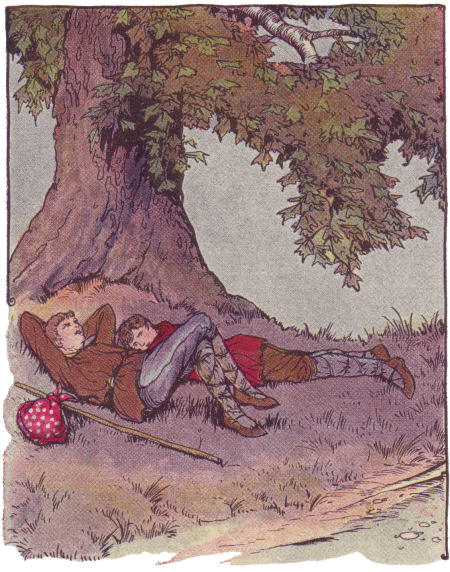
TWO TRAVELLERS, walking in the noonday sun, sought the shade of a widespreading tree to rest. As they lay looking up among the pleasant leaves, they saw that it was a Plane Tree."How useless is the Plane!" said one of them. "It bears no fruit whatever, and only serves to litter the ground with leaves."
"Ungrateful creatures!" said a voice from the Plane Tree. "You lie here in my cooling shade, and yet you say I am useless! Thus ungratefully, O Jupiter, do men receive their blessings!"
Our best blessings are often the least appreciated.
The Marinwood CSD has many options with PreEngineered and Kit buildings that are attractive, save space and are "right sized"
All of the following buildings are preengineered "pole barn " construction. As you can see, most of these would be comfortable on a private estate, yet the costs are a small fraction of the currently proposed Marinwood CSD design. All of these designs can be lengthened to increase the storage space and add an office.
The Marinwood CSD architect, Bill Hansell is understandably upset with these designs as it is competition with his plan. Most cities do not hire architects for utility buildings. They order them from catalogs of pre-engineered buildings and customize them. The Hansell design is completely inadequate for our landscaping department due to the constrained access and sprawling footprint. Unfortunately, Bill Hansell has refused to meet with concerned residents to make improvements and has resorted to personal attacks on NextDoor and other social media. This is completely unnecessary and counter productive for our community.
I sincerely hope that Izabela Perry, Jeff Naylor, Leah Green, Bill Shea and Irv Schwartz will conduct a fair and open review of alternative designs with the public before approving a final design as has been promised in 2017 and 2018. Tonight at the CSD meeting on September 11, 2018, Eric Dreikosen CSD Manager is seeking approval of the Hansell design which will allow him to request a "Design Review Exemption" and ignore all public input .
This is profoundly wrong. The Marinwood CSD has not considered alternative designs nor has it divulged the budget for this project. We requested story poles and lot markers from the CSD so that we could have an honest discussion of the design merits and defects. They refused and so we installed our own. Most people we meet in the park are surprised at the size of the facility and have signed the petition.
We love our Marinwood Park and want the best building for generations to come.
 |
| This design mimics the "Marinwood " style homes. |
 |
| This reminds us of the Eichlers. |

 |
| Barn style buildings fit well in the rustic setting |


 |


 |

 |
| This would look great next to the path. |
 |
| Accessory buildings can exhibit style even while assuming utilitarian uses. |
 |
| This basic shed is $11k installed. |
 |
| This shed is $30k installed and will meet the space requirements of our department. |
 |
| Every government agency in Marin County from Sausalito to Novato uses this type of side access garage. It is affordable, spacious and efficient. |
 |
| Mid century architecture is possible too. |
 |
| These look like homes on Quietwood. |
 |
| A rustic split rail fence can keep pedestrians from wandering behind garage doors without blocking the view. |
Saturday, December 1, 2018
Before and After the Camp Fire in Magalia, CA


Here is my in-laws former house in Magalia, CA before and after the Camp Fire in November 2018. They sold this house years ago and are safe. We don't know the status of the current owners. The pictures tell the story.
Near Riot at 2012 Plan Bay Area Workshops in Santa Rosa
Jake McKensie, Rohnert Park Politician and Regional Representative tries to calm the angry crowd at Plan One Bay Area Workshop in Santa Rosa. The workshops received similar reception across the Bay Area as people understood that this was a takeover of local governments and converting our local jurisdictions to an administrative technocracy. Years later, the MTC and ABAG continue to push their agenda. Most of the public has not waken up to the outrageous assault on our freedoms. In 2012, we had our first "One Bay Area" workshops and near riots broke out. The first people to object were a mix of housing activists and Tea Party groups espousing exotic conspiracy theories. Many dismissed them but they did shine a light on the huge injustice about to be imposed upon the people of the Bay Area. Others got involved. In Marin, long a bastion of environmentalism and intentional growth formed Citizen Marin, a non partisan coalition of local citizens. They understood that this "One Bay Area" plan was nothing but a smoke screen for developers and the destruction of communities just like Marincello in the 1960s. While none of the scenes in Marin were nearly this extreme, Plan Bay Area has awaken a sleeping giant and today, "The CASA COMPACT" is the full realization of the dream legislative prescription. If implemented, it will be the biggest takeover of local government in the history of the United States since the Civil War. We expect Marc Levine, Assemblyman, Mike McGuire, State Senator, and our local political leaders to back our sovereignty.
Friday, November 30, 2018
How to Troll. First class of Troll College by Scott Adams
The trolls on NextDoor also troll this site. You know who they are if you are on NextDoor. We are willing to engage with serious discussion but anonymous trolls will not have a platform here. We welcome discussions of substance.
Marinwood and Lucas Valley residents ‘adopt’ Paradise families devastated by fire
Marin residents ‘adopt’ Paradise families devastated by fire
 Jennifer Harris-Marks, left, and Suzanne Egan connect with their “adopted” families in Paradise on Monday at Harris-Marks’ home in San Rafael. (Alan Dep/Marin Independent Journal)
By KERI BRENNER | kbrenner@marinij.com | Marin Independent Journal
PUBLISHED: November 26, 2018 at 11:22 am | UPDATED: November 28, 2018 at 5:23 am
It’s a deja vu that Jennifer Harris-Marks of Marinwood and Suzanne Egan of Lucas Valley didn’t really want to see all over again.
Even so, just as they did a year ago for the Wine Country fires in Sonoma and Napa counties, the two Marin mothers are now mobilized again to help victims of the Camp Fire in Butte County — and they are even more organized and high-tech than they were in 2017 during their first literal trial by fire.
“The message is, ‘Marin is here to help,'” said Harris-Marks, a real estate agent with Coldwell Banker in Greenbrae and a former PTA president at Mary Silveira Elementary School. “I’m so slammed at work right now, but I just tell myself, ‘I don’t need to sleep.'”

The Baker family of Paradise lost many of their belongings in the Camp Fire. From left: Nicholas, Kirsten-Grace, Marvin and Karla.
(courtesy Baker family)
Harris-Marks, who has “adopted” the four-person Baker family from Paradise through the newly created Paradise Fire Adopt-a-Family Facebook page,made her comments as she was loading up Egan’s 2011 bronze Honda Odyssey mini-van — the same one Egan used last year — with books, clothes and stuffed animals to take up to Butte County on Tuesday.
Egan, who has “adopted” the two-person Southerland family through the Facebook page, was to spend the rest of Monday at pickup stops in Marin neighborhoods to collect more donations.
“We have coordinated points of contact,” said Egan, a former PTA president at Dixie Elementary School. “We learned a lot from last year.”
see the article HERE
Thursday, November 29, 2018
Damon Connolly, Marin supervisor not sold on proposed solutions
Housing crisis plan discussed in luxury; Marin supervisor not sold on proposed solutions
 In emails, Marin Supervisor Damon Connolly wrote that while the housing plan contains some good ideas, “there are significant problems with the approach.”(Robert Tong/Marin Independent Journal)
By RICHARD HALSTEAD | rhalstead@marinij.com | Marin Independent Journal
PUBLISHED: November 28, 2018 at 5:26 pm | UPDATED: November 28, 2018 at 8:50 pm
Metropolitan Transportation Commission board members, including Marin County Supervisor Damon Connolly, are meeting at the swank Fairmont Sonoma Mission Inn this week to discuss a blockbuster new plan for addressing the Bay Area’s critical shortage of affordable housing.
The plan calls for generating $1.5 billion per year in new revenue over the next 20 to 25 years to achieve its goals. It would include new taxes and fees affecting property owners, developers, employers, local governments and taxpayers.
Marin critics of the MTC and its initiatives, such as Plan Bay Area, see the choice of venue as indicative of the commission’s hauteur.
“It smacks of decadence,” said Richard Hall of San Rafael. “While working to house people with low incomes, we have a group of politicians living it up at a wine resort in Sonoma.”
Some members of the commission will be staying overnight at the inn while attending the retreat, which cost the commission $29,000. Mission Inn’s amenities include a spa and a Michelin-rated restaurant; the Sonoma Golf Club is next door. The commission had Connolly on a list of attendees planning to spend the night, but he said Tuesday that was incorrect. See article HERE
Subscribe to:
Posts (Atom)