Sunday, April 22, 2018

7 Awful Stories About the Man Destroying Downtown LA

7 Awful Stories About the Man Destroying Downtown LA

105
By Adrian Glick Kudler Nov 25, 2014, 3:18pm PST
SHARE


Developer Geoff Palmer has built more apartments in Downtown Los Angeles than anyone else (more than 3,000) and they're all fucking terrible. His squat, nearly-identical fortresses, with embarrassing names like the Visconti and the Medici, aren't just ugly (although they are very ugly), they're vacuums designed to suck the life out of a neighborhood that has worked so hard to become lively in the past decade. "Fortress" isn't really a metaphor—Palmer's buildings take up full city blocks but face entirely inward. They're notorious for the skybridges that keep tenants off of the streets and sidewalks; their street-level retail spaces sit mostly empty; their many basketball courts and libraries and green spaces (in one case, a one-acre park) are not even a little bit open to the public. And they're spreading: while most of Palmer's buildings are practically on top of the 110 Freeway, his latest will add more than 650 units on the action-packed block of Broadway between Ninth and Olympic.

Palmer "hasn't granted an interview in eight years," but Los Angeles magazine has put together a shocking overview of a career that's involved illegally laundering campaign contributions; destroying a historic Downtown gem; and making an amazingly, hilariously dumb defense of his architectural record. Here are the worst parts:

· Palmer wrote in an email to Los Angeles that "he wanted to recapture downtown's former glorywith the buildings," which are collectively referred too, barfily, as the Renaissance Collection. He adds that his totally-incomprehensible-but-kinda-Italianate architectural style is actually historifical: "The Italians actually settled L.A. before the Spanish and Chinese." That of course is not in any way true (the Spanish founded LA in the late *1700s, shutting out both the Chinese and the Italians).

· The Renaissance Collection features "resort amenities" including gyms, movie theaters, basketball courts, libraries (!!), climbing walls, and, in the case of the Medici, a "one-acre private park with tennis and picnic facilities and a sand volleyball court." And none of it is open to the public, including that park. Only the Orsini has an "outdoor ornamental fountain" available to non-tenants. And that is the result of an obscure episode that really ought to become common knowledge…

· Palmer's the man responsible for destroying the very last building in the lost Downtown neighborhood of Bunker Hill. The city wiped out most of the neighborhood, which it deemed a "slum," starting in the 1950s, but there was one 1880s Queen Anne house left at Cesar Chavez Avenue and Figueroa Street in the late 1980s, when Palmer began work there on the Orsini. It was called the Giese House and it was protected under preservation laws. There were plans in place to move the house to Angelino Heights, but Palmer's workers demolished it instead. Their excuse? A bulldozer had accidentally backed into it, making it unsavable. It gets even more screwed up, though! When the city suggested it might hold Palmer accountable for his shitty actions, he sued the city. In the end he only had to pay $200,000 and provide some "public mitigations," which explains the Orsini's fountain.


· Unshockingly, Palmer began his career building sprawly tract houses in the San Fernando and Santa Clarita Valleys. "Perhaps fearing that the move to incorporate Santa Clarita in 1987 would result in more building regulations," his company GH Palmer Associates laundered donations to an anti-cityhood PAC, reimbursing employees for contributions it made. He also made illegal contributions to an LA City Councilmember whose district he was building in, "under a similar scheme," as the LA Times described itin 1991. The company ended up paying just $30,000 in fines for 15 campaign finance violations.

· Palmer's potentially hurt efforts throughout the state to build more badly-needed affordable housing. He's won two lawsuits to keep affordable apartments out of his buildings, including one over the Piero II that pokes a hole in cities' ability to make zoning laws that require affordable housing. According to LA, "Affordable-housing advocates often blame that decision when they point to the paucity of low-income housing downtown."

· Palmer's properties are, according to Palmer's company, 95 percent full (rents range from about $2,000 to about $5,000), but the tenants don't actually seem to like it there: "There are consistent complaints about trash and property damage around the premises, about the noise from other tenants (many are students), and about what people describe as lax oversight." His company actually has its own management subsidiary that runs the buildings, so it's all on him. Update: A tipster emails to add that Palmer's buildings are also magnets for break-ins, far more than other Downtown buildings, plus they're riddled with surveillance cameras, by Palmer's own admission.

· Palmer plans to add "at least 1,200 other apartments" Downtown, which he very strangely believes "will resemble Manhattan" in a couple decades. You know, Manhattan, that borough full of ornate, ahistorical, five-story, stucco fortresses.

Judy Arnold has been in politics for 46 years. Thats longer than more Marin residents have been alive.

Judy Arnold has been in politics for 46 years. That's longer than more Marin residents have been alive. This was created during her last election and few thought she would make it. Now it seems she wants to hold onto power until the end.

Saturday, April 21, 2018

Major California housing bill dies in first committee hearing

Major California housing bill dies in first committee hearing


By KATY MURPHY | kmurphy@bayareanewsgroup.com | Bay Area News Group
PUBLISHED: April 17, 2018 at 5:54 pm | UPDATED: April 18, 2018 at 5:42 pm


SACRAMENTO — A sweeping bill that would have given the state unprecedented power over local development failed in its first committee hearing, crushing the hopes of those who saw it as the key to making housing in the state more affordable.

At a lively and crowded hearing Tuesday, the Senate Transportation and Housing Committee blocked Senate Bill 827, a bill to force cities to allow apartments and condominiums of roughly four to five stories within a half mile of rail and ferry stops — as well as denser housing near bus stops with frequent service.

The vote abruptly halted a feverish debate over one of the biggest housing proposals introduced in Sacramento this year — one which took aim at cities reluctant to embrace larger developments. Its demise also underscored the political realities and pace of change at the Capitol, even as pressure mounts for the state to respond to runaway housing costs.

“Every housing advocate should know that this was always going to be an uphill battle,” said Laura Foote Clark, executive of San Francisco YIMBY Action, which advocates for more housing construction. “Of course there are going to be setbacks, but we are going to rally and keep fighting for it.”

Just four of the 13 committee members, including the bill’s two main authors, Sens. Scott Wiener, D-San Francisco, and Nancy Skinner, D-Oakland, supported the proposal.

Some senators said they liked the idea of housing density near public transportation, but the details were off: that the bill didn’t make sense for smaller, more rural areas, or that its affordable housing provisions weren’t strong enough.

“My challenge, frankly is the one-size-fits-all approach to the bill,” said Sen. Richard Roth, D-Riverside.

When the bill’s fate became clear, Wiener vowed to keep the idea alive — a sentiment echoed by a number of his colleagues, even some who voted against it. “Whatever happens today,” he said, “we’re going to keep working.”

As he made his case to his colleagues, Wiener had argued the ambitious proposal was long overdue, given the state’s spiraling housing costs and freeways clogged with long-distance commuters who can’t afford to live near their jobs. Wiener, a former San Francisco supervisor elected to the statehouse in 2016, says he knows firsthand the pressure on local elected officials to preserve the status quo, and that the bill would bring sorely needed housing where it is needed the most.


“In California, for decades now, we have made a conscious decision that having enough housing simply doesn’t matter,” Wiener told the committee earlier as he made his case. “SB 827 promotes exactly the kind of housing that we need.”

The bill was sponsored by California YIMBY, a coalition of pro-development Yes In My Backyard groups who are newcomers to Sacramento politics. Also backing it were Silicon Valley CEOs and development and real estate trade associations. Dozens of urban planning and housing experts have lined up in favor of the proposal, arguing it could encourage more racially integrated neighborhoods and ease the state’s housing shortage. But the proposal had an even longer list of detractors, including scores of cities and many tenants’ rights and affordable housing groups who predicted it would hasten gentrification and put tenants at even greater risk of displacement.

The state’s influential construction union, the State Building & Construction Trades Council of California, also came out against the bill, which did not include prevailing wage standards or other labor-friendly provisions.

The vice mayor of Beverly Hills, John Mirisch — a vocal opponent of SB 827 — drew cheers and laughter when he called the bill “the wrong prescription,” likening the effort to “trying to cure psoriasis with an appendectomy.”


How BART extension will change the South Bay, fossil’s found in dam construction find new home at UC Berkeley and Raiders have NFL’s only female strength coach are today’s Current featured stories.

At least twice during the hearing, the committee chairman Sen. Jim Beall, D-Campbell, had to tell the crowd to be quiet. “No outbursts whatsoever,” he said.

Wiener twice amended the bill after its introduction in January. The second set of changes, made last week, lowered height limits, gave cities more time to prepare for the new rules to take effect, and added provisions that the senator argued would protect low and middle-income tenants at risk of losing their homes.

But the new language did little to neutralize the opposition.


Related Articles
Why did California’s major housing bill fail so quickly?“We just think it was very, very deeply flawed from the start,” said Anya Lawler, a policy advocate for the Western Center on Law & Poverty, in an interview Tuesday. “Do we support high density housing near transit? Of course we do. But we have to be very thoughtful about how we get there.”


In a statement issued after the vote, Wiener said the outcome was not a surprise, given the scope of the proposal.

“I have always known there was a real possibility that SB 827 – like other difficult and impactful bills that have come before – was going to take more than one year,” he said. “… I will continue to work with anyone who shares the critical goals of creating more housing for people in California, and I look forward to working in the coming months to develop a strong proposal for next year.”

Friday, April 20, 2018

Another California spending spree

Another California spending spree


Illustration on California’s criminally profligate ways by Linas Garsys/The Washington Times more >


By Victor Davis Hanson - - Wednesday, January 24, 2018


ANALYSIS/OPINION:

Nobody quite knows who built Stonehenge some 5,000 years ago in southern England. The mysterious ring of huge stone monoliths stands mute.

Californians may leave behind similarly enigmatic monuments for puzzled future generations. Along a 119-mile pathway in central California from Bakersfield to Madera, there are now huge, quarter-finished cement overpasses. These are the totems of the initial segment of a planned high-speed-rail corridor.

Californians thought high-speed rail was a great idea when they voted for it in 2008. The state is overwhelmingly progressive. Silicon Valley reflects California’s confidence in new-age technology. Californians are among the highest-taxed citizens in the nation. They apparently are not opposed to borrowing and spending for ambitious government projects — especially to alleviate crowded freeways.


Planners assured voters that the cost for the first 520 miles was going to be an “affordable” $33 billion. The rail line seemed a good way to connect the state’s economically depressed interior with the affluent coastal corridor.

The segment from Madera to Bakersfield was thought to be the easiest to build. Rural land was cheaper to acquire in the interior of California. The route was flat, without the need to bore tunnels. The valley is considered seismically stable. Economically depressed counties welcomed the state and federal investment dollars.

But projected coasts have soared even before one foot of track has been laid. The entire project’s estimated costs, according to various projections, may have nearly doubled. The current cost for the easiest first segment alone has spiraled from a promised $7.8 billion in 2016 to an estimated $10.6. There is no assurance that enough Central Valley riders will wish to use the line.


The real problem is that this environmentally friendly mass transportation project is being undertaken in a state known for high taxes, litigiousness, chronic budget crises, byzantine regulations, a dysfunctional one-party political system and challenging geography.

Will the federal government bail out California high-speed rail? So far, the Trump administration has shown no real affinity for blue-state California in general, or for the idea of subsidizing mass transit in particular.

Can California find its own money? Maybe not. The state has been on a spending spree driven by social welfare and health-care and pension costs. The state budget has ballooned 44 percent over the last seven years to an inconceivable $190 billion when all annual costs (including bond spending and special funds) are added up.

More worrisome, new federal tax codes allow only $10,000 in state and local tax deductions. Given California’s exorbitant taxes and property assessments, high-end earners will soon learn that what they owe the IRS has skyrocketed.

How will the state raise taxes even higher when only about 150,000 households out of 40 million state residents already pay almost half the state’s income tax? Given the proximity of several low- and no-tax states, thousands of affluent retirees might move once they see the effects of losing federal tax deductions.

California imposed new taxes on gasoline and licenses to raise $5.2 billion in order to fix decrepit roads — which in some sense were shorted by the decision to spend billions on high-speed rail. Some surveys rate the state’s once cutting-edge freeways among the worst in the country. There is not much of a fallback tax base. California has the nation’s highest percentage of impoverished residents when factoring in cost of living. One in three welfare recipients in the U.S. lives in the state. One in four California residents was not born in the United States.

Outgoing California Gov. Jerry Brown just warned that in the foreseeable future it may be impossible to honor pension obligations to the state’s retirees. They may be already underfunded by nearly half a trillion dollars. California’s once-impressive annualized GDP is slowing. Despite the tech boom and the national economic renaissance, the state has recently slipped from fifth in the U.S. to 35th in annual economic growth.

How has California’s state government reacted to the challenges to the high-speed-rail project?

The state is still talking about a new $400 billion single-payer health plan. It just became a sanctuary state, vowing to resist enforcement of federal immigration law and to use state funds to sue on behalf of undocumented immigrants. In crazy (and likely illegal) fashion, the panicked legislature is dreaming of schemes to redefine state taxes as “charitable contributions” to dodge new IRS rules.

Central Valley drivers on the state’s main north-south artery, State Route 99 — often referred to as the “highway of death” — are frequently bottlenecked in ancient two-lane “freeways” that ironically run right next to unfinished high-speed-rail overpasses.

The answer to all these premodern problems of financial insolvency, illegal immigration and mass transportation is not postmodern dreaming. If the state does not wake up fast, future generations of Californians will wonder who built the mysterious Stonehenge-like monoliths — and why?

• Victor Davis Hanson, a classicist and historian at the Hoover Institution at Stanford University, is the author of “The Second World Wars: How the First Global Conflict Was Fought and Won” (Basic Books, 2017).


Letter to Senator Mike McGuire in Opposition to Senate Bill 828

Letter from Sustainable TamAlmonte to Senator Mike McGuire and the other members of the State Senate Transportation and Housing Committee in opposition to Senate Bill 828

            California State Capitol


Hi Sustainable TamAlmonte Friends,

Please read the attached letter, dated April 18, 2018, from Sustainable TamAlmonte to Senator Mike McGuire, urging him to oppose Senate Bill 828 and remove the bill from consideration.  We sent a similar letter to each member of the State Senate Transportation and Housing Committee.

Although Senate Bill 827 was defeated in committee, another just as powerful housing bill is on the horizon.  It is Senate Bill 828.  It is scheduled for a hearing in the Senate Transportation and Housing Committee on April 24th.

SB-828 changes Housing Element law and would exponentially increase the number of homes that cities and counties have to plan for in several ways:
•    Doubling the amount of land intended to house all income levels of residents by setting aside more properties for apartments and condominiums.
•    Zoning land to account for homes not built under production goals from the prior eight years.
•    Zoning even more land for residential properties if a state audit shows there’s a shortage in that community.
•    Boosting targets higher where home prices are far outpacing wage increases.

For more details about the bill, please read the LA Times article entitled; "A little-known bill could reshape housing development across California":

http://www.latimes.com/politics/la-pol-ca-under-the-radar-housing-bill-20180412-story.html

Excerpts from the LA Times article:
"A Bay Area lawmaker's housing proposal (SB-828) could expand the size and scope of home building efforts in California at an unprecedented scale."

"SB 828 has garnered less interest (than SB-827) because its changes are harder to understand and predict, said Greg Morrow, director of the Fred Sands Institute of Real Estate at Pepperdine University. But Morrow said SB 828's increases to allowable zoning for housing across the state could be as dramatic as those anticipated by Wiener's other bill (SB-827)."

I will soon be sending out an ACTION ALERT email regarding SB-828.  We will need all of you to send in opposition letters and call Senators if we are to defeat this bill.

Sustainable Tam Almonte

Thursday, April 19, 2018

Crazy Senator Nancy Skinner from Berkeley ignores public testimony but pushes for SB827 anyhow


Senator Skinner ignores the public but claims that single family homes and homeowners are racist. This is why she wants to force high density apartments on California.

The Suburb Wooing Millennials With Avocados, Kombucha, and Cheap Houses

thinkhomewood.com

The Suburb Wooing Millennials With Avocados, Kombucha, and Cheap Houses


AMANDA KOLSON HURLEY APR 9, 2018

In a new comic-strip ad campaign, Homewood, Illinois, bills itself as a hip, diverse, urban neighborhood that Millennials can afford. The only catch: It’s in the suburbs.

Four friends in early middle age are chatting on a small-town sidewalk. “So, what are you doing this weekend?” asks one of them, a man in a button-down shirt. “The usual,” replies his friend, a black woman wearing a t-shirt with a rainbow-striped heart. “A guitar lesson, checking out the artisan street fair with the littles, and then some Aurelio’s—“

Her partner, a blond woman, cuts in. “From the old oven, of course!”

The man and the third woman look pleasantly surprised. “And here we thought you’d miss living in Chicago,” he says.(thinkhomewood.com)

Welcome to Homewood, Illinois, a suburb of 20,000 that is marketing itself to urbanites as a hidden hipster gem.

The town, which is about 25 miles south of downtown Chicago, just launched a new advertising campaign called “Think Homewood.” Ads posted inside trains on the L’s Blue Line and elsewhere in Chicago contrast the laid-back vibe of Homewood to the stress of city living. The ads are comic strips drawn by illustrator and Homewood resident Marc Alan Fishman.

In one strip, a Homewood mom with a purple streak in her hair and a tattoo praises the school system. “Zen gets to be with the same kids all the way through high school,” she says. Meanwhile, “Somewhere in Wicker-Humboldt-Pilsen”—Chicago neighborhoods that have experienced dramatic gentrification and zooming housing prices in recent years—two anxious moms in a city park talk about school options for their kids. “Have you started figuring out the schools yet?” a Janeane Garofalo lookalike asks her companion.

“No … I’m so overwhelmed with all the options,” the other mom says. “I’m just pretending like it’s not happening.”(thinkhomewood.com)(thinkhomewood.com)

The ads, which will run through the end of May, were the idea of Mary Jane Maharry, a public relations consultant to the town. Maharry enlisted Fishman, the local artist, and presented the concept to the village board, whose members embraced it, according to Homewood Mayor Richard Hofeld.

Hofeld said the town wants more young families to move there, and as urban Millennials start to think about homeownership and child-rearing, it’s the right time to recruit them. “We found the Millennials [in Chicago] are prone to looking to the north suburbs and the west suburbs, and rarely look to the south,” Hofeld said. “We have all the amenities that a family could ask for. And on top of it, as far as the housing stock goes, it’s affordable. We feel those are good sells.”This proves a fact that would have been unthinkable 20 years ago: Suburbs now have to work to attract the cohort they were built for.

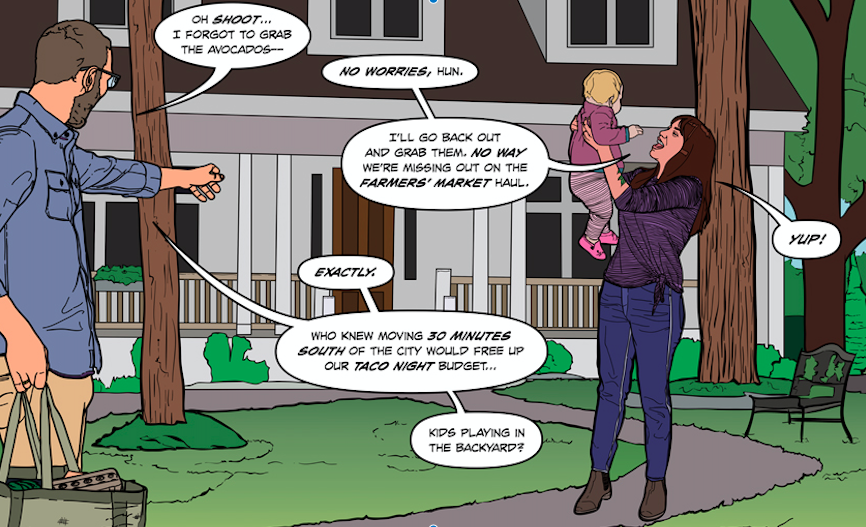
The ads evoke a bougie paradise with as much tongue-in-cheek detail as an episode of Portlandia: avocados, kombucha, farm-to-table brunch, street fairs. In the one with the tattooed mom, she’s joined by a guy (her partner?) who’s looking at his iPhone and wearing a t-shirt that says LOCAL FOOD. But there’s a twist: Here, the people living out this progressive urban cliché are suburbanites.

In Homewood, we’re told, people walk to the farmer’s market, keep chickens in their yards, and hang out with friends of different races and sexual orientations. By contrast, their urban peers come across as either a bit square (see the first ad above), or just stressed out from having to deal with school bureaucracy and oversubscribed city services, like rec classes that fill up immediately.

Who’s the sucker for moving to the suburbs now, eh?, the ads seem to ask. But the characters are more or less interchangeable; the implication is that if they move to Homewood, those tightly wound Chicagoans will chill out and name their kids “Zen,” too.

While they might seem suspiciously like they were generated by an algorithm fed with marketing data and New York Times trend pieces, the comic-strip Homewood denizens are based on real residents and real events, according to Maharry (who lives in Homewood herself).

In fact, “Think Homewood” reveals just how much the old dichotomy of city vs. suburb is blurring. It proves a fact that would have been unthinkable 20 or 30 years ago: Suburbs now have to work to attract the cohort they were built for. As certain cities become more sought-after and lively, suburbs can no longer just sit back and wait for the inevitable stampede of first-time homebuyers and new parents. They have to convince skeptical young folk of their essential urbanity first. (Another Chicago suburb, Berwyn, is running ads on city billboards proclaiming that it’s “nothing like a suburb.”)

They also have to offer a competitive advantage vis-a-vis the city. In Homewood, that advantage is affordable real estate and good public schools. The median home value in Homewood is a reasonable $149,800, according to Zillow. The area high school, Homewood-Flossmoor, is well regarded. And the K-8 schools have a streamlinedstructure, which the ads dangle in front of Chicago parents as sweet relief. Even as school choice brings more educational options to Chicago and other U.S. cities, it can be a gamble, and a fragmented school landscape can be difficult and exhausting for parents to navigate.

In the view of sociologist John Joe Schlichtman, Homewood is basically promising gentrification without the guilt. Ditto for guilt-free driving: The ads promise easy car trips on traffic-free streets along with (limited) walkability and Metra rail service into Chicago. This “car-light” lifestyle is portrayed as the best of both worlds.

One comic panel shows Chicago Dad stuck in traffic on the way back from the store. He realizes he forgot to get avocados. Frak! That’s taco night ruined. But when Homewood Dad remembers the avocados, he can hop in the car and be back at the store in minutes. Taco night is saved.(thinkhomewood.com)(thinkhomewood.com)

The multiracial cast of these ads is not a sleight of hand. Homewood is legitimately diverse: 53 percent white, 37 percent black, 2 percent Asian, and 8 percent Hispanic. Its schools are majority nonwhite. These figures reflect larger demographic shifts as people of color move out (or are pushed out) of expensive cities, and as immigrants bypass central cities and head straight to the ’burbs. But Homewood-Flossmoor also has a history of proactive integration efforts: The South Suburban Housing Center, a regional fair-housing organization, was founded in Homewood in 1975.

Mayor Hofeld told me that in Homewood, “the glue that really binds [the] community together” is a series of annual festivals, including a chili cook-off and a rail fest. He hopes people who are interested in the town will attend one. Millennials, he said, “have enjoyed living in the city, and the features the city might afford. But they’re getting a little bit older, thinking of raising families, and looking around for a stable community that has a lot of amenities. And that’s what we are.”

I asked the mayor, who is 80 and has been in office for two decades, if “Think Homewood” reflects the town as it is today. “Very much so,” he said. “This cartoonist and MJ [Maharry], they really nailed it down. There are choices here. And that’s what’s nice.”

Wednesday, April 18, 2018

The Equality Song

Committee Kills High-Density Housing Bill - Senate Bill 827

HURRAY! After fierce debate, the State Senate Transportation and Housing Committee Kills High-Density Housing Bill - Senate Bill 827

Contemplative Senator Wiener with Senator Beall in the background (Photo by Paul Chinn, The Chronicle)


HURRAY! On Tuesday, the Senate Transportation and Housing Committee killed Senate Bill 827 (Wiener), a bill that would have limited the ability of counties and cities to block high-density apartment and condominium construction near public transit. 

The committee voted 5 "Nay" to 4 "Yay" and prevented the bill from moving forward.  Four Senators did not cast votes, even though they were present.  Here's how the Senators voted:

Sen. Jim Beall, D-San Jose (chair): No
Sen. Anthony Cannella, R-Ceres (Stanislaus County) (vice chair): No
Sen. Benjamin Allen, D-Santa Monica: No
Sen. Bill Dodd, D-Napa: No
Sen. Ted Gaines, R-El Dorado Hills: Yes
Sen. Cathleen Galgiani, D-Stockton: Not voting
Sen. Mike McGuire, D-Healdsburg: No
Sen. Mike Morrell, R-Rancho Cucamonga (San Bernardino County): Yes
Sen. Richard Roth, D-Riverside: Not voting
Sen. Nancy Skinner, D-Berkeley: Yes
Sen. Andy Vidak, R-Hanford (Kings County): Not voting
Sen. Bob Wieckowski, D-Fremont: Not voting
Sen. Scott Wiener, D-San Francisco: Yes

The Senate Committee's discussion began with Senator Wiener presenting his case and the benefits of the bill. Wiener argued the ambitious proposal was long overdue, given the state’s spiraling housing costs and freeways clogged with long-distance commuters who can’t afford to live near their jobs. "SB 827 promotes exactly the kind of housing that we need."

The San Francisco Chronicle reported; "He (Wiener) took aim at  Beverly Hills and Marin County, saying they opposed his bill because it would remove an obstacle that wealthy cities use to keep new housing out of their communities."

Then, each Senator gave reasons for his/her vote.  

Senator Beall (D-San Jose) stated that it didn't make sense to plan housing near bus services that are not permanent and recounted a personal story about how his father sold his car with the intention of relying on the bus to get to work, but then the bus route was eliminated.  Beall was also concerned about the bill's impact on social justice.

Senator Roth (D-Riverside) said; 'My challenge, frankly, is the one-size-fits-all approach to the bill."  Senator Dodd (D-Napa) stated something similar; "The bill isn't flexible enough." and doesn't work for small cities.  

Senator Ben Allen (D-Santa Monica) indicated it was poor city planning to have long corridors of dense housing.  He added; "It doesn't make sense to dole out development near non-permanent bus routes."  Allen also stated; "Density doesn't bring affordable housing. Just look at Manhattan" and the bill doesn't include historical preservation.

Senator Cathleen Galgiani (D-Stockton) relayed that the bill didn't address the needs of her area, which is housing-rich and jobs-poor, the exact opposite of what San Francisco (Wiener's district) is facing.

Senator Mike McGuire (D-Marin, Sonoma) (our representative) gave a number of reasons for opposing the bill: "The affordable housing provisions are not strong enough."; "The bill needs stronger anti-displacement protections."; The bill weakens CEQA and the ability to analyze impacts; Cities need at least 5 years to plan for increased density; and Smaller cities with poor transit need more parking.   I believe (not certain) he added that housing density around fixed transit stops and ferry terminals makes sense but dense housing around unpredictable bus service does not.

Senator Nancy Skinner (D-Berkeley), who voted in favor of the bill, said; "If we don't build more housing we will never get the cost of housing down."

Many of the Senators (including Senator McGuire) who opposed the bill, prefaced their remarks by thanking Senator Wiener for his persistence and bringing an important topic to the limelight. They also expressed that they look forward to working with him on another bill to solve the housing crisis.  Some senators said they liked the idea of housing density near public transportation but the details of the bill were wrong.

Acknowledging probable defeat, Senator Wiener expressed; "Whatever happens today, we're going to keep working." "This issue isn't going away.  This bill isn't going away."

Here's Senator Scott Wiener's statement regarding his loss:
http://sd11.senate.ca.gov/news/20180417-senator-wiener%E2%80%99s-bill-allow-more-housing-near-public-transportation-stalls-senate
At the end of the hearing, Wiener asked for reconsideration and Chair Beall granted it without amendments. 

According to Michelle Pariset (Public Advocates Staff); " 'Reconsideration without amendments' means that Wiener can bring the bill up again for another vote but he can't do it with amendments. Wiener would need to flip enough votes before next Tuesday's (4/24) Transportation and Housing Committee meeting to move the bill. Then he'd need to ask for and receive a rules waiver to be heard the very next day (Wednesday 4/25) in the Senate Governance and Finance Committee. He'd need to have enough "yay" votes in the Senate Governance and Finance Committee, which is chaired by McGuire who's not going to flip. Friday (4/27) is the policy committee deadline for fiscal bills. This scenario is highly unlikely but it's possible."

For more details, please follow the below links to read pertinent articles.

Thank you to everyone who spread the word about the issue, met with representatives, sent letters, signed the petition, made calls to the Senators and went to Sacramento to attend the Senate Transportation and Housing Committee meeting.  Your advocacy made a difference! 


ARTICLES ABOUT SB-827'S DEMISE:

"Major California housing bill dies in committee meeting" by Katy Murphy, The Mercury News:
https://www.mercurynews.com/2018/04/17/major-california-housing-bill-dies-in-first-committee-hearing/

"Bill pushing apartments and condos near public transit loses crucial vote" by Melody Gutierrez, San Francisco Chronicle:
https://www.sfchronicle.com/politics/article/Bill-pushing-apartments-and-condos-near-public-12841780.php
California plan linking new housing to public transit rejected by state lawmakers by Liam Dillon, LA Time
http://www.latimes.com/politics/la-pol-ca-big-housing-bill-dies-20180417-story.html

Marinwood CSD President Green "I don't have a brain and will not listen"


Linda Barnello makes a simple request for a communication policy from Marinwood CSD manager, Eric Dreikosen and he laughs.  Marinwood CSD President Leah Green refuses to answer also and interupts the speaker and claims' I don't have a brain"  None of the other Marinwood CSD managers even look up from their desk and express outrage at this insulting, arrogant display by President Green and CSD manager Dreikosen.   Linda has been a major benefactor of the Community and the Marinwood Fire Department.  There is no excuse for this behavior from our staff and elected officials.

Tuesday, April 17, 2018

Sacramento hearing on SB827. aka. Wiener's War on California.

This SimCity-Like Tool Lets Urban Planners See The Potential Impact Of Their Ideas

This SimCity-Like Tool Lets Urban Planners See The Potential Impact Of Their Ideas

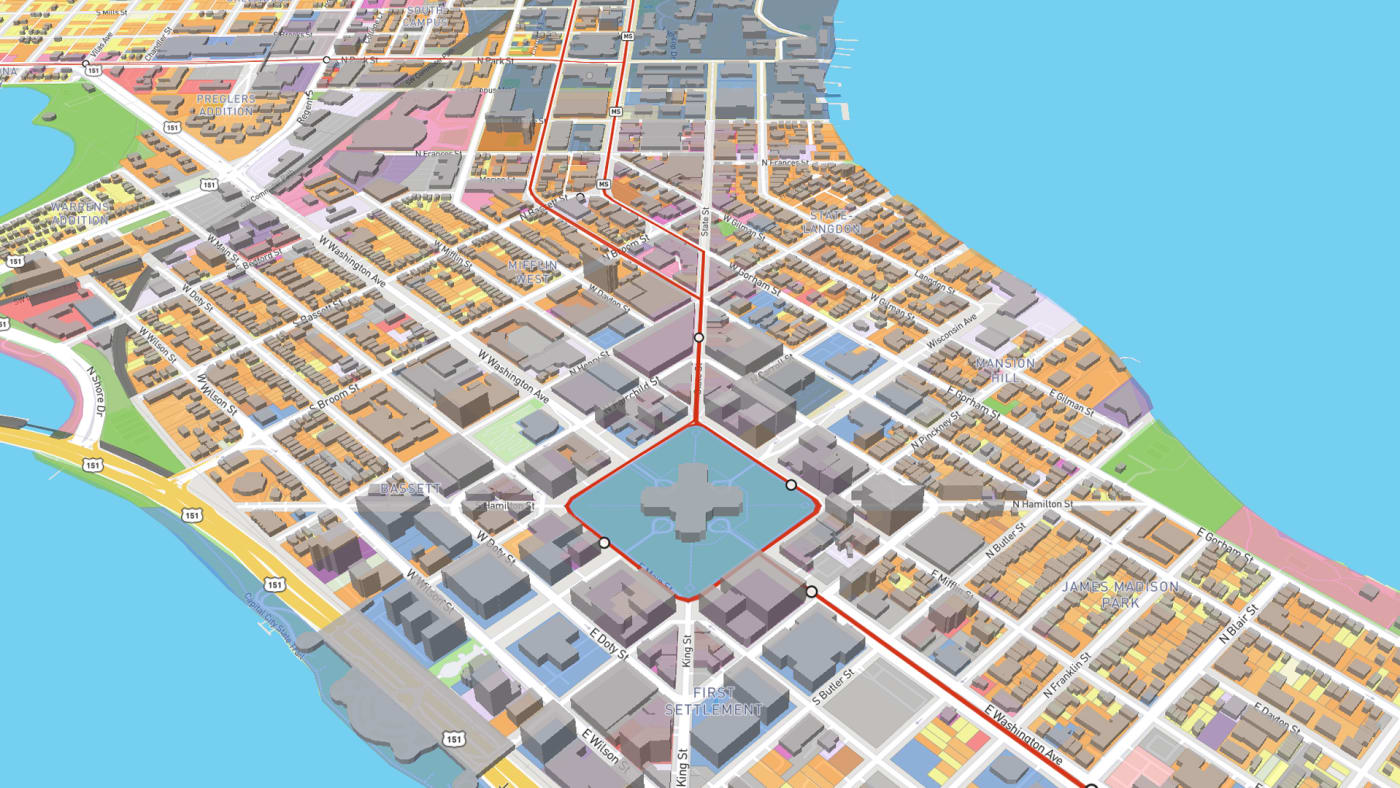
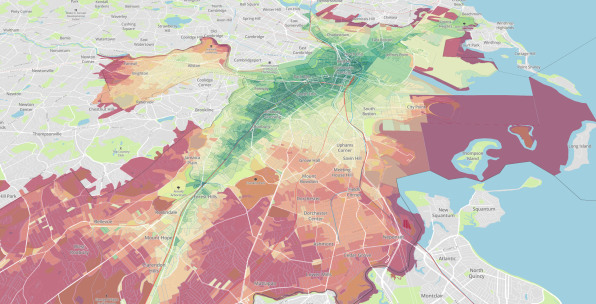
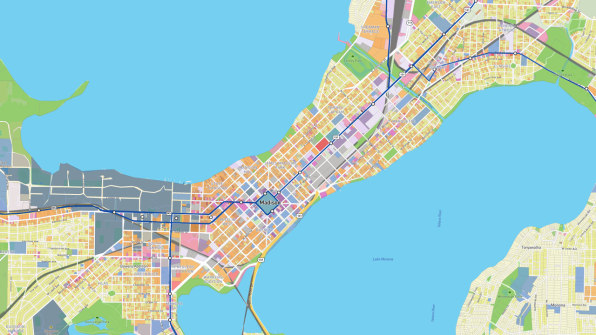
Urban Footprint makes it easy to run simulations to see how a new plan might change traffic and commute times, the ability of kids to walk to school, access to jobs, energy use, the local economy, health, and carbon emissions.

[Image: courtesy UrbanFootprint]

Editor's Note:  What about the infrastructure capacity of water, sewer, roads, schools, tunnels and bridges? Planners have big ideas but don't like to actually plan for these boring considerations.  This is why many of us are strongly opposed to Plan Bay Area, SB827 and other rapid urbanization schemes.


BY ADELE PETERS6 MINUTE READ


When a state senator in California proposed a bill that would require cities to allow developers to build dense housing near transit stops–including five-story apartment buildings on some streets where there are only one or two-story buildings now–Californians quickly took sides. Some say the change is a needed step to address the state’s housing crisis, and that it would lower carbon emissions because people living near transit would no longer have to drive. Some say that it would change neighborhood character, or that the increased development will drive displacement of low-income renters.
[Image: courtesy UrbanFootprint]

One thing that’s helpful–but often lacking–in arguments across the country about major urban policy like this is specific numbers about how the change might affect the city in the future. UrbanFootprint, a startup with a software tool of the same name, was first to begin providing stats. Near one Oakland BART station, for example, they found that the surrounding area could go from 4,447 housing units to 27,156. In comparison to building the same amount of housing in a typical Alameda County location, they later calculated, the dense housing near the BART station would result in 270 million fewer miles traveled in cars per year, 12 million fewer gallons of fuel burned (a savings of $43 million in fuel cost alone), and nearly 110,000 metric tons of carbon emissions averted.[Image: courtesy UrbanFootprint]

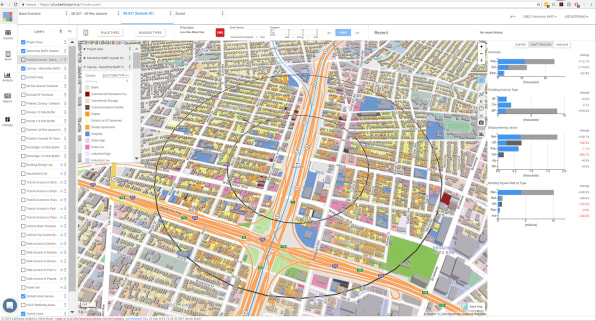
The software makes it possible to plug in any urban planning scenario, push a few buttons, and see a broad set of impacts, including how a plan might change traffic and commute times, the ability of kids to walk to school, access to jobs, energy use, the local economy, health, and carbon emissions. (The software tool can’t predict changes to rents). In the past, these types of complex calculations–if they were done at all–could take months or years as teams of consultants gathered massive amounts of data and made or customized models. Today, the State of California announced that it is partnering with the company to make the tool available for free to more than 500 cities, counties, and regional agencies in the state.

When communities can see comprehensive data about multiple plans for the future, the startup’s founders say, it becomes easier to compare them and reach consensus. For planners and designers, the tool can lead to better designs.

[Image: courtesy UrbanFootprint]Co-founders Peter Calthorpe and Joe DiStefano first started using data in a similar way–without the software–around 25 years ago. As they had worked with cities as consultants, they’d seen information gaps. “Whether it was a decision about how to invest in transportation or a decision about where and how to put housing, battles about sprawl versus transit-oriented development, all this stuff was being done in a next-to-factless vacuum,” says DiStefano.


In Salt Lake City, in the late 1990s, they worked with the city to envision how it could meet a new demand for housing. Environmentalists were concerned about sprawl. Fiscally conservative legislators were concerned about the cost of water for new neighborhoods. The Mormon Church wanted affordable housing. Calthorpe and DiStefano ran the numbers for the various scenarios that each group wanted. When everyone saw the results, they collectively chose the option of transit-oriented development.

[Image: courtesy UrbanFootprint]“When you lay out all the facts against all the scenarios what happens is there are few really truly virtuous strategies that rise up and solve many problems simultaneously,” says Calthorpe. “And when you find those strategies you get a political consensus that didn’t exist before.”


This happens, he says, despite living in a time when facts sometimes don’t seem to matter. The process doesn’t ask environmentalists or fiscal conservatives to change their values; it shows which solutions can best meet a variety of desires.

Looking at several impacts of a plan simultaneously also makes connections between multiple problems clearer, such as the link between walkable neighborhoods, transit, and health. “We tend to deal with our issues one at a time,” says Calthorpe. “If it’s obesity, we think about diet and exercise. But actually, the kind of environments we create have a huge impact.”[Image: courtesy UrbanFootprint]

They used a similar process in Portland, Oregon, post-Katrina Louisiana, China, and elsewhere. In Hawaii, the local Sierra Club opposed a new transit system, but the group changed its mind after seeing the data about the reductions in car trips the project would bring. The process worked. But Calthorpe and DiStefano also realized that it was difficult to scale. The work in Salt Lake City took two years, a massive budget, and “an army of consultants.” They started to play with the idea of creating software that could make the process cheaper, quicker, and more accessible.

When California passed a 2008 law that required cities and regions to create plans for more sustainable design to reduce emissions, the state needed software to set targets and measure compliance. The government asked Calthorpe and DiStefano to take its early version of the software and develop it further. The tool helped the state see a range of financial, environmental, and social impacts beyond carbon, helping win broader support for smart growth rather than climate action alone. Seeing that success, UrbanFootprint decided to make another version that any city can use.

In late 2017, the company raised $5 million in seed funding from the venture firm Social Capital and angel investors. Social Capital, a purpose-driven firm in Silicon Valley, has a different perspective than some peers. “We believe UrbanFootprint will be transformative for one of the most critical real-world challenges of our times,” says Jay Zaveri, a partner at Social Capital. “It sits at the nexus of software technology, machine learning, and urban infrastructure scenario planning to drive sustainable and equitable outcomes for cities everywhere.”[Image: courtesy UrbanFootprint]

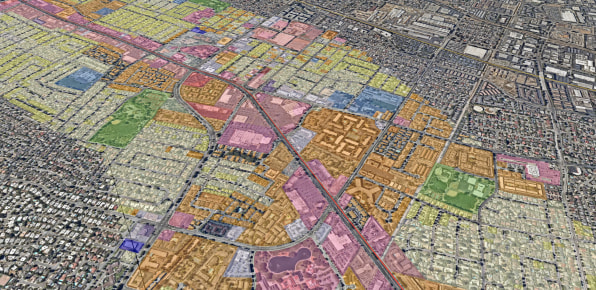
The tool pulls in data from around 100 datasets–about jobs and the people living in a neighborhood, how many people are driving or biking, existing buildings, predictions for sea levels rise, decaying infrastructure, inequality, health, and more–and uses machine learning to clean up the data. When someone using the software enters information about a proposed plan or policy, the tool feeds back environmental, social, and economic metrics. The tool uses a variety of models, some built in-house, and others that build on academic work. California energy and water agencies helped build the models for measuring energy and water impacts; conservation modeling was developed with the Nature Conservancy. After entering data about a proposed plan, a city can see detailed, color-coded maps that show, for example, access to public transit.


As new data becomes available from the growing range of sensors used by city governments or from startups like Aclima, which is using air quality sensors attached to Google StreetView cars, that can be added to the tool. UrbanFootprint worked with The Nature Conservancy to add data about conservation and ecosystem services, and with the American Lung Association to add data about air quality impacts like asthma.

“The data is getting to the point now where one of the biggest challenges for people engaged in city building is filtering through it all,” Calthorpe says. “It turns into an avalanche of information that people can’t really manage their way to clarity and insights.” It isn’t really useful, he argues, unless it’s in a tool that makes it easily accessible.

The software is currently built for the U.S., though UrbanFootprint is also working with international cities like Chongqing, China, which has a population of 30 million, nearly as large as all of California. They believe it can be useful anywhere, and as cities continue to grow–by 2050, 70% of the world’s population will be urban–good planning, which shapes social opportunity and environmental impact, is also necessary.

“In China alone, they’re going to be building cities for another 300 million people in the next 20 years,” says Calthorpe. “That’s basically building the urban environment of the United States. And they’re going to do that in 20 years instead of 200 years. So getting cities right is really at the crux of the well-being of mankind.”