Thursday, July 6, 2017

Wednesday, July 5, 2017
Kotkin, Gattis: Economic diversity helps Houstonians live well
Kotkin, Gattis: Economic diversity helps Houstonians live well
Lower costs help middle- and working-class residents enjoy higher standards of living
By Joel Kotkin and Tory Gattis | October 18, 2014
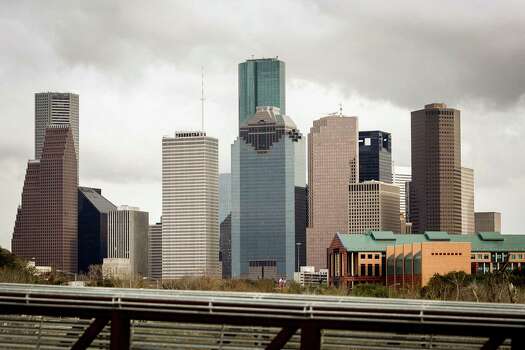
Over the past decade, we have witnessed the emergence of a new urban paradigm that both maximizes growth and provides greater upward mobility. We call this opportunity urbanism, an approach that focuses largely on providing the best policy environment for both businesses and individuals to pursue their aspirations.
Although contrary to much of the conventional wisdom about cities and regions, this is not a break with traditional urbanism, but instead a reinforcement of old traditions. Long ago, Aristotle reminded us that the city was a place where people came to live, and they remained there in order to live better. "A city comes into being for the sake of life, but exists for the sake of living well." In the end, opportunity urbanism rests on the notion that cities serve, first and foremost, as engines to create better lives for the vast majority of its residents.
The Houston and luxury models
The Houston metropolitan area reflects the idea of opportunity urbanism more closely than any major metropolitan area. Across a broad spectrum - income growth, new jobs, housing starts, population growth and migration - no other major metropolitan region in the country has performed as well over the past decade. This was among the first major metropolitan regions to replace the jobs lost in the recession and has experienced by far the largest percentage job growth since, with Dallas-Fort Worth second.
In many ways, opportunity urbanism contrasts with the prevailing urban planning paradigm - variously called new urbanism or smart growth - which seeks to replicate the dense, highly concentrated monocentric city of the past. This approach posits the notion that policies of forced density, through regulatory mandates and often subsidies, are critical to attracting both young, educated people and the global business elite. This approach describes the successful city, in the words of former New York Mayor Michael Bloomberg, as "a luxury product."
This notion of the "luxury city" worked, at least for some, in well-appointed older cities such as New York, San Francisco and Boston. Unlike most American cities, these boast long-established dense cores and transit-oriented areas where residents are employed. They possess great amenities tied to their pasts, from world-class art museums and universities, to charming historic districts, parks and public structures.
But this model of urbanism does not fit the profile of most American metropolitan regions, which tend to be far more recent in their development, more dispersed and overwhelmingly dependent on cars in terms of commuting. Indeed, most of the fastest-growing regions in this country - Houston, Dallas-Fort Worth, Oklahoma City, Raleigh and Nashville - function in a highly multipolar model that contrasts sharply with that of cities like New York, Boston or Chicago.
Prospects for upward mobility
The luxury paradigm has worked for some in some cities, but has failed, critically, in providing ample opportunities for the middle and working classes, much less the poor. Indeed, many of the cities most closely identified with luxury urbanism tend to suffer the most extreme disparities of both class and race. If Manhattan were a country, it would rank sixth-highest in income inequality in the world out of more than 130 countries for which the World Bank reports data. New York's wealthiest 1 percent earn one-third of the entire municipality's personal income - almost twice the proportion for the rest of the country.
Indeed, increasingly, New York, as well as San Francisco, London, Paris and other cities where the cost of living has skyrocketed, are no longer places of opportunity for those who lack financial resources or the most elite educations. Instead, they thrive largely by attracting people who are already successful or are living on inherited largesse.
They are becoming, as journalist Simon Kuper puts it, "the vast gated communities where the 1 percent reproduces itself."
Not surprisingly, the middle class is shrinking rapidly in most luxury cities. A recent analysis of 2010 Census data by the Brookings Institution found that the percentage of middle incomes in metro regions such as New York, Los Angeles and Chicago has been in a precipitous decline for the last 30 years, due in part to high housing and business costs.
A more recent 2014 Brookings study found that these generally high-cost luxury cities - with the exception of Atlanta-tend to suffer the most pronounced inequality: San Francisco, Miami, Boston, Washington DC, New York, Chicago and Los Angeles. In recent years, income inequality has risen most rapidly in the very mecca of luxury progressivism, San Francisco, where the wages of the poorest 20 percent of all households have actually declined amid the dot com billions.
Like other large cities, Houston also suffers a high level of inequality, but its lower costs have helped its middle and working class populations to enjoy a higher standard of living than their luxury city counterparts. The promise of the opportunity urbanism model also can be demonstrated by smaller income disparities between racial groups, higher GDP growth, less expansion of poverty and the greater production of high-paying mid-skilled jobs. In these aspects, opportunity cities like Houston greatly out-performed their often more celebrated rivals.
But for this model to continue to succeed, Houston must confront many challenges, some of which are a direct product of its successful growth. Opportunity urbanism is not a libertarian fantasy; government must and should play an important, even expanding role. There remains, as we spell out in our report, enormous need to expand the region's infrastructure, and, most important, to improve the educational institutions of the region, from the troubled grade schools to expanding vocational programs and building up the area's still inadequate higher education.
How to measure 'living well'
The one statistic that best encompasses the success of the Houston opportunity model and exposes the weakness of smart growth is the cost-of-living adjusted average paycheck (see chart on page B13).
Despite the assertions of New York Times columnist Paul Krugman, among others, that the Texas urban economy is based on low wages, Harris County's average household income is above the national average; close to that of Boston. But once the cost of living is factored in, Houston does far better for its citizens compared to any of the legacy cities.
Houston, with Dallas-Fort Worth a strong second, is able to provide its citizens the highest standard of living, as measured by average annual adjusted wages, of any major metro area in America. This is different from subjective "quality of life," but includes such basics as jobs, housing and overall cost of living.
In the end, the key advantage and promise of opportunity urbanism lies in finding ways to help residents fulfill the basic aspirations of citizens. Far more than glittery events or celebrity culture, what really matters is whether a city helps improve the often mundane conditions of life. "Everyday life," observed the great French historian Fernand Braudel, "consists of the little things one hardly notices in time and space."
This approach follows Aristotle's notion of the ultimate purpose of cities - about serving as an engine for improving lives.
It is a great thing that America continues to boast some of the most luxurious, edgy and attractive urban districts in the world. But we also need cities that can nurture new and innovative businesses, while accommodating families, middle- and working-class people with a high standard of living. Opportunity urbanism, and cities like Houston, provides that option.
Kotkin is an author, executive editor of NewGeography.com and Roger Hobbs Distinguished Fellow in Urban Studies at Chapman University. Gattis writes the Houston Strategies blog.
Although contrary to much of the conventional wisdom about cities and regions, this is not a break with traditional urbanism, but instead a reinforcement of old traditions. Long ago, Aristotle reminded us that the city was a place where people came to live, and they remained there in order to live better. "A city comes into being for the sake of life, but exists for the sake of living well." In the end, opportunity urbanism rests on the notion that cities serve, first and foremost, as engines to create better lives for the vast majority of its residents.
The Houston and luxury models
The Houston metropolitan area reflects the idea of opportunity urbanism more closely than any major metropolitan area. Across a broad spectrum - income growth, new jobs, housing starts, population growth and migration - no other major metropolitan region in the country has performed as well over the past decade. This was among the first major metropolitan regions to replace the jobs lost in the recession and has experienced by far the largest percentage job growth since, with Dallas-Fort Worth second.
In many ways, opportunity urbanism contrasts with the prevailing urban planning paradigm - variously called new urbanism or smart growth - which seeks to replicate the dense, highly concentrated monocentric city of the past. This approach posits the notion that policies of forced density, through regulatory mandates and often subsidies, are critical to attracting both young, educated people and the global business elite. This approach describes the successful city, in the words of former New York Mayor Michael Bloomberg, as "a luxury product."
This notion of the "luxury city" worked, at least for some, in well-appointed older cities such as New York, San Francisco and Boston. Unlike most American cities, these boast long-established dense cores and transit-oriented areas where residents are employed. They possess great amenities tied to their pasts, from world-class art museums and universities, to charming historic districts, parks and public structures.
Prospects for upward mobility
The luxury paradigm has worked for some in some cities, but has failed, critically, in providing ample opportunities for the middle and working classes, much less the poor. Indeed, many of the cities most closely identified with luxury urbanism tend to suffer the most extreme disparities of both class and race. If Manhattan were a country, it would rank sixth-highest in income inequality in the world out of more than 130 countries for which the World Bank reports data. New York's wealthiest 1 percent earn one-third of the entire municipality's personal income - almost twice the proportion for the rest of the country.
Indeed, increasingly, New York, as well as San Francisco, London, Paris and other cities where the cost of living has skyrocketed, are no longer places of opportunity for those who lack financial resources or the most elite educations. Instead, they thrive largely by attracting people who are already successful or are living on inherited largesse.
They are becoming, as journalist Simon Kuper puts it, "the vast gated communities where the 1 percent reproduces itself."
Not surprisingly, the middle class is shrinking rapidly in most luxury cities. A recent analysis of 2010 Census data by the Brookings Institution found that the percentage of middle incomes in metro regions such as New York, Los Angeles and Chicago has been in a precipitous decline for the last 30 years, due in part to high housing and business costs.
A more recent 2014 Brookings study found that these generally high-cost luxury cities - with the exception of Atlanta-tend to suffer the most pronounced inequality: San Francisco, Miami, Boston, Washington DC, New York, Chicago and Los Angeles. In recent years, income inequality has risen most rapidly in the very mecca of luxury progressivism, San Francisco, where the wages of the poorest 20 percent of all households have actually declined amid the dot com billions.
Like other large cities, Houston also suffers a high level of inequality, but its lower costs have helped its middle and working class populations to enjoy a higher standard of living than their luxury city counterparts. The promise of the opportunity urbanism model also can be demonstrated by smaller income disparities between racial groups, higher GDP growth, less expansion of poverty and the greater production of high-paying mid-skilled jobs. In these aspects, opportunity cities like Houston greatly out-performed their often more celebrated rivals.
But for this model to continue to succeed, Houston must confront many challenges, some of which are a direct product of its successful growth. Opportunity urbanism is not a libertarian fantasy; government must and should play an important, even expanding role. There remains, as we spell out in our report, enormous need to expand the region's infrastructure, and, most important, to improve the educational institutions of the region, from the troubled grade schools to expanding vocational programs and building up the area's still inadequate higher education.
How to measure 'living well'
The one statistic that best encompasses the success of the Houston opportunity model and exposes the weakness of smart growth is the cost-of-living adjusted average paycheck (see chart on page B13).
Despite the assertions of New York Times columnist Paul Krugman, among others, that the Texas urban economy is based on low wages, Harris County's average household income is above the national average; close to that of Boston. But once the cost of living is factored in, Houston does far better for its citizens compared to any of the legacy cities.
Houston, with Dallas-Fort Worth a strong second, is able to provide its citizens the highest standard of living, as measured by average annual adjusted wages, of any major metro area in America. This is different from subjective "quality of life," but includes such basics as jobs, housing and overall cost of living.
In the end, the key advantage and promise of opportunity urbanism lies in finding ways to help residents fulfill the basic aspirations of citizens. Far more than glittery events or celebrity culture, what really matters is whether a city helps improve the often mundane conditions of life. "Everyday life," observed the great French historian Fernand Braudel, "consists of the little things one hardly notices in time and space."
This approach follows Aristotle's notion of the ultimate purpose of cities - about serving as an engine for improving lives.
It is a great thing that America continues to boast some of the most luxurious, edgy and attractive urban districts in the world. But we also need cities that can nurture new and innovative businesses, while accommodating families, middle- and working-class people with a high standard of living. Opportunity urbanism, and cities like Houston, provides that option.
Kotkin is an author, executive editor of NewGeography.com and Roger Hobbs Distinguished Fellow in Urban Studies at Chapman University. Gattis writes the Houston Strategies blog.

Monday, July 3, 2017
FLIGHT FROM URBAN CORES ACCELERATES: 2016 CENSUS METROPOLITAN AREA ESTIMATES
FLIGHT FROM URBAN CORES ACCELERATES: 2016 CENSUS METROPOLITAN AREA ESTIMATES
by Wendell Cox 03/24/2017
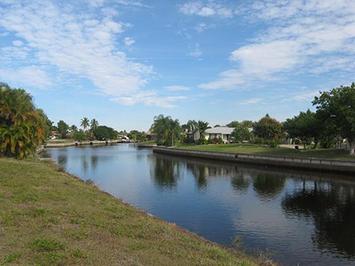
The flight from the nation’s major metropolitan area core counties increased 60 percent between 2015 and 2016, according to just-released estimates from the US Census Bureau (Note). A total of 321,000 more residents left the core counties than moved in, up from 199,000 in 2015. This is ten times the decade’s smallest domestic migration loss of 32,000 for the same counties which occurred in 2012.
Suburban counties continued to attract net domestic migrants, at a somewhat higher rate than in recent years and much higher than in the early part of the decade. The suburban counties gained 235,000 domestic migrants in 2016, compared to 224,000 in 2014 and more than double the low point of 113,000 in 2011 (Figure 1).
Sunday, July 2, 2017
What if ABAG had a Forty Year Plan and Nobody Obeyed?


This is the crowd at ABAG Open House for Plan Bay Area 2040 held in Walnut Creek, CA on April 29, 2015. It is a generous estimate that fifty people attended most of whom were pro affordable housing activists. Almost no one from the general public showed up.
Contra Costa County has a population over one million people. Do the planners and politicians of ABAG/MTC really think this means "public buy in" for their forty year plan"?
Only seventeen comments on this question about the plan that promises to radically transform the Bay Area to a "One Bay Area" city state run by regional bureaucrats, political appointees and politicians unaccountable to the local communities they serve. This is the most radical attempt to change the "economy, environment and equity" ever conceived in our lifetime. It will reshape politics, property rights, settlement patterns and introduce a level of taxation and government control never seen before in a free republic.
We Must Save Marin Again!
 |
“All animals are equal, but some animals are more equal than others.”― George Orwell, Animal Farm |
Bay Area group’s housing solution: Punish cities that don’t build
Bay Area group’s housing solution: Punish cities that don’t build
By David R. Baker
November 6, 2015 Updated: November 6, 2015 12:04am

Photo: Liz Hafalia, The Chronicle
About a hundred units of affordable housing might replace this parking lot on the southwest corner of San Jose and Geneva avenues in San Francisco, Calif., on Tuesday, October 27, 2015.
To keep the Bay Area economy strong, all nine counties and 101 cities must work as a unified entity — adding housing and coordinating mass transit and road projects — according to a report from an influential business group.
But many of the group’s recommendations are sure to face resistance.
The Bay Area Council report argues that the clogged roads, packed commuter trains and astronomical housing prices plaguing the region can be solved only by cities planning and working together. The “Roadmap for Economic Resilience” calls for creating “super agencies” that would prioritize, approve and fund projects throughout the area, whether in bustling downtown San Francisco or suburban Livermore.
HOUSING CRISIS
 Berkeley Plaza housing needed, but meets with resistance
  Propositions I and F rejected by voters throughout S.F.
  Prop. A, affordable-housing measure, wins in S.F.
  Neglected Balboa Park offers opportunities for affordable housing
 “We believe religiously that the best approach to solving challenges on a regional scale is to act on a regional scale,” said Jim Wunderman, the council’s chief executive officer.
The need is perhaps most visible in the housing crisis that has become one of San Francisco’s most contentious issues.
For years, the region has not been building enough housing, Wunderman said. Some cities have actively encouraged new housing while others have tried to shut it out. Unaffordable prices are the result.
“The core issue is under-supply,” Wunderman said. “We’re in a crisis now, there’s no question about it. The cost of housing in the Bay Area could be a very serious downer for the future of our economy.”
But the report’s prescriptions for solving the crisis would be difficult to carry out, in part because they would require cities to give up some of their power.
For example, regional planners already set goals for the number of housing units each Bay Area city should build, goals that many cities routinely ignore. The report recommends punishing cities that don’t meet the targets, perhaps by stripping them of the ability to approve or reject development projects.

Photo: Jerry Telfer, The Chronicle
Jim Wunderman of the Bay Area Council
Or the state could expand “by right” approval for housing. If a proposed housing project complied with local zoning and building codes, no city would be able to block it.
The report also suggests capping impact fees on housing developments and exempting some home construction from state-mandated environmental reviews.
Some of those steps would need the approval of the Legislature, while most would require the agreement of the Bay Area’s cities. Such agreement would not come easily.
“We have, in the state of California and in the Bay Area, a real commitment to local control over land-use issues,” said Jeremy Madsen, CEO of the Greenbelt Alliance, which encourages environmentally responsible development. “That’s something cities hold onto with a very tight fist.”
Wunderman says the report’s recommendations aren’t set in stone.
“The mission of the report isn’t to say, ‘It must be done this way,’” he said. “It’s to start a region-wide conversation. ... We don’t, in any way, want to put local governments out of the business of deciding what goes in their neighborhoods.”
The report also calls for creating a regional authority with the ability to raise and spend money for infrastructure projects that benefit the entire Bay Area. That money could come from establishing a regional gasoline tax, sales tax or vehicle license fee.
In addition, the region’s 26 transit agencies should immediately start coordinating their operations and future plans. Eventually, a regional transit agency would set priorities and distribute money for expansion projects, such as building another transbay tube or increasing ferry services.
“It’s definitely time for them to start coordinating,” Wunderman said. “It should be routine that, from scheduling to payment systems, they should act as one.”
David R. Baker is a San Francisco Chronicle staff writer. E-mail: dbaker@sfchronicle.com Twitter: @DavidBakerSF

LA’s Black Lung Lofts … Another Kind of Freeway Death
LA’s Black Lung Lofts … Another Kind of Freeway Death
PATRICK RANGE MCDONALD 22 JUNE 2017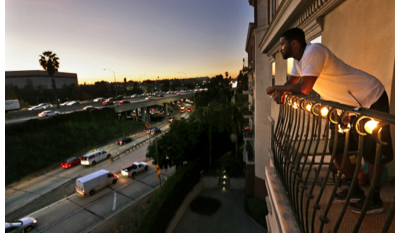
MCDONALD REPORT--After years of alarming studies and in-depth news coverage, the Los Angeles City Council and Mayor Eric Garcetti have yet to address the devastating health impacts to residents who live in freeway-adjacent housing, which LA politicians continue to approve. On Tuesday, at the Planning and Land Use Management Committee meeting, the Coalition to Preserve LA and other community groups urged council members to finally take substantive action.
“There’s an urgent need to develop new and ambitious targets and rules for reducing freeway exposure,” said Michele Prichard of Liberty Hill Foundation, a social justice group.
“Living near multiple freeways, as we do in Pacoima,” said Yvette Lopez-Ledesma, deputy director of Pacoima Beautiful, an environmental justice group in the northeast San Fernando Valley, “is an urban planning death sentence.”
On Tuesday, the Planning and Land Use Management (PLUM) Committee asked the Department of City Planning to provide a report on current city practices to address freeway pollution impacts on nearby communities. As revealed during the meeting, there are no citywide policies in place to protect the public’s health.
Yet the City Council and Mayor Eric Garcetti have known since at least 2007 that freeway-adjacent housing, widely known as “Black Lung Lofts,” seriously endangers the health of children, who are highly vulnerable to life-long respiratory illnesses when living within 500 feet of a freeway. USC’s landmark Children’s Health Study, which was first published in 2004, has proven that beyond a doubt.
In addition, other scientific studies have shown that pregnant women and senior citizens face dangerous health impacts by living next to a freeway. The LA Weekly, in 2010, and Los Angeles Times, in 2017, have also sounded the public health alarm.
The City Council and Mayor Garcetti, however, have refused to implement important policies such as creating buffer zones so that developers can’t build housing within 500 feet of a freeway or instituting a mandatory notification system in which developers must inform prospective tenants of freeway-adjacent health hazards.
Instead, the City Council and Mayor Garcetti keep approving Black Lung Lofts, such as NoHo West (642 units) next to the 170 Freeway in North Hollywood and Clarendon Street Apartments (335 units) next to the 101 Freeway in Woodlands Hills.
Developers, who’ve long been top political patrons in LA and have outsized influence at City Hall, have contributed at least $6 million in campaign cash to city politicians since 2000.
At the PLUM meeting, Miki Jackson, of the Coalition to Preserve L.A, put the council members on notice.
 “Knowing what you know,” she said, “being informed of how dangerous [freeway-adjacent housing] is, and allowing it to go forward could set the city up for some interesting lawsuits.”
 East Hollywood activist Doug Haines, whose neighborhood sits along the 101 Freeway, said, “We must prohibit all new construction next to freeways.”
And Chris Chavez, deputy policy director of the Coalition for Clean Air, said his group “urges the City Council to work with the environmental community in developing the [planning department] report… to help ensure that the recommendations in the report are as effective as possible.”
The Coalition to Preserve LA agrees, and insists that residents and community groups are not only allowed to give input about recommendations, but are given a decision-making role in the creation of citywide policies for freeway-adjacent housing.
Subscribe to:
Posts (Atom)