Monday, December 12, 2016

California legislator, Melissa Melendez speaks out against Divisive California Politics.


Monday marked the first day of session for the California State Legislature. It is a day where all California State representatives are sworn into office and commit to defending the Constitution. It has traditionally been a day of celebration, a renewed scene of bipartisanship and putting the people first.
Unfortunately, the Democrat majority decided to break from tradition by introducing a bitterly partisan and hypocritical Resolution that condemns President-elect Donald J. Trump and seeks to further divide our country along politically expedient lines.
Now more than ever, we must come together as a country rather than stooping to cheap tricks in an effort to grab headlines.

Editor's Note:  Although I did not vote for Donald Trump,  I am very disheartened that the California Legislature and other politicians are attacking Donald Trump before he gets in office. 

Portland taxes CEOs who earn more than 100x than lowest paid workers

Saturday, December 10, 2016

Generation Zero Full Documentary | Citizens United


Interesting documentary produced by Steve Bannon, former Goldman Sachs executive and controversial advisor to Donald Trump.

Man punches a kangaroo in the face to rescue his dog


A group of hunters got together to help a young cancer sufferer (terminal diagnosis) with his last wish of catching a 100 kg (220 pound) wild boar with his dogs. One day while hunting one of the highly trained dogs was chasing some pigs by scent and collided with a big buck kangaroo that then held and wrestled the dog by its protective gear (boars have tusks like knives), the owner was horrified that his dog or the kangaroo would get hurt and run in to save both parties. You can see the dog trying to escape, wanting nothing to do with the kangaroo. The big buck kangaroo releases the dog when the owner gets close but then moves in to try and attack the human. A kangaroo kick to the guts could easily disembowel the owner easily , so he backs off a couple of times giving the kangaroo some space but he eventually changes the roo's mind with a punch to the snout, as it kept coming forward. The punch stops the roo and makes him think about the situation, giving the owner and the dog time to disengage from the big wild animal and leaving it to hop off and I suppose wonder about what just happened. We laughed at the absurdity of the situation and at how unfortunate it was for the dog and kangaroo. Our 6 foot 7 inch friend felt no malice to the kangaroo but had to step in and fix a bad situation before it got worse. Young Kailem unfortunately lost his brave battle with cancer two days ago, so this hunt is part of the treasured memories his family and friends have. Having a dog get tangled up with a roo was never our aim or intention and we were happy no animals were hurt in the incident." -Greg Bloom

Can Tiny Homes Solve Homelessness?

Despite Trump, Is the Clean Energy Future Inevitable?

Despite Trump, Is the Clean Energy Future Inevitable?

The momentum away from fossil fuels and toward renewables is 'undeniable and irresistible' assert activists.

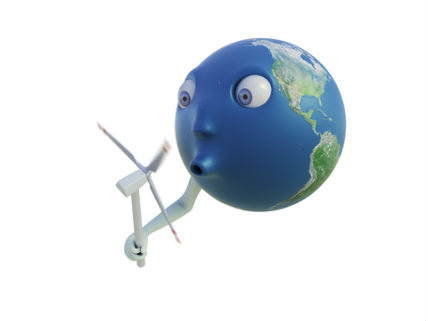
EarthWindTurbineMopicDreamstimeMopic/DreamstimeNo matter who's running the government, America's "transition to a clean energy economy is irrevocably underway," the Natural Resources Defense Council asserted in its Accelerating into a Clean Energy Future report this week. Report co-author Ralph Cavanagh added, "The nationwide momentum for pollution-free energy is undeniable and irresistible because clean energy now costs less than dirty energy."
As if to confirm the Council's claim, the infotech giant Google announced this week by the end of next year, its global operations will be fueled 100 percent by electricity generated by renewable sources. ("The science tells us that tackling climate change is an urgent global priority," the company's press release explained.) This does not mean that Google gets its electricity directly from solar panels on the roofs of its data centers or from wind turbines churning away on its corporate campuses. The company basically makes purchasing commitments to renewable projects that offset the conventionally generated electricity that it gets from local utilities.
There is, of course, nothing wrong with a business legally adopting measures that it thinks are in the best interests of its customers and shareholders. If the company is on the wrong track, those stakeholders will let Google's executives know through their purchasing and investment choices.
But if clean energy really does cost less than dirty energy, then what is there to resist? In that case, surely the invisible hand of the marketplace will make the transition to a clean-energy economy irrevocable. So can we all put aside our worries about catastrophic climate change?
Not so fast. You see, policies are needed.
Google notes that during "the last six years, the cost of wind and solar came down 60 percent and 80 percent, respectively, proving that renewables are increasingly becoming the lowest cost option." Yet even as proponents insist that clean energy now outcompetes fossil fuels, they nevertheless want to enhance their irrevocablabilty with a little help from the government. As Google obliquely puts it, "We believe the private sector, in partnership with policy leaders, must take bold steps."
What might that "partnership" look like? Google doesn't say, but you can get a sense of what might be required by reading From Risk to Return, a new report from the Risky Business Project. This group is supported by the media mogul Michael Bloomberg, the Bush-era treasury secretary Henry Paulsen, and the hedge fund manager and prominent Democratic Party donor Thomas Steyer. Its report presents four pathways toward restructuring America's energy infrastructure, with the goal of cutting U.S. carbon dioxide emissions 80 percent by 2050.
While the paper does not favor any of those four pathways—renewables, nuclear, carbon capture, and a mix—it focuses mostly on the costs and benefits of the fourth, which reduces emissions via a combination of renewables, nuclear, carbon emissions captured from fossil fuels, and the transformation of transportation toward reliance on electricity, hydrogen, and biofuels. By 2050, the report projects, the extra expenditures for building out low-carbon energy production and consumption infrastructure would be more than offset by fuel costs. The authors argue that clean energy is unfortunately not yet ready to compete head-on with fossil fuels.
"The private sector alone cannot solve the climate change problem," the Risky Business report concludes. "We know from our collective business and investment experience that the private sector will take action at the necessary speed and scale only if it is given a clear and consistent policy and regulatory framework." What sort of policies do they think are necessary? First and more foremost, they want government to put a price on carbon emissions. From their point of view, this would level the energy playing field. In addition, they rightly want to eliminate tax incentives for fossil fuel extraction, end subsidized flood insurance in high-risk areas, and lower regulatory and financing barriers to clean energy projects. Also, they want companies to disclose material climate-related risks; presumably this would include risks related to capricious public policy.
Speaking of capricious public policy, what is the Trump administration likely to do with regard to energy policy—and, in particular, to renewable energy subsidies? As it happens, Congress passed legislation just last year that gave a three-year extension to the 30 percent tax credit for solar investment, then will ramp it down incrementally until it reaches a permanent 10 percent level in 2022. The 2.3 cents per kilowatt-hour wind power production credit remains through this year, and will subsequently begin dropping 20 percent each year through 2020. Republicans voted for these subsidies in exchange for Democratic votes in favor of lifting the 40-year ban on exports of crude oil produced in the U.S. Since these subsidies are already scheduled for a phase-out, it seems unlikely that the Trump administration will regard going after them as a high priority.
What about Ralph Cavanagh's claim that clean energy now costs less than dirty energy? Last year, the investment bank Lazard calculated that the levelized unsubsidized cost of utility-scale solar photovoltaic electricity—levelizedmeans capital, fuel, and operation and maintenance are all taken into account—would range between $58 and $70 per megawatt-hour. For on-shore wind, it's $32 to $77. The cost of cheapest fossil fuel competitor, natural gas combined cycle generation, ranged between $52 and $78 per megawatt-hour. If Lazard is right, the clean energy transition does look irresistible. Who would want to resist cheaper energy?
On the other hand, the Energy Information Administration's somewhat higher estimates do not find that unsubsidized wind and solar will become cost competitive with cheap natural gas by 2022. Other research points out that increasing dependence on renewable energy means building back-up generation that can take over when clouds obscure the sun or wind dies down.
In any case, federal energy policy is not the only game in town. As the Natural Resources Defense Council report observes, one-fifth of Americans live in states that currently plan to get at least 50 percent of their energy from renewable sources by around 2030. It will be interesting to see how such states fare economically against states without such mandates.

Friday, December 9, 2016

Facial Recognition? There's an App for That, and U.S. Law Enforcement Has Been Helping Private Companies Use It

Facial Recognition? There's an App for That, and U.S. Law Enforcement Has Been Helping Private Companies Use It

Soon shopping malls and theaters can run surveillance images through an app to access state, federal, and international law enforcement watch-lists.

ALFRED PASIEKA/SCIENCE PHOTO LIBRARY/Alfred Pasieka/SPL/NewscomALFRED PASIEKA/SCIENCE PHOTO LIBRARY/Alfred Pasieka/SPL/NewscomLas Vegas-based startup Biometrica Systems describes its business as "creating software and systems that link the physical to the digital" and vice versa, "with the intention of minimizing criminality" and "events that could lead to crime."
The company's encrypted Security & Surveillance Information Network (SSIN) is already used by law-enforcement and gaming, retail, and hospitality businesses to share real-time information about suspicious incidents and individuals. Now, the network's newest iteration will give clients "the ability to run facial recognition scans of any individual or group on their properties and match them against a law enforcement verified database of criminals numbering in the millions, including more than one million registered sex offenders"—all using a convenient mobile app. What could go wrong?
Initially focused on the casino and gaming sector, Biometrica has since expanded SSIN to serve "shopping centers, stores, malls, and movie theaters." In an explanation of Biometrica products, the company website notes that federal and state governments have been "seeing the upside of sharing data with private partners" and that has allowed Biometrica to "collect and amalgamate several different law enforcement watch-lists—local, federal, state, and international."
And this, in turn, has allowed Biometrica "to create a composite set of images of an individual and their known associates, and build a set of dynamic attributes to attach to the individual and/or group" to provide businesses with a more "holistic" way of conducting "threat identification and crime prevention."
In a show of spectacularly creepy bravado, Biometrica CEO Wyly Wade called the new SSIN "revolutionary," and not only for security and surveillance companies. "This might be the first time a private company has taken Department of Defense-developed Facial Recognition software… and attached that to mobile devices for private customer use," he said.
The facial-recognition app can also benefit "non-bank financial institutions," said Biometrica Chief Financial Officer Nigel White in a statement. "They have an imperative to fulfill Know Your Customer requirements on an everyday basis. Helping them have access to faces and backgrounders of known white-collar felons in the system, will support their KYC and Anti-Money Laundering obligations."

Could Donald Trump Cancel the Paris Climate Accord?


Cassandra Sweet, a reporter for the Wall Street Journal explains the impact Donald Trump's presidency may have on the Paris Climate Accord.


Full program: President-elect Trump’s enthusiastic embrace of fossil fuels and rejection of the Paris climate deal is the earthshaking story of 2016. That surprise change is casting doubt on clean energy efforts across the board and sending climate-conscious people into a deep funk.

Thursday, December 8, 2016

Pension Wake up Call. Marinwood, are you listening?

From: The San Diego Union Tribune


Loyalton's pension default is a wake up call

Sick … a punch in the stomach. That’s how public retirees in Loyalton, California, are taking news that their town defaulted on its pension payments, resulting in the possibility of their retirement benefits being cut by as much as 60 percent, the majority of their hard-earned livelihood. 
Pension debt is not a new story — in fact, most of the country’s public pensions are significantly underfunded (state and local pensions across the U.S. have an estimated $5 trillion less than needed to cover promised benefits). But this time the largest pension plan in the nation, the California Public Employees’ Retirement System (CalPERS), has thrown public employees overboard. And that has government workers and retirees across the country asking, could this happen to me? The answer is yes! If your city runs out of money and your pension plan is not fully funded, you will lose. The only question is how much.
Loyalton withdrew from CalPERS in 2013, upon the retirement of its last guaranteed pensioner. For council members, it just made sense — after all, the town had been fully paying its required annual contributions all along. But what it didn’t count on was the $1.6 million termination fee demanded by CalPERS to cover unfunded liabilities which CalPERS has allowed to grow for the last 17 years. The fee amounts to a whopping $320,000 per each of Loyalton’s five retirees, an amount that is impossible for the town to pay. And now CalPERS has put the retirees on notice that their monthly checks will be cut.
This is what happens when cities run out of money and their pension plans are underfunded. Municipalities in fiscal distress with huge pension debt are spread throughout the country, and, sadly, California is leading the charge. StocktonSan Bernardino and Vallejo were just the beginning — all forced into bankruptcy with massive pension obligations, causing retirees to lose their health care benefits. In DetroitMichiganCentral FallsRhode Island, and PritchardAlabama, retirees took hits to their health care and pension benefits.
State and local government retirement programs are trillions of dollars in debt, resulting in tremendous budget challenges for states and municipalities and it’s only getting worse. There is no doubt that spiraling pension debt is at crisis-level proportions and is the most significant financial issue facing state and local governments.
So how did we get here and what steps can policymakers take to clean up the mess? 
As retirement costs go up, and in most states they’ve doubled or tripled in the last decade, government leaders are simply not keeping up with the rising costs. Instead, they are creating enormous pension debt, which threatens not just taxpayers but also retirees. 
In California we’ve seen many years of systemic failure to properly fund the state’s public pension systems. CalPERS’ pension debt now totals around $170 billion. As a result, between 2003 and 2013, annual pension costs for California governments jumped from $6.4 billion to $17.5 billion, and are still rising. Because of the debt, Californians face a future of higher taxes and lower services, and retirees face insecurity and possible loss of their pension benefits.
The story is similar in many other states as well. Some local governments already face service delivery insolvency and bankruptcy. More will join them in the next recession, and public employees, retirees and residents will suffer unless there is significant and meaningful pension reform. 
Government leaders can start by fully funding their pensions. State and local governments have an obligation to ensure that their retirement plans are sustainable, fiscally sound and responsibly managed so that all retirees and employees get paid what they have earned. All workers deserve safe and secure futures and shouldn’t be held responsible for poor decision-making by policy leaders. 
Failure to fund pension obligations as they are incurred makes retirement security impossible. The widespread use of overly optimistic assumptions, like high rates of return on investments means that plans are systematically underfunding their obligations every year.
Let Loyalton be a wake-up call. Neither public employees nor taxpayers created the current pension crisis, and neither should be left holding the bag when the politicians who created the problem don’t make good on their promises.
Reed, former mayor of San Jose, is a board member of the Retirement Security Initiative, a national, bipartisan advocacy organization focused on protecting and ensuring the fairness and solvency of public sector retirement plans.

Wednesday, December 7, 2016

McNellis: Let Them Commute

McNellis: Let Them Commute

“The rich are different from you and me.” F. Scott Fitzgerald
Rich cities are different, too, but—like rich people—they have their own seemingly insoluble problems. It’s just that their problems are different. At first blush, less fortunate municipalities would beg for their issues. While every other city from Bangor to Burbank is scrabbling to improve its sputtering job growth, a handful of charmed towns should be embarrassed by their employment riches.
From 2012 to 2014, the San Francisco Bay Area created 382,500 jobs while providing only 68,200 new dwellings (homes and apartments). The forecast for 2015 is roughly another 4 new jobs for each new dwelling. Even if you consider economists’ predictions on a par with those of shamans, you know the dismal science is dead-on about supply and demand. The 2014 median house price in America was $206,800. In San Francisco, it was $1,006,600, five times more. Median apartment rents nationwide are $1,231 while San Francisco’s weigh in at $3,396.
McNellis
McNellis
Once upon a time, when everyone had to walk, the rich lived on the flat land in the center of town and the poor lived atop the surrounding hills. No one with a choice was willing to trudge up and down hills every day. Henry Ford changed that. Once upon a nearer time—say from after WWII through sometime in the ’80s—the rich lived in wooded suburbs and commuted to the center of town. Gridlock changed that. The rich now live within close proximity to where they work. In fact, the CEO theory of corporate headquarters has it that a company’s main office will be located within a 10-minute surface-street drive of the CEO’s residence.
265,000 workers commute into San Francisco every day from out of town, handing the city, by some measures, the second worst traffic in the country. With a $1,000,000 median home price, it’s not only shoe clerks who are enduring the Sisyphean commute; it’s anyone making less than three hundred thousand a year. But the irony is that the reverse commute*, that is, out of the city to Silicon Valley may be even worse. Why? Because those who can afford to live in San Francisco—the techies—work in the Valley.
If it’s not the Valley’s capital, Palo Alto is surely its epicenter, home to its best and brightest minds and arguably its worst side effects. At 3.01 jobs per dwelling, Palo Alto has an unparalleled jobs-housing imbalance (Manhattan’s stands at 2.67). What do 3 jobs for every residence get you? A median home price of $2,200,000 (eleven times the national median), apartment rents 10 percent higher than San Francisco’s and roads that turn into parking lots twice a day.
What’s shocking is that this imbalance is getting worse by the day. With office rents among the highest in the country, Palo Alto is in the midst of a land-grab where developers are converting every lot and shack in town to office space (a new low was achieved earlier this year when a laundromat in a crappy strip center was turned into start-up space). What isn’t shocking is that the gridlocked citizenry is up in arms, demanding a cessation to the run-away office development. Sadly, what also isn’t shocking is that no one—neither the lunatic fringe that opposes everything nor the thoughtful people elected to run the city—is connecting the woes from our choking jobs growth to our jobs-housing imbalance.
Why? Because as socially liberal as Palo Alto may be, new housing for anyone—from the working poor to the idle upper class—is political cyanide. Merely uttering the word density in public is enough to get a politician recalled. If truth were a commonplace at public hearings, the vociferous no-growth forces might, instead of hiding behind their threadbare concerns for public safety, simply declare, “Let them commute.”
Sadder still is that this is a very old story. The Palo Alto Weekly’s former editor-in-chief, Jay Thorwaldson, pointed out in an insightful piece last year that this issue has been bedeviling Palo Alto for forty years and, despite the periodic public Sturm und Drang, has only become much worse.
Is there a solution? Piece of cake: Take urban planning away from local officials; make it a regional decision. As long as land use is decided by neighborhood-elected city councils, nothing will change. Short of that real-world impossibility, a big step in the right direction would be to reform the California Environmental Quality Act (CEQA), if ever so slightly. This well-intentioned legislation is, simply put, broken. Instead of being used to assure environmental compliance, it is relied upon as the final roadblock in the effort to defeat projects, regardless of their environmental quality. CEQA lawsuits contesting a city’s decision to allow a given development cost no-growth opponents virtually nothing to file and prosecute. They file these suits knowing that if a project can be delayed long enough, it will die or, at a minimum, be drastically cut back. If, as a prerequisite to filing their lawsuit, the opponents had to post a bond in a meaningful amount—say the actual cost of the project’s environmental studies—which they would forfeit in the event they were to lose their lawsuit, far fewer suits would be filed.
What Palo Alto’s raised-drawbridge crowd fails to realize is that ultimately they are condemning themselves to a life without family, without children and grandchildren. They may have a cracker box they bought for $90,000 that’s now worth $2,500,000, but their children—even their very bright, very hardworking children—will move away when it comes time to buy a home. How many young lawyers and doctors can save the half million you need for a down payment on a $2,200,000 house? And, unwilling to endure an hour and a half commute, they will move to Portland.
* “I have a reverse commute,” a very popular real estate lie in the 80’s, finally died out when even the criminally gullible began to scoff.
John E. McNellis is a Principal at McNellis Partners in Palo Alto, Calif.    [ Editor's Note: He is a developer asking for the suspension of democratic rights and the use of government power to enable him to make millions.  This is  despicable crony capitalism. }

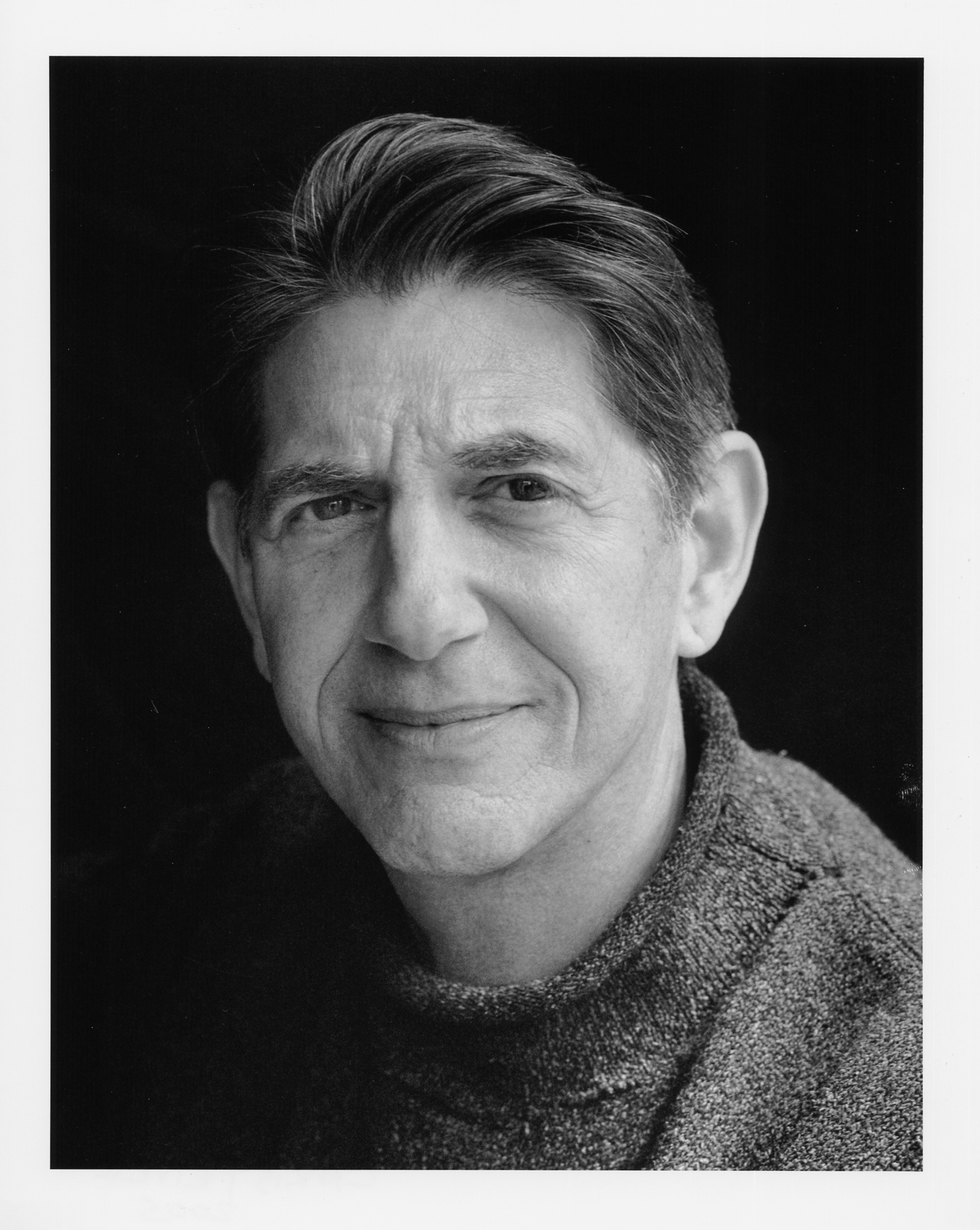
Peter Coyote, the "Spirit of Marin" leaves for Sonoma County.


Peter Coyote will be doing a talk and book signing at the Commonweal Retreat Center in Bolinas on Sunday, July 19. Photo courtesy of Peter Coyote


Yes, I am moving to Sonoma County. I’ve had it with Mill Valley. It’s become so crowded, so much traffic, and so little responsibility has been devoted to the carrying capacity of the area. 

By Steve Heilig
Peter Coyote was once voted “Marin’s favorite celebrity” by Pacific Sun readers, although he probably wasn’t too excited about that. But there’s no denying his fame. He has appeared in more than 140 films and television shows, and narrated more than 100 projects, including documentaries by the likes of Ken Burns, PBS, National Geographic and more, as well as the Olympic opening ceremonies and many commercials and audiobooks. He’s co-hosted the Academy Awards telecast and much more. But he has always seemed to be something of a reluctant star, even as he undeniably enjoyed some of the trappings of celebrity.
Born as Robert Peter Cohon in 1941 in New York City to an investment banker father, he grew up in affluence where, “I don’t remember anybody being happy.” After elite private schooling, then Iowa’s Grinnell College and a taste of student anti-war activism that resulted in Coyote and his fellow protesters being invited to the White House, he heeded the musical, literary, chemical, political, spiritual and other callings of the early 1960s and came west. After a pot bust and a name change via peyote and a shaman, he became a central figure in the San Francisco hippie or “freak” counterculture, centered in the Haight-Ashbury, both as a budding actor with the radical San Francisco Mime Troupe and as a co-founder of the anarchic collective called the Diggers.
That loose collective, beyond giving out free food and staging all manner of events, “had taken as its collective task the rethinking and recreation of our national culture,” as he wrote in his widely-praised first autobiographical book, 1998’s Sleeping Where I Fall: A Chronicle. Such intentions were not unique to the Diggers, he wrote, as “my generation was struggling openly with problems of racism, grossly inequitable distribution of goods and services, dishonorable foreign policies, and the war in Vietnam.” But by the end of the ’60s, when the Diggers’ lofty goals seemed out of reach and they morphed into the broader Free Family, Coyote migrated into rural West Marin for an experiment with communal living in Olema—an experience that, as recounted in his first book, was, if anything, more anarchic than the Haight.
In the 1970s, after serving as Chair of the California Arts Council during Jerry Brown’s first term as governor, struggles with various addictions and the problem of how to best forge a life after the collapse of so much ’60s idealism and activism, Coyote found a path in acting that eventually brought him fame and relative fortune. After the Olema commune melted away, he returned to San Francisco for a time, primarily to study Zen Buddhism at the San Francisco Zen Center, but has been a Mill Valley resident and family man for more than three decades. His devotion to Buddhism has continued, and he has recently been ordained a priest and teacher—again, seemingly with some ambivalence about those formal roles.
His new, second book has the enigmatic title, The Rainman’s Third Cure: An Irregular Education. While his first memoir delved mostly into the fabled ’60s, this one goes back further, to Coyote’s childhood and upbringing and its lasting impact on his trajectory and struggles. His writing, which has earned him a Pushcart Prize (a prestigious award that honors small presses and authors) in the past, is vivid and compelling, and what is most striking about the book is how revealing Coyote has become about his troubled family and lifelong efforts to come to grips with who he is and who he really wants to be. In some ways, as with so many men, his new book’s story is far from being just a celebrity tell-all, but more a way of making peace with his own “lifetime of unremitting struggle,” especially with his powerful, sometimes scary, distant-yet-ultimately-loving parents, and his “simple luck not to have died.”
We had a long lunch in Sausalito, after Coyote had finished his daily hours of guitar practice and probably, meditation. He admired my dog and noted that after many years, he finally feels ready to get one of his own. He retains his renowned charisma, focused intelligence and yes, movie-star looks, all leavened now by age, spiritual study and discipline. But as revealed here, even that equanimity is not enough to keep him in a rapidly changing Marin, and he is finally fleeing northward, albeit not too far. As for the “Rainman” and his “Third Cure,” well, those interested will just have to read his book—after all, he relates here that producing it was “like crapping a porcupine.”
*   *   *   *   *
So, why another book from you? You covered a lot of ground in your previous one …
Yeah, and especially why another memoir in particular, right? Well, when I looked back at my early life more recently, I realized I had been operating under a world view that was not exactly accurate—I thought there were just two options—a world of love or a world of power—and the trick was to somehow get the mix right. Love without power is flaccid; power without love is brutal. I had all these mentors who have taught me about the world, taught me about navigating the realms of love and power, and from a conventional point of view I’d say I did alright—it’s not an exaggeration to say that for a time I was an international movie star, maybe not of the first magnitude, but my film A Man in Love did open the 40th anniversary of the Cannes Film Festival. But it was wanting.
Luckily, I had grown up in the household of a very rich man, in which I don’t remember anybody being happy. So that liberated me from being attached to the idea that true wealth was going to be material in nature. At about age 29, I met Gary Snyder, and he was such an exemplar of an integrated life that I was floored. I couldn’t figure out at first what the trick was, how he linked his family life, his political life, his artistic life, his fame, his family life—all of it, until I realized that Buddhism and Buddhist practice was at the core.
Did you start involvement with Buddhism soon after meeting Snyder?
Not immediately, but maybe five years after I met Gary I began courting a woman who was living at Zen Center, whom I subsequently married, and I began formal Buddhist practice. And I didn’t really stick to it diligently for a long time, you know. I was building a career—I didn’t get my Screen Actors Guild union card until I was 39—and I had a daughter to get through school, and we had to save for college, then we had a son. Also, I had chosen a wife who did not want to live in the back of a truck, so I put a lot of energy into earning a living even though it didn’t engage me all that much.
Do you mean that you really weren’t that into acting?
It was never my greatest gift. I’m a much better writer than I am an actor. I might have been a better actor had I had time to really study, but I started late and couldn’t take a year off to go to England, which I would have liked to do. So in some ways, when I was performing, I always felt a little naked and exposed. I came to understand that because of my childhood I had been really traumatized when I was little and that the way I learned to survive was by cutting off my feelings, and learning to see things in a clear observational, unemotional way. It helped me then, but it’s an impediment to being an actor because it often took me a long time to figure out exactly what I was feeling—and knowing what you are feeling is a prerequisite for a great actor. You don’t actually have to be smart, but you can’t act unless