Thursday, April 12, 2018

Wieners Warriors as told by San Francisco Magazine


The myth of long-term housing “underproduction”


The myth of long-term housing “underproduction”

Has California—and SF—failed to build housing for the past 50 years? The data show otherwise
In an interview with Phil Matier on CBS April 1, State Sen. Scott Wiener repeated a line I’ve heard from him, and from many others in politics and the news media, over and over:
“There’s a reason we don’t build much housing,” he said, “and it’s been that way for 50 years.”
This is one of the central pieces of the housing market mythology that defines the debate over SB 827 and the larger question of development policy in the city, the region, and the state.
And when you look at the actual facts, it doesn’t seem to hold up.
Here’s how Fernando Marti, co-director of the Council of Community Housing Organizations, puts it:
We have asked reporters to give the source of the assertion that the state has had “50 years of underproduction,” which gets used over and over as though it is fact, and no one has been able to provide a source.
So we looked at the Census data for the Bay Area, going back to 1950, and guess what we found? Construction was booming 50 years ago, and 40 years ago, and 10 years ago. In fact, units were being produced at a much faster rate than population growth throughout the 50s, 60s and 70s, and again in the 2000s until 2008. 
Maybe low-density zoning and Nimbys had something to do with slowing production in the 90s, but then again, it could also be that there was a deep recession in 1990. And how can we explain that those factors seemed to suddenly go away during the construction boom of the 2000s? In the Bay Area, housing production was growing at a rate almost twice as high as population growth. And then, did cities suddenly downzone again in 2008? No, it’s something else…
What the data shows is that, while the rate of production generally tracked population growth, often faster, it crashed in 2008, and even with the booming economy, it hasn’t come back. The sooner we start understanding what’s really been happening since 2008, rather than blaming a fictitious “50 years of underproduction,” the sooner we can get to real solutions that matter. 
The same holds true for San Francisco. We haven’t had 50 years of underproduction; in fact, the population of the city fell from 1950 to 1980. Much of that may have been suburban flight (mixed with the displacement of urban renewal), and neither of those factors were anything to be cheered. But the city didn’t “underbuild” because of Nimbys or CEQA or anything else.
Census figures should the population of SF peaked in 1950 at 775,000. It fell to 740,000, then 715,000, then 678,000 in the next three decades. It wasn’t until 2000 that the city was back to its 1950-level population.
Sponsored link
The opposite was happening in Santa Clara, Marin, and Alameda counties. But in those counties, too, housing production was keeping up with population growth.
Here’s the data, with sources:
Population 1850-2010: US Census
California Housing Units 1970-2010: 2010 Population and Housing Unit Counts, Issued August 2012
Bay Area Housing Units 1950-1960: http://www.bayareacensus.ca.gov/counties/counties.htm
So it’s not “decades of underbuilding” that we’re facing. It’s a decade or two of extreme, unlimited growth in the tech industry driving tens of thousands of workers, who moved here from somewhere else to take jobs, competing for existing housing.
It would have been almost impossible to build housing fast enough to keep up with that demand. That’s why, in the 1980s and 1990s, the people who are getting blamed for the current housing crisis were demanding that the city limit office growth and link it to new housing construction.
The CEQA battles of the 1980s and 1990s weren’t over housing; they were over office buildings, which created a demand for housing that the market wasn’t going to meet – because back then, there was a higher return for developers in office construction than in housing construction.
We can argue over whether SB 827 will solve the current crisis. But as Wiener is fond of saying, everyone has the right to their own opinion, but they don’t have the right to their own facts.

See the story HERE  in www.48hills.org 

If high density housing makes rents cheaper, why do developers want to build it?

YIMBY question for today: "Why are developers and banks willing to invest in real estate if will make rents go down?"

Tuesday, April 10, 2018

Paul Ehrlich: 'Collapse of civilisation is a near certainty within decades'


Paul Ehrlich: 'Collapse of civilisation is a near certainty within decades'By Damian Carrington

Cities
Overstretched cities


Fifty years after the publication of his controversial book The Population Bomb, biologist Paul Ehrlich warns overpopulation and overconsumption are driving us over the edge
Cities is supported byAbout this content

@dpcarrington

Thu 22 Mar 2018 07.30 EDTLast modified on Thu 22 Mar 2018 18.00 EDT


The toxification of the planet with synthetic chemicals may be more dangerous to people and wildlife than climate change, says Ehrlich. Photograph: Linh Pham/Getty Images


Ashattering collapse of civilisation is a “near certainty” in the next few decades due to humanity’s continuing destruction of the natural world that sustains all life on Earth, according to biologist Prof Paul Ehrlich.

In May, it will be 50 years since the eminent biologist published his most famous and controversial book, The Population Bomb. But Ehrlich remains as outspoken as ever.
FacebookTwitterPinterest Prof Paul Ehrlich of Stanford University. Photograph: Alamy Stock Photo

The world’s optimum population is less than two billion people – 5.6 billion fewer than on the planet today, he argues, and there is an increasing toxification of the entire planet by synthetic chemicals that may be more dangerous to people and wildlife than climate change.

Ehrlich also says an unprecedented redistribution of wealth is needed to end the over-consumption of resources, but “the rich who now run the global system – that hold the annual ‘world destroyer’ meetings in Davos – are unlikely to let it happen”.

The Population Bomb, written with his wife Anne Ehrlich in 1968, predicted “hundreds of millions of people are going to starve to death” in the 1970s – a fate that was avoided by the green revolution in intensive agriculture.

Many details and timings of events were wrong, Paul Ehrlich acknowledges today, but he says the book was correct overall.

“Population growth, along with over-consumption per capita, is driving civilisation over the edge: billions of people are now hungry or micronutrient malnourished, and climate disruption is killing people.”


Make modern contraception and back-up abortion available to all and give women full equal rights, pay and opportunities

Ehrlich has been at Stanford University since 1959 and is also president of the Millennium Alliance for Humanity and the Biosphere, which works “to reduce the threat of a shattering collapse of civilisation”.

“It is a near certainty in the next few decades, and the risk is increasing continually as long as perpetual growth of the human enterprise remains the goal of economic and political systems,” he says. “As I’ve said many times, ‘perpetual growth is the creed of the cancer cell’.”

It is the combination of high population and high consumption by the rich that is destroying the natural world, he says. Research published by Ehrlich and colleagues in 2017 concluded that this is driving a sixth mass extinction of biodiversity, upon which civilisation depends for clean air, water and food.
FacebookTwitterPinterest High consumption by the rich is destroying the natural world, says Ehrlich. Photograph: Paulo Whitaker/Reuters

The solutions are tough, he says. “To start, make modern contraception and back-up abortion available to all and give women full equal rights, pay and opportunities with men.

“I hope that would lead to a low enough total fertility rate that the needed shrinkage of population would follow. [But] it will take a very long time to humanely reduce total population to a size that is sustainable.”


It will take a very long time to humanely reduce total population to a size that is sustainable

He estimates an optimum global population size at roughly 1.5 to two billion, “But the longer humanity pursues business as usual, the smaller the sustainable society is likely to prove to be. We’re continuously harvesting the low-hanging fruit, for example by driving fisheries stocks to extinction.”

Ehrlich is also concerned about chemical pollution, which has already reached the most remote corners of the globe. “The evidence we have is that toxics reduce the intelligence of children, and members of the first heavily influenced generation are now adults.”

He treats this risk with characteristic dark humour: “The first empirical evidence we are dumbing down Homo sapiens were the Republican debates in the US 2016 presidential elections – and the resultant kakistocracy. On the other hand, toxification may solve the population problem, since sperm counts are plunging.”
FacebookTwitterPinterest Plastic pollution found in the most remote places on the planet show nowhere is safe from human impact. Photograph: Conor McDonnell

Reflecting five decades after the publication of The Population Bomb (which he wanted to be titled Population, Resources, and Environment), he says: “No scientist would hold exactly the same views after a half century of further experience, but Anne and I are still proud of our book.” It helped start a worldwide debate on the impact of rising population that continues today, he says.

The book’s strength, Ehrlich says, is that it was short, direct and basically correct. “Its weaknesses were not enough on overconsumption and equity issues. It needed more on women’s rights, and explicit countering of racism – which I’ve spent much of my career and activism trying to counter.

“Too many rich people in the world is a major threat to the human future, and cultural and genetic diversity are great human resources.”

Accusations that the book lent support to racist attitudes to population controlstill hurt today, Ehrlich says. “Having been a co-inventor of the sit-in to desegregate restaurants in Lawrence, Kansas in the 1950s and having published books and articles on the biological ridiculousness of racism, those accusations continue to annoy me.”

But, he says: “You can’t let the possibility that ignorant people will interpret your ideas as racist keep you from discussing critical issues honestly.”

More of Paul and Anne Ehrlich’s reflections on their book are published in The Population Bomb Revisited.

Editor's Note:  I cannot believe this idiot is still peddling his nonsense. Fear sells.  Unfortunately for him, the truth is more durable than lies. I guess he was tenured before he was exposed as a charlatan.   

YIMBYS "Final Solution" forcing urbanization on the planet.


Leading YIMBY and SF Supervisor Candidate Sonja Trauss is promoting this disturbing opinion piece that advocates for the forced urbanization of the planet.


Note the sponsor of this piece is the Rockefeller Foundation who advocates for World Government and other radical social and political experiments. This is UN Agenda 21 folks in living color.


Empty half the Earth of its humans. It's the only way to save the planet

Kim Stanley Robinson


There are now twice as many people as 50 years ago. But, as EO Wilson has argued, they can all survive – in cities
Cities is supported byAbout this content


Tue 20 Mar 2018 07.00 EDTLast modified on Thu 5 Apr 2018 12.13 EDT


View more sharing options

Shares
48,779

Comments1,097
‘We are mongrel creatures on a mongrel planet, and we have to be flexible to survive’ … Wind river, Yukon, Canada. Photograph: Peter Mather
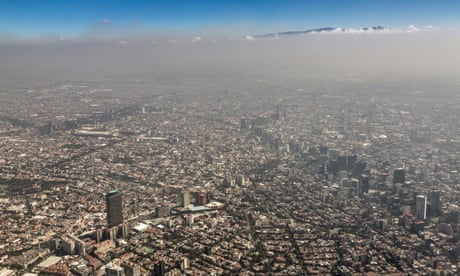

Discussing cities is like talking about the knots in a net: they’re crucial, but they’re only one part of the larger story of the net and what it’s supposed to do. It makes little sense to talk about knots in isolation when it’s the net that matters.


The 100 million city: is 21st century urbanisation out of control?


Cities are part of the system we’ve invented to keep people alive on Earth. People tend to like cities, and have been congregating in them ever since the invention of agriculture, 10,000 or so years ago. That’s why we call it civilisation. This origin story underlines how agriculture made cities possible, by providing enough food to feed a settled crowd on a regular basis. Cities can’t work without farms, nor without watersheds that provide their water. So as central as cities are to modern civilisation, they are only one aspect of a system.

There are nearly eight billion humans alive on the planet now, and that’s a big number: more than twice as many as were alive 50 years ago. It’s an accidental experiment with enormous stakes, as it isn’t clear that the Earth’s biosphere can supply that many people’s needs – or absorb that many wastes and poisons – on a renewable and sustainable basis over the long haul. We’ll only find out by trying it.
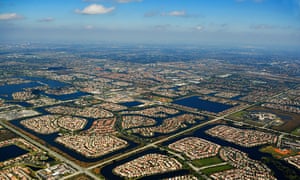
FacebookTwitterPinterest ‘Right now we are not succeeding’ … an aerial view of houses in Florida. Photograph: Alamy

Right now we are not succeeding. The Global Footprint Network estimates that we use up our annual supply of renewable resources by August every year, after which we are cutting into non-renewable supplies – in effect stealing from future generations. Eating the seed corn, they used to call it. At the same time we’re pumping carbon dioxide into the atmosphere at a rate that is changing the climate in dangerous ways and will certainly damage agriculture.

This situation can’t endure for long – years, perhaps, but not decades. The future is radically unknowable: it could hold anything from an age of peaceful prosperity to a horrific mass-extinction event. The sheer breadth of possibility is disorienting and even stunning. But one thing can be said for sure: what can’t happen won’t happen. Since the current situation is unsustainable, things are certain to change.


It wouldn't have to be imposed – it's happening anyway

Cities emerge from the confusion of possibilities as beacons of hope. By definition they house a lot of people on small patches of land, which makes them hugely better than suburbia. In ecological terms, suburbs are disastrous, while cities can perhaps work.

The tendency of people to move to cities, either out of desire or perceived necessity, creates a great opportunity. If we managed urbanisation properly, we could nearly remove ourselves from a considerable percentage of the the planet’s surface. That would be good for many of the threatened species we share this planet with, which in turn would be good for us, because we are completely enmeshed in Earth’s web of life.
FacebookTwitterPinterest A farmer at work near the village of Lok Ma Chau, outside Shenzhen, Hong Kong. Photograph: Jerome Favre/EPA


Here I’m referring to the plan EO Wilson has named Half Earth. His book of the same title is provocative in all the best ways, and I think it has been under-discussed because the central idea seems so extreme. But since people are leaving the land anyway and streaming into cities, the Half Earth concept can help us to orient that process, and dodge the sixth great mass extinction event that we are now starting, and which will hammer humans too.

The idea is right there in the name: leave about half the Earth’s surface mostly free of humans, so wild plants and animals can live there unimpeded as they did for so long before humans arrived. Same with the oceans, by the way; about a third of our food comes from the sea, so the seas have to be healthy too.

At a time when there are far more people alive than ever before, this plan might sound strange, even impossible. But it isn’t. With people already leaving countrysides all over the world to move to the cities, big regions are emptier of humans than they were a century ago, and getting emptier still. Many villages now have populations of under a thousand, and continue to shrink as most of the young people leave. If these places were redefined (and repriced) as becoming usefully empty, there would be caretaker work for some, gamekeeper work for others, and the rest could go to the cities and get into the main swing of things.
FacebookTwitterPinterest ‘The seas have to be healthy too’ … vessels set sail after a four-month fishing ban on China’s Yellow Sea and Bohai Sea. Photograph: Fang Yi/China News Service/VCG

So emptying half the Earth of its humans wouldn’t have to be imposed: it’s happening anyway. It would be more a matter of managing how we made the move, and what kind of arrangement we left behind. One important factor here would be to avoid extremes and absolutes of definition and practice, and any sense of idealistic purity. We are mongrel creatures on a mongrel planet, and we have to be flexible to survive. So these emptied landscapes should not be called wilderness. Wilderness is a good idea in certain contexts, but these emptied lands would be working landscapes, commons perhaps, where pasturage and agriculture might still have a place. All those people in cities still need to eat, and food production requires land. Even if we start growing food in vats, the feedstocks for those vats will come from the land. These mostly depopulated landscapes would be given over to new kinds of agriculture and pasturage, kinds that include habitat corridors where our fellow creatures can get around without being stopped by fences or killed by trains.

This vision is one possible format for our survival on this planet. They will have to be green cities, sure. We will have to have decarbonised transport and energy production, white roofs, gardens in every empty lot, full-capture recycling, and all the rest of the technologies of sustainability we are already developing. That includes technologies we call law and justice – the system software, so to speak. Yes, justice: robust women’s rights stabilise families and population. Income adequacy and progressive taxation keep the poorest and richest from damaging the biosphere in the ways that extreme poverty or wealth do. Peace, justice, equality and the rule of law are all necessary survival strategies.
FacebookTwitterPinterest Homes in Palm Springs, where the average daily water usage per person is 201 gallons – more than double the California average. Photograph: Lucy Nicholson/Reuters

Meanwhile, cities will always rely on landscapes much vaster than their own footprints. Agriculture will have to be made carbon neutral; indeed, it will be important to create some carbon-negative flows, drawing carbon out of the atmosphere and fixing it into the land, either permanently or temporarily; we can’t afford to be too picky about that now, because we will be safest if we can get the CO2 level in the atmosphere back down to 350 parts per million. All these working landscapes should exist alongside that so-called empty land (though really it’s only almost empty – empty of people – most of the time). Those areas will be working for us in their own way, as part of the health-giving context of any sustainable civilisation. And all the land has to be surrounded by oceans that, similarly, are left partly unfished

All this can be done. All this needs to be done if we are to make it through the emergency centuries we face and create a civilised permaculture, something we can pass along to the future generations as a good home. There is no alternative way; there is no planet B. We have only this planet, and have to fit our species into the energy flows of its biosphere. That’s our project now. That’s the meaning of life, in case you were looking for a meaning.

This week, the Overstretched Cities series examines the impact of the rush to urbanisation, which has seen cities around the world explode in size. Follow Guardian Cities on Twitter, Facebook and Instagram to join the discussion, andexplore our archive here

Editor's Note:  Despite the scare mongering in this article,  Earth is 93% uninhabited.  I am more frightened of the politicians who use such scare tactics to control others.  

Monday, April 9, 2018

YIMBY uses "Age Shaming" to get support for SB 827

They're using street lights equipped with microphones and CCTVs to spy on us

They're using street lights equipped with microphones and CCTVs to spy on us


In the city of San Jose in California anyCOMM is installing between 300 and 1,000 street lights with microphones and surveillance cameras in street lights. It was said that the council voted to allow the technology company to install nodes which come with audio and video recording on the street lights in a pilot program that is going to run for a year.
Countries Cities Using Surveillance Cameras And Microphones To Spy On People Through Street Lights


The program is going to run only in areas that have been pre-approved, and anyCOMM along with Siemens is going to pay more than $34 million for the installation of the LED streetlights with surveillance, over the city. Just four months ago it was said that smart street lights were being run in smart cities by the CIA signature school from New Mexico.
Surveillance Street Lights Cost $34 Million

It was also revealed earlier on this year that GE, AT&T, and Intel would be working in partnership to install street lights that were able to spy on residents. General Electric plans to put sensors, microphones, and cameras into 3,200 street lights in the San Diego region this year and this would be the first use of smart cities on a large scale. General Electric said that it would help the council and officials to monitor traffic along with being able to pinpoint crime.
Street Lights With Audio Recording Installed In Los Angeles

The story of streetlights that can spy on people is playing out across the country, and people do not seem to be taking much notice. Two years previously street lights were installed in Los Angeles, and they had microphones in them, which officials said were installed so that they could hear the traffic. Light poles had been fitted with microphones which could monitor the ambient sounds in some parts of the city, and it was said that they helped to give a diverse and articulate reading of the urban soundscape. In the same year in Florida General Electric installed 50 lights that had video cameras in them in Jacksonville.


The Simon Property Group along with Cisco, Acuity Brands, and General Electric have all worked with Sensity Systems to make street lights that can spy on the general public along with being able to monitor the traffic. The New York Times said that the LED street lights could do far more than just monitor the traffic though. It was said that depending on the sensors that had been connected and installed; the lights could pick up many activities and factors, including congestion, gunshots, pollutants and even a shopper going around a store.

The article in the New York Times went on to say that the LED street lights were even able to spot and keep an eye on someone who was acting in a suspicious manner. So if your street suddenly gets new street lights, beware as someone may just be spying down on you from them.

Street Lights Can Even Monitor Individual Bluetooth Signals

It has also been said that police are making use of Bluetooth detectors so that they can identify the Bluetooth signal of an individual. It was said that by combining the phone number or license plate with the serial number of Bluetooth, it is now possible to track people through their phones. It seems that wireless Bluetooth detectors are just about everywhere. The vice president of public sector sales for a traffic data software company said that the whole country is doing it. Of course, if it comes down to spying on the public the fingerprints of the DHS are generally to be found all over it.

DHS Is Behind Intellistreets Spying Street Lights

DHS, TSA and NJ Transit last year installed the DriveCam LTYX cameras that are equipped with microphones, and this allowed them to spy in secret on the conversations of people commuting. A spokesperson for the NJ Transit system said that the audio and video that was captured was used by the New Jersey Police Department and they called it an investigatory tool that was invaluable.

So it seems that new street lighting is not for the safety of the public at all, it is for government spying on a scale that is unimaginable.

The Shadowy Side of LED Streetlights


The Shadowy Side of LED Streetlights


SARAH HOLDER MAR 8, 2018

As LED streetlights proliferate, they come with the promise of more efficient smart city service. But they also raise new opportunities for surveillance.

SHARE
TWEET


Blinking down at passersby in traffic intersections and lining dark alleys, sleek, energy-efficient LED streetlights have begun to replace old-fashioned, glitchy ones. It’s part of a wave of smart city initiatives sweeping the country: Already, LEDs are strung above parts of places like Baltimore, San Diego, Kansas City and Bethlehem. Now, Portland, Maine, is in a race with Schenectady and several other cities to become the first to convert their entire light grid.

But as more communities adopt government-funded, eco-friendly LED lights as an environmental measure, some worry that the eyes on these bulbs may be a bit too literal. As they illuminate the streets, they could be watching—and recording—what happens below with attached cameras, microphones, and other devices.

The biggest appeal of LEDs is their efficiency and cost-saving potential: They aren’t designed specifically to surveil. But the bulbs’ complex wiring and strategic positioning make recording devices an easy addition. When LEDs started brightening the halls of Newark Liberty International Airport in 2014, and malls across the countrysoon after, the American Civil Liberties Union (ACLU) and community members were unsettled to discover that hidden inside some of them were cameras. Others, microphones.


“I think rather than call them smart bulbs in smart cities I’d call them surveillance bulbs in surveillance cities,” said Chad Marlow, advocacy and policy council for the ACLU. “That’s more accurate.”

In Portland, 6,100 LED streetlights will spray across the city over the next two years, reducing light pollution and potentially saving the city $1 million in annual maintenance fees the local utility once charged to fix up old light fixtures. Touting Portland’s plans, city manager Jon Jennings calls the city “very progressive” on climate change.

Jennings says the city provided opportunities for community input before the LED conversion plan commenced, and that the city is not at all interested in outfitting the smart lights with cameras right now. But in Portland, as in many cities across the U.S., there are no laws in place ensuring that residents have to be alerted if (or when) they do add cameras or other surveilling equipment. The city council would have to approve the line item in the budget to fund them, but their installation will never put up to a vote.

The ACLU has launched a national campaign called Community Control Over Police Surveillance (CCOPS), encouraging cities to build public oversight into decisions about smart city technologies with surveillance components. Laws have been passed in Seattle, Nashville, Somerville, and Santa Clara County, according to the ACLU’s website, and are under consideration in other cities like New York, St. Louis, and Oakland. Bills were introduced in Maine’s last two legislative sessions that would have applied the CCOPS model to every state agency, but they were denied both times. No municipal-level laws have been passed in the rest of the state.

Language in Portland’s proposal leaves the door open for future installation of “environmental sensors, [and] video cameras installed in strategic locations.” Scarborough, a town to the south of Portland, is installing LEDs too, and Scarborough Public Works Director Mike Shaw told the Portland Press Herald that theirs may also include “other technology such as cameras.”

Other cities have been less oblique about their intentions. In the upstate New York community of Schenectady, mayor Gary McCarthy is still in the process of lobbying the city council to free up funds to convert all 5,000 streetlights to LEDs. First, LEDs will be implanted with optical sensors that could pick up infrared signals, get traffic counts in intersections, and take pictures of the street surfaces to more effectively plan pavement maintenance.

But McCarthy says eventually, he envisions more sophisticated recorders lining the streets. The city already has a comprehensive wireless camera system, used specifically for police surveillance; and cameras in front of city hall. Adding more video streams would provide valuable business and traffic intel, McCarthy says. “The actual surveillance, if you’re really deploying it correctly, is a very small component of the potential application,” he said. “The pavement management, sequencing and traffic control devices are more practical.”

Portland and Schenectady’s conversion projects come on the heels of several other cities’ switches to greener lighting technology. Many LED grids are outfitted with smart sensors that can track noise modulations, traffic patterns, and environmental pollutants. “The lights might be a ubiquitous presence,” but each city, and each neighborhood, can add and subtract certain extras, said Jim Schriver, director of innovation at TEN Connected, the smart city technology company spearheading Portland and Scarborough’s conversions."We’re not looking for data collection on our residents or city—we’re looking to do things that make sense to move a city forward in the 21st century.”

As the menu of data collection options for cities increases, so too does the trepidation from privacy advocates that’s been building for decades. “It’s not that there’s anything wrong with LED lights,” said Fred H. Cate, Senior Fellow at the Center for Applied Cybersecurity at Indiana University. “It’s that they’re a signpost on the way to more particularized, more granular sensors.”

Portland’s Jennings argues that smart city technologies will vastly improve urban quality of life, if only worriers stopped worrying, and intervening. The lights’ intricate digital coding means they will soon fit into Portland’s larger smart city plan—to equip the growing downtown and beyond with responsive traffic signals, universally available wireless internet, high speed fiber, and mapping infrastructure for autonomous vehicles.


As for the ACLU’s resistance, “that tends to be somewhat of a hysterical reaction to trying to move the city forward by the use of innovative technology,” he said. “We’re not looking for data collection on our residents or city—we’re looking to do things that make sense to move a city forward in the 21st century.”

Traffic flow data can be crucial for increasing Department of Transportation efficiency, for example. But, the ACLU notes, indiscriminate AV streams also capture conversations, habits, and interactions. Two friends sitting in a park, discussing their plans to attend a Black Lives Matter rally later that day. A woman leaving a mosque, joking with her husband. In the wrong hands, those private moments can be used for future persecution. And eventually, with city approval, police might want to look at footage to track crimes like speeding or illegally parked cars; to stop street violence; and to identify suspects.

That might start happening soon. By May, San Diego, California, will convert 14,000 of its 40,000 streetlights to LEDs, and expand its network test of 50 smart lights to 3,200. San Diego’s deputy chief operating officer told IEEE Spectrum that the city’s new sensor-enabled lights could eventually be hooked up to the city’s ShotSpotter network, helping to identify the source of gunfire and “automatically alert police to dangerous situations” by picking up audio from the ground. The sounds of violence are defined as breaking glass and shots fired, but it’s not hard to imagine that raised voices could be linked to real people, and draw similar scrutiny.


“We think streetlights are the place to do this because they have power, ubiquity, and the perfect elevation to capture a lot of important data,” Austin Ashe, smart city technology company Current’s general manager for intelligent cities, told IEEE Spectrum.“I would say that installing these light bulbs makes your city a less safe city, especially if you happen to be poor or a person of color.”

The operation of these automated data collectors can’t be divorced from the human decision-making patterns that govern all police actions, though: There are choices driving where to start deploying cameras; whether to equip them with audio or video collection, or both; which to maintain—and, most significantly, which to check. Civil liberties advocates fear that the personal biases that seep—insidiously or innocently—into police enforcement will grow more heads, and be allowed to flourish in new venues that never used to exist.

“If it’s anything like surveillance technologies we see around the country, the bulbs in communities of color or lower income communities or that happen to be on a corner where a Mosque is located—those are going to be the bulbs subject to maximum monitoring,” said Marlow. “Whereas those in the white upper class segment of town aren’t going to be watched.”

These use cases may sound far-fetched in a place like Portland, which is largely liberal and relatively small. But already in Oakland, a sanctuary city, the seemingly routine data collection of license plate identification information ended up aiding ICE in their hunt for undocumented immigrants. The data passed from the city’s transportation department into a Fusion center, and from there into ICE’s hands.


“[Portland] should not call itself a safe city. Safe from whom?” said Marlow. “I would say that installing these light bulbs makes your city a less safe city, especially if you happen to be poor or a person of color.”Civil liberties advocates fear that the personal biases that seep, insidiously or innocently, into police enforcement will grow more heads, and be allowed to flourish in new venues that never used to exist.

Outfitting a city with unregulated, government-controlled “dragnet surveillance,” as Marlow calls it, opens up more privacy issues than some of the cameras that already watch shopping malls and gas stations: Police need to obtain a warrant or permission to get ahold of the privately owned tapes, but not necessarily the city-owned ones. Any such project “should at a minimum [be] subject to public hearings and strict regulations from outside auditors,” said Marlow.

Before CCOPS legislation is passed in more places, and absent a U.S. privacy commissioner, it is up to city planners, managers, and mayors to formulate responsive public policy surrounding what kinds of data will be collected, how long information will be retained, and who can gain access to the information once it exists.

Schenectady Mayor McCarthy wants to allow businesses that might want to locate in the area to access information on traffic patterns and daily counts, to set up a public webcam showing pedestrian traffic through a bustling farmer’s market as a marketing tool, and to allow local news stations and papers to view past recordings through public records requests. But he says he will work to develop clear policies surrounding retention and access before cameras are installed.


Portland is working with TEN Connected to anonymize the data LEDs will collect, says Schiver. “It’s very disappointing to have entities call into question or create conspiracy theories,” said Jennings. “We’re not looking to spy on our people, but some people are never going to believe that.”

Portland’s LED conversion plan is too far gone for the ACLU to legally intervene. They can only step in to defend people if data is used to violate their civil liberties. Marlow says the ACLU is not suspicious of the city leaders’ intentions, but believes that the cost-benefit analysis they’re making is misguided. “There are certainly other methods for dealing with urban issues like traffic and trash collection that do not pose a significant of a threat to civil rights and civil liberties,” he said.

It’s part of a broader consciousness shift city-dwellers are starting to have to grapple with. “We’ve built up most of our privacy laws around reasonable expectation of privacy: That if you do it in public you have no reasonable expectation of privacy,” said Cate. Of course, we often don’t act like we believe that to be true: We have personal conversations in parks; on the street; and in cars, windows down.

“This bright line rule—if it’s in public we can do anything—it both doesn’t make sense, and we’re starting to see it crumble,” said Cate.

Che Wiener


Life inside China's Surveillance state