Friday, March 24, 2017

California Cops and the FBI Want to Keep Their Facial Recognition Tech Secret


California Cops and the FBI Want to Keep Their Facial Recognition Tech Secret

Legislators aren’t so sure that’s a good idea. The FBI has been using facial recognition software for years without filing mandatory disclosures.

ALFRED PASIEKA/SCIENCE PHOTO LIBRARY/Alfred Pasieka/SPL/NewscomALFRED PASIEKA/SCIENCE PHOTO LIBRARY/Alfred Pasieka/SPL/NewscomA California proposal requiring law enforcement agencies to disclose all surveillance equipment to the public took the first steps towards becoming law this week, while a congressional committee gave the side-eye to FBI officials who declined to give specifics about some of the bureau's own surveillance tech.
First, California. A bill sponsored by State Sen. Jerry Hill (D-San Mateo) would require police and sheriff's departments to explain to local officials how they use surveillance technology like facial recognition programs and social media trackers. The disclosures would have to be made at a hearing that is open to the public.
Hill's proposal builds on two laws that took affect last year in California, the Los Angeles Times notes, requiring law enforcement to disclose when they use license plate scanners to track vehicles, and when they use so-called "Stingrays"—suitcase-sized devices that mimic cellphone towers and can be used to track or collect information from mobile phones.


"We want to be able to protect our civil liberties, defend and protect our Constitution and make sure law enforcement will have the tools available that will enable them to fight crime in our communities. We just have to find that [right] spot," Hill told the Senate Public Safety Committee during a hearing this week, according to the Times.
That committee voted 4-2 on Tuesday to approve the bill. It is now awaiting another vote in the Senate Judiciary Committee.
There's really no good reason to oppose this sort of transparency. The bill does not jeopardize ongoing investigations and does not limit what law enforcement agencies can do—provided that they first obtain permission from lawmakers. It's about transparency, yes, but also about restoring the proper order to the relationship between law enforcement and duly elected officials who are supposed to oversee and approve how law enforcement operates. Keeping surveillance tech secret prevents city councils and state legislatures from being able to preform that vital duty.
Keeping those secrets also jeopardizes the outcomes of investigations to a greater degree. We know that the FBI has ordered local prosecutors to drop cases rather than risk the public exposure of secret surveillance technology that helped track suspects. We have no idea how often this happens, but it's clear that potential criminals have gotten off scot-free because law enforcement inverted its priorities to value secrecy over keeping the public safe.
There's one key element missing from the bill: an outline of how law enforcement agencies would be punished for violating the mandatory disclosures.
That matters, as we saw this week in Washington, D.C., when officials from the FBI were in front of the House Oversight and Government Reform Committee to answer questions about how the bureau secretly uses facial recognition software and other surveillance technology.
The hearing was sparked by a Government Accountability Office report last year that revealed the FBI had been using facial recognition technology for years without first publishing a report on how it would impact Americans' privacy, as required by law.
The FBI has agreements with 18 states to share photos from state-level drivers' license databases, and that report from the GAO revealed that as many as 64 million Americans might be entered into the FBI's facial recognition database without knowing it. When you include similar databases maintained by the state and local law enforcement agencies around the country, one in every two American adults is included in a facial recognition network, the Center on Privacy and Technology at Georgetown Law concluded in a recent report.
"So here's the problem – you're required by law to put out a privacy statement and you didn't," said Rep. Jason Chaffetz (R-Utah). "And now we're supposed to trust you with hundreds of millions of people's faces in a system?"
Kimberly Del Greco, deputy assistant director for the FBI, told the committee that a privacy report was filed with the Department of Justice but never made public, for reasons that she seemed unwilling or unable to fully articulate at the hearing.
"Yeah, well, we don't believe you," Chaffetz said. "You're supposed to make that public."
Chaffetz argued that the facial recognition program was akin to collecting fingerprints and DNA from all Americans to build a database that could be abused for a wide range of reasons.
The entire exchange between Chaffetz and Del Greco is worth watching:


Thursday, March 23, 2017

Orwellian Colleges Socially Engineering Students with Fake Pronouns

Meet the Artist Using Ritual Magic to Trap Self-Driving Cars

Meet the Artist Using Ritual Magic to Trap Self-Driving Cars


BECKETT MUFSON

Mar 18 2017, 5:10am
Well, it's actually science, but for James Bridle science and magic aren't that distinct.


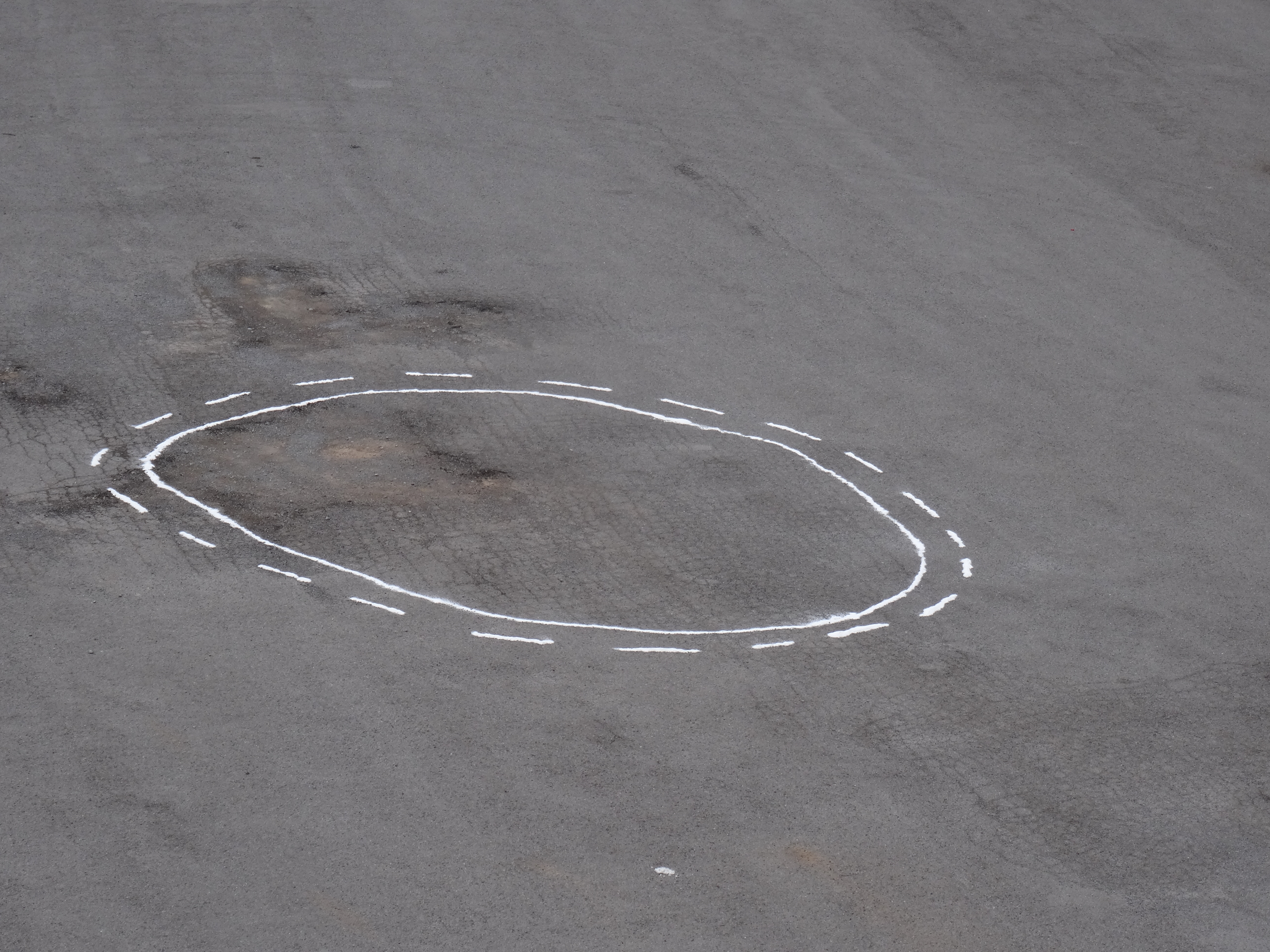
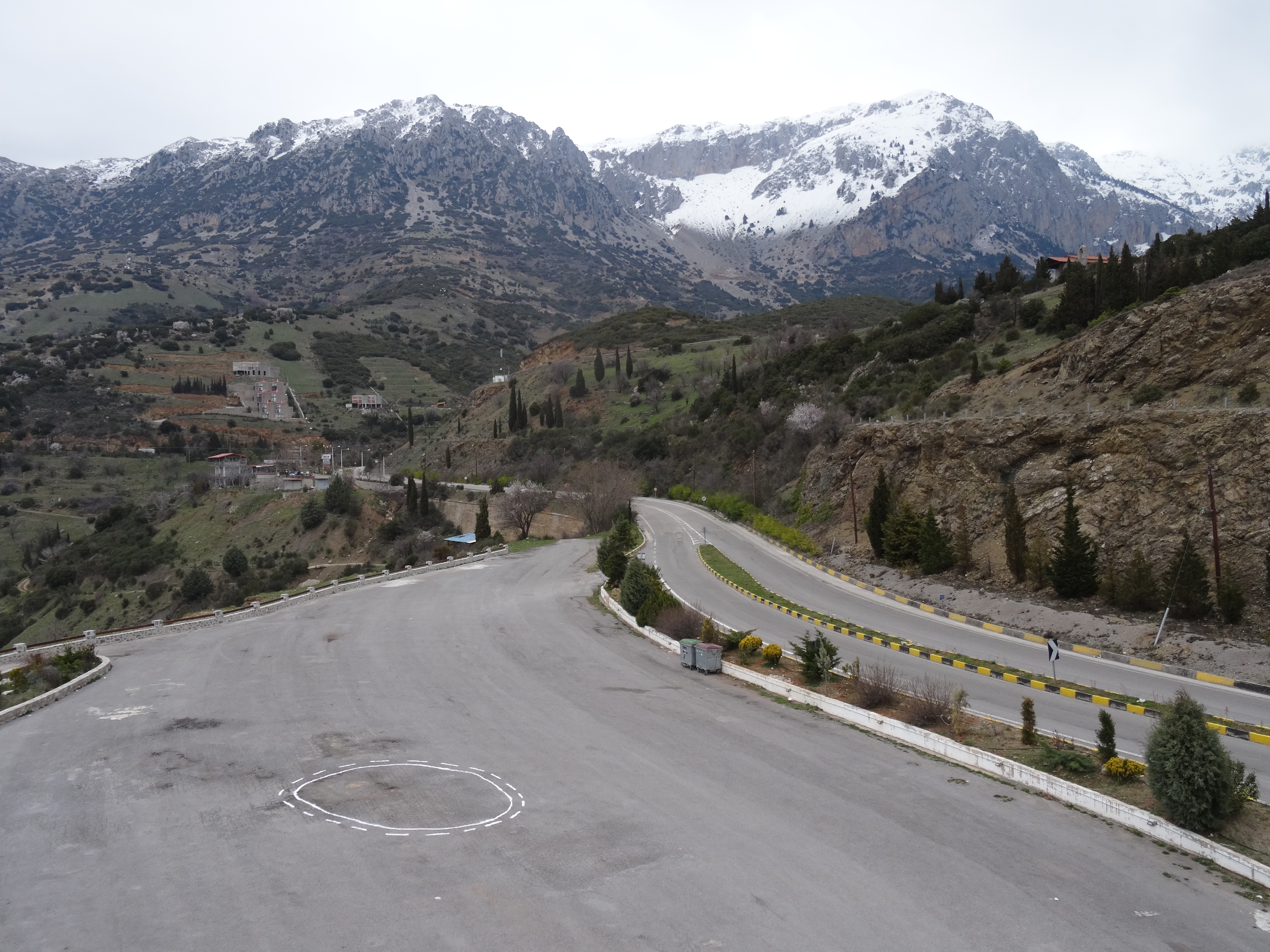
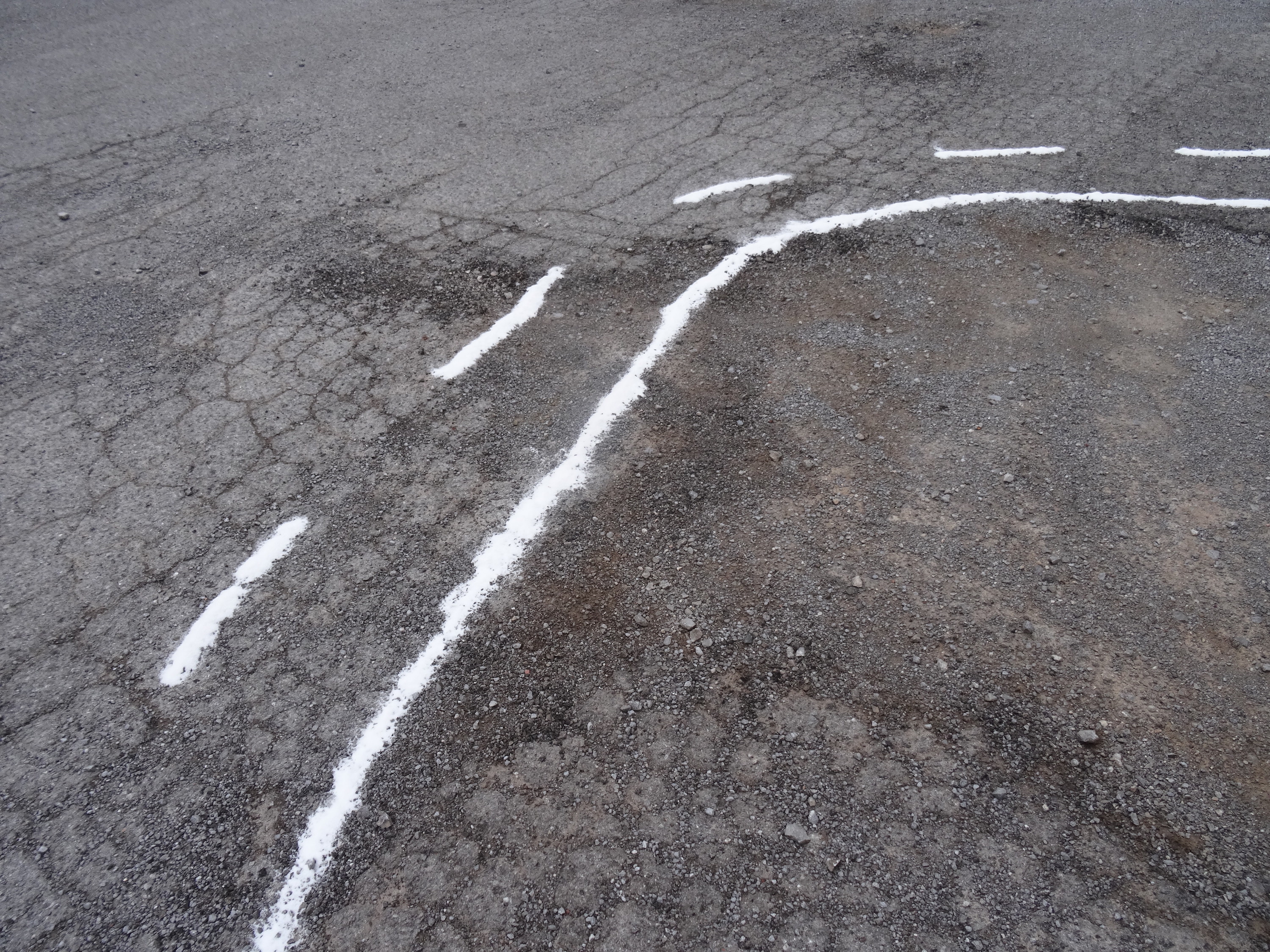
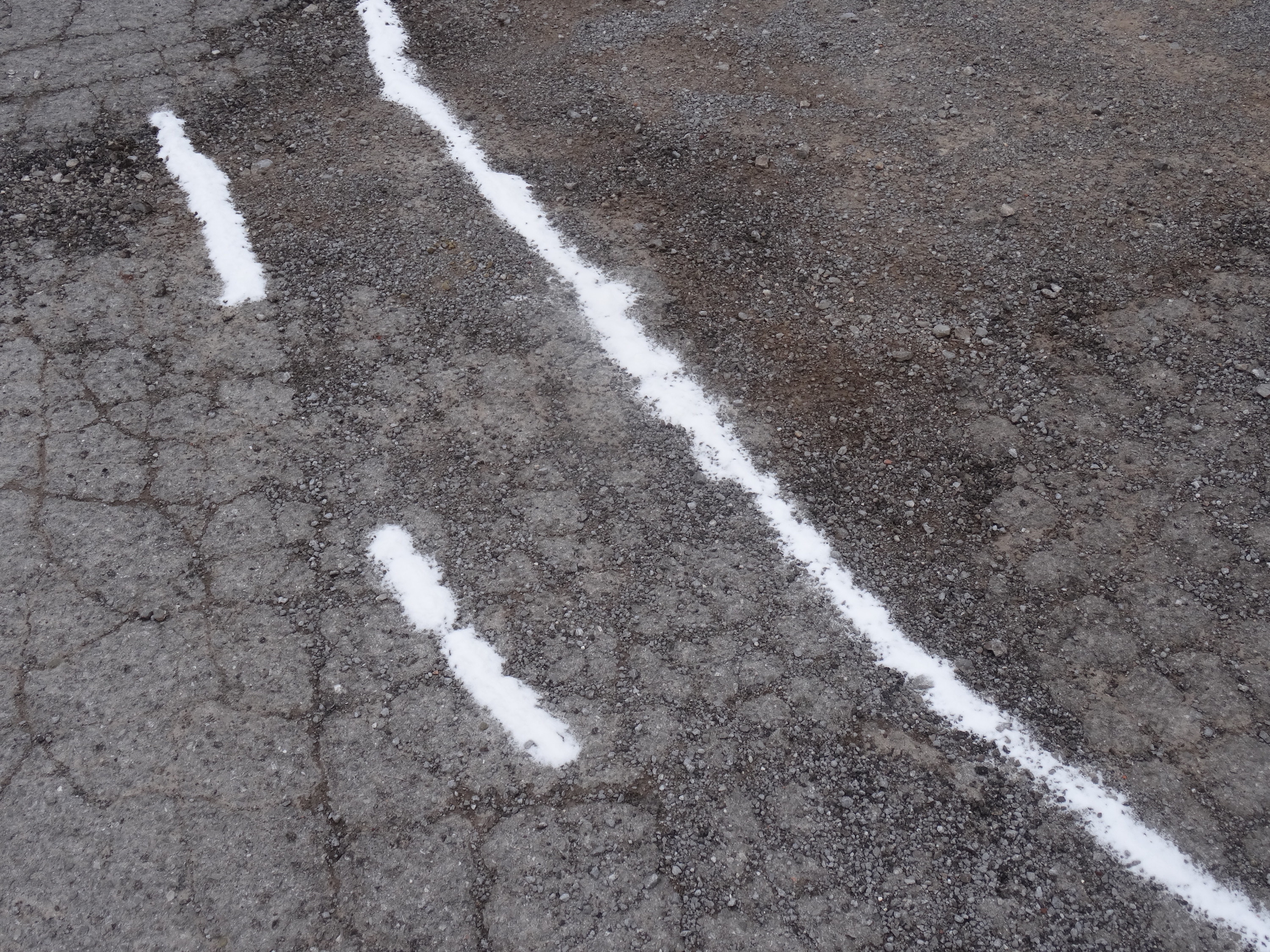
Is it a silly prank, a Pagan ritual, or a genius discovery about the next era of mass transit? In a picture posted to Flickr by artist James Bridle—known for coining the term, "New Aesthetic"—a car is sitting in the middle of a parking lot has been surrounded by a magic salt circle. In the language of road markings, the dotted white lines on the outside say, "Come On In," but the solid white line on the inside says, "Do Not Cross." To the car's built-in cameras, these are indomitable laws of magic: Petrificus Totalus for autonomous automobiles.

Captioned simply, "Autonomous Trap 001," the scene evokes a world of narratives involving the much-hyped technology of self-driving cars. It could be mischievous hackers disrupting a friend's self-driving ride home; the police seizing a dissident's getaway vehicle; highway robbers trapping their prey; witches exorcizing a demon from their hatchback.


Self-driving cars aren't there yet, but the artist-philosopher-programmer's thought-provoking photo is a reminder that we'll have to start thinking about these things soon. If a self-driving car is designed to read the road, what happens when the language of the road is abused by those with nefarious intent?


Bridle has carved out a space for himself among those thinking 10–100 years in the future. His website Booktwo.org is lousy with philosophical treatises, thought experiments, creative code, and art projects. His "collaboration with technology" Five Eyes was part of the V&A Museum's privacy-oriented show All of This Belongs to You, which also included the remains of whistleblower Edward Snowden's smashed hard drive full of leaked documents. Bridle has spent the last decade making drones more relatable, uncovering the mysteries of weather prediction, and otherwise trying to elucidate the invisible technologies—usually military in origin—that rule our world.

Recently Bridle has become fascinated by autonomous vehicles. Self-driving cars will be available to the public soon. Singapore is considering the purchase of a fleet of 300,000 driverless taxis to replace the 780,000 manned ones currently clogging their streets. Google's self-driving car initiative, now called Waymo, has been investing in the technology since 2009. Elon Musk's Tesla is already implementing limited automated features in the United States, and even slow-moving large scale car manufacturers like Ford are getting into the game. If driverless cars become anywhere as ubiquitous as the horseless carriage, innocuous vandalism like the Autonomous Trap is just the beginning the problems engineers will have to solve.

Now Bridle is trying to build his own self-driving car, and made the sardonic artwork Autonomous Trap 001 in the process. He's released all the code developed in pursuit of the DIY self-driving car here. We spoke to Bridle to learn more about the circumstances behind this vague photo series and better understand his apprehension and curiosity about the robot chauffeurs of the future.


Creators: What are we looking at here? Can you give me a brief explanation of Autonomous Trap 001?


James Bridle: What you're looking at is a salt circle, a traditional form of protection—from within or without—in magical practice. In this case it's being used to arrest an autonomous vehicle—a self-driving car, which relies on machine vision and processing to guide it. By quickly deploying the expected form of road markings—in this case, a No Entry glyph—we can confuse the car's vision system into believing it's surrounded by no entry points, and entrap it.

Is this actually an autonomous car, or is it conceptual?


I don't actually have a self-driving car, unfortunately—I don't think any have made it to Greece yet, plus the cost issue—but I do have a pretty good understanding of how the things work, having been researching them for a while. And the one in the picture is a research vehicle for building my own. As usual, I've got totally carried away in the research, and ended up writing a bunch of my own software, rigging up cameras and building neural networks to reproduce some of the more interesting currents in the field. Like the trap, I wouldn't entirely trust what I've built, but the principles are sound.


Where did you take these pictures?


I made this Trap while training the car on the roads around Mount Parnassus in Central Greece. Parnassus feels like an appropriate location because, as well as being quite spectacular scenery and wonderful to drive and hike around, it's the home of the Muses in mythology, as well as the site of the Delphic Oracle. The ascent of Mount Parnassus is, in esoteric terms, the journey towards knowledge, and art.


What is your role in the project and is there anyone else involved?


It's just me. I did a project last year called Cloud Index Index which used satellite imagery and machine learning to explore politics and computational thinking, and I had a lot of help on that, particularly from Gene Kogan, another artist who works with machine learning. This time I wanted to do it all myself—mostly to show that I could, and therefore, in theory and accepting an immense amount of privilege and good fortune, anyone can. These technologies are for everyone: you can read the papers, repeat the findings, study the code, build your own tools. This radically reshapes the way you understand and interact with the world, and is something I think is quite crucial to propagate in the current age.

Why did you create Autonomous Trap 001, besides poking fun at an incredibly hyped technology?


It's part of a body of work / research / writing / fooling about to explore and understand the contemporary technologies of automation, in order to better use them, and in some cases to disrupt and oppose them.

Self-driving cars bring together a bunch of really interesting technologies—such as machine vision and intelligence—with crucial social issues such as the atomization and changing nature of labor, the shift of power to corporate elites and Silicon Valley, and the quasi-religious faith in computation as the only framework for the production of truth—and hence, ethics and social justice.


The Trap falls into the category of resistance, while the attempt to build my own car is a process of understanding how the dominant narratives of these technologies are produced, and could be changed. I don't see why cab drivers of the future shouldn't be chalking white lines on side streets to derail self-driving Ubers which are putting them out of work, and I also think we need more eyes and hands on the tools which are shaping all of our futures.

Were there any unexpected challenges in creating the piece?


I ran out of salt, and had to drive back to the nearest village to buy a few more kilos. Luckily, salt, unlike bandwidth and computational power, is a pretty cheap resource. Also, I should have pulled my trousers up for the video.


This is Autonomous Car Trap 001. Do you have more planned?


I have a habit of numbering things, but yes, there will definitely be more. Like the Drone Shadows, which proliferate to this day, consciously starting a series seems to have generative effects.

Where does this fit in your larger body of work?


It's all part of the same attempt to understand the world and act in it, if that doesn't sound too pompous. This work follows directly from projects on machine vision, artificial intelligence, militarized technology, big data etc.—as well as more, shall we say, poetic interventions into emerging technologies. It's one big rolling project, with occasional bouts of specific obsession.

What's next for you? What other projects are you working on?


This body of work is in part in preparation for a solo exhibition which opens next month in Berlin, at Nome Gallery, called Failing to Distinguish Between a Tractor Trailer and the Bright White Sky. I'll be showing a bunch of different outcomes of the research, including interpretations of the machine vision systems I've been building, and the results of the self-driving car training—and hopefully connecting them to some of my more mythological interests.

I've also got a new commission opening in London next week, as part of Convergence—a series of billboards in East London continuing my search for the Render Ghosts. Beyond that, I'm mostly working on writing projects about the new dark age and the relationship between technology, knowledge, understanding, and agency.

Wednesday, March 22, 2017

#SXSW: How Activists Are Using Technology to Fight Dictators


#SXSW: How Activists Are Using Technology to Fight Dictators

Dissidents are using USB drives to smuggle information into authoritarian regimes.


But if you were looking for something truly disruptive at SXSW, look no further than a group of activists using tech to spread information to citizens oppressed by authoritarian regimes.
"The people out there they don't have satellites, they don't have internet, they have nothing," says Abdalaziz Alhamza who escaped Syria and co-founded Raqqa is Being Slaughtered Silently. "To be stuck with only ISIS propaganda, it will affect them."


Alhamza and dissidents from Eritrea, Afghanistan and Cuba were brought together by the Human Rights Foundation (HRF) for a panel discussion called "The Real Information Revolution." Reason caught up with the group at the HRF booth on the convention floor, centered around a large wall of Kim Jong Un faces with USB ports for mouths. Attendees were invited to donate USB drives into the display. The drives will later be smuggled into North Korea after being wiped and filled with films and information from the outside world.
"The struggle for freedom is one that used to be about who has more guns. Now information is a key component in making sure the government doesn't get away with winning the day with its narrative and pushing what governments tend to do, which is the use of fear to control the population," says Thor Halvorssen, president of HRF.
If you're interested in the campaign you can log onto flashdrivesforfreedom.org for more information about donating your drive.
Produced by Meredith Bragg, Paul Detrick, Austin Bragg and Alexis Garcia.

Tuesday, March 21, 2017

Prop 13 was a victim of the Original "Fake News"

OPINION

Proposition 13 is the original victim of ‘fake news’


March 18, 2017 Updated 12:00 a.m.

By JON COUPAL / Contributing writer
Paul Gann, left, and Howard Jarvis hold up their hands as their co-authored initiative Proposition 13 takes a commanding lead in the California primary, in Los Angeles, June 7, 1978.AP PHOTO


As Proposition 13 approaches its 39th birthday, it is still subject to the same dishonest attacks in the media that were used against it when it was on the ballot in 1978. Proposition 13 was one of the first victims of “fake news.”

“The bigwigs in labor and business went all out to defeat 13,” said its principle author, Howard Jarvis. “They tried to outdo one another in issuing doomsday prophecies about what passage of 13 would mean.” The media slavishly supported the exaggerated and dishonest claims, often endorsing them through editorials and by giving prominent placement to negative stories on the tax revolt.

The politicians, including Gov. Jerry Brown, and government agencies from top to bottom weighed in. Here is a typical example: Before the election, Alameda County Transit told the public that passage of Prop. 13 would result in the termination of 80 percent of its 2,000 employees. Two months later, the Fremont-Newark Argus reported on the aftermath of the passage of Proposition 13, “To date, no one in the district has been laid off and officials now believe there will be no massive layoffs.” The paper added that three local fire districts that anticipated losing one-half to three-fourths of its staff, had not lost a single firefighter to Prop. 13.

When the scare tactics were rejected by the public, some media attacked Prop. 13 sponsors Howard Jarvis and Paul Gann with false stories. Two weeks before the election, the Monterey Peninsula Herald editorialized that the public had “been so outrageously deluded by a pair of slick Southern California real estate operators.” The Herald was 0-for-2. Gann was from Sacramento, which Herald editors should know is in Northern California, and neither man owned any California real estate except for their own homes.

A month before the June 6 election, the Los Angeles Times repeated the claims of Prop. 13 opponents in a lengthy editorial in which the lies were treated as facts: “Los Angeles County would eliminate all of the Fire Department’s paramedic units, could close half of the 129 fire stations. It would close half of the county’s 93 libraries. ... More than 30,000 county employees would be laid off. The city of Los Angeles is considering the dismissal of 2,152 police officers and the closing of six stations. More than 1,000 firefighters would be cut, and 56 stations would be shut down. ... The prospect for Los Angeles schools is even darker. More than 18,000 teachers would be laid off.”

The same editorial in the Times included the following statement in italics: “Vote yes on Proposition 13 and send a message to tens of thousands of teachers, librarians, firefighters, police officers, sanitation workers and public-health specialists that you can safely dispense with their services.”

Howard Jarvis commented, “It was tough having 90 percent of the media against us.”

Nobel Prize winning economist Milton Freidman summarized the fake news campaign against Prop. 13 in his column in Newsweek several weeks after the overwhelming passage of the measure: “Despite the use of scare tactics including notices to teachers of automatic dismissal on passage of Jarvis-Gann [Prop. 13], advance local budgets threatening drastic cuts in police and fire protection, and whatever other portents of catastrophe desperate feeders at the public trough could devise, the public refused to be bamboozled this time, as they had so often before while watching taxes mount and government services deteriorate. This time, the scare tactics simply produced a backlash.”

But the beat down of Prop. 13 goes on. Some years ago, a newspaper editorial asked if Prop. 13 was responsible for a measles epidemic saying it may have limited the availability of vaccine. A national publication suggested that O.J. Simpson’s acquittal of murder charges was due to the tax limiting measure because prosecuting attorneys may not have been paid enough.

More recently, a column by a West Coast writer published in the New York Times claimed that one of the reasons that Los Angeles is becoming a “third world” city is reduced funding for education caused by the tax revolt that passed Prop. 13. As is typical, the writer ignores the fact that California now spends 30 percent more per pupil, in inflation adjusted dollars, than the amount spent just prior to the passage of Prop. 13 — a time when both liberals and conservatives agree that California schools were among the best in the nation.

Today, those who want to bring down Prop. 13 are a little more clever with their fake news. We are seeing claims, that the media delights in repeating, that Prop. 13 has caused the housing shortage, that Prop. 13 only helps the wealthy, and, of course, that Prop. 13 is responsible for our poor performing schools, even when our teachers are the third-highest paid in all 50 states.

Taxpayer advocates in California are still dealing with “fake news” as they have for nearly 40 years. It is doubtful that that battle will end anytime soon.

Jon Coupal is president of the Howard Jarvis Taxpayers Association.


Rent a Room, Go to Jail!

Rent a Room, Go to Jail!

If you "discriminate" against Section 8, you will face jail time, fines, civil and criminal penalties plus a lawsuit risk.


The Marin County Board of Supervisors are "remodeling" your property rights as you sleep.


We tried to warn everyone.  The Marin County Board of Supervisor's have lost their minds.  They have created an ordinance where you can go to jail if you "discriminate" against a Section 8 tenant applicant.  This looks really messy and a landmine for someone seeking a roommate.  The ordinance alleges that you can still screen for creditworthiness but cannot exclude people solely on Section 8.  This puts would be landlords in a real bind because Section 8 requires a legal contract with the government and the willingness to have random government inspections.


Did the Supervisors actually think this one through?  Probably not.  Many people who rent out rooms are simply looking for supplemental income due to a job change, divorce or unforeseen financial challenge.  This ordinance now creates a big financial risk from zealous regulators and housing activist attorneys.  Why should the simple act of getting a roommate require a lawyer?

See the complete ordinance HERE

You earn too much. You need to "Contribute" more to your local government"

If Federal Taxes go down, State and Local Taxes could go up


By Kathleen PenderMarch 14, 2017 Updated: March 14, 2017 9:35pm


Photo: Brian A. Pounds, Hearst Connecticut Media


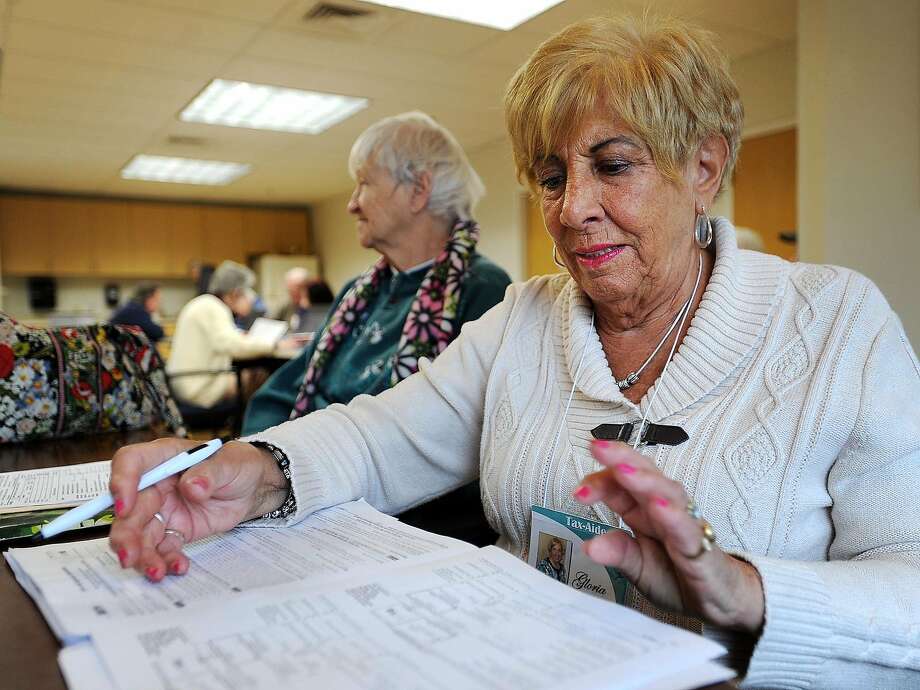
Volunteer Gloria Lanna, of Milford, reviews tax returns before filing at the AARP's Tax Aid Program at the Milford Senior Center in Milford, Conn. on Tuesday, March 7, 2017. Seniors and low income residents can have their taxes done for free on Tuesday and Thursday mornings from 9 am until noon. Lanna said that volunteers are able to complete about thirty returns per session at the Milford location.

As President Trump and his allies in Congress work to cut federal taxes and spending, San Francisco’s elected officials are laying plans to create new taxes at the state and local levels.


The Board of Supervisors plans to vote next week on a resolution urging the California Legislature to amend state law to allow cities and other local governments to impose personal and corporate income taxes. The resolution says the city needs to explore “progressive” new revenue sources because the Trump administration has threatened to withdraw federal funds from sanctuary cities and is working to overturn the Affordable Care Act, which could increase the city’s cost of providing health services.


At the state level, Sen. Scott Wiener, D-San Francisco, has introduced a ballot measure that would create a California estate tax, but only if Trump and congressional Republicans carry out their vow to kill the federal estate tax.

In 2015, the federal estate tax brought in $17.1 billion, of which $4.5 billion or 26 percent came from California, even though California accounts for only 12 percent of the U.S. population. The proposed California estate tax would have the same rates and rules as the federal one, but the billions it raises would go to California instead of federal coffers, Wiener said.

That federal tax applies to the portion of an estate that exceeds roughly $5.5 million per person. The rate tops out at 40 percent. In 2015, it applied to just under 5,000 estates, including 975 in California.

Both new tax proposals face an uphill battle. Only 14 states let local governments impose income taxes, and only 14 states and the District of Columbia levy state estate taxes, according to the Tax Foundation.

California has never allowed local income taxes. In 1963, amid rumblings to enact them, the Legislature passed a law forbidding them. To begin imposing them, the Legislature would have to amend that law and the governor would have to approve it. Then, a city or county would have to get local voters to approve the tax, said Michael Coleman, who runs CaliforniaCityFinance.com.

In 2003, then-state Assemblyman Mark Leno introduced a bill that would have authorized any California city or county that formed a fire protection agency to levy a local income tax, if that tax was approved by voters. The bill died in committee, Coleman said.

Last year, Los Angeles County supervisors voted to lobby for state legislation that would let them impose a local tax on personal incomes over $1 million to pay for homeless projects. Gov. Jerry Brown said he would not support it and the effort died.

Supervisor Aaron Peskin, the San Francisco resolution’s main sponsor, said it has the six votes needed to pass next week. Peskin and Assemblyman Phil Ting, D-San Francisco, are working on legislation that would let San Francisco alone pursue a local income tax, Ting said.

Peskin said that $1.2 billion of the city’s $9.6 billion budget comes from the federal government. In January, Trump signed an executive order that said “sanctuary” jurisdictions that don’t comply with certain immigration laws “are not eligible to receive federal grants.” It’s unclear what federal grants Trump meant or whether the order is constitutional.

Even if it’s not, the city should be exploring “all mechanisms and tools” to fund its transportation and homelessness needs, Peskin said. Although he is not proposing a specific tax rate, Peskin said the city controller estimated that a 0.5 percent city tax on incomes above $1 million would raise about $80 million a year.

“Right now (an income tax) is not even on the menu of options. It should be on the menu. How we would cook it remains to be seen,” Peskin said.

David Kline, spokesman for the California Taxpayers Association, called local income taxes a “bad idea.” California’s top state income tax rate, 13.3 percent, is already the highest in the nation. “Adding local taxes to the mix would make us less competitive and would be a nightmare to administer,” Kline said. If you worked in more than one city, you might have to prove where you earned every dollar, he said.

It would also be a “major detriment” for cities competing to host an athletic event, like the America’s Cup or Super Bowl, because visiting athletes would have to pay state and local income tax on money earned there, Kline said.

His association also opposes a state estate tax. “You earn income, you pay income tax. You buy a car, you pay tax every year to drive it. You buy gasoline, you pay gas tax. You buy a house, you pay property tax every year. When you die, everything that has already been taxed, now they want to tax it again,” he said.

California had an inheritance tax, similar to an estate tax, from 1893, until 64 percent of state voters approved a ballot measure to repeal it 1982. The repeal, which also prevented future estate taxes, had bipartisan support, Kline said.

Wiener’s measure would overturn that ban, with voter approval. Wiener expects there would be less opposition to an estate tax now than in 1982 because it affects far fewer people. “It is one of the most progressive forms of taxation,” he said.

His bill would not earmark the estate tax for any purpose, but Wiener said he’d like it to fund “areas Trump is planning to cut, like health care, transportation, if they go after public education, maybe environmental protections.”

In 2001, all 50 states had estate taxes, said Nicole Kaeding, an economist with the Tax Foundation. But “they are incredibly complex to administer. They produce very little revenue. Most states decided it wasn’t worth the cost,” she said.

The 14 states that still have the tax rely on the Internal Revenue Service to audit estates and do the heavy administrative lifting. “If the IRS decides an estate is worth $10 million, the state says, ‘Here is our tax rate on that $10 million,’” she said. If the federal estate tax dies, she predicts those 14 states will also abandon theirs because the IRS won’t be there to help.

The “rhetoric that surrounds the estate tax,” that it “breaks up dynastic wealth,” is overstated, she said, because the uber-wealthy use sophisticated strategies to minimize it. “Who really pays are small farms and business owners” who are marginally over the exemption amount.

Kaeding said most cities and states are trying to understand how federal tax and spending plans will affect them before proposing new taxes. Most states piggyback on federal taxes. The Trump and House Republican plans would cut tax rates and broaden the tax base by cutting back deductions and credits. “If you increase the base, but state tax rates don’t change, states would see an increase in revenues from federal tax reform as currently structured,” she said.

However, states may need that money to offset proposed cuts in federal funding for health care and other programs.

Kathleen Pender is a San Francisco Chronicle columnist. Email: kpender@sfchronicle.comTwitter: @kathpender

Monday, March 20, 2017

California housing bills could change Marin Forever


California housing bills could take away subsidies for homeowners and add them for renters


California's homeownership rate is at its lowest since World War II, and a third of renters spend more than half of their income on housing costs.

California lawmakers have introduced more than 130 bills this year that try to tackle the state’s housing affordability crisis.

Reams of statistics support the depth of the problem: California’s homeownership rate is at its lowest since World War II, a third of renters spend more than half of their income on housing costs and the state has nearly a quarter of the nation’s homeless residents — despite having 12% of the overall U.S. population.

William Fulton, director of the Kinder Institute for Urban Research at Rice University, said he has never seen such interest in housing in the three decades he’s been tracking the issue in California.

“It is the biggest issue in the state right now,” Fulton said.

Here’s a guide to some of the most significant housing bills up for debate in Sacramento and what they might do.

Financing low-income housing

For decades, federal and state politicians have subsidized homeowners, most prominently through giving them the ability to deduct interest from their home mortgages on their taxes.

But Assembly Bill 71 from Assemblyman David Chiu (D-San Francisco) aims to eliminate the state portion of that tax break for second, vacation homes and redirect the approximately $300 million it costs the state annually toward financing low-income housing instead.

Chiu’s bill is one of a number of efforts designed to boost funding for low-income projects. Senate Bill 2 from Sen. Toni Atkins (D-San Diego) and Senate Bill 3 from Sen. Jim Beall (D-San Jose) are the most prominent. Atkins’ bill would raise between $230 million and $260 million a year through a $75 fee on real estate transactions, such as mortgage refinances, except for home sales. Beall’s would put a $3-billion bond to fund low-income housing on the 2018 statewide ballot.


Assembly Constitutional Amendment 4 from Assemblywoman Cecilia Aguiar-Curry (D-Winters) would make it easier for local governments to raise taxes or pass bond measures to fund low-income housing. Her proposal would lower the margin needed to pass such measures from a two-thirds supermajority to 55%. This would also go on the 2018 ballot.

All these bills require two-thirds supermajority votes of the Legislature to pass, so they face high hurdles. And although most economists and housing experts believe more public dollars are needed to house the state’s poorest residents, greater subsidies won’t fix the problem. A report from the nonpartisan Legislative Analyst’s Office estimated that building affordable homes for the 1.7 million low-income households in California that currently spend half their salaries on housing would cost as much to finance each year as the state’s spending on Medi-Cal.
Removing obstacles from development

Last year, Gov. Jerry Brown failed in his bid to lessen local restrictions for developments that reserved units for low-income residents. His proposal by itself wouldn’t have created substantial new housing, but it would have profoundly changed the housing approval processes in Los Angeles, San Francisco and other cities that have multiple hurdles in place before new housing is approved.

While no one has replicated Brown’s effort so far, lawmakers have introduced narrower bills aimed at getting local governments to speed up their approval of housing, or preventing cities from blocking projects.

Senate Bill 35 from Sen. Scott Wiener (D-San Francisco) would force cities to streamline their permit processes if they’re not keeping up with state housing production goals. Assembly Bill 72 from Assemblyman Miguel Santiago (D-Los Angeles), Assembly Bill 678 from Assemblyman Raul Bocanegra (D-Pacoima) and Senate Bill 167 from Sen. Nancy Skinner (D-Berkeley) would strengthen and add money to enforce a state law that prohibits cities from denying low-income housing projects.

Assembly Bill 352, also from Santiago, would force cities to permit tiny apartments — as small as 150 square feet — as a way to house people more affordably. Many cities now require units to be larger.

Local governments have responded to this push with their own favored legislation, including Senate Bill 540 from Sen. Richard Roth (D-Riverside). This bill would allow cities to borrow money from the state to plan neighborhoods as zones for affordable housing. Once the planning is done, approval of such projects would be fast-tracked.
New tax breaks for renters and homebuyers

Two bills from Republican lawmakers would create or expand housing tax breaks. Assembly Bill 181 from Assemblyman Tom Lackey (R-Palmdale) would double the state tax credit that low- and middle-income renters receive to $240 for married couples and $120 for single filers. Assembly Bill 53 from Assemblyman Marc Steinorth (R-Rancho Cucamonga) would allow couples to save up to $20,000 tax free — $10,000 for individuals — toward the purchase of a principal residence.
Expanding rent-controlled, low-income rentals

Assemblyman Richard Bloom (D-Santa Monica), who has consistently been a sponsor of housing legislation, has introduced a host of bills this year. Three proposals, Assembly bills 1505, 1506 and 1521, would increase low-income housing by allowing cities to force developers to build more low-income rentals as part of their projects, expand rent control and protect aging affordable housing stock from going back on the market, respectively.

Based on a law in Massachusetts, Bloom’s Assembly Bill 1585 would introduce an out-of-court state appeals board for developers whose low-income housing was rejected.

Despite its failure, Brown’s housing legislation spurred a discussion that has raised the issue’s profile within the Capitol, Bloom said.

“I think it’s one of the most pressing issues that the state faces,” he said. “In addition to having statistically some of the worst poverty in the country, it’s exacerbated by the fact that housing prices are out of control.”

Venezuelan bakers arrested for making brownies instead of bread (Oh those funny Socialists!)

Venezuelan bakers arrested for making brownies instead of bread
7 hours ago

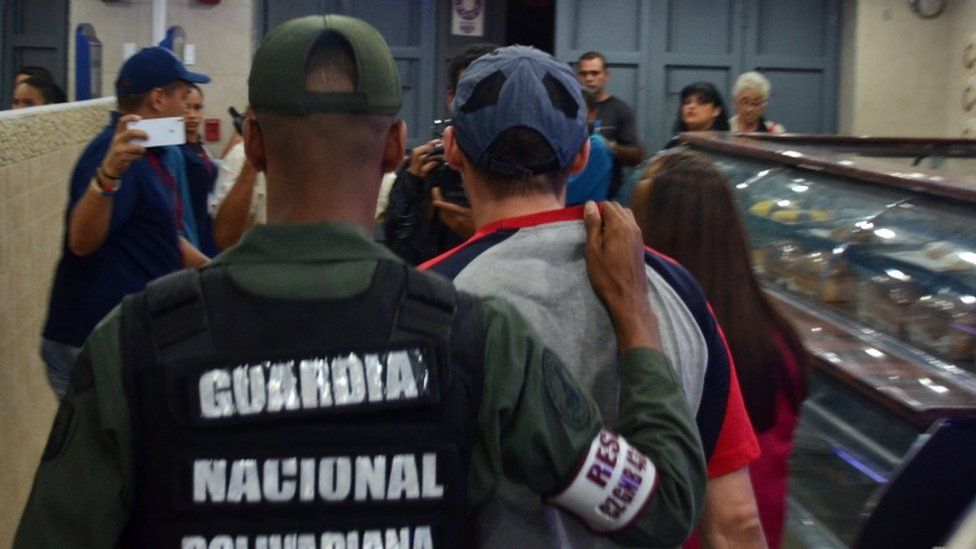
Baker being arrested in Venezuela
Four bakers have been arrested in Venezuela for illegally making brownies and other pastries.
It's part of a crackdown by the government, which now requires 90% of the country's wheat to be used in loaves rather than cakes.
President Nicolas Maduro has threatened to take over bakeries in the capital Caracas as part of a new "bread war".
He's sent inspectors and soldiers into more than 700 bakeries this week to enforce the rules.
Venezuela's Superintendency of Fair Prices said two men were arrested because their bakery was using too much wheat in sweet bread, ham croissants and other products.
Baker being arrested for making croissants
Image captionThis is one of the bakers in Caracas being arrested with his illegal croissants in plain sight
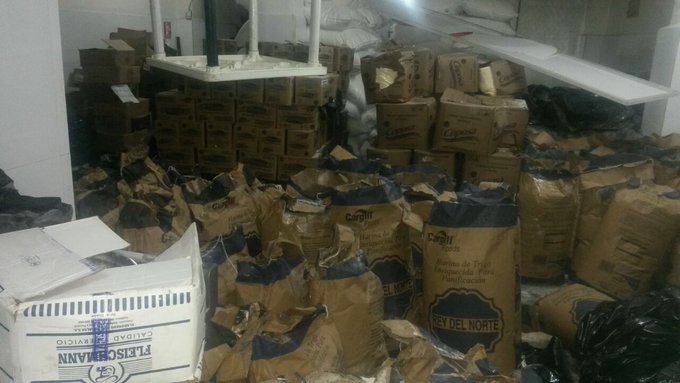
Two more bakers were taken into custody for making brownies with out-of-date wheat.
A government organisation tweeted a photo of the 54 bags in question.


1/7  fueron detenidos dos individuos y puesto a la orden del MP por la elaboración de Brownie con harina de trigo vencida.
At least one bakery has been taken over temporarily by authorities for 90 days.
This is all part of the government's attempt to combat shortages and long lines for basic products during a three-year economic crisis.
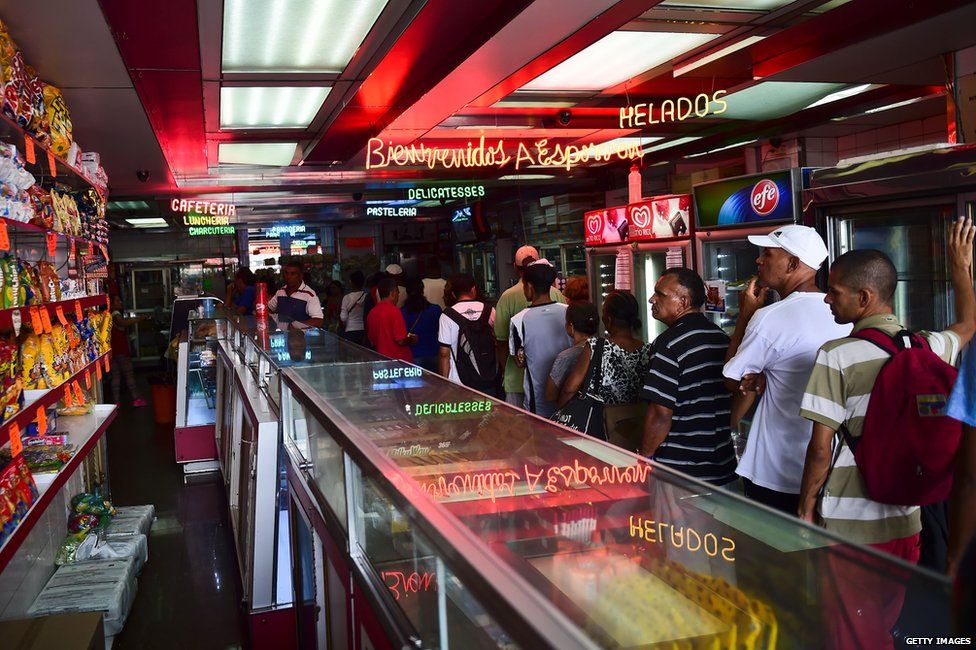
Long lines for a bakery in Caracas, Venezuela
Image captionLong lines for bread are a usual sight in Caracas, Venezuela
Bags of bread in a Caracas bakery
Image captionBags of bread sit untouched in a Venezuelan bakery as prices rise
Shops in Venezuela with no bread signs
Image captionMany shops in Venezuela are displaying "no bread" signs
The ruling Socialist Party claims businessmen are hoarding products and pushing up prices.
Critics say the government's to blame because of failed price policies and currency controls.
Breadmakers are blaming politicians for a national shortage of wheat, saying 80% have none left in stock.
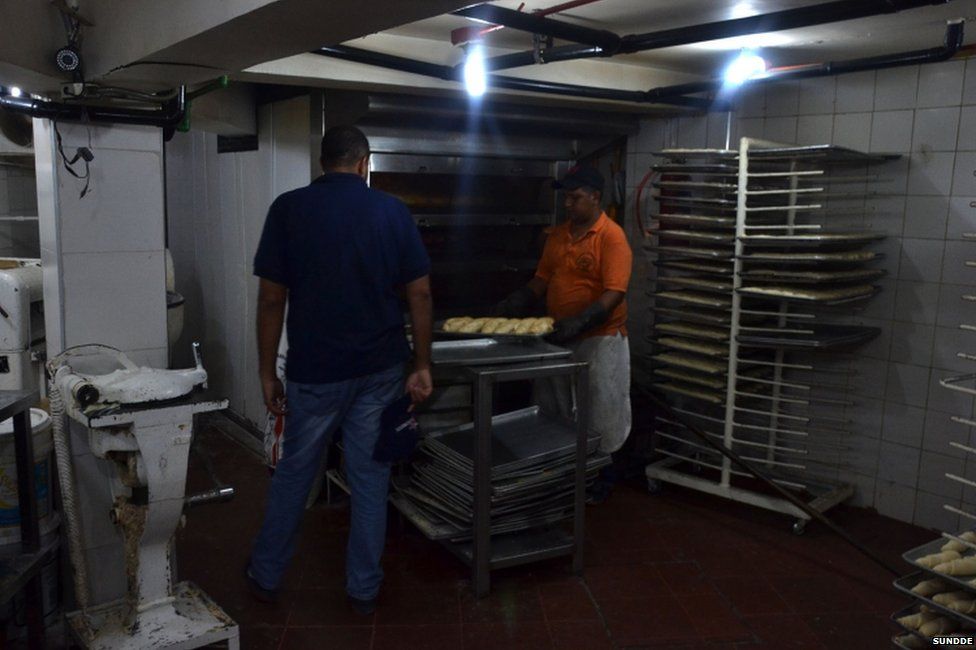
Baker making ham croissants in Venezuela
Image captionMaking ham croissants is currently banned in Venezuela
President Nicolas Maduro said earlier this week: "Those behind the 'bread war' are going to pay, and don't let them say later it is political persecution."
The group representing bakers, Fevipan, has asked for a meeting with Nicolas Maduro, saying most shops can't make ends meet without selling higher-priced products.


Venezuela has moved its clocks forward 30 mins to shorten the day & save electricity amid an economic crisis.
New rules brought in mean bakeries in Caracas must use 90% of flour to bake savoury bread and only 10% for pastries and cakes.
They are also required to provide a constant supply of bread throughout the day from 7am to 7pm and make sure there's bread the next morning by holding over loaves from the previous day.