Thursday, March 10, 2016
Marinwood CSD Meeting March 8, 2016 full meeting
Marinwood CSD Meeting March 8, 2016, Sol Ed Construction Approval, Rules change for Marinwood CSD Board, Free Stuff for Marinwood CSD Board members, Pensions, Commissions (Full Meeting)

Wednesday, March 9, 2016
Marinwood Residents Demand the immediate cleanup of the Toxic Waste at Marinwood Plaza (9 min)
Marinwood Residents demand the immediate clean up of the Toxic Waste Hotspot at the former Prosperity Cleaners at the California Regional Water Quality Control Board in Oakland, CA on March 8, 2016. The former Prosperity Cleaners is located in Marinwood Plaza at 187 Marinwood Ave in San Rafael, CA . No active clean up has occurred since 2011 when the discharger, Marinwood Plaza LLC was allowed to suspend clean up while it was trying to sell the property. In the mean time, the toxic plume has spread 1/2 mile to the East and is not even fully defined. Toxic soil vapors threaten neighboring residents. Marinwood Plaza submitted an incomplete clean up plan to the board on December 28, 2015 . Residents demand immediate removal of the source contamination while plans for full remediation are created.
How to enjoy off-leash time with your dog
How to enjoy off-leash time with your dog

Marin Humane Society:
With the recent changes proposed for the Golden Gate National Recreation Area in regard to where one may bring either on- or off-leash dogs, we thought it was time to revisit both the pleasure of recreating with our dogs off-leash and, just as important, the responsibility that comes with it.
There are real advantages to walking your dog off-leash. It allows for increased exercise and mental stimulation and, of course, is fun. Thankfully, gone are the days when a dog’s only opportunity for exercise was a brief walk around the block or simply left in the backyard. Many guardians — especially physically active Marinites — take their dogs with them when they go for a run or for a brisk hike in the great outdoors. We know from many years of adopting out dogs that stronger bonds are formed when guardians and their dogs spend time together doing what both love.
From a behavioral standpoint, off-leash walking is especially beneficial for dogs that aren’t always comfortable on-leash. Some often pull against the restraint of a leash, sometimes literally taking their owners for a walk, other times getting so frustrated by their leash that they bark at anything passing by.
See the story in the Marin IJ HERE
Tuesday, March 8, 2016
Will Marinwood CSD get Burned with a Bad Solar deal from SolEd?
 |
| A little protection from legal and financial exposure can prevent nasty surprises later. |
The Top 10 Mistakes Schools make with a Solar PPA
An Open Letter to the Marinwood CSD on the proposed SolEd contract approval on 3/8/2016
Dear Marinwood CSD board Member,
Tonight you will be making a fateful decision to encumber Marinwood Community Services District into a twenty five year commitment with a young inexperienced Solar company, SolEd and and an unknown financiers C2Beta Holdings llc, a Delaware Corporation formed in May 2015.
As you know, Soled Benefit Corporation was fired by the City of St Helena for "FAILURE TO PERFORM" its contract duties on November 10, 2015. C2Beta Holdings is run by a 29 year old financial entrepreneur from New York.
There are many red flags.
The above link is a very detailed explanation of the risks involved in Solar PPAs that is posted to the California School Boards Association website HERE. According to all accounts it is a VERY EXPENSIVE way to purchase solar and does little to guarantee competitive energy prices in a changing marketplace.
A outright cash purchase using conventional financing may result in as much as 75% savings over a PPA. This means faster payback and less risk due to technical obsolescence.
Please weigh the facts carefully before putting our finances at risk for twenty five years.
Stephen Nestel
Marinwood, CA
Editor's Note: The attached power point presentation makes all of the points we have been making against the SolEd contract. I doubt if anyone other than Jeff Naylor even bothers to read the presentation. For the rest of the CSD, they seem ready to blindly accept the contract without any modifications .
Editor's Note: The attached power point presentation makes all of the points we have been making against the SolEd contract. I doubt if anyone other than Jeff Naylor even bothers to read the presentation. For the rest of the CSD, they seem ready to blindly accept the contract without any modifications .
This is really disgraceful
Will the Marinwood CSD have the integrity to revisit the contract with Sol Ed Benefit Corp?
A warning about SolEd Benefit Corporation of the SEED Solar Fund.
David Kunhardt, CEO of SolEd Benefit Corporation explains to the Marinwood CSD, their financial partners to their 20 year solar deal.
In this video, he misleads the directors about the financial backer, C2 Holdings Group. It is run by a 29 year old out of a Delaware corporation that was formed in May 2015. The Marinwood CSD directors voted to approve 4-1 on December 8, 2015.
On November 10, 2015, the City of St. Helena, CA terminated their contract with Sol Ed Benefit Corporation due to "non performance" which was unknown at the time of this video.
https://youtu.be/0AqdSv8N-1w City of St. Helena meeting cancels contract (20 minutes)
Will the Marinwood CSD have the integrity to revisit the contract in light of this new information?
Affordable housing may be limited by new state environmental rules
Affordable housing may be limited by new state environmental rules
A new rule designed to promote urban development and curb both car usage and greenhouse gas emissions may end up making cities less affordable and more congested, critics say.

The rule would modify how traffic is evaluated during a critical phase for planning for building developments, shifting the focus from traffic congestion to the increase in miles traveled. New building projects would be viewed as adversely affecting the environment if they increase vehicle miles traveled by more than a regional average without offsets.
The Brown administration — which was tasked with creating the new rule by the Legislature — believes this shift will encourage the development of urban housing, bringing people into the cities and giving them more transportation options beyond the car.
“This proposal will actually help affordable housing projects, especially near transit,” said Christopher Calfee, General Counsel for California’s state Office of Planning and Research. Calfee said the new proposed guidelines will streamline the process as it removes other factors, like aesthetics and parking — from being considered to be negative for the environment.
But critics say applying this standard in instances outside of specific urban areas near major transportation spots — areas called Transit Priority Areas — will hurt the development of housing in suburban and rural areas where property values are lower, and hurt local economies by thwarting new development.
“We’d prefer to see approaches that continue to incentivize transit, incentivize (re-purposing old buildings),” said Richard Lambros, the managing director of the Southern California Leadership Council. Lambros was critical of the new rule, saying while it benefits areas near mass transit, it could limit the development in lower cost, suburban and rural areas.
Greenhouse gasses
When the Legislature tasked Brown’s administration with writing the new rules in 2013, it asked that the new rule “promote the reduction of greenhouse gas emissions, the development of multi-modal transportation networks, and a diversity of land uses.” This coincided with a statewide goal to reduce greenhouse gas emissions by 40 percent by 2030.
In addition to promoting alternative means of travel, the new regulations impose a “road diet,” meaning limiting the amount of new road lanes built — a 4 percent cap statewide between now and 2030.
“We respect that we’re trying to achieve important (greenhouse gas) reduction goals in California, but we can’t develop the policy to do that in a way that doesn’t account for unintended consequences,” said Lambros.
But the Brown administration contends that this doesn’t put a cap on roads (although road diet is OPR’s term), providing instead a threshold for when the mileage standard is considered significant.
“Some new roads will actually decrease (the new standard called Vehicle Miles Traveled),” said Calfee. “Others will increase it. Even if that increase is significant, lead agencies may override the impact and still approve the project.”
Lawsuits
The 46-year-old California Environmental Quality Act requires developers to obtain an Environmental Impact Report during the planning period, which evaluates a project’s impact on the local environment. This public document advises local governments when they are deciding to approve or deny a project, and it’s in this report that the new guidelines will be applied.
Local governments are not actually required to deny a project based on a negative report. However, many proposed developments end up being fought in court — by environmentalists, opposing developers and so on — so cities and counties can overlook these guidelines at their own peril. In other words, overlooking the environmental impact report makes a project less defensible.
“It gives more ammunition to people who want to stop capacity projects for whatever reason,” said Hasan Ikhrata, executive director of the Southern California Association of Governments, whose group is concerned that the new rule will subject hundreds of projects in their six counties to new standards midstream, which they say are largely un-achievable.
History
Under CEQA (pronounced see-qua), many factors were considered in an environmental impact report — a requirement for new development. Some of the factors were transportation, aesthetics and parking.
The 2013 bill said that parking and aesthetics in certain instances in the Transit Priority Areas were no longer considered significant impacts on the environment. These areas were created by the Legislature to encourage high-density development in areas where there is existing or proposed public transportation — like areas near metro stops.
The bill also tasked the Brown administration to come up with new guidelines on determining the transportation impact, as the old guidelines were based on traffic congestion — making congestion worse was considered an adverse impact.
The proposed modification shifts the focus from congestion to vehicle miles traveled, as compared to the regional average. So, increasing the average amount of miles that vehicles travel compared to the regional average is considered adverse if it’s without plans to offset the mileage.
Affordable Housing
So with the new standard, close proximity to proposed or existing mass transit is certainly helpful, and critics say it’s an unofficial requirement. Because there are existing roads and generally adequate access to public transportation, high density projects near urban centers will fare better in the CEQA/environmental review process.
But areas further away from the urban center would likely be more affected. Critics say this could affect the access to affordable housing, since property values and rents usually fall the further away development gets from the city. Many critics aren’t against the new standard, just it’s widespread application.
“We’re ok with (the new standard),” said Ikhrata. “But what we’re saying is you shouldn’t subject every project to this test. This should be done on an overall system, and be able to mitigate in other places. No project is going to pass that test.
Monday, March 7, 2016
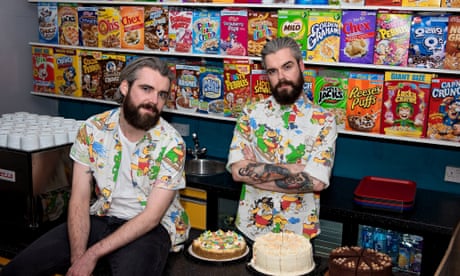
Shoreditch Cereal Killer Cafe targeted in anti-gentrification protests

Shoreditch Cereal Killer Cafe targeted in anti-gentrification protests
Paint and cereal thrown at east London cafe in attack owners describe as ‘terrifying’Hundreds of protesters attacked a cereal cafe in east London on Saturday night, daubing the word “scum” on the shop window and setting fire to an effigy of a police officer.
Riot police were called in to defend the Cereal Killer Cafe in Shoreditch after it was targeted by a large crowd of anti-gentrification activists carrying pigs’ heads and torches.
The owners of the cafe, which has been seen by some as a symbol of inequality in east London, said on Sunday that the attack left customers including children “terrified for their lives”.
The hipster Cereal Killer Cafe owners aren’t the East End’s real enemy
Audrey Gillan
Gary Keery, 33, who founded the cafe with his twin brother, Alan, said: “It’s senseless violence, isn’t it? We’ve had some letters through the letterbox saying ‘die hipsters’ and stuff but nothing to this extreme. It just doesn’t make sense.” Footage of the attack filmed from inside the shop and obtained by the Guardianshows masked protesters shouting outside the shopfront. One man daubs graffiti on the window while another is seen holding a burning stick.
The Metropolitan police said one of their officers had suffered an injury to his face as a result of a bottle thrown during the disorder, caused by a “criminal element within a group of several hundred people” who had thrown missiles and attacked shops on Brick Lane.
They added that one protester was arrested on suspicion of criminal damage.
One protester who was at the demonstration said the Cereal Killer Cafe was targeted as a “symbol of gentrification”, although he said a nearby estate agent, Marsh & Parsons, was also attacked. The cafe, which opened in December, was open as usual on Sunday morning, with queues of customers paying up to £4.40 for a bowl of cereal.
Gary Keery said customers – including children – barricaded the cafe doors when the disturbance started but then had to be moved downstairs to safety. At one point the protesters managed to break into the small shop and threw a smoke bomb and furniture inside the doorway, he said. Other masked figures threw red paint and cereal at the shop windows.
FacebookTwitterPinterest Footage from the protest shows damage to the cafe and a nearby estate agent and burning torches in the street
“If they really believe in the protest, why are they covering their face while they’re doing it? Why are they wearing pig masks?” Gary said. “It’s not just the fact that someone threw paint on the windows, there’s more of a deep-rooted issue that needs to be looked at. You need to look at why they’re attacking us.”
The cereal-only cafe has sparked controversy since its opening. The Keery brothers were forced to defend their prices after a Channel 4 News interviewer asked whether local people could afford £3.20 for a bowl of cereal.
Can the Cereal Killer cafe, which sells only cereal, really make a killing?
Gary dismissed the suggestion that his business had become a symbol of east London gentrification. “There’s another Pret at the top of the street here and that wasn’t targeted. We’re an independent business, we’ve got two shops, we’ve only been open months,” he said.
“If you want to talk about gentrification and different classes, you don’t go about attacking independent businesses who are putting their whole life on the line to open a business, you go to the conglomerates and big companies.”
The protest was advertised on Facebook as the third Fuck Parade, and was apparently organised by the anarchist group Class War. The event page stated: “Our communities are being ripped apart – by Russian oligarchs, Saudi sheiks, Israeli scumbag property developers, Texan oil-money twats and our own home-grown Eton toffs. Local authorities are coining it in, in a short-sighted race for cash by ‘regenerating’ social housing.
“We don’t want luxury flats that no one can afford, we want genuinely affordable housing. We don’t want pop-up gin bars or brioche buns, we want community.” The Fuck Parade organisers had not responded to requests for comment at the time of publication.
Esther Planas Balduz, 55, an artist who attended the protest after hearing about it on Facebook, said she supported the cause because she was evicted from her home of seven years when her rent doubled last year.
“I’ve lived in Shoreditch for 17 years and it’s appalling what’s been going on. Its our fault, artists like me go to these kind of areas, then the architects follow, the developers, the hipsters etc,” Balduz said. “The problem is social cleansing. There are no protections for us. The law does not protect us, only the greedy landowners.”
Balduz said the protest seemed “more like a punk carnival” and hoped it would open up debate on the issue of gentrification. “Even if a few became a bit aggressive, it was really less aggressive than the masses of drunks I have to cope with every weekend in the area,” she said.
Another protester, who declined to be named, conceded that there were “more justifiable targets” than a small independent business, but played down the scale of the attack.
Sunday, March 6, 2016
NEXTDOOR Neighborhood ALERT! Off Leash Dogs in White Van Spotted at Matt and Jeff's Carwash are Headed to Marinwood!

Off leash dogs in white van spotted at Matt and Jeff's Carwash are headed to MARINWOOD!


 |
| They are wearing hoodies and don't look like they belong in the neighborhood. |
WE NOW JOIN THE U.S. CLASS WAR ALREADY IN PROGRESS
WE NOW JOIN THE U.S. CLASS WAR ALREADY IN PROGRESS
by Joel Kotkin 02/16/2016

Neither Trump nor Sanders started the nation’s current class war—the biggest fight over class since the New Deal—but both candidates, as different as they are, have benefited.
Class is back. Arguably, for the first time since the New Deal, class is the dominant political issue. Virtually every candidate has tried appealing to class concerns, particularly those in the stressed middle and lower income groups. But the clear beneficiaries have been Trump on the right and Sanders on the left.
Class has risen to prominence as the prospects for middle and working class Americans have declined. Even amidst a recovery, most Americans remain pessimistic about their future prospects, and, even more seriously, doubt a bright future (PDF) for the next generation. Most show little confidence in the federal government, although many look for succor from that very source.
To understand class in America today, one has to look beyond such memes as “the one percent” or even the concept of “working families.” As Marx understood in the 19thcentury, classes are often fragmented, with even the rich and powerful divided by their economic interest and world view. In our complex 21st century politics, there’s a big divergence among everyone from the oligarchic classes to those who inhabit, or fear they will soon inhabit, the economic basement.
The Fragmented Oligarchies—The Techies versus the Tangibles
This confounding election stems, as much as anything, from the growing divisions among America’s business elite. These divisions have existed in some form in the past, but may never have been so gaping as today.
On one side, we have the tangible industries—manufacturing, homebuilding, agriculture, logistics and especially energy—which often find themselves on the bad side of progressive regulation. Once these industries split their political contributions between the two major parties, but increasingly they are heading into the GOP camp.
This is particularly notable in the energy industry. With progressives clamoring for the virtual destruction of the fossil fuel industry as soon as possible, executives feel compelled to back the GOP. They know that as the green movement ups its demands, their heads are on the collective chopping block. In 1990, energy firms gave almost as much to Democrats as Republicans; in 2014 they gave over three times as much to the GOP. Other tangible sectors, including agriculture, homebuilding and chemical manufacturing, which depends on cheap energy, seem also be leaning to the GOP.
These corporate interests used to dominate fund-raising, but they are increasing out-gunned and out-spent by the rising tech and media sectors. This is where the big money is: In America , the media-tech sector in 2014 accounted for five of the top ten wealthiest people. And just this year, the fortune of the poster boy of social media, Mark Zuckerberg,exceeded that of the Koch brothers, the much demonized scions of the old economy.
And these new style oligarchs are, for the most part, much younger than their tangible industry rivals. Indeed, virtually all self-made billionaires under 40 are techies. And where once tech folk supported middle of the road candidates, there has been a steady “leftward” drift for the last 15 years. In 2000, the communications and electronics sector was basically even in its donations; by 2012, it was better than two to one Democratic. Microsoft, Apple, and Google—not to mention entertainment companies—all overwhelmingly lean to the Democrats with their donations.
This shift has occurred as the tech industry has moved away from its roots in aerospace and manufacturing to software and media. This realignment has relieved Silicon Valley of many traditional concerns with labor, energy prices, and basic infrastructure. When you are moving bits and bytes instead of building machines and circuits, you have less pressing interest in maintaining roads and having access to cheap energy. When virtually all your employees have degrees from elite colleges, or are imported technocoolies from India, you worry less about the cost of living or managing unions.
The Obama years have solidified these ties. Many former Obama aides now work for firms such as Uber, AirBnB, Google, Twitter, and Amazon. Tech also leans strongly towards cultural progressivism—support for gay marriage, abortion rights and unrestricted immigration—and sympathy for the administration’s initiatives on climate change. They are not too concerned about higher energy prices for the middle and working classes, or their negative impact on basi cindustries. Climate change politics not only allows Silicon Valley and its Wall Street supports to feel better about themselves. It has also allowedventure firms and tech companies to profiteer on subsidies.
But class issues muck up this alliance of manna and idealism. Despite their hip and cool image, the tech oligarchs remain very much ruthless capitalists when it comes to preserving and expanding their wealth. Although Bernie Sanders rarely attacks the tech oligarchs directly, they recognize him as a threat. “They don’t like [Bernie] Sanders at all,” notes San Francisco-based researcher Greg Ferenstein, who has been polling internet company founders for an upcoming book. “He’s an egalitarian liberal,” Ferenstein explains. “These people are tech liberals. Equality is a non-issue in Silicon Valley.”
Sanders seems not to get the memo—he prefers to demonize Wall Street—butThe Washington Post, owned by super-oligarch Jeff Bezos, has taken particular pains to cut the Vermont socialist down to size. No surprise here, given the controversy over labor relations at Amazon, which, unlike Facebook or Google, actually has to employ blue collar workers.
Most gentry and “tech liberals” appear to be aligning their vessels with Hillary Clinton’s now listing “armada” of well-heeled tech, financial, and other cronies. Some of these same people have also donated quite generously to the ethically challenged Clinton Foundation.
And what about Wall Street, the biggest and most deserving target for class rage? Of course, the masters of the universe don’t like Bernie, the one candidate sure to oppose their interests. They are more than ready for Hillary, who, as Sanders repeatedly points out, has been taking their money in gigantic gobs. Security firms, for example, are thelargest donors to Clinton’s super-pak, lagging behind only Jeb Bush in terms of money from this detested part of our economy.
Yet the more Wall Street money dominates the race in both parties, the less voters seem willing to listen. Their GOP favorites have either lost or are on the way out, including Marco Rubio, who seemed poised to win Wall Street support with his confounding proposal—amidst concern with inequality and rapacious profiteering—advocating a zero capital gains rate. Unable to unite, they are now facing the real, unnerving possibility of Donald Trump or Ted Cruz as the party standard-bearer.
The Divided Middle Orders: The Yeomanry vs. the Clerisy
Big contributors may determine who stays in a race, and sometimes who wins, but most elections are settled by the middle class, which constitutes something close to half the population, and likely more of the electorate. Yet like the oligarchs, the middle class is also deeply divided between competing factions and interests.
The largest section of the middle class consists of what I call the yeomanry. This includes some 28 million small business owners, many of whom employ one of more family members. Spread across a variety of fields, this sector constitutes the class most opposed to the Obama program. In fact, according to Gallup, in 2012 three-fifths of all small business owners opposed Obama’s policies.
The reasons for this opposition are obvious. Progressive policies like higher minimum wages and stricter environmental and labor laws hit small businesses harder than bigger firms, which have the staff and resources to adapt to the regulatory vise. Once seen as the leading, creative edge of the economy, small business has not done well under Obama: for the first time in modern history, more firms (PDF) are going out of business than staying solvent.
But there’s another, more ascendant part of the middle class—highly educated professionals, government workers, and teachers—who have done far better under President Obama. In 2012, professionals generally approved of his regime, according to Gallup,by a 52 to 43 percent margin. These voters have become a critical part of the democratic coalition; indeed eight of the nation’s ten wealthiest counties—including Westchester County in New York, Morris County in New Jersey, and Marin County in California—all went Democratic in 2012.
These middle income workers increasingly do not work for the private economy; they occupy quasi-public jobs dependent on public dollars than private markets. Universities, a core Democratic constituency have been hiring like mad: between 1987 and 2011, they added 517,636 administrators and professional employees, or an average of 87 every working day.
This educated and often well credentialed middle class tends towards progressive politics; in fact, university professors have become ever more leftist, outnumbering conservatives six to one. Indeed, those voters with advanced degrees were the only group of whites by education to support Obama in 2012.
In modern America, these people serve largely as a clerisy, hectoring the public and instructing them how to live. A bigger state is not a threat to them, but a boon. No surprise that public unions and academics have emerged as among the largest and most loyal donors to Democrats.
The Democratic race is a largely a battle over securing the loyalty this class. Clinton tends to dominate the already established clerisy—most notably the teachers unions and gay and feminist lobbies—and among older progressives. But the leaders are being deserted by the followers: Sanders won a decisive 56 percent of college educated primary voters in New Hampshire.
The Lower Classes: The Precariat and the Traditional Lower Class
More Americans see themselves as belonging to the lower classes today than ever in recent times. In 2000 some 63 of Americans, according to Gallup, considered themselves middle class, while only 33 percent identified as working or lower class. In 2015, only 51 percent of Americans call themselves middle class while the percentage identifying with the lower classes rose to 48 percent.
The bulk of this population belongs to what some social scientists call the “precariat,” people who face diminished prospects of achieving middle class status—a good job, homeownership, some decent retirement. The precariat is made up of a broad variety of jobs that include adjunct professors, freelancers, substitute teachers—essentially any worker without long-term job stability. According to one estimate, at least one-third of the U.S. workforce falls into this category. By 2020, a separate study estimates, more than 40 percent of the Americans, or 60 million people, will be independent workers—freelancers, contractors, and temporary employees.
This constituency—notably the white majority—is angry, and with good cause. Between 1998 and 2013, white Americans have seen declines in both their incomes and their life expectancy, with large spikes in suicide and fatalities related to alcohol and drug abuse.They have, as one writer notes, “lost the narrative of their lives,” while being widely regarded as a dying species by a media that views them with contempt and ridicule.
In this sense, the flocking by stressed working class whites to the Trump banner—the New York billionaire won 45 percent of New Hampshire Republican voters who did not attend college—represents a blowback from an increasingly stressed group that tends to attend church less and follow less conventional morality, which is perhaps one reason they prefer the looser Trump to the bible thumping Cruz, not to mention the failing Ben Carson.
Many Trump supporters are modern day “Reagan Democrats.” Half of Trump’s supporters, according to a YouGov survey, stopped their education in high school or before. Trump’s message appeals to these voters in part by preserving social security and other entitlements. He appeals to populist rather than the usual GOP free market sentiment, and decisively won all voters making under $50,000 a year. Tellingly, among Iowa Republican voters who called themselves “moderate or liberal,” Trump trounced Cruz, and duplicated the feat again in New Hampshire.
Conservative intellectuals dismiss Trump as both too radical and not conservative enough. He offends pundits in both parties by pushing things verboten in polite circles, such as trade with China, which has been responsible for the bulk of U.S. manufacturing losses. He also has embraced curbs on immigration, something that rankles the established leaders in both parties.. “There’s a silent majority out there,” Trump says. “We’re tired of being pushed around, kicked around, and being led by stupid people.”
But if older, white Trumpians reflect the precariat’s past, young people flocking to Sanders’s camp may represent its future. Sanders destroyed Clinton among those under 30, winning their votes in both the Iowa caucuses and New Hampshire by six to one. These young voters may differ from generally older and whiter Trump voters on many key issues, but they also face a precarious future and diminished prospects. Over the past 40 years, few groups (PDF) have seen their incomes drop more than people under 30.
In a decade, these millennials will dominate our electorate and as early as 2024 outnumber boomers at the polls. They may be liberal on many social issues, but their primary concerns, like most Americans, are economic, notably jobs and college debt . Fully half, notes a recent Harvard study (PDF), already believe “the American dream” is dead.
For many millennials, Clinton style incrementalism is less than enough. A recentyougov.com poll found some 36 percent of people 18 to 29 favor socialism compared to barely 39 percent for capitalism, making them a lot redder than earlier generations. No surprise that Sanders beat Clinton among younger voters. As one student, a Sanders backer, recently asked me, “Why should I support her. How is she going to make my life better?”
Below the precariat lie the traditional lower classes. Almost 15 percent of Americans live in poverty (PDF), and the trend over time has gotten worse. More than 10 million millennials are outside the system, neither in the labor force or education. This is just the cutting edge of a bigger problem: a labor participation rate which is among the lowest in modern history.
The low-income voters are helping both Trump and Sanders. The Vermont socialist won an astounding 70 percent of the votes among people making less than $30,000 a year. Trump’s largest margins were among both these voters and those making under $50,000 annually, who together accounted for 27 percent of GOP primary voters.
Class as the New Defining Issue
We are now experiencing a growth in class-based politics not seen since the New Deal. During the long period of generally sustained prosperity from the ’50s to 2007, class issues remained, but were increasingly subsumed by social issues—civil and gay rights, feminism, environment—that often cut across class lines. Democrats employed liberal social issues to build a wide-ranging coalition that spanned the ghettos and barrios as well as the elite neighborhoods of the big cities. Similarly, Republicans cobbled together their coalition by stressing conservative social ideas, free market economics, and a focus on national defense; this cemented the country club wing with the culturally conservative suburban and exurban masses.
The chaos and constant surprises of this campaign represent the beginning of a new political era shaped largely by class. In November Trump hopes to ride the concerns of the white working class to victory in the rustbelt to overcome Hillary Clinton’s coastal edge. Close to 20 percent of Democrats, according to Mercury Analytics surveys, plan to support Trump as their champion. In the coming months, the donor class, politicians, and pundits will be forced to address the needs of Trump’s supporters, as well as those of Sanders’ youth precariat in ways mainstream politicians have avoided for years.
As class politics reshape American politics, we are entering territory not explored for at least a half century. Our political culture is being rocked in ways few would have anticipated just a few months ago.
Joel Kotkin is executive editor of NewGeography.com. He is the Roger Hobbs Distinguished Fellow in Urban Studies at Chapman University and executive director of the Houston-based Center for Opportunity Urbanism.
Subscribe to:
Posts (Atom)