
Saturday, November 5, 2016

How to protect yourself from hacking
How Can Journalists Protect Themselves During a Trump Administration?
The president-elect’s attacks on the press hint at an unfriendly atmosphere for reporters.
The United States is one of the easier countries in which to be a journalist. Compared to countries with authoritarian governments in Russia, China, and nearly everywhere in the Middle East, a reporter can clash with the U.S. government and still go home from work feeling safe. Reporters without Borders, a nonprofit organization that advocates for reporters’ rights, has ranked the U.S. in the top 50 countries with the most press freedom since 2002.
Things are far from perfect. The Obama Administration has hotly pursued whistleblowers—especially those who leak information related to national security—and its attempt to force James Risen, a journalist for The New York Times, to reveal confidential sources was a major setback to press freedom.
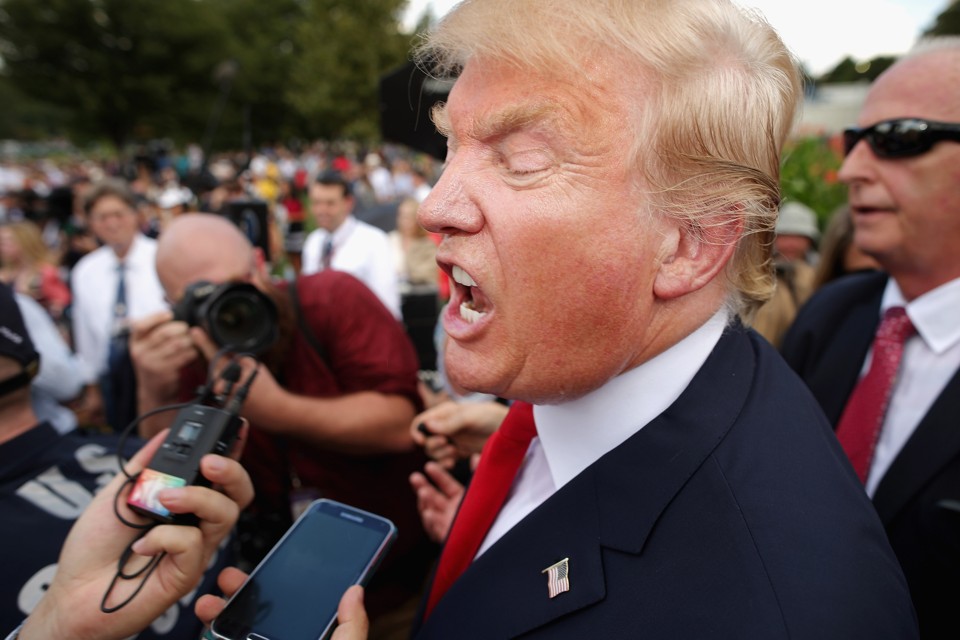
But before long, these past eight years may look like summer camp for journalists. On Tuesday, American voters chose a new president, and he’s not a friend to the press.
Donald Trump has called for an “opening up” of libel laws in the U.S., which would make it easier to sue journalists who write unflattering things, and maintained blacklists of media outlets he didn’t want covering him. He’s got a penchant for surveillance, allegedly wiring up the phones in his Mar-A-Lago resort so that he could listen in on any call from the handset at his bedside. He’s called for boycotting Apple after the company refused to unlock the iPhone used by one of the San Bernardino shooters when asked by the FBI. He’s “keeping a list” of political figures who were disloyal to him, and he has a habit of singling out journalists he dislikes.
If you’re a journalist in the U.S., all this means that it’s time to protect yourself.
The government can ask technology companies to turn over information—like the contents of an email or instant message, for example—if they’ve got the appropriate warrant or court order. The best way to keep overreaching law enforcement from doing this is to use a messaging platform that, by design, can’t read the data it shuttles from user to user.
Here’s how: Tech-savvy reporters, including many who focus on digital privacy and surveillance, routinely use tools that encrypt their online communications end-to-end—that is, in such a way that not even the company delivering messages can read their contents. Signal, a smartphone app, is the medium of choice for privacy-conscious communicators, and is probably the easiest way to call or text securely. Encrypting email using PGP is also an option, but it’s far more cumbersome.
It’s also important to make up complex passwords—and never to reuse a username and password combination for more than one site. Password managers like 1Password, LastPass, and Dashlane can create a different randomized password for every website, and remember them all so that you don’t have to. Turning on two-factor authentication on every service that supports it—Google, Slack, Dropbox, Amazon, etc.—makes it much harder for hackers to get into your accounts, by requiring you to approve every login with a mobile device. And for those who need to browse the internet securely, a properly configured Tor browser allows users to poke around the web anonymously.
Already, journalists and human-rights activists around the world operate under hostile governments that use surveillance to detect and disrupt their work. To understand what U.S.-based journalists might learn from them, I reached out to Ali Bangi, the co-director of ASL19, a non-profit organization that helps Arabic- and Persian-speaking internet users protect their privacy and anonymity online, and bypass internet censorship.
Bangi made two predictions based on his experience with the media landscape in Iran. First, he said, journalists will need to work harder to keep their anonymous sources safe. Electronic surveillance can make it easy for the government to determine the identity a whistleblower, if a reporter isn’t careful. A vindictive administration could deploy surveillance tools more freely in order to figure out who’s leaking information.
It’s also possible that more types of information will be considered sensitive and dangerous. That’s why people other than national-security reporters should think about communicating more securely: Even run-of-the-mill political reporting could make journalists a target.
“Activists and journalists working on hostile situations understand very well that, unless you take the necessary precautions, your online activities can have consequences for your physical safety,” said Daniel Bedoya Arroyo, the incident-response manager at Access Now, a digital-rights advocacy group. “For example, a mobile device can reveal with a decent level of accuracy your physical location, even if geolocalization services are disabled. And unfortunately, this increased risk and fear can cause self-censorship in many situations.”
A survey conducted by PEN America, an organization that promotes freedom of expression, found that 16 percent of writers in the U.S. avoided writing or speaking about a topic as a result of government surveillance, and that another 11 percent had “seriously considered” avoiding a topic for that reason. (The survey was conducted after Edward Snowden’s leaks first began to reveal the massive scale of the National Security Agency’s spying operations.)
“If the government is monitoring your communication, or if you even perceive that they might be, you are not going to say precisely what you think, particularly in repressive societies where there are consequences for critical expression,” said Joel Simon, the executive director of the Committee to Protect Journalists.
The fact that the government’s spying apparatus will soon be under Trump’s control is causing panic among privacy advocates. Writing in The Guardian,Trevor Timm, the executive director of the nonprofit Freedom of the Press, argued that Trump could wreak havoc using President Obama’s secret drone program and a powerful NSA:
In a little over two months, Donald Trump—after his shocking victory last night—will control a vast, unaccountable national security and military apparatus unparalleled in world history. The nightmare that civil libertarians have warned of for years has now tragically come true: instead of dismantling the surveillance state and war machine, the Obama administration and Democrats institutionalized it—and it will soon be in the hands of a maniac.It will go down in history as perhaps President Obama’s most catastrophic mistake.
Evan Greer, the campaign director for Fight for the Future, a digital-rights nonprofit, called on Obama to shut down the NSA’s mass-surveillance programs in next few months, before he leaves office.
Institutional checks and a strong first amendment will probably keep press freedoms in the U.S. from eroding too much in the next four or eight years. It’s certainly won’t approach the situation in countries like Iran, where a journalist named Yashar Soltani was thrown in solitary confinement in September for exposing corruption in the office of Tehran’s mayor.
“Encrypt, encrypt, encrypt!” said Bangi when I asked him what an Iranian journalist might advise an American reporter working under Trump’s NSA. “And if it's not safe anymore, leave.”Friday, November 4, 2016
Technological terrors from license-plate readers to facial recognition.
Technological terrors from license-plate readers to facial recognition.
The theory here — if such loosey-goosey thinking even deserves to be called that — is that drivers who both attend gun shows and drive across the border are apt to be involved in gun smuggling. That might just about be plausible if we were talking about people who had attended gun shows in Maine or Connecticut. But people who attend gun shows in Del Mar and then cross the border are about as likely to be smuggling guns as people who shop at Whole Foods in Darien, Conn., and then drive over the Triborough Bridge are likely to be smuggling organic avocados into Manhattan. Driving across the U.S.–Mexico border is not especially suspicious when you live on the U.S.–Mexico border.
As the Wall Street Journal reports, the Drug Enforcement Agency considered a similar scheme before abandoning it.
ICE has no written policy on the use of license-plate scanners, and therefore no guidelines in place to address what is plainly yet another episode of mass surveillance conducted against the general population by law-enforcement agencies that cannot quite rouse themselves to do old-fashioned police work.
Federal law prohibits the creation of mass databases of U.S. gun owners, a provision of the 1986 Firearms Owners Protection Act, a law passed to head off Democrats’ efforts to create a national gun registry. The surveillance also brings up some Second Amendment questions, but what is really at play are familiar constitutional concerns about unreasonable search and seizure. We require things like subpoenas, court orders, and warrants because the invasion of our privacy by police authorities is supposed to be conditioned upon such criteria as “probable cause” and “reasonable suspicion.” The mere fact of being a resident of southern California who does two things common among residents of southern California does not give police probable cause to believe that one is likely to be up to anything more nefarious than a trip to In-N-Out. This is plainly abusive and lawless behavior on the part of the Obama administration, which, if you’ll remember, came into power in 2009 partly on promises to roll back privacy-invading programs associated with the George W. Bush administration and the PATRIOT Act. That was back when Barack Obama was worried about feds snooping through your library records, before the Nobel Peace Prize winner took to assassinating U.S. citizens as part of the endless “war on terror.”
The creation of such mass databases is dangerous and unnecessary. But it is something that governments at all levels, under leaders of both parties, are pursuing aggressively. If you want to drive legally in freedom-loving Texas, prepare to be subjected to electronic fingerprinting and rules that require (unlike some other western states) license plates on both the front and the back of your car, to facilitate automated plate-reading.
RELATED: Hooray for Tim Cook
If you have a driver’s license, your photograph and identification have probably been uploaded to a nationwide police database searched by facial-recognition software, even if you never have committed a crime or had so much as a speeding ticket. Police can use those to find bank robbers, but they also can use them to see who is attending the Clinton-for-president or the Trump-for-president rally this weekend. The Center for Privacy and Technology at Georgetown University surveyed 100 law-enforcement agencies, and what they found will horrify you even as it fails to surprise you: Almost none of those agencies had policies restricting inquiries into lawful public events conducted under First Amendment protection or conditioning such inquiries on traditional constitutional standards; only one agency even bothered conducting routine audits into how those tools were used and against whom.
(Hurrah for the Michigan State Police.)
There is a good reason why police agencies do not audit the use of such programs: Because when they do conduct such audits, they find abuse, and lots of it. An Associated Press report found police officers using confidential law-enforcement databases to stalk former lovers or investigate new ones, to harass personal enemies, and the like. It’s pretty entertaining stuff, human frailty on dramatic display: A marshal whose ex-girlfriend was seeing a man who drove a white pickup ordered information on every white pickup in his jurisdiction; another police officer accessed information about a woman in a domestic-battery case to send her unsolicited Facebook messages on the theory that she probably was available; a jilted Akron police sergeant went to prison on a stalking conviction after abusing police data to harass and threaten his ex-girlfriend and her mother; another police officer shared information with suspects in a drug and gun-trafficking case in exchange for sex.
There are some heroic men and women in law enforcement. There are also a lot of bullies, bums, and reprobates, just as there are in any other group.
We know from experience that these tools will be abused. In cases such as the California gun-show surveillance, these tools are put to trivial ends that are difficult to justify at all in terms of their value to investigators, even if we could get past the constitutional questions. In those cases in which such surveillance is both legal and useful, it must be narrowly available, conditioned on the same standards of probable cause as any other invasion of privacy, and constantly audited by oversight authorities outside of the police agencies in question.
The police say they want these tools because it is difficult to tell the good guys from the bad guys. It is, and such technological terrors should be carefully managed for exactly the same reason.
— Kevin D. Williamson is National Review’s roving correspondent.
Editor's Notes: Many police agencies and communities in Marin County have license plate readers and advanced technology for "public safety".
Del Mar, Calif., is one of this nation’s beautiful places, a surfing town on the California coast not far from San Diego. That also puts it close to the Mexican border — less than two hours to Tijuana down the 805. Traveling between San Diego County and Mexico is about as exotic as traveling between Omaha and Des Moines. They also have gun shows there, from time to time.
That lattermost fact caught the attention of the Obama administration, which has an interest in gun smuggling. (That interest happily is no longer proprietary, so far as we know, Operation Fast and Furious having been concluded.) And so Immigration and Customs Enforcement was ordered to do something extraordinary: Working with local police departments, it set up automated license-plate readers to record the information of everybody coming and going to Southern California gun shows, including the one in Del Mar. It then cross-referenced the plate numbers against those of cars crossing the U.S.–Mexico border near Tijuana.The theory here — if such loosey-goosey thinking even deserves to be called that — is that drivers who both attend gun shows and drive across the border are apt to be involved in gun smuggling. That might just about be plausible if we were talking about people who had attended gun shows in Maine or Connecticut. But people who attend gun shows in Del Mar and then cross the border are about as likely to be smuggling guns as people who shop at Whole Foods in Darien, Conn., and then drive over the Triborough Bridge are likely to be smuggling organic avocados into Manhattan. Driving across the U.S.–Mexico border is not especially suspicious when you live on the U.S.–Mexico border.
As the Wall Street Journal reports, the Drug Enforcement Agency considered a similar scheme before abandoning it.
ICE has no written policy on the use of license-plate scanners, and therefore no guidelines in place to address what is plainly yet another episode of mass surveillance conducted against the general population by law-enforcement agencies that cannot quite rouse themselves to do old-fashioned police work.
Federal law prohibits the creation of mass databases of U.S. gun owners, a provision of the 1986 Firearms Owners Protection Act, a law passed to head off Democrats’ efforts to create a national gun registry. The surveillance also brings up some Second Amendment questions, but what is really at play are familiar constitutional concerns about unreasonable search and seizure. We require things like subpoenas, court orders, and warrants because the invasion of our privacy by police authorities is supposed to be conditioned upon such criteria as “probable cause” and “reasonable suspicion.” The mere fact of being a resident of southern California who does two things common among residents of southern California does not give police probable cause to believe that one is likely to be up to anything more nefarious than a trip to In-N-Out. This is plainly abusive and lawless behavior on the part of the Obama administration, which, if you’ll remember, came into power in 2009 partly on promises to roll back privacy-invading programs associated with the George W. Bush administration and the PATRIOT Act. That was back when Barack Obama was worried about feds snooping through your library records, before the Nobel Peace Prize winner took to assassinating U.S. citizens as part of the endless “war on terror.”
The creation of such mass databases is dangerous and unnecessary. But it is something that governments at all levels, under leaders of both parties, are pursuing aggressively. If you want to drive legally in freedom-loving Texas, prepare to be subjected to electronic fingerprinting and rules that require (unlike some other western states) license plates on both the front and the back of your car, to facilitate automated plate-reading.
RELATED: Hooray for Tim Cook
If you have a driver’s license, your photograph and identification have probably been uploaded to a nationwide police database searched by facial-recognition software, even if you never have committed a crime or had so much as a speeding ticket. Police can use those to find bank robbers, but they also can use them to see who is attending the Clinton-for-president or the Trump-for-president rally this weekend. The Center for Privacy and Technology at Georgetown University surveyed 100 law-enforcement agencies, and what they found will horrify you even as it fails to surprise you: Almost none of those agencies had policies restricting inquiries into lawful public events conducted under First Amendment protection or conditioning such inquiries on traditional constitutional standards; only one agency even bothered conducting routine audits into how those tools were used and against whom.
(Hurrah for the Michigan State Police.)
There is a good reason why police agencies do not audit the use of such programs: Because when they do conduct such audits, they find abuse, and lots of it. An Associated Press report found police officers using confidential law-enforcement databases to stalk former lovers or investigate new ones, to harass personal enemies, and the like. It’s pretty entertaining stuff, human frailty on dramatic display: A marshal whose ex-girlfriend was seeing a man who drove a white pickup ordered information on every white pickup in his jurisdiction; another police officer accessed information about a woman in a domestic-battery case to send her unsolicited Facebook messages on the theory that she probably was available; a jilted Akron police sergeant went to prison on a stalking conviction after abusing police data to harass and threaten his ex-girlfriend and her mother; another police officer shared information with suspects in a drug and gun-trafficking case in exchange for sex.
There are some heroic men and women in law enforcement. There are also a lot of bullies, bums, and reprobates, just as there are in any other group.
We know from experience that these tools will be abused. In cases such as the California gun-show surveillance, these tools are put to trivial ends that are difficult to justify at all in terms of their value to investigators, even if we could get past the constitutional questions. In those cases in which such surveillance is both legal and useful, it must be narrowly available, conditioned on the same standards of probable cause as any other invasion of privacy, and constantly audited by oversight authorities outside of the police agencies in question.
The police say they want these tools because it is difficult to tell the good guys from the bad guys. It is, and such technological terrors should be carefully managed for exactly the same reason.
— Kevin D. Williamson is National Review’s roving correspondent.
Editor's Notes: Many police agencies and communities in Marin County have license plate readers and advanced technology for "public safety".
Why voting for Measure A in Marin may be a complete waste of your Tax Money
Editor's Note: Marin County voters will have an opportunity to vote for Measure A, the so called "Smart Starts" program that promises free preschool, medical care and social services to low income people REGARDLESS IF THEY LIVE IN MARIN. While there are many problems with the tax, what about the effectiveness of similar programs like Head Start? It turns out that the governments own studies demonstrate that there is little benefit to the programs. We urge you to vote NO on MEASURE A.
Hillary Clinton Wants More Kids to Get Nothing Out of Early Childhood Education
Useless pre-K programs give politicians the warm-fuzzies but don’t do much to help students, new study says.
 Christopher Fitzgerald/Chris Fitzgerald/CandidatePhotos/Newscom
Overpaying for a low-quality product won't turn it into something better.
Outside of politics, this isn't a controversial notion. Plopping down $20,000 for a 10-year old Kia isn't going to turn that car into a brand new BMW. If you were repeatedly dissatisfied with your neighborhood pizza joint, you wouldn't go back to the pizza shop and pay double for the same thing. Instead, you'd order Thai or otherwise find a better way to spend the take-out food portion of your household budget.
Which bring us, somehow, to the topic of early childhood education.
A new report published this week in Behavioral Science and Policy Journal, raises serious questions about whether the widespread adoption of publicly funded preschool programs is in the best interest of children and taxpayers. Dale Farran and Mark Lipsey, the two Vanderbilt University researchers who published the study, say governments are funding pre-K programs without having a good sense of what these programs should be trying to achieve and without knowing how to judge if they're working.
These programs aren't cheap. According to the Brookings Institution, state and federal governments spent more than $34 billion on pre-K last year. Head Start, probably the most well-known early childhood education program, has been around since the 1960s and it costs the federal government more than $8 billion a year—not counting the matching funds that state and local governments pay when they receive a Head Start grant.
After all that time and all that money, there's not much evidence that Head Start has given students much of a head start. A 2010 report from the U.S. Department of Health and Human Services concluded that any benefits from the program "yielded only a few statistically significant differences in outcomes at the end of 1st grade."
Still, that doesn't mean all pre-K program don't work. Oklahoma, for example, has been funding statewide early education since 1998 and boasts that 74 percent of all four-year olds are enrolled in pre-K. Studies that tracked Oklahoma students from 1998 through 2010 found that children enrolled in pre-K consistently outperformed others, regardless of class or race.
Oklahoma's successes set off a mad dash in state capitols. By the end of 2015, 54 state-funded pre-K programs were operating in 42 states plus Washington, D.C., at a cost of more than $6.2 billion for state taxpayers. Programs that used to be narrowly targeted to low income students are now being expanded—New York City recently adopted a universal pre-K program and Barack Obama called for states to do the same in his 2016 State of the Union address.
In the rush to create new programs and expand old ones, Farran and Lipsey say, states are misallocating money and not checking for results.
"Viewed with a critical eye, the currently available research raises real questions about whether most state pre-K programs do anything more than boost 4-year-olds' academic cognitive skills to where they would be by the end of kindergarten anyway," Farran and Lipsey conclude. "Children are not well served by a perpetuation of magical thinking about the likelihood of profound effects resulting from poorly defined, state-run pre-K programs."
You can think about it like this: federal and state governments are spending $34 billion annually on take-out pizza, based on a study of take-out pizza in Oklahoma that concluded take-out pizza in Oklahoma was delicious. These governments don't know if the pizza everywhere else is any good. They don't know whether they would be better off spending their money on Thai food instead. They don't even know how to decide if the pizza they are getting is any good, but they're willing to pay more for it.
Hillary Clinton is promising to join the party. The Democratic presidential nominee says she would double the number of children enrolled in Head Start and would expand other federally-subsidized programs with the goal of giving all four-year olds access to pre-K. Clinton is no stranger to the issue: in the 1990s, she pushed for an expansion of Head Start that passed during her husband's time in office.
As with many other topics, Donald Trump's view on early childhood education is difficult to ascertain. He's a firm believer in local control over schooling decisions—"I'm a tremendous believer in education. But education has to be at a local level," he bellows in one campaign ad—and he has outlined a plan to allow parents to deduct the costs of child care, but it's not clear how he views the government's role in providing pre-K (the Republican platform adopted in Cleveland opposes public funding for pre-K on the grounds that it's a government intrusion into the parent-child relationship).
Regardless of who wins the election, federal and state officials should be asking if it make sense to keep funding pre-K when even the federal government admits it can't find much evidence of success in decades of trying?
It all comes down to "the ongoing triumph of hope over experience," says Lisa Snell, director of education policy for the Reason Foundation, which publishes this website.
"There are solid reasons to remain skeptical of multi-billion dollar investments in universal preschool," said Snell. "While there is research that preschool may improve some outcomes for kindergartners in terms of language development, the long-term gains from universal preschool have been more difficult to capture."
That's true even in Oklahoma—remember, the one state that had gotten pre-K right?
Oklahoma's improved test scores in reading happened only after the state implemented a third grade retention program to hold back students who weren't reading at the appropriate grade level. New evidence suggests that policy probably has more to do with the state's recent uptick in verbal and reading skills than the state's decades-old pre-K program.
Universal preschool comes with a massive price tag. It would cost about $75 billion to implement, under the terms outlines by Obama earlier this year. States would be on the hook for about 10 percent of the start-up costs and as much as 300 percent of federal outlays by the tenth year of the program.
The New America Foundation predicts that preschool programs meeting the proposed standards would cost about $8,000 per pupil per year. At that rate, providing preschool to just 75 percent of all 4-year olds would cost taxpayers about $25 billion annually.
That's a lot of money for "magical thinking."
Take a Ride on the ‘Tide-tanic’: You’re Paying for It
Take a Ride on the ‘Tide-tanic’: You’re Paying for It
Virginia Beach taxpayers will vote on whether to fund an extension of a light-rail line that no one rides. ENLARGE
The Tide’s electrically powered light-rail vehicle at a station Norfolk, Va. PHOTO: SUNPIX TRAVEL/ALAMY STOCK PHOTO
By
KATE BACHELDER ODELLOct. 28, 2016 6:48 p.m. ET
61 COMMENTS
Norfolk, Va.
The clang—bling bling!—is familiar to anyone who lives along the edge of downtown, an otherwise pleasant part of this old Navy port town. The bell signals an arriving train on the Tide, a 7.4-mile light-rail line. Here’s something else you will notice if you hop aboard: The train is seldom carrying more than six passengers. The Tide moves from places you don’t work to areas you don’t wish to visit. It doesn’t stop at the airport or the world’s largest naval base.
But residents of nearby Virginia Beach will vote on Nov. 8 whether to use local tax dollars to extend the Tide to their shores. Proponents promise strong ridership, economic development, sustainable travel, even slimmer waist lines—commuting on light rail, one group says, reduces your odds of obesity by a precise 81%. If that claim sounds laughable, the rest are equally bogus. Virginia Beach taxpayers are actually considering a bailout for one of the least patronized rail systems in the country.
The Tide first picked up passengers in 2011, more than a year later than scheduled and $100 million over budget. A federal transportation grant and stimulus money funded the project, and by the end transit officials were under investigation for fudging cost estimates. A Federal Transit Administration profile predicted 10,400 weekday riders in the Tide’s opening year. The train doesn’t crack half that, even now.
The Brookings Institution last year bestowed on the Tide the dishonor of losing more money per ride—$6.63—than any other metro rail system in the U.S. Lamentably, the light rail in Santa Clara, Calif., sneaked past the Tide to steal the title of Biggest Loser before this tidbit could appear in Norfolk tourism brochures. But the race is still competitive. Tide fares contribute about 15% of operating expenses; the 2014 shortfall was $9.5 million.
The pitch for light rail is always the same: Businesses will pop up along the route, which is good for the economy; plus, millennials love riding trains. A city fact sheet suggests the Tide and other transit projects have spurred $600 million in development. But the methodology seems to count everything built since the rail opened, regardless of the train’s role. For instance, did light-rail riders demand a new $70 million medical office? As for millennials, their already dismal ridership is expected to decline. Young people grow older and do the unthinkable: Buy cars.
The Tide clogs roads, as drivers idle at intersections waiting for a train to pass. Another irony: “Because the light-rail cars are so empty,” the Cato Institute’s Randal O’Toole says, “they use a huge amount of energy per passenger mile”—nearly 7,200 British thermal units, or BTUs, in 2014 compared with 3,600 for the average SUV. Wonderful news for Norfolk’s Chevy Suburban drivers, who can buzz by the train with the smug superiority once reserved for people who bike to work.
Tide advocates aren’t fazed by any of this. Two years ago the economists at the opinion page of the Virginian-Pilot newspaper suggested slashing fares to 50 cents from $1.50, or maybe even making rides free. “It’s time to end the pretense,” the editorialists wrote, “that a 7-mile starter light rail line can on its own attract enough fare-paying riders to substantially offset the cost of operations.” For intellectual firepower the paper cited an article on mass transit published by Salon.com.
The idea to cut fares went nowhere, but Virginia Beach has debated for years whether the Tide deserves a cash infusion in the form of a 3.5-mile extension. The state would put up $155 million, but Virginia Beach taxpayers would be stuck with the rest—at least $88 million, not including inevitable cost overruns.
Proponents of the measure are largely the folks who would profit: railway developers. The No Light Rail in Virginia Beach campaign is run by the city’s treasurer, John Atkinson, along with a handful of Virginia Beach council members and activists. Acrimony between the two sides is running high. The light-rail crowd accuses detractors of the ultimate sin in 2016: Coarsening the “public discourse” with phrases like “lie rail” and “Tide-tanic.” Earlier this month opponents put up a sand sculpture at a beach festival—and someone raked off the three-dimensional letters telling residents to vote against.
The no campaign has the better argument. Extending the Tide would siphon tax dollars from bus services, schools or preparation for the occasional hurricane that submerges the place. But the vote could be close: An October survey showed the ballot measure polling dead even, with 48% in support and 49% opposed.
One sign of desperation is that rail proponents don’t even purport to discuss benefits. Instead they rely on bromides about posterity. Virginia Beach should be a place “where young people are valued and take part in building a 21st century community,” one activist wrote in a newspaper op-ed. “This includes making light rail part of our story.” Allow me to preview how this story ends: Empty trains to nowhere that barrel around town every 10 to 15 minutes. Bling bling!
Ms. Odell is an editorial writer for the Journal.
Thursday, November 3, 2016
Wednesday, November 2, 2016
The Ruling Class
The Ruling Class
The ruling class decide which ideas are acceptable, which scientific theories to believe, what speech is permitted.John Stossel | October 26, 2016
America is often described as a society without the Old World's aristocracy. Yet we still have people who feel entitled to boss the rest of us around. The "elite" media, the political class, Hollywood and university professors think their opinions are obviously correct, so they must educate us peasants.
OK, so they don't call us "peasants" anymore. Now we are "deplorables"—conservatives or libertarians. Or Trump supporters.
The elite have a lot of influence over how we see things.
I don't like Donald Trump. I used to. I once found him refreshing and honest. Now I think he's a mean bully. I think that partly because he mocked a disabled person. I saw it on TV. He waved his arms around to mimic a New York Times reporter with a disability—but wait!
It turns out that Trump used the same gestures and tone of speech to mock Ted Cruz and a general he didn't like. It's not nice, but it doesn't appear directed at a disability.
I only discovered this when researching the media elite. Even though I'm a media junkie, I hadn't seen the other side of the story. The elite spoon-fed me their version of events.
Another reason I don't like Trump is that he supported the Iraq war—and then lied about that. Media pooh-bahs told me Trump pushed for the war years ago on The Howard Stern Show.
But then I listened to what Trump actually said.
"Are you for invading Iraq?" Stern asked.
Trump replied, "Yeah, I guess ... so." Later, on Neil Cavuto's show, Trump said, "Perhaps (Bush) shouldn't be doing it yet, and perhaps we should be waiting for the United Nations." I wouldn't call that "support"—the way NBC's debate moderator and many others have.
I was stunned by how thoroughly the media have distorted Trump's position. That's a privilege you get when you're part of the media elite: You get to steer the masses' thinking.
At the second debate, we all know that Trump walked over to Hillary Clinton's podium, as if he was "stalking Ms. Clinton like prey," said The New York Times. CNN said, "Trump looms behind Hillary Clinton at the debate."
Afterward, Clinton went on Ellen DeGeneres' show and said Trump would "literally stalk me around the stage, and I would just feel this presence behind me. I thought, 'Whoa, this is really weird.'"
But it was a lie. Watch the video. Clinton walked over to Trump's podium. Did the mainstream media tell you that? No.
The ruling class has its themes, and it sticks to them.
When Clinton wore white to a debate, the Times called the color an "emblem of hope" and a Philadelphia Inquirer writer used words like "soft and strong ... a dream come true." But when Melania Trump wore white, that same writer called it a "scary statement," as if Melania Trump's white symbolized white supremacy, "another reminder that in the G.O.P. white is always right."
Give me a break.
The ruling class decide which ideas are acceptable, which scientific theories to believe, what speech is permitted.
In the book Primetime Propaganda, Ben Shapiro writes that the Hollywood ruling class calls conservatives "moral scum."
He says, "If you're entering the industry, you have to keep (your beliefs) under wraps because nobody will hire you ... they just assume you're a bad person."
They won't tell you why you weren't hired. They just tell you, "You weren't right for the part," explains Shapiro. "Talent is subjective, which means that it's pretty easy to find an excuse not to call back the guy who voted for George W. Bush."
Years ago, the ruling class was the Church. Priests said the universe revolved around Earth. Galileo was arrested because he disagreed.
Today, college lefties, mainstream media, Hollywood and the Washington establishment have replaced the Church, but they are closed-minded dogmatists, too.
We are lucky that now we have a lot of information at our fingertips. We don't need to rely on the ruling class telling us what to believe. We can make up our own minds.
Subscribe to:
Posts (Atom)