
Fairfax County wrestles with housing issues as its suburban character shifts
 |
| (Jared Soares/ The Washington Post ) - Bruce Waggoner, who has lived in his neighborhood for 20 years, stands on his street near his home in Springfield on Oct. 11. Fairfax County is examining changing zoning regulations to allow denser residential housing and more studio apartments. |
With its yellow wood siding and wraparound country porch, the apartment building near Mount Vernon evokes the quiet suburban charm that has long drawn families to Fairfax County’s neighborhoods.
Its tenants, however, are recovering drug addicts, ex-cons and drifters who used to be homeless.
And the studio apartments they are housed in are part of a debate across the rapidly growing county of 1.2 million people over how to manage the demographic changes sweeping through one of the richest communities in the nation.
A proposed zoning ordinance that grew out of an effort to create more transitional housing would make it easier for developers to build hundreds more studio or “efficiency” apartments that, officials say, are in increasing demand as Fairfax grapples with a mounting homeless problem and as more low-salaried workers arrive in search of cheaper housing.
Those forces have in recent years gnawed at the suburban character of the area that is home to such neighborhoods as Great Falls and the “planned community” of Reston. In the woods near regal mansions, homeless transients curl up at night inside makeshift tents, officials say. Along quiet cul-de-sacs, as many as a dozen renters at a time share space inside squat brick ramblers and newer “McMansions” that have been illegally converted into boarding houses.
Gail Nittle sighed at one of the houses in her Springfield neighborhood that, because of the number of cars parked in the driveways, she and her neighbors suspect are illegal boarding homes.
“When you look at your house and then you see these others, it just makes you want to weep,” she said.
County officials hope to address those problems by allowing single-occupancy apartments in areas that are not currently zoned for such housing, under an ordinance that was initially conceived as a solution to homelessness but has evolved to include housing for young professionals and low-income workers. The units would be no larger than 500 square feet, and most would be affordable to people making at least $45,000 a year, although some would be virtually free as part of supportive housing programs aimed at fighting homelessness.
With new luxury high-rise apartments going up in Tysons Corner and more growth expected to follow the $6 billion Silver Line Metrorail extension, county officials also see cheaper studio apartments as a tool for luring more hotels, restaurants and other lower-salary businesses to Fairfax.
The idea is part of an effort underway in Fairfax and other “urbanizing suburbs” to manage growth while keeping communities family friendly.
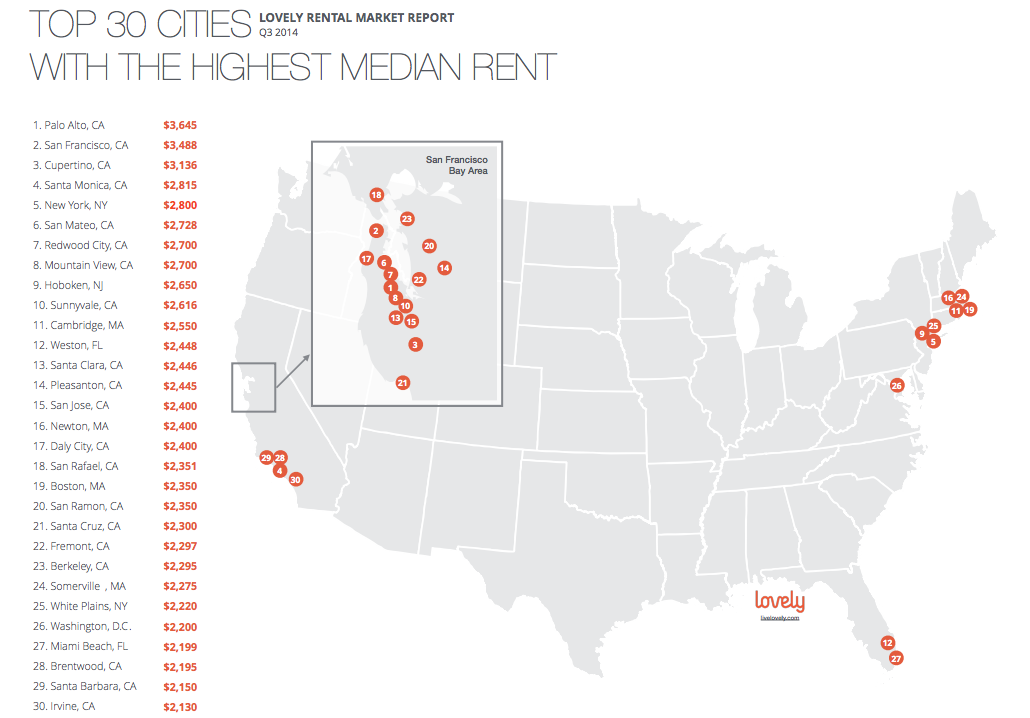
In an area where the annual median household income is $107,000 and average rents for one-bedroom apartments approach $1,300 a month, affordable “workforce” housing is increasingly hard to come by, said Sharon Bulova (D), chairman of the Fairfax County Board of Supervisors.
“When you talk to the business community . . . they’ll tell you that the biggest impediment to growth in Fairfax County is a lack of affordable housing for the workforce,” she said. “We’re really talking about creating a community in Fairfax County that provides for housing in all ranges so people can live and work here.”The zoning ordinance is before the county’s Planning Commission and is not expected to be voted on by the Board of Supervisors until early next year.
But an effort is already being mounted to kill the idea or dramatically scale it down. Many residents say they are already overwhelmed by congested parking and crowded schools and argue that the plan would exacerbate the problem.
They are particularly incensed by one option being considered: allowing developers to build apartment buildings with as many as 75 studio units in areas zoned for low density.
County officials say the option is required under federal fair-housing laws as a way to prevent income discrimination. They stress that all projects would be relegated to arterial roads and streets that connect them and that community input would be a major part of the approval process.


 If you are a tech worker, it probably wouldn’t be very logical to vote for Campos. He has sided against tech on the key votes of the last several years
  Chiu has positioned himself as someone who has the wherewithal to get difficult legislation passed and staked a lot on this very politically risky effort to legalize and regulate short-term stays. Indeed, regulating Airbnb is a total rat’s nest in a city that has a long history of incredibly contentious land-use debates. Chiu’s legislation
 Another candidate that’s received widespread support across the political spectrum is Nicholas Josefowitz, who is running for one of the two BART board seats representing San Francisco.
 Oakland is the major spillover community for people who are displaced or priced out of San Francisco and
