Showing posts with label solar. Show all posts

Friday, October 5, 2018

The Insiders Game of Selling LIHTC Tax Credits for Affordable Housing.

McCaskill’s Husband Makes Millions Flipping Government Tax Credits

Husband used government program for poor to build own fortune


Sen. Claire McCaskill with her husband, Joseph Shepard / Getty Images


BY: Brent Scher
October 5, 2018 4:59 am

Since Claire McCaskill joined the Senate, her husband Joseph Shepard has made at least $11 million through a business that buys up tax credits awarded to Missouri affordable housing developers and sells them to high-income entities seeking tax relief.

Shepard's company, the Missouri Tax Credit Fund, operates within the Low-Income Housing Tax Credit (LIHTC), a $9 billion a year federal program that awards tax credits to developers building qualified affordable housing projects. The LIHTC program is designed for developers in need of cash to attract investors for projects by offering them tax credits.

Analysis by policy institutions and government investigators, however, has found the LIHTC program to be inefficient, with much of the money—intended for affordable housing—ending up in the pockets of middlemen syndicators who connect developers with investors, earning lofty fees from both sides.

Shepard plays the lucrative role of syndicator and has made millions off the government program.

Records available on the Missouri secretary of state's website show Shepard’s company acquired tax credits awarded to at least 57 different affordable housing projects in Missouri between 2006 and 2017. Together, the 57 projects were awarded $273.3 million in LIHTCs, a review of the state's tax credit database found.

It can't be determined exactly how much Shepard has made off the tax credit business, due in part to a lack of transparency in the transfer of tax credit, but also because Senate financial disclosure reports don't require specific figures on incomes exceeding $1 million.

McCaskill's disclosures show her husband earned "over $1 million" from the Missouri Tax Credit Fund for 11 consecutive years from 2007 to 2017, meaning that he's earned at least $11 million. McCaskill files taxes separately from Shepard and has never released her husband's returns, which would contain a more specific figure.
The Unknown World of the Low-Income Housing Tax Credit

Much remains unknown regarding how Shepard and other syndicators of LIHTCs earn their high profit margins.

The U.S. Government Accountability Office was ordered to look into "the role of syndicators" in the LIHTC process. In its findings, the GAO reported last year that profits were earned generally through both initial and annual fees. The GAO was unable to garner details on the size of the fees.

In a subsequent GAO report on the LIHTC released last month calling for increased oversight of the program due to findings that only a fraction of allocated funds reach their intended goal, the oversight agency places blame on the unknown cost of syndicators.

"Syndication expenses represent a significant cost of producing affordable housing with LIHTCs, but complete data on syndication partnerships generally were lacking," the GAO found.
Chris Edwards, director of tax policy for the Cato Institute and a major critic of the tax credit, characterized it as "absurd" that there's a government program so complex "that the GAO is left scratching its head to figure it out."
"It's modern crony capitalism where insiders earn money on complex, nontransparent, government schemes," Edwards said. "It may be legal, but it undermines the economy and trust in government."

Edwards said he was unable to determine whether the millions of dollars Shepard made off the LIHTCs were out of the ordinary.

"Whether or not McCaskill's husband is earning above-normal returns for the industry is unknown," Edwards said. "Nobody really knows how much money these syndicators are making and how big the fees they earn are. We need more transparency."
Joseph Shepard's Complex Tax Credit Operation

The public sources with the most information on Shepard's complex tax credit operation—where the Missouri Tax Credit Fund is only a cog—are financial documents showing how the fund uses the LIHTCs as collateral for bank loans.

One such document filed on Nov. 26, 2008, shows the Missouri Tax Credit Fund obtained a loan from Heartland Bank by putting up as collateral "any and all Missouri Low Income Housing Tax Credits" awarded to the Martin Luther King Village, a 108-unit project in Kansas City. The project was ultimately awarded $6.5 million in LIHTCs in 2009, according to a Missouri Accountability Portal database.

Another document filed on Dec. 21, 2012, shows a nearly identical structure, with the Missouri Tax Credit Fund obtaining a loan from Enterprise Bank and Trust, this time using "any and all" tax credits awarded to Cedar Valley Apartments for the rehabilitation of 88 affordable housing units. The project was awarded $5.9 million in LIHTCs that year.

Nearly identical documentation exists showing the Missouri Tax Credit Fund obtaining bank loans using tax credits as collateral for 57 different Missouri projects, which together were awarded $273.3 million in LIHTCs, according to the database. It has 15 additional deals in place with projects that are yet to be awarded LIHTCs.

The Missouri Tax Credit Fund is just a small piece of Shepard's tax credit operation, serving as the entity that enters into the tax credit purchase agreements with developers.

Once the tax credits are acquired, investors for the projects are brought in by Sugar Creek Capital, which advertises the tax credit investments on its website as "an effective, reliable tax planning opportunity" for "companies and high-income individuals to maximize cash flow."

Both Shepard's companies, the Missouri Tax Credit Fund and Sugar Creek Capital, are located at 17 W. Lockwood Ave. in St. Louis.

Less transparently involved in the operation is a Missouri company called Horizon Asset Management, formed in St. Louis in 2004, the same year the Missouri Tax Credit Fund was formed by Shepard, business filings show.

Horizon Asset Management is involved in nearly all the Missouri Tax Credit Fund's partnerships with developers, including both the above-mentioned arrangements with Martin Luther King Village and the Cedar Valley Apartments. The tax credits awarded appear to be allocated, at least for a period of time, to Horizon Asset Management.

Horizon Asset Management acts as the storehouse for the tax credits in the LIHTC operation, and the reason for this is its ties to a tax-exempt Missouri nonprofit organization, the Horizon Housing Foundation.

The Horizon Housing Foundation's annual tax filings show that it owns Horizon Asset Management, and that the foundation's assets are derived almost entirely from the tax credits allocated from developers to Horizon Asset Management. The foundation lists millions of dollars' worth of tax credits in its control each year and has virtually no tax liabilities.

In its most recent filing for 2016, the foundation reported $52.8 million in income in the form of tax credits earned through Horizon Asset Management's "investments in affordable housing projects." The foundation reported just $1,466 in charitable contributions and paid just $16,772 in taxes for the year, all for payroll, the filing shows.

The foundation's filings also shed light on the large volume of tax credits in Horizon Asset Management's control and how quickly the operation has grown over the years.

The 2016 filing shows Horizon Asset Management with a book value of $228.2 million, a spike from $176.4 million the previous year and the highest its ever been. In 2007, McCaskill's first year as a U.S. senator, its book value was reported as $25.4 million.

The foundation currently has no obvious ties to Shepard aside from being involved in nearly all the partnerships with developers, mainly Shepard's Missouri Tax Credit Fund. But there are strong indications that it's part of the same operation.

The strongest indication is a 2002 Horizon Housing Foundation filing where its listed address, 17 West Lockwood Ave. in St. Louis, and phone number, (314) 968-2205, match exactly with the current contact information for Sugar Creek.

The foundation's current listed address is 23 North Gore Ave. in St. Louis, a location just around the corner from Sugar Creek's offices.

Many of the foundation's officers also have ties to other Shepard businesses.

Sugar Creek did not respond to an inquiry on how Horizon Asset Management and the Horizon Housing Foundation fit into its tax credit operation. Neither are listed in McCaskill's financial disclosures.

A representative for the Horizon Housing Foundation told the Free Beacon it could expect a call back, but the call has yet to come.
The Future of the Low-Income Housing Tax Credit

The LIHTC program has come under increased scrutiny in recent years due to findings such as the one reached by the Missouri State Auditor, which found that only 42 cents of each credit dollar awarded actually goes to low-income housing projects, with much of the remainder ending up in the hands of middlemen syndicators like Shepard.

The St. Louis Post-Dispatch reported in 2014 that a major obstacle to changing the program is the political clout of syndicators such as Shepard, who declined to be interviewed for the story. Shepard purchased more tax credits than any other syndicator in the state that year, the paper wrote.

Experts on the tax credits such as Cato's Edwards have advocated for ending the "costly, complex, and corruption-prone" program, arguing that a demand-side system where housing vouchers are given to those in need of affordable housing would be more effective.

"The supply-side approach is very inefficient, and a lot of money ends up disappearing with the middle-men," Edwards said. "The great irony of this program is it's intended to help the needy, but it seems to be benefiting the top one percent."

McCaskill's office did not respond to an inquiry into her husband's tax credit operation or on possible changes that could be made to the LIHTC program to make it more efficient.

The Kansas City Star reported earlier this year that Shepard had been on the receiving end of more than $131 million in federal housing subsidies since 2007. McCaskill's Republican opponent Josh Hawley has pointed to Shepard's use of government programs to generate profit for his businesses as a reason she should release his tax returns.

Wednesday, June 13, 2018

Solar Panel Mandate Displaces 150,000 Home Buyers

Solar Panel Mandate Displaces 150,000 Home Buyers

June 12, 2018 By Ted Gaines 2 Comments


While Democrats in the state Legislature and Governor Jerry Brown debate how to spend our state’s budget surplus, they continue to push policies that bust the budgets of ordinary California families.

The California Energy Commission’s mandate that all new homes in California include a minimum $10,000 solar panel system is the latest such attack. With this mandate, the governor’s hand-picked commission has priced out 150,000 California homebuyers.

Why? Because the National Association of Home Builders says that for every $1,000 increase in the price of a home, 15,000 buyers are priced out of the market. So this one action by the Energy Commission will shut out 150,000 Californians from buying a home.

And even that $10,000 is a shameful government fiction. New solar arrays average more than $19,000 in California now, and larger homes could cost double that. California’s “solar tax” could be forcing hundreds of thousands of people into a permanent renter class and barring the door to the American Dream.

With the new gas-tax forcing prices up toward $4 a gallon, “cap-and-trade” taxes pushing electricity rates 50-percent higher than the national average, and the cost of renting or buying a home continuing to spiral out of control, the once Golden State now is home to a quarter of the nation’s homeless population – 134,000 people who can’t afford to have a roof over their heads – solar or not.

This isn’t how our government is supposed to work. Your state and local representative is supposed to figure out ways to make life better for their community, not come up with umpteen-hundred ways to see just how much more money they can pluck from your wallet.

The solar panel mandate is just one more example of the Democrats’ endless experiments in social engineering.

You deserve better than this.

Editor's Note:  What do you do if your home on a shady street or a ravine?  Must you still pay for this addition.  I like solar and think it is great when properly installed and maintained but it doesn't make sense for everyone.  I live on a shady street and I believe the money saved on cooling costs likely outweighs the benefit of solar.  Besides, trees are also pleasant addition to the landscape and give home to many animals and clean the environment.

Thursday, June 7, 2018

Who will save LA’s trees?

Who will save LA’s trees?

The city’s urban canopy is disappearing—and new developer rules might make it worse
By Alissa Walker@awalkerinLA Jun 6, 2018, 10:01am PDT
SHARE


The Ficus microcarpa trees along Hollywood’s Cherokee Street create a majestic arch. Walking beneath them is an almost otherworldly experience. In the impenetrable shade, as birds chirp high in the deep green canopy above, the air is unmistakably cooler.


Trees are critical for cooling down warming cities like Los Angeles, where temperatures are expected to increase an average of 4 to 5 degrees Fahrenheit by 2050.

The shade that trees produce can cool surfaces like soil and pavement. But trees can also lower the surrounding daytime summer air temperature up to 10 degrees, thanks to water evaporating from their leaves.

That’s why preserving mature trees that form a canopy should be LA’s priority, says Glynn Hulley, a scientist in the carbon cycle and ecosystems group at NASA’s Jet Propulsion Laboratory.

“It’s a pretty precious resource in cities, and you don’t want to take them down—you want to be adding to them,” he says.
LA’s palm trees are iconic, but they require a lot of water, and don’t create a great deal of shade. Getty Images/Collection Mix: Subjects RF

Instead, since 2000, many neighborhoods in the LA region have seen a tree canopy reduction of 14 to 55 percent, according to a University of Southern California study published in 2017.

In recent years, the city’s street trees have taken a hit. According to permits filed with the city of Los Angeles’s street services bureau, 263 street trees—including the 18 on the 1200 block of North Cherokee—are slated to be ripped out in the first five months of this year alone for sidewalk repairs and street widening.

Those numbers are for removals of three or more trees at a time and do not include instances where one or two trees are removed for repairs, which do not require a public hearing. They also do not include permits by developers to remove one or two street trees.

“People should be climbing into these trees to stop them from being cut down,” says Hulley.

Hulley is publishing a major study this summer looking at heatwave trends in the region, which he recently presented to a Los Angeles County sustainability task force.

The many devastating—and deadly—effects of heatwaves include increased wildfire risk.

“Heatwaves are not only increasing in frequency and intensity, but also their seasonality is changing, with more heatwaves earlier and later in the year,” says Hulley. “Trees are the most cost-effective way to cool down the urban environment.”

Since 2010, the region has experienced extreme drought conditions, which not only kills trees but also makes them more susceptible to disease. But the drought is only partly to blame for LA’s recent tree loss.

After an era that saw maintenance efforts plummet and budget cuts that restructured the city’s urban forestry efforts, in recent years, more healthy trees have been removed to make way for construction or sidewalk repairs.
“Trees are the most cost-effective way to cool down the urban environment.” LA Times via Getty Images

Sidewalk repair is important—as is building new multi-family structures to address the housing crisis—but these improvements can be made without losing tree canopy by employing alternative pavement materials, like recycled mixed plastic materials, or changing the sidewalk design to accommodate a mature tree, known as a meander.

Now, experts say a new program approved last month by the Los Angeles City Council to allow developers and homeowners to pay fees to tear out street trees—instead of replacing them at the city’s required 2 to 1 ratio—will exacerbate the problem.


The fee was proposed in response to patterns city officials saw in applications for tree removal permits, according to Heather Reppening, vice president of the board of public works.

For larger construction projects—which already have separate tree-planting requirements per unit dictated by the planning department—developers were filing tree removal permits because they claimed they didn’t have room to plant trees onsite, says Reppening.

Plus, replacement trees purchased by developers often sat unplanted in the city’s nursery, where they can become root bound and die. Repenning says the in-lieu fee money goes into a fund the city can tap to plant trees to maximize their chance of survival.

“The tree removals are necessary,” says Repenning. “But they are sad. You are losing mature canopy. But our urban foresters will tell us there’s value in having younger trees in that it’s actually healthy to have trees of all different ages.”
Since 2000, many neighborhoods in the LA region have seen a tree canopy reduction of 14 to 55 percent. Getty Images

The fee structure ranges based on the size of the project, not the size or maturity of the removed tree. Developers of large projects can pay $2,612 to remove or forego planting a tree, and homeowners and developers of smaller projects pay $267.

Those fees are far too low, says Travis Longcore of USC’s Spatial Sciences Institute; he co-authored the 2017 study that used aerial imagery to track the deforestation of LA.

That study found that deforestation was most accelerated in neighborhoods popular for McMansionization, where a smaller, older single-family home is replaced by a newer, much larger single-family home.

Longcore is particularly concerned with the $267 fee. He says the fee is low enough that homeowners and small-lot developers will simply pay instead of making a consideration to keep the tree.

“So you remove a tree—which provides a much greater annual economic value to the public—and then you don’t replace it?” he says. “We are incentivizing people to remove them instead of working around them.”
Deforestation was most accelerated in neighborhoods popular for McMansionization, where a smaller, older single-family home is replaced by a newer, much larger single-family home.

Repenning says the low fee, which is equivalent to the cost of purchasing and planting a new tree, will help remove a barrier for homeowners to repair their own sidewalks. The city is relying on some homeowners to front the cost of fixing buckling sidewalks to meet its sidewalk repair program goals.

But the city’s push to repair sidewalks has accelerated the loss of hundreds of mature trees, according to Julie Stromberg, a lawyer who serves on the city’s community forest advisory committee.

“I’m receiving all the notifications for tree removals, and sometimes there is not that much effort from local residents to save them,” she says. “In those instances, there’s no one in the community who is fighting for these trees.”


Stromberg also says she’s seeing trees aggressively removed from places where the city has been sued for trips and falls.

A notice that the 18 ficus trees on Cherokee Street would be removed was issued the same day the City Council voted to pay $3 million to a woman who fell and hit her head on a “defected” sidewalk there.

A major class action lawsuit, which was filed on behalf of Angelenos with disabilities, was also the impetus for the city’s sidewalk repair program.

Under both the sidewalk repair program and the in-lieu fee program, streets that see a lot of development or major sidewalk repairs are the most likely to lose tree cover.

While both programs aim to put replacement trees as close as possible to where removed trees had been, there is no guarantee for when and where replacement trees will be planted.

That’s unacceptable for underserved communities that never had much of a tree canopy in the first place, and where trees are helping to clean air polluted by freeways and industry. There is mounting evidence that shows the connection between chronic health problems and tree loss.

“Established and mature trees assist in mitigating the environmental impact as the city of Los Angeles moves away from fossil fuels,” says Jason Gallegos, the planning and land use committee chair for the Boyle Heights Neighborhood Council. “The loss of trees from our community, even a temporary one, adds to a cumulative effect of lung issues, such as asthma.”
A broken sidewalk on Saturn Street. Advocates worry that there is little effort to save trees in an effort to repair sidewalks. LA Times via Getty Images

There are thriving urban forests just outside the city of LA’s borders that could serve as examples for how officials could work harder to protect existing trees and be more proactive in planting new ones.

Santa Monica is facing a lot of the same challenges when it comes to trees and development, says Matthew Wells, the city’s urban forester. But he estimates that the city loses very few trees through removal—“only a handful per year.”

In Santa Monica, removing any mature tree—whether the trees are on private or public property—requires a developer or homeowner to make a case to the city’s urban forest task force. Often a plan is made to save the existing trees, per the city’s detailed developer guidelines, and paying a fee is seen as a last resort, says Wells.

“We don’t want to stop development—we know we need more housing and more high-quality facilities,” he says. “But if we don’t value trees and we don’t try to preserve them, the design process happens so quickly that if developers are not aware the tree has to stay, they don’t think about it.”

Even notoriously gnarly ficuses are not nuisances if they are well-maintained with proper root pruning, says Wells, who has expanded treewells and widened parkways in efforts to save them.

To quantify the importance of large trees, Wells undertook a tree inventory for Santa Monica, and has has been able to produce data showing the value of its mature trees, some of which have public benefits—including energy and water savings—that are the equivalent of $10,000 to $20,000.
“We need to become a trees-first city, above all else, otherwise we are going to fry.”

Right now, Los Angeles doesn't have enough information to assess the value of its trees—or know how many need to be replaced.

A 2015 report on the state of trees commissioned as part of the city’s sustainability plan—the most recent report made available—noted that the city has 700,000 street trees and 100,000 vacant tree wells, but these numbers are based on 1996 data.


This year’s budget has money for the city of Los Angeles to mount a comprehensive tree inventory for streets and parks, according to Repenning.

The influx of money will also allow LA to hire a citywide tree policy coordinator who will oversee tasks that have been spread across several departments. It may also add up to 40 tree care jobs, including two new positions for preserving mature trees in place during sidewalk reconstruction projects.

Los Angeles is also the beginning stages of putting together an urban forest management plan to help guide the planting, care, and protection of the city’s trees.

That plan could make specific recommendations that address trees’ cooling benefits, says Bryn Lindblad, associate director at Climate Resolve. She recommends adding biochar, an agricultural waste byproduct, to roots to retain water and nutrients.

“The healthier the trees, the more effective they are at converting solar energy into new plant growth through the process of photosynthesis, which helps to cool down our intense urban heat island archipelago,” she says.

Hulley argues that the city could also be more strategic about where trees are planted by adding more in places where their cooling effects will be most impactful. Planting trees on the western side of LA buildings is known to shade structures from afternoon heat gain.

Protecting all healthy trees with a certain trunk diameter could be one solution to ensure that more mature trees don’t get removed, suggests Wells. For now, the city of Los Angeles only protects four native species.

Above all, a city with such lofty climate goals should view trees not just as a priority, but as a crucial public health investment. Longcore points out that trees should be treated as an essential part of the street—much like the city’s similarly sized network of street lamps, which have a dedicated installation, maintenance, and replacement budget.


Mayor Eric Garcetti—who has set a goal of preventing Los Angeles from warming 3 degrees—has garnered attention for a “cool streets” program that paints streets gray. That effort may receive as much as $2 million in funding this year.

The city should be looking at similarly creative, well-funded ways to make room for more trees, block-by-block, says Isabelle Duvivier, an architect and member of the city’s community forest advisory committee.

She has been tracking tree loss in City Council district 11, where she lives, and says at least 199 trees have been permitted for removal since January 2017. That includes 26 ficus and bottle brush trees on South Sepulveda Boulevard and South Naylor Avenue that a local nonprofit have elected to cut down as part of a streetscape improvement project to remove “unsafe, overgrown trees.”

“Trees should not be optional to the homeowner’s whim, but need to be part of the required city infrastructure,” says Duvivier. “We need to become a trees-first city, above all else, otherwise we are going to fry.”


Editor's Note: Marinwood-Lucas Valley is blessed with plentiful trees. Those of us who enjoy shade trees enjoy much cooler living and use less air conditioning. 

Saturday, March 11, 2017

Renewable and Sustainable Crony Capitalism

April 28, 2015

Renewable and Sustainable Crony Capitalism

I recently attended a conference sponsored by the American Council on Renewable Energy or ACORE. Although ACORE is set up as an educational organization under the Internal Revenue Code, it mostly behaves as a trade association promoting the financial interests of investors in wind and solar energy. The conference was held in Washington, D.C., close to the gusher of money that supports the wind and solar industries. The conference participants were uniformly worried that government subsidies might be reduced. One speaker cautioned that the subsidies should be called “incentives”. According to that speaker, subsidies are what the fossil fuel industry gets.

Renewable power has serious problems, apart from costing too much. Wind doesn’t work if there is no wind and solar doesn’t work at night. The proprietors of solar and wind expect the electrical grids to accept and pay for all the power they can provide, whenever they provide it. If a cloud drifts in front of the sun, and the power output suddenly stops, the grid is expected to handle the problem and make up the missing power on a moment’s notice. This is just the opposite of the way that the operators of the electrical grids usually deal with power plants. Normally, grid operators tell the power plants when they want power and how much. The purveyors of wind and solar have enough political juice to be able to reverse the command hierarchy and boss the grid operators. Now you know why everyone is talking about smart grids. Existing grids are not smart enough to deal with more of this erratic power.

One might think that wind and solar would be cheap, since they don’t require fuel. This is not the case because the cost of construction is extremely high and it is much cheaper to build a conventional plant and pay for fuel rather than pay the debt service on extremely expensive renewable installations. There are hidden ancillary costs. For example the conventional power plants that step in, when renewable power suddenly drops off line, end up costing more because their capital costs are spread over fewer hours of operation. The renewable power does not displace a lot of conventional power; it just forces it to be idle more. Yes, wind or solar, when they are operating, save fuel that would otherwise be burned. But with coal or natural gas the fuel costs about 2 cents a kilowatt-hour. That, less additional hidden expenses, is pretty much the real value of renewable electricity. But, generating renewable electricity, excluding subsidies, costs, at best, about 7 cents for wind and more for solar.
Hardly any electrical utility in its right mind would bother with renewable electricity except for politics. Many states have enacted laws (renewable portfolio standards) requiring a certain proportion of renewable power by some date in the future. The Obama administration is working hard to make things as difficult as possible for coal and natural gas plants. Finally, large subsidies are provided to make renewable electricity cheaper than it otherwise would be.

The ultimate justification for renewable power is to reduce CO2 emissions and thus, supposedly, to prevent catastrophic global warming. This justification is wrong for a number of independent reasons. It is becoming obvious that the theory behind catastrophic global warming is wrong because the Earth isn’t warming and even if it does warm a little bit it won’t be catastrophic. Adding CO2 to the atmosphere may cause a little global warming but additional CO2 is extremely beneficial to plants and agricultural production. It turns out that plants are generally starved for CO2 and they do much better, and require less water, when they can breathe more freely. Even if you believe in the global warming myth, the main source of growing CO2 emissions is Asia. Efforts to reduce CO2 in the U.S. will have negligible effect. Finally, if you are really alarmed about CO2 the answer is nuclear power, not windmills. Nuclear is potentially cheap and emits no CO2. In short, global warming is nonsense, and the myth is kept alive by incessant propaganda from special interests, including scientists and their unions (scientific societies).

Many of the speakers at the ACORE conference placed their faith in imagined rapid technical progress. For example, lithium batteries, such as are used to power the Tesla automobile, could be used to store utility scale electricity if only they were 10 times or 100 times cheaper and if only they would last for 20 years, instead of 3 years, when cycled daily. Many of the conference participants seemed to believe that Moore’s law should apply to wind and solar power. Moore’s law postulated that the number of transistors on a chip doubles every 18 months due to technological progress. However, it hardly seems likely that any such law applies to wind and solar power. A solar photovoltaic panel cannot have greater than 100% efficiency and, absent subsidies, cannot cost less than zero. And, even if it did cost zero and did have 100% efficiency, solar power would still not work at night and it would still require square miles of land and structures to support the panels, as well as labor to install them.
The imagined Moore’s law for renewable energy provides an alibi for the exorbitant cost of wind and solar. Supposedly we are currently in a development phase that temporarily requires government subsidy until the renewable energy revolution arrives and we all celebrate with whipped cream and strawberries. Perhaps we will have superconducting undersea cables bringing solar power at night from the Australian desert, or even solar power beamed down by microwave from satellites positioned where the sun always shines. Takes your breath away.

The many subsidies and mandates for renewable energy are a tangle that only highly paid lawyers and accountants can fully understand. Legal fees can run to millions, a fact that may explain why the president of ACORE is an attorney. An example subsidy is the ITC or investment tax credit for solar energy. A company with a large tax liability can invest in a solar power scheme and receive a 30% of the plant cost tax credit

that may be used to reduce its taxes. If 80% of the scheme is financed by a low interest government loan, another subsidy, the immediate tax credit returns more than the cash investment. In addition, the property, expected to last for 25 years, can be depreciated in only 5 years, providing additional tax relief. The sale of power is usually on favorable terms because politicians have forced the power companies to buy it. Power revenue is guaranteed by a long-term power purchase agreement (PPA). This type of activity attracts companies with large tax bills, such as Google. Google has stated that it expects to earn 14% return on money invested in renewable power. Not only does investment in renewable power bring in money from the government, but the companies can pretend to be altruists protecting the Earth. Thus, when the average homeowner pays his electric bill he may be actually subsidizing Google as well as the entire renewable energy industry. He will also be paying taxes to support even more subsidies. This gives some insight as to why some homeowners in California pay more then 30 cents per kilowatt-hour for electricity, an amount that compares with 7 or 8 cents in many states that are less enthusiastic concerning renewable energy.

Three Republican United States senators gave speeches supporting renewable energy at the ACORE conference. Charles Grassley, from Iowa, Cory Gardner, from Colorado, and Dean Heller, from Nevada. Iowa is the heartland of government subsidies for wind, and more importantly, corn ethanol. Colorado has a nest of true believers in global warming at the Peoples Republic of Boulder. Senator Gardner barely beat his liberal Democratic opponent. It’s more of a puzzle to understand why the senator from Nevada, Dean Heller, is supporting renewable energy. His website doesn’t exhibit enthusiastic support for renewable energy.

The renewable energy industry seems to have its political ducks in a row. They get subsidies on the pretense that they are saving the Earth. The scientifically ignorant media provide propaganda support. The cost of their subsidies is buried in the tax code and in people’s electric bills. The industry’s main problem is Republicans that are skeptical about global warming and subsidized industries. The industry has to recruit republicans and that explains why three Republican senators were featured at the conference. Those of us who understand the nature of this fraud need to put heat on wavering Republicans (and Democrats).

Thursday, February 23, 2017

The Shady Marinwood CSD Solar Contract (It is not too late)

The "World Headquarters" of C2SGG and Richard Devore, 29 year old financial entrepreneur in New York, New York who will be providing Marinwood CSD financing for SolEd Solar contract.


As followers of this blog know, Marinwood CSD entered into a very high priced Solar Power Purchase Agreement with SolEd Benefit Corporation that was facilitated by former Marinwood CSD manager Cyane Dandridge in a "hush hush, no bid" deal in November 2012.  

The project has had many delays due to SolEd Benefit Corporation and the lack of financing.  In March 2016, the board unanimously approved the contract and already the contract is TWO MONTHS behind schedule and in violation of contract terms.

The board was warned about the financial instability of the SolEd and the blistering report by the City of St Helena who summarily fired SolEd Benefit Corporation in November 2015 after a years worth of broken promises.

Marinwood CSD will be paying up to SEVEN TIMES the cost of competitive solar systems  ( 20 cents plus per KWhr vs 3.5 cents per/KWhr of a purchased system).  There appears that they used NO INDEPENDENT FINANCIAL ANALYSIS in evaluating the system and instead relied solely on the representations of the salesmen, Jonathan Whelan of Optony and David Kunhardt of SolEd Benefit Corporation

The contract will last for TWENTY YEARS.

The interim financier is 29 year old Richard Devore has an address at a lawyers office in New York City (above). He has had a remarkable number of business ventures in his young career.  The contract for Marinwood is held by his Delaware Corporation formed in May 2015 and his "parent company" was formed a few months earlier.

The long term financier has not been identified nor are the ultimate terms of the twenty year contract known.

Does this sound like a smart decision for the Marinwood CSD to you -especially when we have the top solar companies in the world right here in the Bay Area?  

This is why informed residents object to this SolEd solar contract and ask that the Marinwood CSD cancel it.  They will save the district tens of thousands of dollars if they purchase the system outright. The Sonoma Water District was in the same SEED program, cancelled it and realized over $100,000 savings with a direct purchase.

Come to the Marinwood CSD meeting on June 14, 2016 at 7:30 PM to voice your objection to the SolEd Solar contract.  Encourage a more cost effective renewable energy solution 

(This article was published in 2016.  The solar panels were installed in September 2016 after months of mysterious delays.  It is still not active as of this writing.  No long term financier of the project has ever been identified and some believe that SolEd and SSG2 group is unable to get financing.  This is a disaster was predicted by several citizens prior to approval. In November 2015, the same contract SolEd was dismissed for performance by the City of St Helena.  The warning signs were clear but the Marinwood CSD approved and Eric Dreikosen, Marinwood CSD manager has provided excuses ranging from PGE failure to perform and months delay to permitting issues.  Both have been dismissed as complete fabrication and/or exaggeration.  A request for information under the California Records Act has been stonewalled for months.  The responsible parties for this disaster should be dismissed.)

Whats wrong about the Marinwood SolEd project? A Twenty Year Mistake at up to SEVEN TIMES cost

At last, the ground has broken for the Marinwood CSD Solar Project.   The proposal was submittedd by a former Marinwood CSD director, Cyane Dandridge who personally profits from the project.  After a series of secret negotiations,  a bidder who had been in business for a few months won the project over well established competitors.  Two years of delays due to financing difficulties and a stubborn will by a new Marinwood CSD to NOT PUT THE SOLAR CONTRACT out for competitive bids, resulted in a twenty year commitment with an unknown company from New York, NY.    

It hardly seems possible that all over the current Marinwood CSD board (Izabela Perry, Jeff Naylor, Justin Kai, Leah Kleinman-Green and Bill Shea)  could be so naive but they voted for the project unanimously in 2016.  Justin Kai even INCREASED the size of the project.  They think the project is "FREE".

All of the Marinwood CSD directors believe the project will "cost nothing" since it is paid from a twenty year commitment to purchase electricity at up to SEVEN TIMES the cost of similar solar system until 2036.

How could they be so feckless?  Simple.  No independent analysis was undertaken outside the board.  Former Marinwood CSD Director, Deana Dearborn was very skeptical of the proposal and recommended against the project but she left office before the final vote.

The Marinwood CSD directors won their solar project.  It was similar to the one cancelled by the City of St Helena just weeks in November 2015 before DUE TO BREECH OF CONTRACT by the SolEd Benefit Corporation.  They all cite the virtues of solar while ignoring the obvious error in locking us into a proposal that will produce energy at seven times cost of similar systems for twenty years. 
(published on 9/13/16.  Justin Kai since resigned and moved to Oregon. Despite the essential solar panel being completed in September 2016, they are not active.  The Marinwood CSD manager claims that delays by PGE were the cause.  Some believe that the financial backers either did not have the capital to complete the project.  No long term financier has ever been identified.  This gross incompetence on behalf of local taxpayers is not acceptable.)


Tuesday, February 14, 2017

Marinwood got BURNED with the Solar Contract and is now over TEN MONTHS behind schedule with NO EXPLANATION!

Editor's Note:  This post below is from March 2016.  Since then the project was approved the project is now TEN Months behind schedule and NO SOLAR POWER.  The Marinwood CSD claimed that "county" was at fault for not approving permits.  This is highly questionable since most projects are approved in a matter of delays.  Finally, after most of the project was installed in August 2016, Marinwood CSD manager, Eric Dreikosen claimed that PGE didn't have the proper generator for three months. This is the same equipment replaced with hours or days after an outage during a storm. Finally, the latest "explanation" is there is "no explanation from the contractor" and at the same time he claims that the contractor IS COMPLYING WITH THE SOLAR CONTRACT.

The Marinwood CSD directors, notably Leah Kleinman Green who approved of the initial Solar consulting contract in 2013 with sitting CSD board member Cyane Dandridge claims that we will be getting FREE solar electricity through the PPA.   Now after MONTHS delay the board is silent and will not hold the Solar Company nor the Marinwood CSD director accountable.

This deserves a full investigation immediately.   The Marinwood CSD is refusing to release documents under the California Records ACT.  
A little protection from legal and financial exposure can prevent nasty surprises later.


The Top 10 Mistakes Schools make with a Solar PPA

An Open Letter to the Marinwood CSD on the proposed SolEd contract approval on 3/8/2016


Dear Marinwood CSD board Member,

Tonight you will be making a fateful decision to encumber Marinwood Community Services District into a twenty five year commitment with a young inexperienced Solar company, SolEd and and an unknown financiers C2Beta Holdings llc, a Delaware Corporation formed in May 2015.  

As you know, Soled Benefit Corporation was fired by the City of St Helena for "FAILURE TO PERFORM" its contract duties on November 10, 2015.  C2Beta Holdings is run by a 29 year old financial entrepreneur from New York.

There are many red flags.

The above link is a very detailed explanation of the risks involved in Solar PPAs that is posted to the California School Boards Association website HERE.  According to all accounts it is a VERY EXPENSIVE way to purchase solar and does little to guarantee competitive energy prices in a changing marketplace.

A outright cash purchase using conventional financing may result in as much as 75% savings over a PPA.  This means faster payback and less risk due to technical obsolescence. 

Please weigh the facts carefully before putting our finances at risk for twenty five years.


Stephen Nestel
Marinwood, CA

Editor's Note: The attached power point presentation makes all of the points we have been making against the SolEd contract.   I doubt if anyone other than Jeff Naylor even bothers to read the presentation.   For the rest of the CSD,  they seem ready to blindly accept the contract without any modifications .  

This is really disgraceful

Wednesday, January 4, 2017

Solar Could Beat Coal to Become the Cheapest Power on Earth

Solar Could Beat Coal to Become the Cheapest Power on Earth

by
Jessica Shankleman and
Chris Martin
January 2, 2017, 4:00 PM PST January 3, 2017, 4:16 AM PST

Global average solar cost may fall below coal within 10 yearsCountries from Saudi Arabia to Mexico planning auctions


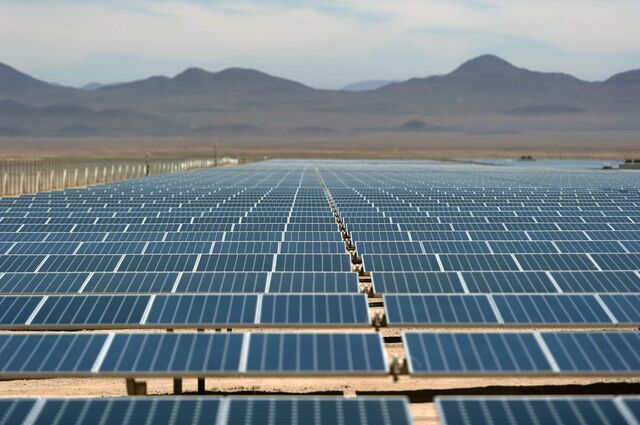
A solar farm in the Atacama desert, northern Chile. Photographer: Vladimir Rodas/AFP via Getty Images


Solar power is now cheaper than coal in some parts of the world. In less than a decade, it’s likely to be the lowest-cost option almost everywhere.

In 2016, countries from Chile to the United Arab Emirates broke records with deals to generate electricity from sunshine for less than 3 cents a kilowatt-hour, half the average global cost of coal power. Now, Saudi Arabia, Jordan and Mexico are planning auctions and tenders for this year, aiming to drop prices even further. Taking advantage: Companies such as Italy’s Enel SpA and Dublin’s Mainstream Renewable Power, who gained experienced in Europe and now seek new markets abroad as subsidies dry up at home.

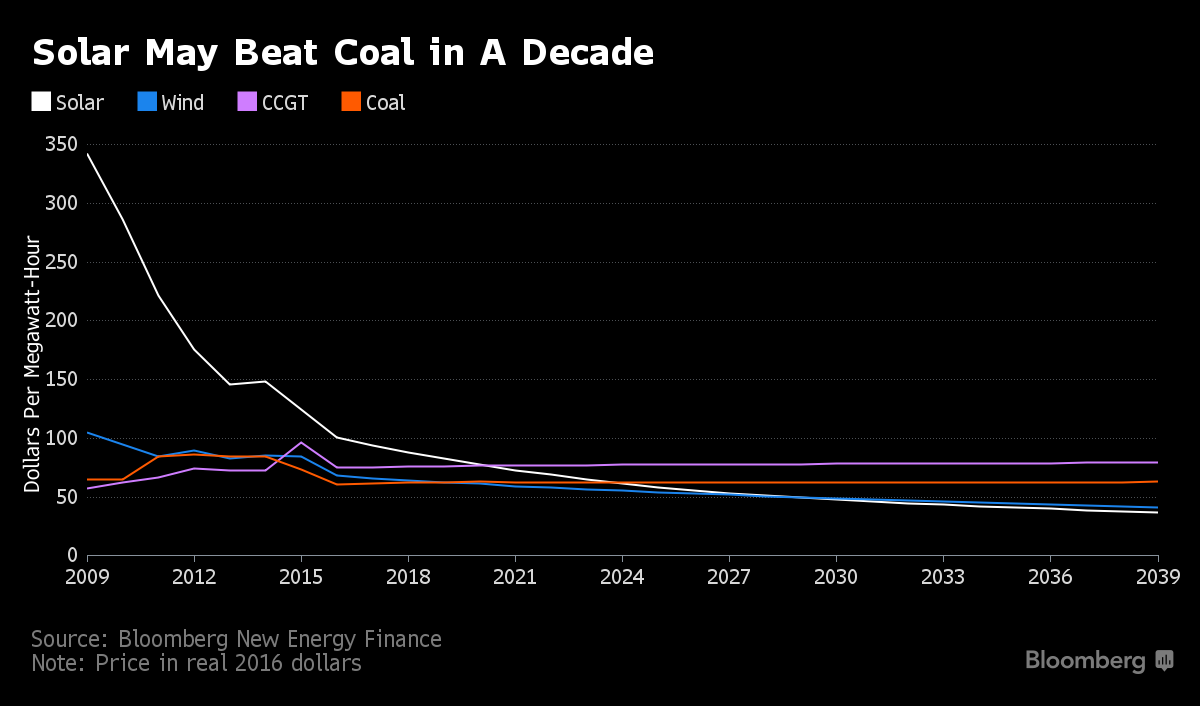
Since 2009, solar prices are down 62 percent, with every part of the supply chain trimming costs. That’s help cut risk premiums on bank loans, and pushed manufacturing capacity to record levels. By 2025, solar may be cheaper than using coal on average globally, according to Bloomberg New Energy Finance.

“These are game-changing numbers, and it’s becoming normal in more and more markets," said Adnan Amin, International Renewable Energy Agency ’s director general, an Abu Dhabi-based intergovernmental group. "Every time you double capacity, you reduce the price by 20 percent.”


Better technology has been key in boosting the industry, from the use of diamond-wire saws that more efficiently cut wafers to better cells that provide more spark from the same amount of sun. It’s also driven by economies of scale and manufacturing experience since the solar boom started more than a decade ago, giving the industry an increasing edge in the competition with fossil fuels.

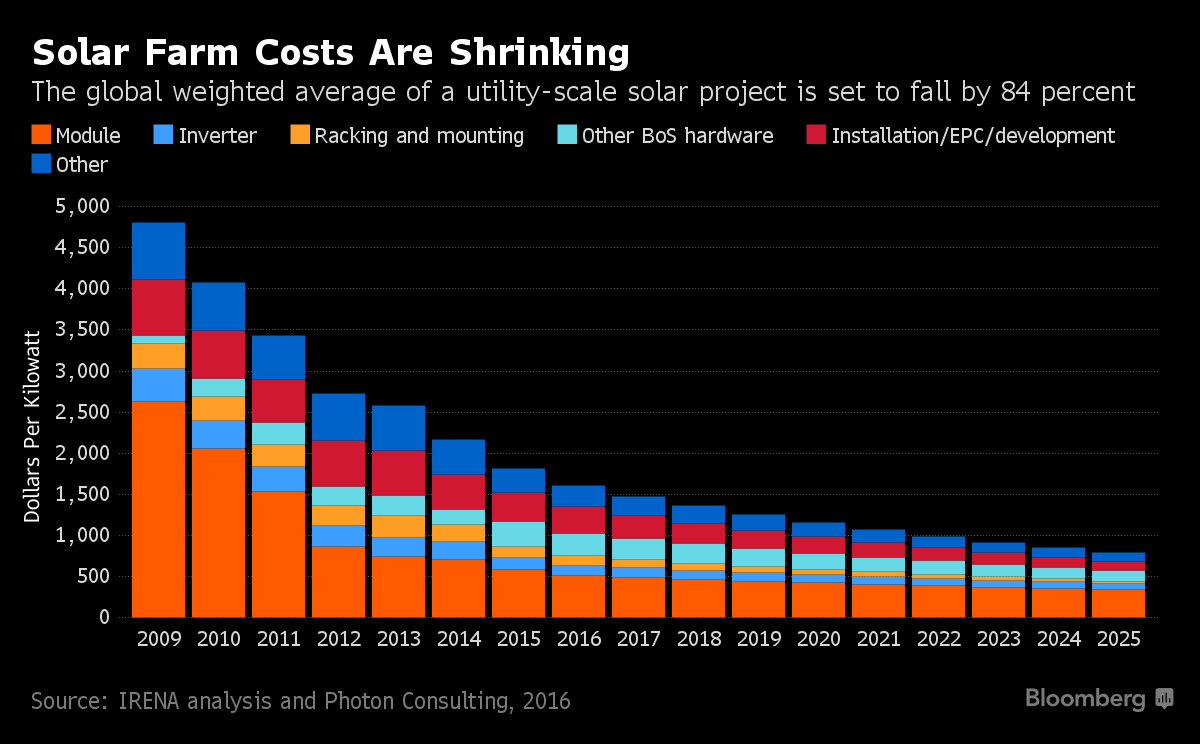
The average 1 megawatt-plus ground mounted solar system will cost 73 cents a watt by 2025 compared with $1.14 now, a 36 percent drop, said Jenny Chase, head of solar analysis for New Energy Finance.

That’s in step with other forecasts.
GTM Research expects some parts of the U.S. Southwest approaching $1 a watt today, and may drop as low as 75 cents in 2021, according to its analyst MJ Shiao.
The U.S. Energy Department’s National Renewable Energy Lab expects costs of about $1.20 a watt now declining to $1 by 2020. By 2030, current technology will squeeze out most potential savings, said Donald Chung, a senior project leader.
The International Energy Agency expects utility-scale generation costs to fall by another 25 percent on average in the next five years.
The International Renewable Energy Agency anticipates a further drop of 43 percent to 65 percent for solar costs by 2025. That would bring to 84 percent the cumulative decline since 2009.

The solar supply chain is experiencing “a Wal-Mart effect” from higher volumes and lower margins, according to Sami Khoreibi, founder and chief executive officer of Enviromena Power Systems, an Abu Dhabi-based developer.

The speed at which the price of solar will drop below coal varies in each country. Places that import coal or tax polluters with a carbon price, such as Europe and Brazil, will see a crossover in the 2020s, if not before. Countries with large domestic coal reserves such as India and China will probably take longer.
Coal’s Rebuttal

Coal industry officials point out that cost comparisons involving renewables don’t take into account the need to maintain backup supplies that can work when the sun doesn’t shine or wind doesn’t blow. When those other expenses are included, coal looks more economical, even around 2035, said Benjamin Sporton, chief executive officer of the World Coal Association.

“All advanced economies demand full-time electricity,” Sporton said. “Wind and solar can only generate part-time, intermittent electricity. While some renewable technologies have achieved significant cost reductions in recent years, it’s important to look at total system costs.”

Even so, solar’s plunge in price is starting to make the technology a plausible competitor.


In China, the biggest solar market, will see costs falling below coal by 2030, according to New Energy Finance. The country has surpassed Germany as the nation with the most installed solar capacity as the government seeks to increase use to cut carbon emissions and boost home consumption of clean energy. Yet curtailment remains a problem, particularly in sunnier parts of the country as congestion on the grid forces some solar plants to switch off.


Sunbelt countries are leading the way in cutting costs, though there’s more to it than just the weather. The use of auctions to award power-purchase contracts is forcing energy companies to compete with each other to lower costs.

An August auction in Chile yielded a contract for 2.91 cents a kilowatt-hour. In September, a United Arab Emirates auction grabbed headlines with a bid of 2.42 cents a kilowatt-hour. Developers have been emboldened to submit lower bids by expectations that the cost of the technology will continue to fall.

“We’re seeing a new reality where solar is the lowest-cost source of energy, and I don’t see an end in sight in terms of the decline in costs,” said Enviromena’s Khoreibi.


Editor's Note: Marinwood committed to pay upto $.40 center per kilowatt hour for 20 years to a SolEd and SSG2 group for solar power.  That is at least a whopping  FOUR HUNDRED percent of solar costs found with other companies.  A former Marinwood CSD director, Cyane Dandridge was a principle on the original solar consulting contract.  The deal was voted on UNANIMOUSLY by Marinwood CSD in February 2016 and it has had mysterious delays ever since.   

The majority of the construction of the project was completed in September 2016 and it has not been activated since then.  We suspect financing difficulty from SolEd and SSG2 group.   The contractor work was completed by a local resident who performed excellent work but it needs expensive equipment to connect to PGE.

The solar system remains dormant since September 2016 and the general manager, Eric Dreikosen refuses to divulge the reasons why.

The local taxpayers deserve answers and the Marinwood CSD must make certain that the Solar  contract is fulfilled.   The City of St Helena suspended their solar contract in November 2015 with SolEd due to NON PERFORMANCE.  Unfortunately the Marinwood CSD ignored this RED FLAG did not consider other solar providers.


Monday, December 26, 2016

Solar Scams around the Country


Dozens of valley residents were fooled by a solar company that promised cheap bills. Stealth Solar promised huge savings but the Arizona Attorney General's Office says the complaints proved otherwise. Dozens of valley residents were fooled by a solar company that promised cheap bills. Stealth Solar promised huge savings but the Arizona Attorney General's Office says the complaints proved otherwise. Dozens of valley residents were fooled by a solar company that promised cheap bills. Stealth Solar promised huge savings but the Arizona Attorney General's Office says the complaints proved otherwise.


Tuesday, September 13, 2016

Many Valley residents fall victim to solar panel scam


Dozens of valley residents were fooled by a solar company that promised cheap bills. Stealth Solar promised huge savings but the Arizona Attorney General's Office says the complaints proved otherwise. Dozens of valley residents were fooled by a solar company that promised cheap bills. Stealth Solar promised huge savings but the Arizona Attorney General's Office says the complaints proved otherwise. Dozens of valley residents were fooled by a solar company that promised cheap bills. Stealth Solar promised huge savings but the Arizona Attorney General's Office says the complaints proved otherwise.

Friday, June 10, 2016

Marinwood CSD ignores RED FLAG Warnings and contracts with SolEd Benefit Corporation in March 2016


The board unanimously approves the Solar Contract with SolEd Benefit Corporation in March 2016.  From the initial SEED Solar project involving fourteen agencies, many had dropped out of the program due to the high costs and inattention to contract provisions by SolEd Benefit Corporation. The City of St. Helena dismissed their contract with SolEd Benefit with prejudice. HERE.  

The Marinwood CSD Solar program has been mysteriously delayed for undisclosed reasons to the public.  Will the Marinwood CSD hold SolEd Benefit Corporation to its contract?

The Marinwood CSD Solar Contract- ANOTHER SMOKING GUN the Audiotapes


In November 2012 after twice violating government ethics, the Marinwood CSD approves a contract with a Marinwood CSD board member, Cyane Dandridge WITHOUT PUBLIC DISCUSSION. The contract provided Dandridge the EXCLUSIVE right to select the solar contractor, SolEd Benefit Corporation.  SolEd Benefit Corporation is providing solar at least DOUBLE the cost of competitive systems and was approved by the Marinwood CSD in January 2016.

Dandridge presented the CSD the SEED proposal in September 2012 (violation #1) but did not reveal that she owned the company SEI. Then in October 2012, she recused herself and the board voted for the "no bid" contract (violation #2). County counsel objected and Dandridge resigned to avoid the conflict of interest but this still does not absolve the prior or subsequent actions of the board.  

Not only did board members Bruce Anderson, Tarey Read, Bill Hansel and Leah Green knowingly enter into a no bid contract with Dandridge they also DID NOT ALLOW PUBLIC DISCUSSION (violation #3).  

The audio was provided by Marinwood CSD Manager Tom Horne in November 2012 and segments are suspiciously inaudible (violation #?).

Government official cover up?   No Bid Contracts? 

See Conflict of Interest rules HERE

CSD Board Members approving the SEED Contract in November 2012: Leah (Kleinman-)Green (president) , Bruce Anderson, Bill Hansell, Tarey Read.  Tom Horne, Marinwood CSD manager

CSD Board Members approving SolEd Contract in March 2016  Justin Kai (president), Leah Kleinman Green, Izabela Perry, Bill Shea and Jeff Naylor approved.


As of 6/10 2016 , the SolEd Solar construction has been delayed for reasons unknown to the public.  

Tuesday, April 5, 2016

Is this the same Richard Dovere of C2 Beta Holdings that is the partner with Marinwood?


The Marinwood CSD signed a contract with Richard Dovere of C2 Beta Holdings.  Is this the same man?  His company was formed just six months ago and it appears he has had multiple businesses since 2011 when this video was made.  Quite an achievement for a 29 year old man.

The real concern is with his company with whom we have a twenty five year commitment.  We could have done business with the established solar companies yet for some odd reason, Sol-Ed, won the contract.  It is owned by David Kunhardt, a company run out a cubicle in downtown San Rafael with NO SOLAR installations experience when it won the contract.  Strange isn't it?

Who is David Kunhardt?  He is an affordable housing lobbyist with  CALM and has testified frequently that Marinwood needs more affordable housing.  

Another key player is Cyane Dandridge, a former Marinwood CSD Director who owns SEI and runs the MSEL Environmental High School at Terra Linda High. She secured the exclusive consulting contract for solar engineering for Marinwood without competitive bids before resigning in 2012. Prior to that she was on the committee to approve eight sites for affordable housing in Marinwood Lucas Valley.   We now have a stunning 83% of all the very low and low income housing units for unincorporated Marin.  

Coincidence?

Sleazy Solar Powered Scheme in New Jersey


This Jersey Mayor used his position to secure a Solar Deal and got caught.  

Monday, March 28, 2016

Zen and the Art of the Solar Deal


Sharks swim in the green waters of Marin.


Deana Dearborn expresses Strong Doubts about the SolEd Solar Proposal in April 2014


Marinwood CSD Director, Deana Dearborn expresses strong doubt about the SolED Solar project based upon the lack of data and engineering considerations.   She was overpowered by the Tarey Reed, Bill Hansell and Bill Shea who seemed ready to approve despite red flag warnings.  

Later, Justin Kai joined the Board members and even expanded the expensive solar carport in the pool area because SolEd solar power is "FREE" (or so they believe).

The final SolED solar deal has been found to be at least TWICE as expensive as similar solar projects.  The City of St. Helena fires SolEd Benefit Corporation in November 2015 for non performance.  Inexplicably the newly elected Marinwood CSD board voted 4-1 to approve the SolEd contract in January 2016 .  

In February 2016, Marinwood CSD director Jeff Naylor joined them for a unanimous vote to approve construction on the solar carport despite MULTIPLE RED FLAGS concerning the cost,  the fitness of SolEd Benefit Corporation, financial concerns and changing contract terms.  
Marinwood Taxpayers got burnt with high prices and questionable terms in February 2016 with their contract with SolEd Benefit Corporation.

Saturday, March 19, 2016

Geyserville, CA once a SolEd customer Buys Solar Instead and Save at least 50%

The Sonoma County Water agency,  once a customer of SolEd Benefit Corp,  realizes huge saving  by purchasing solar equipment outright. The 60kw system is similar in size to the Marinwood CSD Solar project.  Marinwood CSD approved the SolEd contract at rates approaching 7 times the cost of a similarly purchased system.  Danlin Solar is the same electrical contractor for both projects but purchasing the solar system instead of a Power Purchase Agreement with SolEd will save at least 50% of the cost.


From the staff report from County of Sonoma


This item recommends the Chair to execute an energy services contract (Agreement) with Danlin Corporation for $145,082 for the design, construction, and maintenance of the Geyserville Solar Photovoltaic (PV) Project, located at the Geyserville Sanitation Zone Wastewater Treatment Plant ($139,986 for design/construction and $5,096 for five years maintenance).. 

HISTORY OF ITEM/BACKGROUND: In February 2013, the Chair of the Board of Directors of the Water Agency executed a Memorandum of Understanding with Strategic Energy Innovations to support the development and evaluation of an aggregated solar procurement solicitation for public agency facilities and to allow those facilities to participate in the Sustainable Energy and Economic Development (SEED) Fund program. Using a grant from the California Solar Initiative, Strategic Energy Innovations created a program for public agencies to participate in a regional group purchase of municipal solar projects. The program leverages the grant funding to defer upfront funds for planning, site assessments, and procurement activities while providing technical expertise and best practice knowledge. A similar SEED program was developed by Strategic Energy Innovations in the Silicon Valley, where aggregating 14.4 megawatts of solar projects realized economies of scale resulting in an estimated 12% reduction in solar PV proposal pricing. On behalf of the Water Agency and other SEED program participants, as the program administer, the City of San Rafael issued a Request For Proposals (RFP) in July 2013 for design-build solar energy projects at numerous public facilities in Sonoma, Marin, and Napa counties. The intent of the RFP was to Revision No. 20140617-1 56 develop 6.7 megawatts of solar PV projects across 32 candidate sites, including a 46 kW solar PV system at the Geyserville Sanitation Zone Wastewater Treatment Plant. The proposals received in November 2013 all showed favorable pricing. The City of San Rafael and some of the participating public entities, including the Water Agency, reviewed the proposals and interviewed the top proposers. The winning proposal team was comprised of Sunetric and SolEd Benefit Corporation as the financing and project integration arm and Danlin Corporation as the construction arm. While most program participants entered or planned to enter into power purchase agreements with the Sunetric team, the Water Agency could realize additional savings by purchasing the system outright. Sunetric and SolEd Benefit Corporation offered to withdraw from the team and allow Danlin Corporation to be the lone entity with whom the Water Agency could enter into design/build agreement under the original proposal terms and pricing. Danlin provided additional project experience documentation and project references that proved that Danlin as a stand-alone entity met the RFP experience and qualification requirements. The Water Agency’s Power Resources Fund aggregates all power production and consumption across all Water Agency enterprises. Geyserville Sanitation Zone Wastewater Treatment Plant would host the solar PV system; the Water Agency’s Power Resources Fund would fund the project and the Water Agency would own and operate the solar PV system. 

FINANCIAL ANALYSIS Currently, the Geyserville Sanitation Zone Wastewater Treatment Plant consumes approximately 93,000 kilowatt-hours (kWh), which costs approximately $14,000 per year. A small portion (less than 5%) of this power is offset by an existing small wind turbine constructed in 2012 that was partially funded by a grant from the California Energy Commission. This solar PV project would generate additional power on site and save an estimated $11,850 in the first year of operation based on current electricity rates. Based on a capital construction cost of $139,986, the payback period of the project is 10 years. Even if energy rates rise more slowly than historical averages or maintenance increases faster than expected, the payback period would not extend beyond 12-14 years. Given the project has an estimated useful life of 25 years, this project has financial benefit to the Water Agency. 


Marinwood CSD got burnt on the Solar PPA deal. It was voted on without considering alternatives methods of financing or competitive bids from qualified solar providers. Just changing our rates with PGE can save us 30%!