Showing posts with label cronyism. Show all posts
Showing posts with label cronyism. Show all posts
Monday, October 1, 2018
Tax Scheme to raise BILLIONS of dollars for developers
Private Developer, Michael Corvarrubias speaks to MTC CASA technical committee about a proposal to raise BILLIONS annually from San Francisco bay area residents and businesses to fund affordable housing. The CASA technical committee consists of industry insiders and appointed politicians. Absent from this group are taxpayers. They had hoped to raise THREE times the amount. This is a sick. It will tax millions of people out of their homes, enrich a few and wreck havoc on the local economy. It is time to sound the alarm.

Wednesday, July 12, 2017
Crony development attempts to take over San Francisco Real Estate deals worth Billions
Michael Covarrubias, CEO of TMG partners, a politically connected private developer attempts to control all 100 + cities development in partnership with MTC , a government planning and transportation agency. He is asking politicians to IGNORE local citizens needs to serve the "greater good" (making his firm billions and building housing). CASA aims to circumvent the local democratic process and CEQA environmental laws. Surely this is a massive conflict of interest and a breach of trust with local voters. They did not elect this body nor did they empower the local politicians to pledge allegiance to this directive. This is the debasement of our constitution rights of representative government.
Saturday, March 11, 2017
Renewable and Sustainable Crony Capitalism
April 28, 2015
 One might think that wind and solar would be cheap, since they don’t require fuel. This is not the case because the cost of construction is extremely high and it is much cheaper to build a conventional plant and pay for fuel rather than pay the debt service on extremely expensive renewable installations. There are hidden ancillary costs. For example the conventional power plants that step in, when renewable power suddenly drops off line, end up costing more because their capital costs are spread over fewer hours of operation. The renewable power does not displace a lot of conventional power; it just forces it to be idle more. Yes, wind or solar, when they are operating, save fuel that would otherwise be burned. But with coal or natural gas the fuel costs about 2 cents a kilowatt-hour. That, less additional hidden expenses, is pretty much the real value of renewable electricity. But, generating renewable electricity, excluding subsidies, costs, at best, about 7 cents for wind and more for solar.
Hardly any electrical utility in its right mind would bother with renewable electricity except for politics. Many states have enacted laws (renewable portfolio standards) requiring a certain proportion of renewable power by some date in the future. The Obama administration is working hard to make things as difficult as possible for coal and natural gas plants. Finally, large subsidies are provided to make renewable electricity cheaper than it otherwise would be.
The ultimate justification for renewable power is to reduce CO2 emissions and thus, supposedly, to prevent catastrophic global warming. This justification is wrong for a number of independent reasons. It is becoming obvious that the theory behind catastrophic global warming is wrong because the Earth isn’t warming and even if it does warm a little bit it won’t be catastrophic. Adding CO2 to the atmosphere may cause a little global warming but additional CO2 is extremely beneficial to plants and agricultural production. It turns out that plants are generally starved for CO2 and they do much better, and require less water, when they can breathe more freely. Even if you believe in the global warming myth, the main source of growing CO2 emissions is Asia. Efforts to reduce CO2 in the U.S. will have negligible effect. Finally, if you are really alarmed about CO2 the answer is nuclear power, not windmills. Nuclear is potentially cheap and emits no CO2. In short, global warming is nonsense, and the myth is kept alive by incessant propaganda from special interests, including scientists and their unions (scientific societies).
Many of the speakers at the ACORE conference placed their faith in imagined rapid technical progress. For example, lithium batteries, such as are used to power the Tesla automobile, could be used to store utility scale electricity if only they were 10 times or 100 times cheaper and if only they would last for 20 years, instead of 3 years, when cycled daily. Many of the conference participants seemed to believe that Moore’s law should apply to wind and solar power. Moore’s law postulated that the number of transistors on a chip doubles every 18 months due to technological progress. However, it hardly seems likely that any such law applies to wind and solar power. A solar photovoltaic panel cannot have greater than 100% efficiency and, absent subsidies, cannot cost less than zero. And, even if it did cost zero and did have 100% efficiency, solar power would still not work at night and it would still require square miles of land and structures to support the panels, as well as labor to install them.
The imagined Moore’s law for renewable energy provides an alibi for the exorbitant cost of wind and solar. Supposedly we are currently in a development phase that temporarily requires government subsidy until the renewable energy revolution arrives and we all celebrate with whipped cream and strawberries. Perhaps we will have superconducting undersea cables bringing solar power at night from the Australian desert, or even solar power beamed down by microwave from satellites positioned where the sun always shines. Takes your breath away.
The many subsidies and mandates for renewable energy are a tangle that only highly paid lawyers and accountants can fully understand. Legal fees can run to millions, a fact that may explain why the president of ACORE is an attorney. An example subsidy is the ITC or investment tax credit for solar energy. A company with a large tax liability can invest in a solar power scheme and receive a 30% of the plant cost tax credit

that may be used to reduce its taxes. If 80% of the scheme is financed by a low interest government loan, another subsidy, the immediate tax credit returns more than the cash investment. In addition, the property, expected to last for 25 years, can be depreciated in only 5 years, providing additional tax relief. The sale of power is usually on favorable terms because politicians have forced the power companies to buy it. Power revenue is guaranteed by a long-term power purchase agreement (PPA). This type of activity attracts companies with large tax bills, such as Google. Google has stated that it expects to earn 14% return on money invested in renewable power. Not only does investment in renewable power bring in money from the government, but the companies can pretend to be altruists protecting the Earth. Thus, when the average homeowner pays his electric bill he may be actually subsidizing Google as well as the entire renewable energy industry. He will also be paying taxes to support even more subsidies. This gives some insight as to why some homeowners in California pay more then 30 cents per kilowatt-hour for electricity, an amount that compares with 7 or 8 cents in many states that are less enthusiastic concerning renewable energy.
Three Republican United States senators gave speeches supporting renewable energy at the ACORE conference. Charles Grassley, from Iowa, Cory Gardner, from Colorado, and Dean Heller, from Nevada. Iowa is the heartland of government subsidies for wind, and more importantly, corn ethanol. Colorado has a nest of true believers in global warming at the Peoples Republic of Boulder. Senator Gardner barely beat his liberal Democratic opponent. It’s more of a puzzle to understand why the senator from Nevada, Dean Heller, is supporting renewable energy. His website doesn’t exhibit enthusiastic support for renewable energy.
The renewable energy industry seems to have its political ducks in a row. They get subsidies on the pretense that they are saving the Earth. The scientifically ignorant media provide propaganda support. The cost of their subsidies is buried in the tax code and in people’s electric bills. The industry’s main problem is Republicans that are skeptical about global warming and subsidized industries. The industry has to recruit republicans and that explains why three Republican senators were featured at the conference. Those of us who understand the nature of this fraud need to put heat on wavering Republicans (and Democrats).
Renewable and Sustainable Crony Capitalism
I recently attended a conference sponsored by the American Council on Renewable Energy or ACORE. Although ACORE is set up as an educational organization under the Internal Revenue Code, it mostly behaves as a trade association promoting the financial interests of investors in wind and solar energy. The conference was held in Washington, D.C., close to the gusher of money that supports the wind and solar industries. The conference participants were uniformly worried that government subsidies might be reduced. One speaker cautioned that the subsidies should be called “incentives”. According to that speaker, subsidies are what the fossil fuel industry gets.
Renewable power has serious problems, apart from costing too much. Wind doesn’t work if there is no wind and solar doesn’t work at night. The proprietors of solar and wind expect the electrical grids to accept and pay for all the power they can provide, whenever they provide it. If a cloud drifts in front of the sun, and the power output suddenly stops, the grid is expected to handle the problem and make up the missing power on a moment’s notice. This is just the opposite of the way that the operators of the electrical grids usually deal with power plants. Normally, grid operators tell the power plants when they want power and how much. The purveyors of wind and solar have enough political juice to be able to reverse the command hierarchy and boss the grid operators. Now you know why everyone is talking about smart grids. Existing grids are not smart enough to deal with more of this erratic power.
Renewable power has serious problems, apart from costing too much. Wind doesn’t work if there is no wind and solar doesn’t work at night. The proprietors of solar and wind expect the electrical grids to accept and pay for all the power they can provide, whenever they provide it. If a cloud drifts in front of the sun, and the power output suddenly stops, the grid is expected to handle the problem and make up the missing power on a moment’s notice. This is just the opposite of the way that the operators of the electrical grids usually deal with power plants. Normally, grid operators tell the power plants when they want power and how much. The purveyors of wind and solar have enough political juice to be able to reverse the command hierarchy and boss the grid operators. Now you know why everyone is talking about smart grids. Existing grids are not smart enough to deal with more of this erratic power.
One might think that wind and solar would be cheap, since they don’t require fuel. This is not the case because the cost of construction is extremely high and it is much cheaper to build a conventional plant and pay for fuel rather than pay the debt service on extremely expensive renewable installations. There are hidden ancillary costs. For example the conventional power plants that step in, when renewable power suddenly drops off line, end up costing more because their capital costs are spread over fewer hours of operation. The renewable power does not displace a lot of conventional power; it just forces it to be idle more. Yes, wind or solar, when they are operating, save fuel that would otherwise be burned. But with coal or natural gas the fuel costs about 2 cents a kilowatt-hour. That, less additional hidden expenses, is pretty much the real value of renewable electricity. But, generating renewable electricity, excluding subsidies, costs, at best, about 7 cents for wind and more for solar.Hardly any electrical utility in its right mind would bother with renewable electricity except for politics. Many states have enacted laws (renewable portfolio standards) requiring a certain proportion of renewable power by some date in the future. The Obama administration is working hard to make things as difficult as possible for coal and natural gas plants. Finally, large subsidies are provided to make renewable electricity cheaper than it otherwise would be.
The ultimate justification for renewable power is to reduce CO2 emissions and thus, supposedly, to prevent catastrophic global warming. This justification is wrong for a number of independent reasons. It is becoming obvious that the theory behind catastrophic global warming is wrong because the Earth isn’t warming and even if it does warm a little bit it won’t be catastrophic. Adding CO2 to the atmosphere may cause a little global warming but additional CO2 is extremely beneficial to plants and agricultural production. It turns out that plants are generally starved for CO2 and they do much better, and require less water, when they can breathe more freely. Even if you believe in the global warming myth, the main source of growing CO2 emissions is Asia. Efforts to reduce CO2 in the U.S. will have negligible effect. Finally, if you are really alarmed about CO2 the answer is nuclear power, not windmills. Nuclear is potentially cheap and emits no CO2. In short, global warming is nonsense, and the myth is kept alive by incessant propaganda from special interests, including scientists and their unions (scientific societies).
Many of the speakers at the ACORE conference placed their faith in imagined rapid technical progress. For example, lithium batteries, such as are used to power the Tesla automobile, could be used to store utility scale electricity if only they were 10 times or 100 times cheaper and if only they would last for 20 years, instead of 3 years, when cycled daily. Many of the conference participants seemed to believe that Moore’s law should apply to wind and solar power. Moore’s law postulated that the number of transistors on a chip doubles every 18 months due to technological progress. However, it hardly seems likely that any such law applies to wind and solar power. A solar photovoltaic panel cannot have greater than 100% efficiency and, absent subsidies, cannot cost less than zero. And, even if it did cost zero and did have 100% efficiency, solar power would still not work at night and it would still require square miles of land and structures to support the panels, as well as labor to install them.
The imagined Moore’s law for renewable energy provides an alibi for the exorbitant cost of wind and solar. Supposedly we are currently in a development phase that temporarily requires government subsidy until the renewable energy revolution arrives and we all celebrate with whipped cream and strawberries. Perhaps we will have superconducting undersea cables bringing solar power at night from the Australian desert, or even solar power beamed down by microwave from satellites positioned where the sun always shines. Takes your breath away.
The many subsidies and mandates for renewable energy are a tangle that only highly paid lawyers and accountants can fully understand. Legal fees can run to millions, a fact that may explain why the president of ACORE is an attorney. An example subsidy is the ITC or investment tax credit for solar energy. A company with a large tax liability can invest in a solar power scheme and receive a 30% of the plant cost tax credit
that may be used to reduce its taxes. If 80% of the scheme is financed by a low interest government loan, another subsidy, the immediate tax credit returns more than the cash investment. In addition, the property, expected to last for 25 years, can be depreciated in only 5 years, providing additional tax relief. The sale of power is usually on favorable terms because politicians have forced the power companies to buy it. Power revenue is guaranteed by a long-term power purchase agreement (PPA). This type of activity attracts companies with large tax bills, such as Google. Google has stated that it expects to earn 14% return on money invested in renewable power. Not only does investment in renewable power bring in money from the government, but the companies can pretend to be altruists protecting the Earth. Thus, when the average homeowner pays his electric bill he may be actually subsidizing Google as well as the entire renewable energy industry. He will also be paying taxes to support even more subsidies. This gives some insight as to why some homeowners in California pay more then 30 cents per kilowatt-hour for electricity, an amount that compares with 7 or 8 cents in many states that are less enthusiastic concerning renewable energy.
Three Republican United States senators gave speeches supporting renewable energy at the ACORE conference. Charles Grassley, from Iowa, Cory Gardner, from Colorado, and Dean Heller, from Nevada. Iowa is the heartland of government subsidies for wind, and more importantly, corn ethanol. Colorado has a nest of true believers in global warming at the Peoples Republic of Boulder. Senator Gardner barely beat his liberal Democratic opponent. It’s more of a puzzle to understand why the senator from Nevada, Dean Heller, is supporting renewable energy. His website doesn’t exhibit enthusiastic support for renewable energy.
The renewable energy industry seems to have its political ducks in a row. They get subsidies on the pretense that they are saving the Earth. The scientifically ignorant media provide propaganda support. The cost of their subsidies is buried in the tax code and in people’s electric bills. The industry’s main problem is Republicans that are skeptical about global warming and subsidized industries. The industry has to recruit republicans and that explains why three Republican senators were featured at the conference. Those of us who understand the nature of this fraud need to put heat on wavering Republicans (and Democrats).
Tuesday, February 14, 2017
Marinwood got BURNED with the Solar Contract and is now over TEN MONTHS behind schedule with NO EXPLANATION!
Editor's Note: This post below is from March 2016. Since then the project was approved the project is now TEN Months behind schedule and NO SOLAR POWER. The Marinwood CSD claimed that "county" was at fault for not approving permits. This is highly questionable since most projects are approved in a matter of delays. Finally, after most of the project was installed in August 2016, Marinwood CSD manager, Eric Dreikosen claimed that PGE didn't have the proper generator for three months. This is the same equipment replaced with hours or days after an outage during a storm. Finally, the latest "explanation" is there is "no explanation from the contractor" and at the same time he claims that the contractor IS COMPLYING WITH THE SOLAR CONTRACT.
The Marinwood CSD directors, notably Leah Kleinman Green who approved of the initial Solar consulting contract in 2013 with sitting CSD board member Cyane Dandridge claims that we will be getting FREE solar electricity through the PPA. Now after MONTHS delay the board is silent and will not hold the Solar Company nor the Marinwood CSD director accountable.
This deserves a full investigation immediately. The Marinwood CSD is refusing to release documents under the California Records ACT.
The Marinwood CSD directors, notably Leah Kleinman Green who approved of the initial Solar consulting contract in 2013 with sitting CSD board member Cyane Dandridge claims that we will be getting FREE solar electricity through the PPA. Now after MONTHS delay the board is silent and will not hold the Solar Company nor the Marinwood CSD director accountable.
This deserves a full investigation immediately. The Marinwood CSD is refusing to release documents under the California Records ACT.
 |
| A little protection from legal and financial exposure can prevent nasty surprises later. |
The Top 10 Mistakes Schools make with a Solar PPA
An Open Letter to the Marinwood CSD on the proposed SolEd contract approval on 3/8/2016
Dear Marinwood CSD board Member,
Tonight
you will be making a fateful decision to encumber Marinwood Community
Services District into a twenty five year commitment with a young
inexperienced Solar company, SolEd and and an unknown financiers C2Beta
Holdings llc, a Delaware Corporation formed in May 2015.
As
you know, Soled Benefit Corporation was fired by the City of St Helena
for "FAILURE TO PERFORM" its contract duties on November 10, 2015.
C2Beta Holdings is run by a 29 year old financial entrepreneur from New
York.
There are many red flags.
The above link
is a very detailed explanation of the risks involved in Solar PPAs that
is posted to the California School Boards Association website HERE. According
to all accounts it is a VERY EXPENSIVE way to purchase solar and does
little to guarantee competitive energy prices in a changing marketplace.
A
outright cash purchase using conventional financing may result in as
much as 75% savings over a PPA. This means faster payback and less risk
due to technical obsolescence.
Please weigh the facts carefully before putting our finances at risk for twenty five years.
Stephen Nestel
Marinwood, CA
Editor's Note: The attached power point presentation makes all of the points we have been making against the SolEd contract. I doubt if anyone other than Jeff Naylor even bothers to read the presentation. For the rest of the CSD, they seem ready to blindly accept the contract without any modifications .
Editor's Note: The attached power point presentation makes all of the points we have been making against the SolEd contract. I doubt if anyone other than Jeff Naylor even bothers to read the presentation. For the rest of the CSD, they seem ready to blindly accept the contract without any modifications .
This is really disgraceful
Wednesday, December 7, 2016
McNellis: Let Them Commute
McNellis: Let Them Commute

Rich cities are different, too, but—like rich people—they have their own seemingly insoluble problems. It’s just that their problems are different. At first blush, less fortunate municipalities would beg for their issues. While every other city from Bangor to Burbank is scrabbling to improve its sputtering job growth, a handful of charmed towns should be embarrassed by their employment riches.
From 2012 to 2014, the San Francisco Bay Area created 382,500 jobs while providing only 68,200 new dwellings (homes and apartments). The forecast for 2015 is roughly another 4 new jobs for each new dwelling. Even if you consider economists’ predictions on a par with those of shamans, you know the dismal science is dead-on about supply and demand. The 2014 median house price in America was $206,800. In San Francisco, it was $1,006,600, five times more. Median apartment rents nationwide are $1,231 while San Francisco’s weigh in at $3,396.
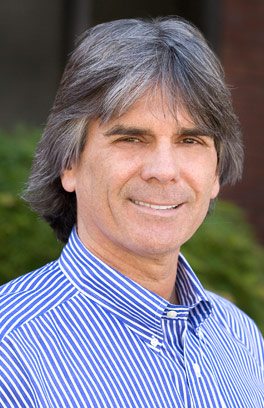
McNellis
Once upon a time, when everyone had to walk, the rich lived on the flat land in the center of town and the poor lived atop the surrounding hills. No one with a choice was willing to trudge up and down hills every day. Henry Ford changed that. Once upon a nearer time—say from after WWII through sometime in the ’80s—the rich lived in wooded suburbs and commuted to the center of town. Gridlock changed that. The rich now live within close proximity to where they work. In fact, the CEO theory of corporate headquarters has it that a company’s main office will be located within a 10-minute surface-street drive of the CEO’s residence.
265,000 workers commute into San Francisco every day from out of town, handing the city, by some measures, the second worst traffic in the country. With a $1,000,000 median home price, it’s not only shoe clerks who are enduring the Sisyphean commute; it’s anyone making less than three hundred thousand a year. But the irony is that the reverse commute*, that is, out of the city to Silicon Valley may be even worse. Why? Because those who can afford to live in San Francisco—the techies—work in the Valley.
If it’s not the Valley’s capital, Palo Alto is surely its epicenter, home to its best and brightest minds and arguably its worst side effects. At 3.01 jobs per dwelling, Palo Alto has an unparalleled jobs-housing imbalance (Manhattan’s stands at 2.67). What do 3 jobs for every residence get you? A median home price of $2,200,000 (eleven times the national median), apartment rents 10 percent higher than San Francisco’s and roads that turn into parking lots twice a day.
What’s shocking is that this imbalance is getting worse by the day. With office rents among the highest in the country, Palo Alto is in the midst of a land-grab where developers are converting every lot and shack in town to office space (a new low was achieved earlier this year when a laundromat in a crappy strip center was turned into start-up space). What isn’t shocking is that the gridlocked citizenry is up in arms, demanding a cessation to the run-away office development. Sadly, what also isn’t shocking is that no one—neither the lunatic fringe that opposes everything nor the thoughtful people elected to run the city—is connecting the woes from our choking jobs growth to our jobs-housing imbalance.
Why? Because as socially liberal as Palo Alto may be, new housing for anyone—from the working poor to the idle upper class—is political cyanide. Merely uttering the word density in public is enough to get a politician recalled. If truth were a commonplace at public hearings, the vociferous no-growth forces might, instead of hiding behind their threadbare concerns for public safety, simply declare, “Let them commute.”
Sadder still is that this is a very old story. The Palo Alto Weekly’s former editor-in-chief, Jay Thorwaldson, pointed out in an insightful piece last year that this issue has been bedeviling Palo Alto for forty years and, despite the periodic public Sturm und Drang, has only become much worse.
Is there a solution? Piece of cake: Take urban planning away from local officials; make it a regional decision. As long as land use is decided by neighborhood-elected city councils, nothing will change. Short of that real-world impossibility, a big step in the right direction would be to reform the California Environmental Quality Act (CEQA), if ever so slightly. This well-intentioned legislation is, simply put, broken. Instead of being used to assure environmental compliance, it is relied upon as the final roadblock in the effort to defeat projects, regardless of their environmental quality. CEQA lawsuits contesting a city’s decision to allow a given development cost no-growth opponents virtually nothing to file and prosecute. They file these suits knowing that if a project can be delayed long enough, it will die or, at a minimum, be drastically cut back. If, as a prerequisite to filing their lawsuit, the opponents had to post a bond in a meaningful amount—say the actual cost of the project’s environmental studies—which they would forfeit in the event they were to lose their lawsuit, far fewer suits would be filed.
What Palo Alto’s raised-drawbridge crowd fails to realize is that ultimately they are condemning themselves to a life without family, without children and grandchildren. They may have a cracker box they bought for $90,000 that’s now worth $2,500,000, but their children—even their very bright, very hardworking children—will move away when it comes time to buy a home. How many young lawyers and doctors can save the half million you need for a down payment on a $2,200,000 house? And, unwilling to endure an hour and a half commute, they will move to Portland.
* “I have a reverse commute,” a very popular real estate lie in the 80’s, finally died out when even the criminally gullible began to scoff.
John E. McNellis is a Principal at McNellis Partners in Palo Alto, Calif. [ Editor's Note: He is a developer asking for the suspension of democratic rights and the use of government power to enable him to make millions. This is despicable crony capitalism. }
Monday, November 28, 2016
Dick Spotswood: Kinsey’s new job a sign of the revolving door
Dick Spotswood: Kinsey’s new job a sign of the revolving door

The revolving door is in full motion. Supervisor Steve Kinsey will retire from the Board of Supervisors in five weeks. His next job will be using contacts he’s made with county government, the Metropolitan Transportation Commission and California’s Coastal Commission.
In Marin Magazine, Kinsey is quoted, “Eventually what I want to do is be involved as a consultant at the local or regional level in strengthening community, either in the field of transportation or working to achieve equity in various aspects of contemporary life.” Kinsey promptly pursued his goal by snagging a $50,000 contract with the city of San Rafael to help guide the city in joint efforts with SMART to relocate the C. Paul Bettini bus depot so it’s compatible with the city’s new rail station.
It’s not that Kinsey, 63, lacks private-sector skills. He was a successful San Geronimo Valley designer-builder when he was first elected to the board 20 years ago.
Kinsey was a good supervisor. There’s never been a whiff of financial scandal about him. Perhaps his contract with San Rafael will be a one-off arrangement.
In justification, Kinsey pointed out to me that his Mission City contract is consulting with a public agency, not working as a private-sector advocate.
It’s still a problem given Kinsey’s role as a reliable supporter of MTC’s management led by top honcho Steve Heminger.
Now that the five-term supervisor will be “interfacing” with MTC as a consultant, the issues of cronyism naturally will arise.
Ditto for the Coastal Commission where Kinsey, along with a few other commissioners, remains under a cloud. The Los Angeles Times reported that a handful of appointees, including Kinsey, had failed to publicly disclose ex-officio communications with entities coming before the coastal land use authority.
The revolving-door phenomenon, so prevalent in Washington, D.C., also encourages See Article HERE.
Sunday, May 8, 2016
Special Interests and Cronyism Sully Supervisors' Decisions

Special Interests and Cronyism Sully Supervisors' Decisions
Posted by: Mimi Willard - May 8, 2016 - 6:07pmIn an anti-establishment election year, voters should ask what our incumbent supervisors and career politicians are doing for US.
Campaign filings show our current supervisors are beholden to special interest money and the Establishment political cabal, which together can account for the majority of the money flowing to a reelection campaign.
Bad decisions result from these unfortunate allegiances.
Per Dick Spotswood, $20 million was spent on a single bike bridge over Sir Francis Drake Boulevard.
Ross Valley residents now face the prospect of an $18 million Sir Francis Drake “improvement” project, which Supervisor Rice promotes. Drake will be dug up for 2-3 years to implement changes designed to permanently slow traffic on this already-clogged, vital arterial.
Ghilotti Construction, which did much of the work for the bike bridge and will likely bid for the Drake project, has been a major contributor to Supervisors Rice, Arnold and Kinsey. Rice received $3,000 from Ghilotti so far this year.
Other big donors to incumbent supervisors are regional unions and political action committees representing construction workers, building trades, machinists, sheet metal workers, and carpenters. The construction industry is particularly keen on Rice, contributing generously and repeatedly to her “campaign” regardless of whether an election is near. Supervisor Sears also accepts construction industry money.
Is it any surprise our Supervisors greenlighted construction of four times the high density housing units mandated by regional agencies?
In approving that unpopular, bloated housing element, our Supervisors alsoviolated the Brown Act’s requirements for proper public notice and hearing process.
Unions representing Marin’s public employees, transit workers, firefighters and deputy sheriffs also contribute heavily to incumbents. Supervisors must approve any changes to public employees’ compensation, benefits, and pensions. Mushrooming compensation costs and a huge unfunded pension liability mean the county can’t maintain services and infrastructure without add-on taxes and fees that make Marin unaffordable. Yet our supervisors unanimously rejected a Grand Jury report calling for greater transparency in employee contract negotiations.
Other parties vying for contracts awarded by supervisors also help fund campaigns. These include civil engineers and consultants; refuse companies; landscape contractors; transit, ambulance, and health care companies. Many contracts are awarded or re-upped without competitive bids.
Supervisors recently bestowed Marin Sanitary, a generous contributor to several of their campaigns, a 6% rate hike payable by unincorporated area residents.
Stetson Engineers donated multiple times to Rice. The Board of Supervisors has so far awarded Stetson $650,000 in contracts for consulting services related to Ross Valley flood control planning. Despite total consultant spending of $2.5-5 million to date, the county hasn’t moved a single shovel of dirt and is not close to having an acceptable flood control plan.
In Sleepy Hollow, Rice’s neighborhood, homeowners will soon enjoy a new private clubhouse, thanks to the supervisors approving a $25,000 “grant” from their slush fund plus a $2+ million transfer of public funds toward its construction.
Roughly two dozen of the clubhouse’s financial supporters donated heavily to Rice’s campaign coffers.
It’s rare (if ever) that a supervisor recuses him or herself from votes like those above.
Rice stridently rebuffed calls to recuse herself from the Sleepy Hollow Clubhouse vote.
Constituents wonder: “Who represents US?”
Equally troubling is how our Supervisors cater to the Establishment’s crony cabal. A lot of Rice’s funds come from current, past, and wanna-be members of Marin’s political class. Some serve at the supervisors’ pleasure. Some are undoubtedly friends. And some say a contribution (and endorsement) is what it takes to ensure the county takes care of constituents’ needs. The latter is particularly disturbing.
Bad stuff also happens when political allegiance trumps the voters’ interests.
When Larkspur considered approving massive new development at Larkspur Landing (opposed by Rice’s challenger, Kevin Haroff) that would have paralyzed traffic in her district, Supervisor Rice declined to intervene, citing a tradition of deferring to local control. (Conversely, when San Anselmo’s leaders proposed turning Memorial Park into a flood detention basin, Rice vainly endorsed her allies’ unpopular project in a letter to the editor of the Marin IJ.)
When you receive the current supervisors’ campaign mailings, question whether the long list of cross-endorsements serves YOUR interests.
Much that we hold dear about Marin is at stake. Returning Marin’s career politicians to office solves nothing. We need new leadership.
The June 7 election provides a chance to vote for positive change.
Monday, March 21, 2016
Tuesday, December 29, 2015
The SolEd difference Vs. Reality.
David Kunhardt,owner Soled Benefit Corporation pitches his ethics while pursuing millions of dollars worth of business from local governments. His company and partners stand to win $3.3 million dollar in tax benefits as a result of the SEED Project in Marin, Sonoma and Napa County.
His company won the contract in 2013 with San Rafael, CA after beating out large, stable Solar companies under unusual circumstances. His company was formed a few months prior to winning the contract and has been plagued with loss of partners, financing difficulties, delays and changing terms. We cannot find a single successful SEED installation two years after winning the mega million dollar contract.
On November 10, 2015 the city of St Helena cancelled their contract due to "non performance" See it HERE
Marinwood CSD committed to SolEd on December 8, 2015 to commence building. Unfortunately, some Marinwood CSD directors are unwilling to change the contract to a large stable vendor. We sincerely hope, they will look at the contract again and "do the right thing".
There are many successful local solar companies. Why not chose an established vendor?
Monday, April 13, 2015
Harvard Trained Developer Claims Town's Racist Policy won't let him Earn Millions.
Dad: Affordable housing plan led to son's demotion in league

By DAVE COLLINS5 hours ago



DARIEN, Conn. (AP) — In one of the country's richest towns — where Mercedes, BMWs and Land Rovers cruise tree-lined streets of multimillion-dollar homes — a man who proposed building more accessible housing says angry neighbors took out their frustration on his son: a 9-year-old boy who was demoted to a lower-level Little League team.
Christopher Stefanoni says in a federal lawsuit that residents of Darien are so worried that affordable housing will draw black people to town that they'll do just about anything to stop it, including using his son to retaliate against him. Town and Little League officials say that's completely false.
"Darien is a little white enclave, sort of a holdout segregated town," said Stefanoni, 50, a Harvard-educated father of five who has lived in town since 2000. "The attitudes that people in Darien have are very exclusionary, demeaning. When they go after your kids, they've crossed the line."
The town of nearly 21,000 people on Connecticut's Gold Coast consistently appears in Top 10 lists of America's wealthiest towns, with a per-capita income around $95,000. About 94 percent of the population is white, with about 620 Hispanics and 70 blacks, according to the latest U.S. Census Bureau estimates.
The lawsuit and a federal housing investigation reopened old wounds in Darien, a New York City suburb depicted in the 1947 Oscar-winning movie "Gentleman's Agreement" starring Gregory Peck where residents conspired not to sell their homes to Jews.
Stefanoni and his wife, Margaret, filed the lawsuit in 2013 against the Darien Little League and its leaders over the demotion of their son for the fall 2010 season, just days after Stefanoni filed an affordable housing application for property right next to the home of a former league official. Several months later, Stefanoni was banned indefinitely from coaching in the league.

Lawyers for the defendants deny the allegations. A federal judge in Bridgeport is now mulling a motion to dismiss the lawsuit. According to court documents, league officials say they made a mistake placing the Stefanonis' son on a higher-level team, after the housing application was filed, and corrected the error by moving him to another team.
"Mr. Stefanoni is pursuing a baseless litigation as a means to harass and retaliate against defendants for an imaginary slight that has no connection to reality or to the civil rights laws that he purports to vindicate," the defendants' lawyers, Michelle Arbitrio and Fred Knopf, wrote in the motion to dismiss. Knopf has since withdrawn from the case.
Former Little League board members named in the lawsuit declined to comment.
Stefanoni said he has had three affordable housing proposals rejected by the town. They include a 16-apartment complex with five affordable units and a 30-apartment development with nine affordable units. A court sent both of those back to the town's planning and zoning commission for review and approved a third. The commission cited traffic safety and other concerns.
The lawsuit includes allegations about city officials blocking affordable housing applications to keep blacks from moving into town, claims identical to those in another pending federal lawsuit against the town by a different affordable housing developer whose project was rejected.
The U.S. Department of Justice in 2010 began investigating whether the town was violating the Fair Housing Act with a zoning policy approved in 2009 that gave top priority for new affordable housing to Darien residents and other people with ties to the town, including town employees. The planning and zoning commission rescinded the policy later in 2010, and the Justice Department closed the investigation in 2012 without taking any action, the Darien Times reported.
According to state data, 2.6 percent of Darien's nearly 7,100 housing units qualify as affordable. Gov. Dannel P. Malloy has called affordable housing one of the state's most pressing needs and has committed hundreds of millions of dollars for more affordable housing.
In 2010, Darien won a four-year exemption to a state law making it easier for developers to build in towns with less than 10 percent affordable housing, and town officials expect to win another after resolving a dispute with the state. The town says it is entitled to the exemption under a complicated formula involving existing affordable housing units.
Darien First Selectman Jayme Stevenson said the town has made significant efforts to increase affordable housing and its housing practices aren't discriminatory.
"The Darien of today bears no resemblance to the allegations that the Stefanonis ... are intending to propagate," she said. "These folks are developers and they're looking to develop housing and make some money."
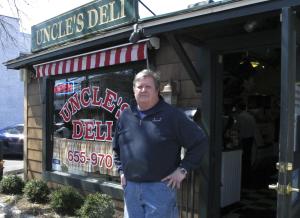
Rob Williamson, owner of Uncle's Deli in downtown Darien, said he doesn't believe the town is being discriminatory in rejecting affordable housing applications.
"The town's small, very tight knit," the resident of nearby Stamford said. "That doesn't mean we want to keep anyone out. It's a small, little New England town and I think they want to keep it that way."
Thursday, February 26, 2015
Greedy Green Business exposed.

Kitzhaber and the Greedy Greens Oregon governor John Kitzhaber
Energy isn’t the only thing that’s green when you’re pushing the clean-energy agenda. Oregon governor John Kitzhaber may have announced that he will resign, but a sweeping FBI investigation of him and his fiancée, Cylvia Hayes, is only getting started. While the story involves personal failings, the green-energy lobbying scandal that brought them down has national lessons and implications. If oil companies and pharmaceutical concerns shouldn’t exercise undue influence in government, the same is true for green energy — which can’t yet survive in the marketplace without giant subsidies or special tax favors.
While Hayes was living in the governor’s mansion with the self-bestowed title of “Oregon’s First Lady,” she collected a series of consulting contracts and “fellowship” money from people with an interest in shaping state energy and environmental policy. She then ordered state employees to help run her private business and take actions in accord with the wishes of the green-energy groups that were paying her. Some of the groups first identified by Willamette Week were sketchy.
The Clean Economy Development Center (CEDC) gave Hayes $118,000 as a “fellow” for “work that Hayes and Kitzhaber’s office have yet to describe in any detail.” The arrangement was made by Dan Carol, a Kitzhaber campaign adviser who was later hired by the governor and his highest-paid aide, at $165,000 a year. CEDC had its tax-exempt status yanked by the IRS in 2014.

Then there was Demos, a New York–based left-wing group normally prominent in attacking voter-ID laws. But in Oregon, Demos persuaded Hayes and Kitzhaber to consider using a “genuine progress indicator” as a substitute for traditional GDP models of growth. In 2013, Governor Kitzhaber and Hayes accepted the invitation of Demos executive Lew Daly to accompany him to the Himalayan nation of Bhutan to study the “genuine progress indicator” concept. The next month, Hayes landed a $25,000 consulting contract with Demos. Within days, in violation of the law, she held a meeting promoting Demos’s concept at the state-owned governor’s mansion.
The San Francisco–based Energy Foundation gave Hayes $40,000 in 2013 to create a green-energy communications strategy. This foundation had also funded almost two-thirds of her $118,000 CDEC fellowship. Although much of its funding is obscure, one of the Energy Foundation’s most prominent backers is Tom Steyer, the California billionaire who last year plowed millions into Democratic campaigns and fighting the Keystone pipeline. Among the recipients of his largesse was the Oregon Democratic party, which netted $100,000 from his NextGen Climate Action group. More scandals might be waiting in the wings.

Last year, the Daily Caller reported that Kitzhaber signed a deal with the governors of Washington and California to implement low-carbon fuel standards that would raise the cost of transportation. But that may have been just the beginning of a much bigger scheme to push green-energy agendas. Chris Horner, of the Energy and Environment Legal Institute, used Freedom of Information Act requests to unearth a ten-page 2014 e-mail thread from the Washington governor’s office to allies working in various other governors’ offices.

The thrust was advice on how to launch “a nationally coordinated, multi-year ‘states strategy’ focused on driving outcomes contemplated by the president’s climate action plan,” to “spread climate coordination and collaboration.” The Kitzhaber aide in the e-mails is Dan Carol, who was so helpful in securing that lucrative green-energy fellowship for the governor’s fiancée. The e-mail participants discuss “Dan’s concept” to use their offices to push the climate agenda. It would be funded by “major environmental donors,” such as Steyer and former New York mayor Michael Bloomberg. A private White House dinner would be arranged “to create buy-in among” the donors. Recipients of the e-mails were assured that Council on Environmental Quality staff at the White House “were interested and felt [the White House’s David] Agnew, [counselor to the president John] Podesta, et al.” would also be interested.

Far from being embarrassed by the green-energy scandals that piled up during its first term, the Obama administration is doubling down on its green agenda. It has dismissed Solyndra, the politically connected solar-panel maker that wasted $535 million of taxpayer money and got President Obama to promote its wares, as an aberration. But the Washington Post reported in 2012 that Solyndra was hardly an anomaly, given that under Obama “$3.9 billion in federal grants and financing flowed to 21 companies backed by firms with connections to five Obama-administration staffers and advisers.” It’s not that no one raised warning signs.
Then–Treasury secretary Timothy Geithner, then–budget director Jacob Lew, and then–National Economic Council director Gene Sperling all opposed many or most of the green-energy schemes that have since failed. But Energy Secretary Steven Chu ignored these voices and handed out the cash anyway. Obama may not have had a Cylvia Hayes advising him, but the conflicts of interest he created were nonetheless major-league.

By now, it must be clear that just because green-energy advocates claim the “cleanest” of motives, they haven’t overcome the all-too-common desire to reap personal profit at the expense of the general public. “The modern green machine is a network of wealthy foundations and consultant groups that finance activists who promote and advise sympathetic politicians,” the Wall Street Journal editorial page observed on Saturday.
Just as with any business lobby, such groups deserve scrutiny about the lengths to which they will go to further their self-interest. As the Kitzhaber scandal in Oregon has shown, green-energy interests can be the most brazen of all because they believe their perceived good intentions will block needed scrutiny. The scandal involving a lone food-supplement owner who corrupted Virginia governor Bob McDonnell and his wife with gifts pales by comparison with what happened in Oregon, and the McDonnell scandal received far greater coverage. It’s time the media woke up and realized that they have a new watchdog role in covering the financial — or “green” — interests of the green lobby.
Read more at: http://www.nationalreview.com/article/398648/kitzhaber-and-greedy-greens-john-fund

Read more at: http://www.nationalreview.com/article/398648/kitzhaber-and-greedy-greens-john-fund
Subscribe to:
Posts (Atom)