Showing posts with label inspiration. Show all posts

Saturday, September 7, 2019

FABLE: THE BELLY AND THE MEMBERS

ALL the Members of the body conspired against the Belly, as against the swallowing gulf of all their labors; for whereas the eyes beheld, the ears heart, the hands labored, the feet traveled, the tongue spake, and all parts performed their functions; only the Belly lay idle, and consumed all. 

 Hereupon, they jointly agreed, all to forbear their labors, and to leave their lazy and public enemy to take care of himself. One day passed over, the second followed very slowly, but the third day was so grievous to them all that they called a common council. The eyes waxed dim, the feet could not support the body, the arms waxed lazy, the tongue faltered, and could not lay open the matter; therefore they all , with one accord, desired the advice of the Heart.  
Then the Heart told them: "It is true that the Belly receives all the meats, but it sends them out again for the nourishment of all parts of the body, and all must work together for the common good. 

The Belly cannot do without the Members, nor the Members without the Belly."

[Illustration]

Monday, March 11, 2019

Dixie School district named two weeks before the Gettysburg Address

The Dixie School District was named on November 3, 1863. Two weeks later, on November 19, 1863 President Lincoln delivered the Gettysburg Address.

"Fourscore and seven years ago our fathers brought forth, on this continent, a new nation, conceived in liberty, and dedicated to the proposition that all men are created equal. Now we are engaged in a great civil war, testing whether that nation, or any nation so conceived, and so dedicated, can long endure. We are met on a great battle-field of that war. We have come to dedicate a portion of that field, as a final resting-place for those who here gave their lives, that that nation might live. It is altogether fitting and proper that we should do this. But, in a larger sense, we cannot dedicate, we cannot consecrate—we cannot hallow—this ground. The brave men, living and dead, who struggled here, have consecrated it far above our poor power to add or detract. The world will little note, nor long remember what we say here, but it can never forget what they did here. It is for us the living, rather, to be dedicated here to the unfinished work which they who fought here have thus far so nobly advanced. It is rather for us to be here dedicated to the great task remaining before us—that from these honored dead we take increased devotion to that cause for which they here gave the last full measure of devotion—that we here highly resolve that these dead shall not have died in vain—that this nation, under God, shall have a new birth of freedom, and that government of the people, by the people, for the people, shall not perish from the earth."

Sunday, February 10, 2019

Fable: An Old Cherokee Tale of Two Wolves


One evening an old Cherokee Indian told his grandson about a battle that goes on inside people. He said, ‘My son, the battle is between two ‘wolves’ inside us all.One is Evil. It is anger, envy, jealousy, sorrow, regret, greed, arrogance, self-pity, guilt, resentment, inferiority, lies, false pride, superiority, and ego.
The other is good. It is joy, peace, love, hope, serenity, humility, kindness, benevolence, empathy, generosity, truth, compassion and faith.’
The grandson thought about it for a minute and then asked his grandfather: ‘Which wolf wins?’
The old Cherokee simply replied, ‘The one you feed.’

Monday, February 4, 2019

Sojourner Truth

Sojourner Truth


Sojourner Truth was an African American evangelist, abolitionist, women’s rights activist and author who lived a miserable life as a slave, serving several masters throughout New York before escaping to freedom in 1826. After gaining her freedom, Truth became a Christian and, at what she believed was God’s urging, preached about abolitionism and equal rights for all, highlighted in her stirring “Ain’t I a Woman?” speech, delivered at a women’s convention in Ohio in 1851. She continued her crusade for the rest of her life, earning an audience with President Abraham Lincoln and becoming one of the world’s best-known human rights crusaders.
Sojourner Truth’s Early Life

Sojourner Truth was born Isabella Baumfree in 1797 to slave parents in Ulster County, New York. Around age nine, she was sold at a slave auction to John Neely for $100, along with a flock of sheep.

Neely was a cruel and violent slave master who beat the young girl regularly. She was sold two more times by age 13 and ultimately ended up at the West Park, New York, home of John Dumont and his second wife Elizabeth.

Around age 18, Isabella fell in love with a slave named Robert from a nearby farm. But the couple was not allowed to marry since they had separate owners. Instead, Isabella was forced to marry another slave owned by Dumont named Thomas – she eventually bore five children.

Walking from Slavery to Freedom


At the turn of the 19th century, New York started legislating emancipation, but it would take over two decades for liberation to come for all slaves in the state.

In the meantime, Dumont promised Isabella he’d grant her freedom on July 4, 1826, “if she would do well and be faithful.” When the date arrived, however, he had a change of heart and refused to let her go.

Incensed, Isabella completed what she felt was her obligation to Dumont and then escaped his clutches as fast as her six-foot-tall frame could walk away, infant daughter in tow. She later said, “I did not run off, for I thought that wicked, but I walked off, believing that to be all right.”

In what must have been a gut-wrenching choice, she left her other children behind because they were still legally bound to Dumont.

Isabella made her way to New Paltz, New York, where she and her daughter were taken in by Isaac and Maria Van Wagenen. When Dumont came to re-claim his “property,” the Van Wagenen’s offered to buy Isabella’s services from him for $20 until the New York Anti-Slavery Law emancipating all slaves took effect in 1827; Dumont agreed.
Winning her Court Case

After the New York Anti-Slavery Law was passed, Dumont illegally sold Isabella’s five-year-old son Peter. With the help of the Van Wagenen’s, she filed a lawsuit to get him back.

Months later, Isabella won her case and regained custody of her son. She was the first black woman to sue a white man in a United States court and prevail.


Spiritual Calling


The Van Wagenen’s had a profound impact on Isabella’s spirituality and she became a fervent Christian. In 1829, she moved to New York City with Peter to work as a housekeeper for evangelist preacher Elijah Pierson.

She left Pierson three years later to work for another preacher, Robert Matthews. When Elijah Pierson died, Isabella and Matthews were accused of poisoning him and of theft but were eventually acquitted.

Living among people of faith only emboldened Isabella’s devoutness to Christianity and her desire to preach and win converts. In 1843, with what she believed was her religious obligation to go forth and speak the truth, she changed her name to Sojourner Truth and embarked on a journey to preach the gospel and speak out against slavery and oppression.
Ain’t I a Woman?

In 1844, Truth joined a Massachusetts abolitionist organization called the Northampton Association of Education and Industry, where she met leading abolitionists such as Frederick Douglass, and effectively launched her career as an equal rights activist.

In 1851, at the Ohio Women’s Rights Convention, Truth spoke out about equal rights for black women. Reporters published different transcripts of the speech where she used the rhetorical question, “Ain’t I A Woman?” to point out the discrimination she experienced as a black woman.

The speech became her most famous, though it was just one of many as she continued to advocate for human rights the rest of her life.
Civil War Years

Like another famous escaped slave, Harriet Tubman, Truth helped recruit black soldiers during the Civil War. She worked in Washington, D.C., for the National Freedman’s Relief Association and rallied people to donate food, clothes and other supplies to black refugees.

Her activism for the abolitionist movement gained the attention of President Abraham Lincoln, who invited her to the White House in October 1864 and showed her a Bible given to him by African Americans in Baltimore.

While Truth was in Washington, she put her courage and disdain for segregation on display by riding on whites-only streetcars. When the Civil War ended, she tried exhaustively to find jobs for freed blacks weighed down with poverty.

Later, she unsuccessfully petitioned the government to resettle freed blacks on government land in the West.

Sojourner Truth’s Later Years


In 1867, Truth moved to Battle Creek, Michigan, where some of her daughters lived. She continued to speak out against discrimination and in favor of woman’s suffrage. She was especially concerned that some civil rights leaders such as Frederick Douglass felt equal rights for black men took precedence over those of black women.

Truth died at home on November 26, 1883. Records show she was age 86 yet her memorial tombstone states she was 105. Engraved on her tombstone are the words, “Is God Dead?,” a question she once asked a despondent Frederick Douglass to remind him to have faith.

Truth left behind a legacy of courage, faith and fighting for what’s right and honorable, but she also left a legacy of words and songs including her autobiography, The Narrative of Sojourner Truth, which she dictated in 1850 to Olive Gilbert since she never learned to read or write.

Perhaps Truth’s life of Christianity and fighting for equality is best summed up by her own words: “Children, who made your skin white? Was it not God? Who made mine black? Was it not the same God? Am I to blame, therefore, because my skin is black? …. Does not God love colored children as well as white children? And did not the same Savior die to save the one as well as the other?”

Sunday, January 20, 2019

THREE BULLOCKS AND A LION

     A LION had been watching three Bullocks feeding in an open field. He had tried to attack them several times, but they had kept together, and helped each other to drive him off. The Lion had little hope of eating them, for he was no match for three strong Bullocks with their sharp horns and hoofs. But he could not keep away from that field, for it is hard to resist watching a good meal, even when there is little chance of getting it.


[Illustration]

Then one day the Bullocks had a quarrel, and when the hungry Lion came to look at them and lick his chops as he was accustomed to do, he found them in separate corners of the field, as far away from one another as they could get.

It was now an easy matter for the Lion to attack them one at a time, and this he proceeded to do with the greatest satisfaction and relish.


In unity is strength. 

Monday, December 24, 2018

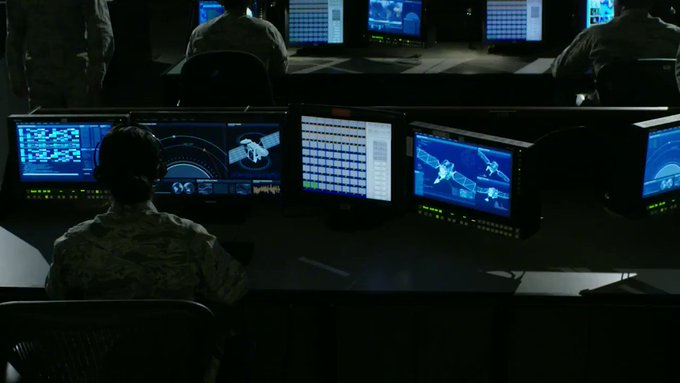
A child calling Santa reached NORAD instead. Christmas Eve was never the same.

A child calling Santa reached NORAD instead. Christmas Eve was never the same.

The military’s famous Santa Tracker began with a wrong number


Col. Harry Shoup was a NORAD commander. (unknown)
By Steve HendrixDecember 24 at 11:50 AM

Col. Harry Shoup was a real by-the-book guy.

At home, his two daughters were limited to phone calls of no more than three minutes (monitored by an egg timer) and were automatically grounded if they missed curfew by even a minute. At work, during his 28-year Air Force career, the decorated fighter pilot was known as a no-nonsense commander and stickler for rules.

Which makes what happened that day in 1955 even more of a Christmas miracle.

It was a December day in Colorado Springs when the phone rang on Col. Shoup’s desk. Not the black phone, the red phone.

“When that phone rang, it was a big deal,” said Shoup’s daughter, Terri Van Keuren, 69, a retiree in Castle Rock, Colo. “It was the middle of the Cold War and that phone meant bad news.”

Shoup was a commander of the Continental Air Defense Command, CONAD, the early iteration of the North American Aerospace Defense Command (NORAD). Then, as now, the joint U.S.-Canadian operation was the tense nerve center of America’s defensive shield against a sneak air attack. In 1955, the command center was filled with a massive map of North America on plexiglass, behind which backward-writing technicians on scaffolds marked every suspect radar blip in grease pencil.


It was not a place of fun and games. And when that red phone rang — it was wired directly to a four-star general at the Pentagon — things got real. All eyes would have been on Shoup when he answered.


“Col. Shoup,” he barked. But there was silence.

Until finally, a small voice said, “Is this Santa Claus?”

Shoup, by all accounts, was briefly confused and then fully annoyed. “Is this a joke?” Glaring at the wide-eyed staff for any sign of a smile, he let the caller have it with all the indignity of a bird-colonel who brooked no nonsense on this most vital of all phone lines.

“Just what do you think you’re doing," he began.

But then the techno-military might of the United States was brought up short by the sound of sniffles. Whoever was on the phone was crying, and Shoup suddenly realized it really was a child who was trying to reach Santa Claus.

The colonel paused, considered and then responded:

“Ho, ho, ho!” he said as his crew looked on astonished. “Of course this is Santa Claus. Have you been a good boy?”

He talked to the local youngster for several minutes, hearing his wishes for toys and treats and assuring him he would be there on Christmas Eve. Then the boy asked Santa to bring something nice for his mommy.

“I will, I will,” Santa-Shoup said. “In fact, could I speak to your mommy now?”

The boy put his mother on the phone, and Shoup went back to business, crisply explaining to the woman just what facility their call had reached.

“He said later he thought she must have been a military wife,” said Van Keuren. “She was properly cowed.”

But she also had an explanation. The woman asked Shoup to look at that day’s local newspaper. Specifically, at a Sears ad emblazoned with a big picture of Santa that invited kids to “Call me on my private phone, and I will talk to you personally any time day or night.”

The number provided, ME 2-6681, went right to one of the most secure phones in the country.

“They were off by one digit,” said Van Keuren. “It was a typo.”

When Shoup hung up, the phone rang again. He ordered his staff to answer each Santa call while he got on the (black) phone with AT&T to set up a new link to Washington. Let Sears have the old number, he told them.

That might have been the end of it. But a few nights later, Shoup, as was his tradition, took his family to have Christmas Eve dinner with his on-duty troops. When they walked into the control center, he spotted a little image of a sleigh pulled by eight unregistered reindeer, coming over the top of the world.


Van Keuren was only 6 at the time, but the exchange that followed became stuff of both family and Air Force legend.

“What’s that,” the commanding officer asked.

“Just having a little fun Colonel,” they answered, waiting for the blowup.

Shoup pondered the offense as the team waited. Then he ordered someone to get the community relations officer. And soon Shoup was on the phone to a local radio station. CONAD had picked up unidentified incoming, possible North Pole origin, distinctly sleigh-shaped.

The radio station ate it up, the networks got involved and an enduring tradition was born. This Christmas Eve will mark the 63rd straight year that NORAD will publicly track Santa’s sleigh on its global rounds.

President Trump and first lady Melania Trump talk to kids as they track Santa Claus's movements with the NORAD Santa Tracker on Christmas Eve in 2017. (Carolyn Kaster/AP)

“This is our most feel-good mission,” said Maj. Andrew Hennessy, a Canadian Army officer posted at NORAD headquarters in Colorado. “We know Santa brings lasting joy to kids around the world and we’re glad to have that as our fourth mission one day out of the year.” (On the other 364 days, NORAD’s three-pronged mandate is to oversee air threats, general aerospace control and, in recent years, maritime warnings for potential threats from sea.)

In good military fashion, the Santa tracking command has grown terrifically complex. NORAD deploys satellites, radar, jet fighters and Santa cams to feed its website, apps and social media accounts used by more than 2 million followers. Naughty and nice alike can follow Santa’s movement on 3-D maps in eight languages. Last year, when Alexa was asked “Where’s Santa?” more than 1.5 million times, it was NORAD that fed her the answer.

But the real emotional outlay comes in the Colorado Springs live call center, staffed for 20 hours on Dec. 24 by more than 1,500 volunteers (many of them local service members and their families). With a nine-page Santa Tracker manual in hand, they fielded more than 126,000 calls in 2017.


“As soon as you put the phone down, it rings again,” said Hennessy, who has done duty in the call center. He remembers telling one young Boston caller that Santa had been confirmed over Maine heading south but — and this is a primary NORAD message — the sleigh wouldn’t stop unless the boy was in bed.

“The next thing I heard was the phone hitting the floor,” he said. “Mom picked it up and said, ‘Can I call you back, he’s never done that before.’ ”

Shoup went on to ever-higher ranks in the Air Force, retiring as a wing commander. When his kids were old enough, he told them why so many of his colleagues called him the “Santa colonel,” but it was a quiet kind of legacy until the 25th anniversary of Santa tracking and TV news crews sought him out.

After that, he looked forward to getting the media calls each December, even carrying special business cards with the story typed on the back. He was buried at 91 in 2009 with a flyover of F-16 fighters, under a gravestone that notes his service in World War II, Korea and Vietnam. The last line reads: “Santa Colonel.”

“I want his message to be ‘Do the nice thing,’ ” said Van Keuren. “A lot of people would have hung up on that kid.”

He Saved West Marin from a Highway and Suburban Sprawl.

Former Marin supervisor Peter Arrigoni dies at 87


Peter Arrigoni, who died this month at age 87, was named to the College of Marin Athletic Hall of Fame in 2011. (Frankie Frost - IJ archive)

By BRAD BREITHAUPT |
PUBLISHED: December 19, 2018 at 2:38 pm | UPDATED: December 20, 2018 at 5:08 am


Former Marin County supervisor Peter Arrigoni, who championed the fight against plans to extend Highway 17 through the Ross Valley to Point Reyes National Seashore — saving West Marin from suburban sprawl — died Tuesday morning after a long illness. He was 87.

The longtime Fairfax resident, former town mayor and political force in Marin County politics died at his home with his wife of 62 years, Pat, at his side.


Mr. Arrigoni was born on July 10, 1931 in San Francisco. His father, Peter S. Arrigoni, was the founder of and longtime partner in New Joe’s restaurant on Broadway Street in San Francisco.

His family had lived in Fairfax for more than 100 years.

Mr. Arrigoni was a graduate of St. Ignatius High School in San Francisco, where he was an all-city athlete. He was an all-conference halfback on College of Marin’s football team before graduating in 1951.

He served for two years in the Coast Guard, reaching the rank of second class petty officer while serving in the Pacific during the Korean War.

After the service, he continued his studies at the University of Arizona, where he was an honor roll student and played football; he was named as an honorable mention member of the all-conference gridiron team. He was also on the college’s baseball team, which played in the College World Series.

He graduated in 1957 with a degree in business and economics.

He was twice drafted by the San Francisco 49ers, but a baseball injury put an end to his hopes to play in the NFL.

He started out as a stockbroker, working on Montgomery Street in San Francisco. He got involved in local activities, coaching in the local Little League and joining the Fairfax Park and Recreation Commission and serving on the then-Fairfax School District’s school site selection committee.

He was elected to the Fairfax council in 1964 and served as mayor in 1966.

Two years later, he decided to run for county supervisor, building his campaign on fighting plans to build a “parkway” stretching from the Richmond-San Rafael Bridge to the national seashore. He unseated incumbent Ernest Kettenhofen and held the seat until 1976.

Mr. Arrigoni’s campaign and victory set the stage for the county’s adoption of historic planning policies that have for decades protected West Marin’s open ranchlands from suburban sprawl.

“If we are not wise in our actions now, Marin County will suffer the same dreary fate of so much of the Bay Area and Southern California: urban sprawl at its worst,” Mr. Arrigoni wrote in 1968.

“Without Pete, we would have a four-way ‘parkway’ from San Anselmo to Olema,” said former IJ editor and reporter Nels Johnson, who covered Mr. Arrigoni and credited him for his “pioneering” leadership in re-shaping the county’s governmental structure. “Even Gary (the late supervisor Gary Giacomini) said if hadn’t been for Pete, there would have been nothing left to save.”  See full article HERE

Why don't perpetual motion machines ever work?

Friday, November 30, 2018

Marinwood and Lucas Valley residents ‘adopt’ Paradise families devastated by fire

Marin residents ‘adopt’ Paradise families devastated by fire


Jennifer Harris-Marks, left, and Suzanne Egan connect with their “adopted” families in Paradise on Monday at Harris-Marks’ home in San Rafael. (Alan Dep/Marin Independent Journal)

By KERI BRENNER | kbrenner@marinij.com | Marin Independent Journal
PUBLISHED: November 26, 2018 at 11:22 am | UPDATED: November 28, 2018 at 5:23 am


It’s a deja vu that Jennifer Harris-Marks of Marinwood and Suzanne Egan of Lucas Valley didn’t really want to see all over again.

Even so, just as they did a year ago for the Wine Country fires in Sonoma and Napa counties, the two Marin mothers are now mobilized again to help victims of the Camp Fire in Butte County — and they are even more organized and high-tech than they were in 2017 during their first literal trial by fire.

“The message is, ‘Marin is here to help,'” said Harris-Marks, a real estate agent with Coldwell Banker in Greenbrae and a former PTA president at Mary Silveira Elementary School. “I’m so slammed at work right now, but I just tell myself, ‘I don’t need to sleep.'”
The Baker family of Paradise lost many of their belongings in the Camp Fire. From left: Nicholas, Kirsten-Grace, Marvin and Karla.
(courtesy Baker family)

Harris-Marks, who has “adopted” the four-person Baker family from Paradise through the newly created Paradise Fire Adopt-a-Family Facebook page,made her comments as she was loading up Egan’s 2011 bronze Honda Odyssey mini-van — the same one Egan used last year — with books, clothes and stuffed animals to take up to Butte County on Tuesday.

Egan, who has “adopted” the two-person Southerland family through the Facebook page, was to spend the rest of Monday at pickup stops in Marin neighborhoods to collect more donations.

“We have coordinated points of contact,” said Egan, a former PTA president at Dixie Elementary School. “We learned a lot from last year.”

see the article HERE

North Korean defector survives starvation, brutal punishment and sex trafficking to come to the USA.


Thursday, October 25, 2018

Pessimism Viewed in Historical Perspective

Pessimism about potentially life-enhancing technologies is not new.

Pessimism Viewed in Historical Perspective

By Chelsea Follett
|
@chellivia


Pessimism about potentially life-enhancing technologies is not new. The Twitter account Pessimist’s Archive (a favorite of the internet guru Marc Andreessen) chronicles the unending stream of pessimism with old newspaper excerpts.

Pessimistic reactions range from merely doubtful (such as this response to the idea of gas lighting in 1809, or this one to the concept of anesthesia in 1839) to outright alarmist (such as this 1999 warning that e-commerce “threatens to destroy more than it could ever create”).

In some cases, the pessimists insist that an older technology is superior to a new one. Some, for example, claimed that an abacus is superior to a computer and a pocket calculator, while others claimed that horses are longer-lasting than the dangerous “automobile terror.”

Others argue that new technology is damaging existing businesses and customs. One particularly emotional 1918 article described how automobiles are destroying the livery stable business and, together with “the movie show,” changing dating forever by ending the tradition of romantic carriage rides.

Another frequent complaint is that new technology exacerbates inequality, because the wealthy tend to adopt new technologies first. One article from 1914, for example, laments that “wireless telephones” will only ever “be a boon to privileged persons.” The article was referring to the early wireless radiotelephones being developed at that time, which were not lightweight handheld devices. Today, of course, wireless phones can fit in your pocket, have many more capabilities, and are ubiquitous. Eventually, the free market tends to drive down the cost of technologies, making them accessible to more people.

Perhaps what is most remarkable about pessimistic responses to new technology is how often the pessimists successfully use the power of the state to try to halt technological progress.

In the 1930s, pessimists feared that radios were a threat to democracy and worried that the devices were ruining childhood. By 1936, the pessimists had succeeded at banning radios in cars in a number of U.S. cities, arguing that they were distracting and might prevent drivers from hearing fire engine sirens.

Sadly, techno-pessimists have managed to enact bans or partial bans on a great variety of technologies. These include “horseless carriages” (cars), “automatic lifts” (elevators), and bicycles (which are “the most dangerous thing to life and property ever invented” according to an 1881 New York Times article). The list also includes, more recently, video games, headphones, and hover-boards.

As new breakthroughs continue to occur practically every day, looking back at how people decried and fought against progress in the past helps put current technological and scientific debates in perspective.


Chelsea Follett is the managing editor of HumanProgress.org.

Wednesday, October 24, 2018

Todd Bol, Creator of Little Free Library Movement, Dies at 62

Todd Bol, Creator of Little Free Library Movement, Dies at 62

ITodd Bol, the creator of Little Free Libraries, in 2013 with Eddye Watkins, who hosted an Amish-made box in her yard in Minneapolis. Mr. Bol considered libraries to be part of the connective tissue of communities.CreditCreditDavid Joles/Star Tribune, via Associated Press


By Katharine Q. Seelye
Oct. 23, 2018

The idea was born of a home renovation and evolved into a worldwide movement.

In 2009, Todd Bol was renovating his garage in Wisconsin when he ripped off its old wooden door. He liked the wood, though, and didn’t want to throw it out. So after staring at it for a while, he decided to use it to build a small monument to his mother, who had been a schoolteacher.

He fashioned it into a replica of a schoolhouse, two feet high and two feet wide, put his mother’s books in it, and planted it on his front yard, hoping to start a little book exchange for his neighbors.

“It was a spiritual gesture,” he said.

That gesture spawned what might be called the tiny library movement, leading to his founding of a nonprofit organization called Little Free Library a year later.

Since then more than 75,000 Little Free Library boxes, which blend the form of folk art with the function of a community water cooler, have popped up in all 50 states and in 88 countries.

They operate under the honor system: You take a book and sometimes you leave a book, so the content of the boxes is constantly changing.

Mr. Bol, who considered libraries to be part of the connective tissue of communities, where everyone was welcome and reading could be encouraged, died on Thursday in hospice care in Oakdale, Minn. He was 62. The cause was complications of pancreatic cancer, his brother Tony said.


Today, the little book-sharing boxes can be found on urban street corners and at suburban malls, in cornfields, forests and lake sides, in subway stations in New York City, police precinct buildings in Los Angeles and a refugee settlement in Uganda. The Today Show established one at NBC’s headquarters at 30 Rockefeller Plaza in Manhattan.
ImageMr. Bol in 2012 in Hudson, Wis. His mini-libraries — part folk art, part community water cooler — spread like a prairie fire.CreditJim Mone/Associated Press


There is even a Little Free Library on the Yamal Peninsula in Siberia, for reindeer herders and their families.


Each box contains at least 20 volumes, curated by local “stewards,” the people who put up the boxes in the first place and use their own taste and discretion to cull the collections.

Mr. Bol was inspired by Andrew Carnegie, the steel and railroad magnate who at one point was the world’s richest man and who left a legacy of libraries around the world. The once-poor Mr. Carnegie believed that “the man who dies rich dies in disgrace,” and saw building libraries as a way for him to give back to society and help people help themselves. By the early 1900s, he had established 2,509 of them.

Mr. Bol wanted to surpass Mr. Carnegie’s feat. He set his sights on building 2,510 little libraries. It took only two years.

“I thought it was just a flash in the pan, like a pet rock,” his brother Tony said in a telephone interview. Todd Bol never sent out a news release to publicize his project, and yet small local papers and then the national media began noticing the phenomenon and writing about it.

“What was powerful about it was that all you needed was the idea,” Tony Bol said. “It didn’t have 17 steps. You just build it, or order it, then put it up in your yard, like a public art monument.”

Todd Herbert Bol was born on Jan. 2, 1956, in St. Paul. to Richard and June (Pattridge) Bol. His father was a chiropractor, and his schoolteacher mother was a booklover who also tutored children at her kitchen table.

In addition to his brother Tony, he is survived by his wife, Susan Marie (Hanson) Bol; a daughter, Allison; a son, Austin; two brothers, Rick and Scot; and a sister, Carolee.


Mr. Bol was raised in Lake Elmo, Minn. He graduated from the University of Wisconsin-River Falls in 1979 with a degree in sociology and in 1982 received a second bachelor’s degree, in psychology. He was a public-school teacher for a time before he went into business arranging fellowships for nurses from overseas to come to the United States.

After he built the schoolhouse library box in honor of his mother, things were quiet. But the next year, in 2010, when he was having a garage sale at his home, in Hudson, Wis., his neighbors came by and were immediately captivated by his Little Free Library.

“I put up my library and noticed my neighbors talking to it like it was a little puppy,” Mr. Bol told The Washington Post in 2013. “And I realized there was some kind of magic about it.”

As orders started to come in, Mr. Bol built many of the little libraries himself, with the assistance of Henry Miller, an Amish craftsman. Little Free Library, the nonprofit organization, made several designs available on its website, littlefreelibrary.org, and offered specifications for do-it-yourselfers.

They spread like a prairie fire. Mr. Bol took 25 little boxes made by prisoners to Detroit, and, thanks to a “super steward” there, Detroit soon had more than 400, according to Tony Bol.

The little libraries come in all shapes — as boxcars, birdfeeders and barns; spaceships, robots and roosters; Victorian mansions, log cabins and even the replicas of the houses they stand in front of. Someone in California made one in the shape of an old Volkswagen van with a surfboard on top.

Perhaps surprisingly, vandalism has not been a problem, but there have been exceptions. One Little Free Library in Indianapolis was destroyed by arson this month. But residents have rallied around, and plans are afoot to build 100 Little Free Libraries in its place.

“Todd created this beautiful, living, breathing movement of literacy and community that resonated from that very first Little Free Library all the way to today,” Margret Aldrich, a spokeswoman for Little Free Library and author of “The Little Free Library Book” (2015), said in an interview.

“He was a true believer in the power of one person to make a difference,” she said. “And he certainly did.”

Editor's Note: We need more "Little Free Libraries" in Marinwood.   Do you want to adopt one?  Email savemarinwood@gmail.com  for details.

Monday, October 22, 2018

Afraid of speaking in Public? Here is some good advice.

Lukas Schwekendiek
Lukas Schwekendiek, Life Coach, Speaker, Writer. Published on TIME, Inc.com & Huffington Post
#1 - Stop speaking - After every sentence make a definite, longer pause than you need to make.
  • It will often seem incredibly long to you, but the truth is that most people will not mind at all.
  • Get into the habit of stopping to speak rather than talking on and making a fool of yourself.
  • A longer silence builds more respect than a blabbering idiot.
#2 - Consider your audience - Who are you talking to? What do they want to learn?
  • Why are they listening to you? What are they hoping to gain from this?
  • If you can answer these questions then you know what to talk about, what interests them and how to form your speech so it remains interesting for them!
#3 - Enunciate and Speak slower - Most people speed up when they are nervous, slur their words and give off a completely different feeling than they intended to.
  • Practice your Enunciation while focusing on speaking slower and you will speak more clearly.
  • Tongue-Twisters are great for practicing your Enunciation. Here are some of my favorites:
#4 - Have little to no notes - Whenever you are practicing try to do it without any notes at all.
  • This way you will know where your problems lie and you will get better at speaking freely. I
  • f anything keep notecards with a few key words on them, never full sentences.
#5 - Speak more - Give speeches whenever, wherever you can to practice!
  • If you do not have any places nearby then start a YouTube channel to get yourself in front of someone and talk.
  • Practice makes perfect.
  • If you are even too scared to do that, then just practice some speeches in front of the mirror!
#6 - Record yourself and pay attention to your quirks - Everyone has quirks, be it an “Umm” an extra “and” or even a small flick of the wrist every now and again.
  • Watch your own quirks so you know what they are to eliminate them.
  • When you re-watch recordings you learn a lot more about your speaking habits than you would like to, but it is the best way to improve!
#7 - Don’t be afraid to go of course - The truth is that no one knows the speech you prepared.
  • No one knows what you wanted to say, what things you didn’t say or what things you messed up on.
  • But if you deliver your speech with fervor, then even when you go off course, no one will know!
#8 - Practice - Practice, Practice, and then practice some more!
  • Every time you practice you will find other faults, will find new ways to say it, but, most importantly, you will grow more comfortable with the speech itself.
  • This gives you options and allows you to be fluid in your speaking rather than trying to stay rigid and following the speech 1-to-1.
#9 - Vary your sentences - Vary each sentence in tonality, length and emphasis to create a flow!
  • No one likes to go on a ride that is straight without any bumps, twists, turns or loops.
  • Bring energy and life to your speech whenever you can! Get emotional about it, get loud, and don’t try to hold anything back.
  • This is your speech, this is what you want to say, make your audience understand why!
#10 - Have fun - The bottom line is that you should have fun giving the speech and speaking.
  • If you are not having fun, your audience won’t have fun.
  • If you laugh, however, then it will create an enjoyable atmosphere, will allow you to mess up more freely and will make the audience listen to you more attentively.
  • Try to have as much fun as you can, laugh, tell jokes, take it easy, and you may actually enjoy yourself!
Editor's Note:  We need more people to speak up at Marinwood CSD meetings.  Please attend the Second Tuesday of the Month at 775 Miller Creek Rd at 7:30 PM.